
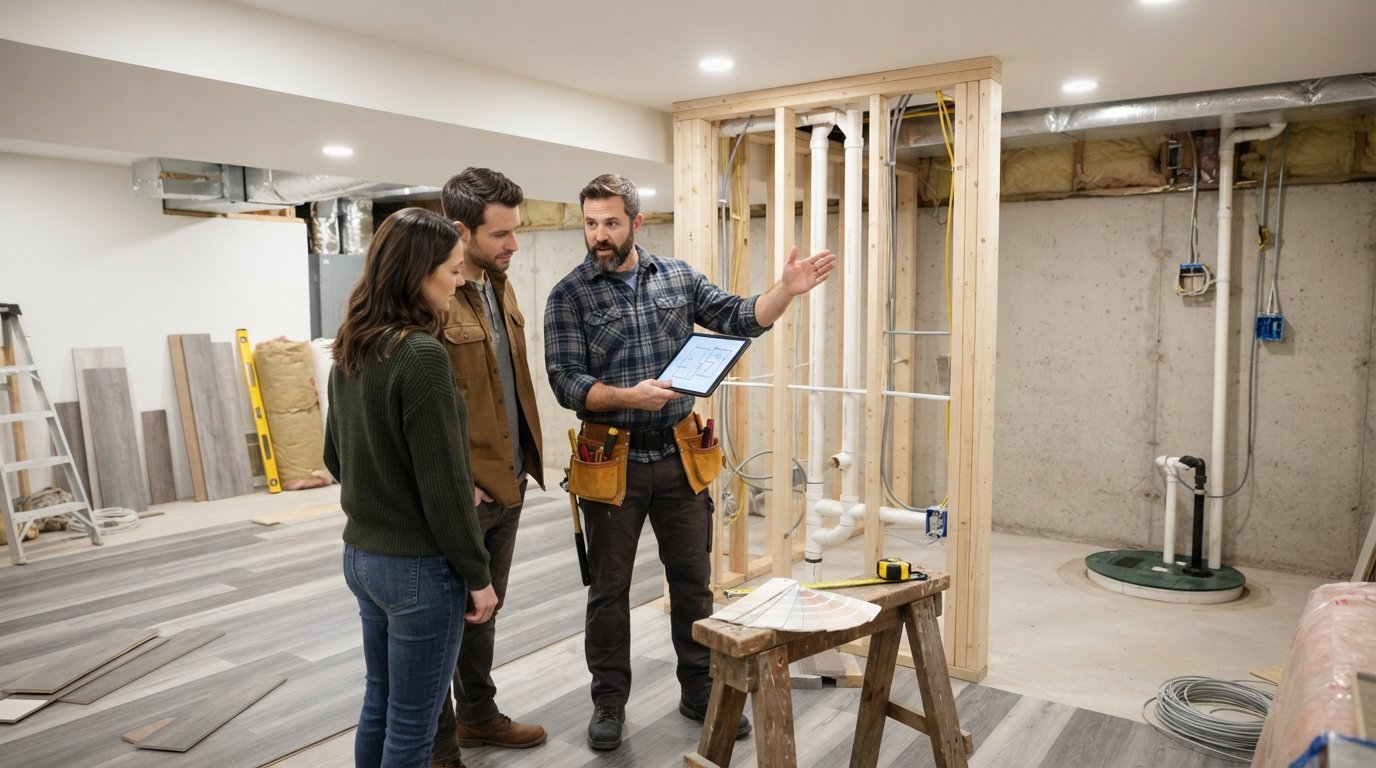
2026 Basement Finishing Costs and Design Ideas
Discover 2026 basement finishing costs and design trends. Learn how to budget smartly and create a beautiful, functional space that boosts home value.

By Sarah Thomas
Learn more about Basement Finishing or Remodeling for guides, costs, and what to expect.
Compare Basement Finishing or Remodeling Pros Near You

Enter your ZIP code to compare top-rated local professionals and request free quotes.
Finishing a basement is one of the most rewarding home improvement projects you can take on, but it is also one that comes with a wide range of costs and creative decisions. For 2026, homeowners are looking for ways to turn unused square footage into functional living space without blowing their budgets. Whether you dream of a cozy family room, a home office, or a rental suite, understanding the true cost and the latest design trends is the first step to success. This guide breaks down what you can expect to pay in 2026 and shares smart design ideas to maximize both comfort and return on investment.
What Drives Basement Finishing Costs in 2026?
The average cost to finish a basement in 2026 typically falls between $30 and $80 per square foot, depending on the scope of work, the quality of materials, and your location. For a 1,000-square-foot basement, that translates to roughly $30,000 to $80,000. However, this is just a starting point. The final number depends heavily on several key factors that you should consider during your planning phase.
First, the condition of your existing basement matters. A clean, dry, and well-maintained space with adequate ceiling height will cost less to finish than one that requires waterproofing, sump pump installation, or structural repairs. Second, the complexity of the layout plays a major role. Adding a bathroom or a wet bar requires additional plumbing work, which can add $5,000 to $15,000 or more. Similarly, if you plan to install a kitchenette, expect to pay for electrical circuits, plumbing lines, and cabinetry.
Finally, your choice of finishes, such as flooring, lighting, and ceiling type, will significantly influence the bottom line. Luxury vinyl plank (LVP) is a popular and cost-effective choice for basements, while hardwood is generally not recommended due to moisture concerns. Drywall ceilings are standard, but many homeowners in 2026 are opting for drop ceilings or painted ceiling tiles to allow easier access to plumbing and electrical systems.
To get a precise estimate for your specific project, it is wise to gather multiple quotes from local contractors. Many homeowners use free estimate services to compare pricing and scope without obligation. For example, a detailed bid from a professional will account for local labor rates, permit fees, and specific material choices, which an online calculator cannot fully capture.
Key Cost Components to Budget For
Breaking down the total cost into categories helps you allocate your budget wisely and avoid surprises. Here are the major line items you will encounter:
- Framing and Insulation: This includes wall studs, insulation (often foam board or fiberglass), and vapor barriers. Expect to pay $2,000 to $6,000 for a typical basement.
- Electrical and Lighting: New circuits, outlets, switches, and recessed lighting can range from $1,500 to $5,000. Adding a subpanel or upgrading service will increase this cost.
- Plumbing: If you are adding a bathroom or bar sink, rough-in and finish plumbing can cost $3,000 to $10,000 or more.
- HVAC and Ventilation: Extending your existing HVAC system or installing a mini-split for temperature control is essential. Budget $2,000 to $7,000 for this.
- Flooring: Carpet, LVP, or tile installation ranges from $1,500 to $5,000, depending on the material and area.
- Drywall and Ceiling: Hanging, taping, and finishing drywall, plus the ceiling material, typically costs $2,000 to $6,000.
- Paint and Trim: Professional painting and baseboards add another $1,000 to $3,000.
Remember that these figures are averages and can vary widely. For a more personalized budget, consider consulting with contractors who can give you a line-item breakdown specific to your home. Getting at least three estimates is always recommended to ensure you are paying a fair price for quality work.
Design Ideas That Maximize Value and Comfort
Once you have a budget in mind, the fun part begins: designing the space. In 2026, the trend is toward multi-functional rooms that adapt to your family's changing needs. Instead of a single-purpose media room, homeowners are creating flexible zones within one large open area. For example, a home theater setup can be paired with a small game corner, or a home office can be integrated into a guest suite.
One of the most popular design ideas is to create a basement that feels like a natural extension of the main floor. This means using consistent color palettes, similar flooring transitions, and plenty of lighting. Egress windows are not only a safety requirement for bedrooms but also a fantastic way to bring in natural light, making the basement feel less like a cave and more like a living space. If codes allow, consider adding a second egress window to brighten a dark corner.
Another strong trend is the inclusion of a small kitchenette or wet bar. Even a simple setup with a sink, mini-fridge, and microwave can transform your basement into an ideal space for entertaining or housing older children or relatives. This addition not only increases daily comfort but also boosts your home's resale value. According to the National Association of Realtors, a finished basement with a bathroom and bar can offer a high return on investment, sometimes recovering over 70% of the cost at resale.
When selecting materials, prioritize moisture resistance. Use mold-resistant drywall (often called purple board), choose water-resistant flooring like luxury vinyl or ceramic tile, and ensure proper drainage and sump pump operation. These choices protect your investment and provide peace of mind for years to come.
Lighting and Ceiling Strategies
Basements typically have low ceilings, so lighting is critical. Recessed can lights are a favorite because they do not take up headroom, but they require at least 7 feet of clearance. If your ceiling is lower, consider surface-mounted LED fixtures or track lighting. A drop ceiling with acoustic tiles can also hide pipes while allowing easy access for repairs. In 2026, many homeowners are using a combination of bright task lighting and dimmable ambient lights to create different moods.
Another trick is to paint the ceiling a light color, such as white or pale gray, to reflect light and make the space feel taller. You can also skip a full ceiling entirely by leaving the joists exposed and painting them a dark color. This industrial look can actually make the room feel more open, especially if you add modern light fixtures that draw the eye upward.
Budget-Friendly Strategies Without Cutting Corners
Finishing a basement on a budget is possible with careful planning. One of the most effective ways to save is to do some of the work yourself, but only if you have the skills. Painting, installing trim, and even laying flooring are DIY-friendly tasks that can save thousands of dollars. However, electrical work, plumbing, and structural changes should always be left to licensed professionals for safety and code compliance.
Another strategy is to phase your project. Start with the essential spaces, such as a finished media room and a half bath, and plan for a future phase that adds a bedroom or bar. This allows you to spread costs over time while still enjoying a usable space early on. You can also save by choosing mid-range materials that look high-end but cost less. For example, quartz countertops for a wet bar are durable and stylish, but a well-sealed butcher block offers a similar warm look at a lower price.
When it comes to hiring contractors, never base your decision solely on the lowest bid. Instead, compare detailed quotes that include the same scope of work and materials. Check references, verify insurance, and ask about warranties. This diligence helps you avoid costly mistakes and ensures the job is done right. To simplify this process, many homeowners turn to platforms like BuySellRemodel, which connect you with pre-screened local contractors and provide free, no-obligation estimates. This saves time and gives you confidence that you are comparing apples to apples.
Return on Investment and Home Value
A finished basement is one of the best investments you can make in your property, but the return varies. On average, you can expect to recoup about 70% to 80% of your finishing costs when you sell your home. This is higher than many other remodeling projects, such as a master suite addition, because you are converting existing but unfinished space into usable square footage.
The key is to ensure your design appeals to a broad range of buyers. Neutral colors, a flexible layout, and high-quality finishes are safe bets. Adding a full bathroom is often the single most valuable upgrade you can make, as it turns the basement into a true living area. If you are planning a home office, keep the design flexible so it can easily convert to a guest room or gym for future owners.
Before you start, check with your local building department about permits and codes. An inspection will ensure your work is safe and legal, which protects your family and your investment. Also, consider how the finished basement will integrate with your home's existing systems. For example, if your HVAC unit is undersized, you may need to upgrade it to handle the extra space, which is a significant but necessary cost.
If you are also planning other major renovations, such as a bathroom remodel, it is wise to coordinate projects to maximize efficiency and cost savings. In our guide on bathroom remodel cost for 2026, we explain how to prioritize upgrades and allocate your budget effectively, which can be particularly helpful if you are adding a basement bathroom.
Working with Contractors and Getting Free Estimates
The success of your basement finishing project hinges on the quality of your contractor. Take the time to interview at least three candidates and ask specific questions about their experience with basements, their timeline, and how they handle unexpected issues. Request a written contract that includes a detailed scope of work, a payment schedule, and a clear warranty.
Many contractors offer free estimates, and using a service that provides multiple quotes can save you hours of phone calls. These services vet the contractors and match you with professionals who fit your project size and budget. Once you have estimates, compare them carefully. A higher price might reflect better materials or a more experienced team, while a lower bid could indicate shortcuts or hidden costs. Always ask for a breakdown of materials and labor to understand what you are paying for.
Throughout the project, maintain open communication with your contractor. Set realistic expectations about the timeline and be available to make decisions quickly. Delays often happen when material choices are not finalized or when change orders are requested. By planning ahead and knowing what you want, you can keep the project on track and within budget.
Wrapping Up: Your Path to a Finished Basement
Finishing your basement in 2026 is an exciting opportunity to add valuable living space to your home. By understanding the costs involved and applying smart design ideas, you can create a beautiful, functional area that meets your family's needs and increases your property's value. Start by setting a realistic budget, then gather multiple estimates from trusted professionals. Focus on moisture control, proper lighting, and flexible design to ensure the space is comfortable and durable.
Finally, remember that the best projects are those that are well-planned and well-executed. Take your time to research, ask questions, and choose a contractor who communicates clearly and delivers quality work. With the right approach, your finished basement will become a favorite spot in your home for years to come.