
2026 Home Remodeling Trends for Budget Conscious Homeowners
Smart 2026 home remodeling trends for budget conscious homeowners that add lasting value. Call (833)-439-3727 for free local estimates.

By Leo Dawson
Learn more about Home Remodeling for guides, costs, and what to expect.
Compare Home Remodeling Pros Near You

Enter your ZIP code to compare top-rated local professionals and request free quotes.
Every year brings a fresh wave of design ideas, and 2026 is no exception. But if you are watching your spending, the real question is not which trend looks best on social media. It is which upgrades will actually improve your daily life and hold their value when you sell. The good news is that the smartest 2026 home remodeling trends for budget conscious homeowners are less about chasing novelty and more about durability, flexibility, and long-term savings. This guide breaks down what is worth your money, what to skip, and how to phase improvements into a plan you can actually afford.
Durable Materials and Flexible Spaces Lead the Way
The defining theme of 2026 is practicality. Homeowners who lived through years of supply chain headaches and rising prices are now prioritizing materials that last and layouts that adapt. Instead of ripping out walls for a single-purpose room, many are choosing finishes and floor plans that can serve multiple needs over time. This shift is especially friendly to tight budgets because it reduces the need for future rework.
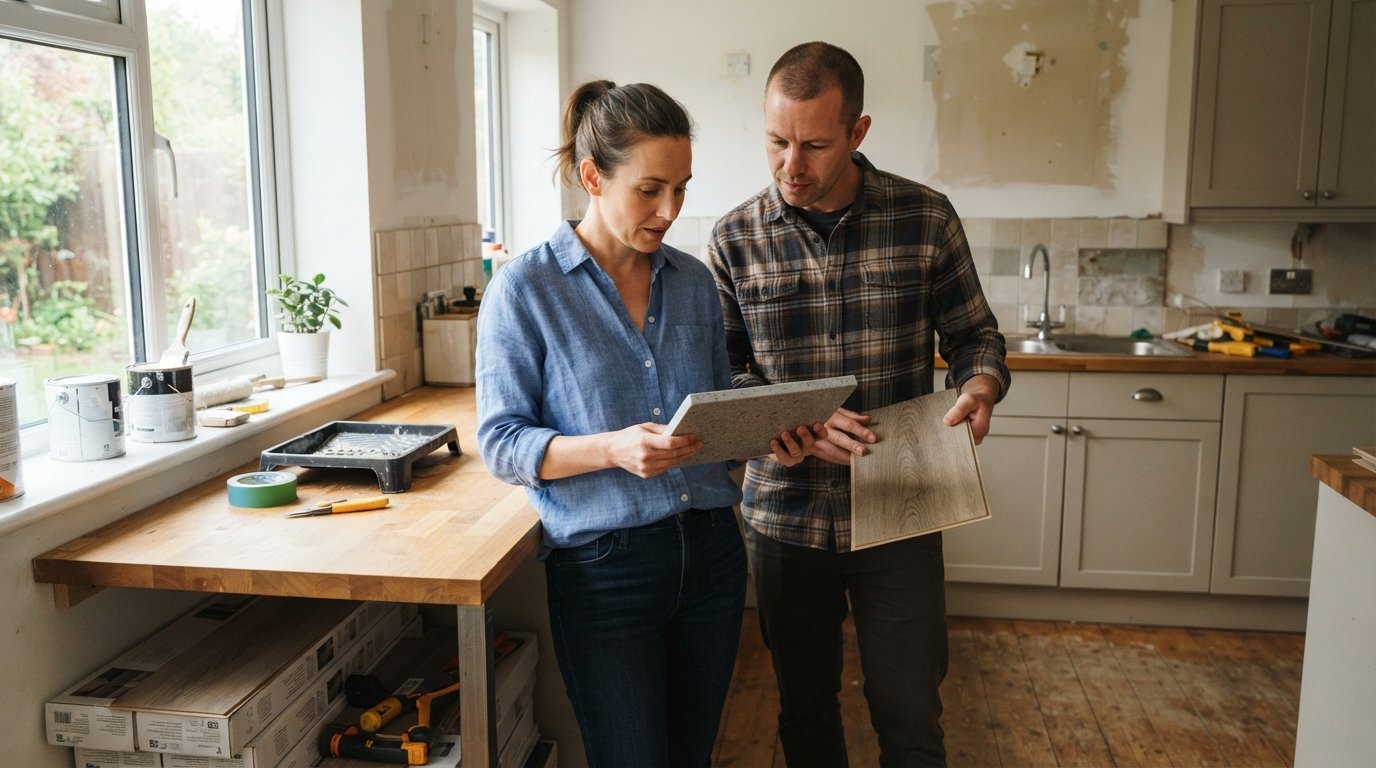
Durable materials are at the center of this trend. Luxury vinyl plank continues to dominate budget-friendly flooring conversations because it resists moisture, handles heavy foot traffic, and costs far less than hardwood. Quartz countertops remain popular, but many homeowners are pairing them with butcher block or laminate in secondary zones to stretch their dollars. The goal is simple: spend where wear happens most, and save where it does not.
Flexible spaces are the second pillar. A spare bedroom that doubles as a home office, a dining nook that converts to a homework station, or a garage corner set up for workouts all reflect the same idea. You do not need an addition to gain usable square footage. You need thoughtful planning. When you map out how a room will be used on a typical Tuesday, you often discover that better storage and a smarter layout deliver more value than a full gut renovation.
- Luxury vinyl plank and tile for high-traffic, moisture-prone areas at a fraction of hardwood cost.
- Multi-use furniture and built-ins that let one room serve several purposes without structural changes.
- Durable, easy-clean finishes such as quartz, solid surface, and scrubbable paint.
- Universal design touches like wider doorways and lever handles that support aging in place.
These choices pay off twice. They lower your maintenance costs today and they appeal to future buyers who are equally budget conscious. If you are still sketching out the financial side of your project, our guide on home remodeling costs and planning tips for 2026 walks through realistic cost ranges and sequencing so you can avoid mid-project surprises.
Warm Palettes and Finishes That Age Well
Cool grays have finally given way to warmer tones. In 2026, budget conscious homeowners are gravitating toward creams, warm whites, soft terracottas, and muted greens. These colors photograph well, hide dust and scuffs better than stark white, and feel welcoming without requiring expensive custom cabinetry. The practical benefit is significant: a warm neutral palette lets you update accent pieces over time instead of repainting entire rooms every few years.
Finishes are following the same logic. Matte and satin sheens are replacing high-gloss surfaces because they are more forgiving of imperfections and easier to touch up. Brushed brass and matte black hardware remain popular, but the real story is consistency. Choosing one finish family and sticking with it across cabinets, lighting, and plumbing fixtures creates a cohesive look that reads as intentional rather than trendy. That cohesion is what holds value at resale.
Wood tones are also warming up. Medium oak and walnut stains are replacing the gray-washed woods that dominated the late 2010s. If your cabinets are structurally sound, refacing or repainting them in a warm tone is one of the highest-return updates you can make. It costs a fraction of full replacement and delivers a dramatic visual change. Pair that with updated lighting and you have a kitchen or bathroom that feels current without a six-figure price tag.
Hidden Storage and Smart Organization
Clutter is the enemy of a calm home, and 2026 trends reflect that. Hidden storage is no longer a luxury feature reserved for custom builds. Budget friendly versions are showing up in big-box stores and online retailers, from toe-kick drawers in kitchens to under-stair cabinets and bench seating with lift-up lids. The appeal is obvious: you gain usable space without adding square footage.
Organization upgrades are particularly smart for budget conscious homeowners because they are scalable. You can start with a single closet system and expand over time. You can add pull-out shelves to existing cabinets without replacing them. You can install a pegboard in the garage for a few dollars and reclaim an entire wall. These small projects compound, and each one makes your home function better without triggering a full renovation.
When planning storage, think in zones. Entryway storage handles shoes, bags, and mail. Kitchen storage handles appliances and pantry goods. Bathroom storage handles linens and toiletries. Bedroom storage handles clothing and seasonal items. Mapping these zones before you buy anything prevents the classic mistake of purchasing organizers that do not fit your actual habits. A measured plan almost always beats an impulse purchase.
Where Costs Are Rising and How to Plan Around Them
Budgeting for a 2026 remodel requires honesty about what is getting more expensive. Labor remains the biggest wildcard. Skilled trades are in high demand, and scheduling delays can push projects into higher-cost seasons. Materials have stabilized in some categories but remain volatile in others, particularly anything tied to imports or energy-intensive manufacturing. Electrical work, plumbing, and HVAC upgrades are all trending upward because of code updates and efficiency requirements.
The smart response is to plan around the categories you can control. Get multiple quotes, lock in pricing where possible, and build a contingency fund of at least 10 to 15 percent. If your project includes electrical or plumbing changes, budget for them early rather than treating them as afterthoughts. These are the line items most likely to blow up a budget because they are hidden behind walls and often discovered mid-project.
- Set your total budget first and subtract a 15 percent contingency before allocating funds to any single category.
- Get three written estimates for every major trade so you can compare scope, not just price.
- Prioritize behind-the-wall work such as wiring, insulation, and plumbing before cosmetic finishes.
- Phase the project so you can pause between stages if costs run higher than expected.
- Request free estimates early to understand local pricing before you commit to a design.
Phasing deserves special attention. Many homeowners assume a remodel must happen all at once. In reality, splitting a project into two or three stages spreads the cost, reduces disruption, and lets you learn from each phase before committing to the next. You might update a kitchen in year one and add storage and lighting in year two. That approach keeps cash flow manageable and reduces the risk of expensive mistakes.
Fads to Skip When Resale Value Is the Goal
Not every trend deserves your money. Some design choices are fun in the moment but narrow your buyer pool later. Highly personalized features, such as bold tile murals or built-in pet washing stations, can be charming but may not appeal to a broad audience. Oversized islands that crowd the kitchen, dark moody bathrooms with limited lighting, and trendy wall treatments that are expensive to remove all fall into the same category. They look great in photos and create headaches at resale.
Another category to approach with caution is smart home technology that locks you into a single ecosystem. A few well-chosen devices are fine, but a fully automated home with proprietary wiring can confuse buyers and complicate inspections. Stick with widely compatible standards and keep the manual controls functional. The same logic applies to highly specialized rooms. A dedicated home theater or wine cellar is a wonderful luxury, but it is unlikely to return your investment in a typical neighborhood.
The safer approach is to invest in upgrades that are broadly appealing and easy to maintain. Neutral finishes, quality lighting, functional storage, and energy efficient windows and appliances all fall into this category. They may not generate the same excitement as a statement wall, but they consistently rank among the improvements that recoup the most at resale. When in doubt, choose the option that a future buyer would find easy to live with.
Phasing Trend-Driven Upgrades Into a Realistic Budget
You do not have to choose between staying on trend and staying on budget. The key is sequencing. Start with projects that improve function and efficiency, then layer in style as funds allow. A practical sequence looks like this: address any safety or code issues first, upgrade insulation and windows second, update high-use rooms third, and finish with cosmetic refreshes. This order ensures that every dollar you spend builds on a solid foundation.
Financing options can help bridge the gap, but they should be used carefully. Home equity lines, personal loans, and contractor financing all have trade-offs. Compare interest rates, fees, and repayment terms before signing anything. If a project can wait, saving for it is almost always cheaper than borrowing. If it cannot wait, such as a failing water heater or a roof leak, prioritize the repair and treat the cosmetic upgrades as a separate phase.
Finally, remember that the best remodeling decisions are the ones that fit your life, not just your feed. A warm, durable, well-organized home will serve you well whether you stay for decades or sell in a few years. If you are ready to move from planning to pricing, BuySellRemodel helps homeowners plan affordable home improvement projects and connect with experienced local contractors, from free estimates to remodeling, repairs, and upgrades. Getting a few real quotes is the fastest way to turn a trend list into a realistic plan.
Start small, choose durable materials, and let each phase inform the next. That approach keeps your budget intact and your home improving year after year.