
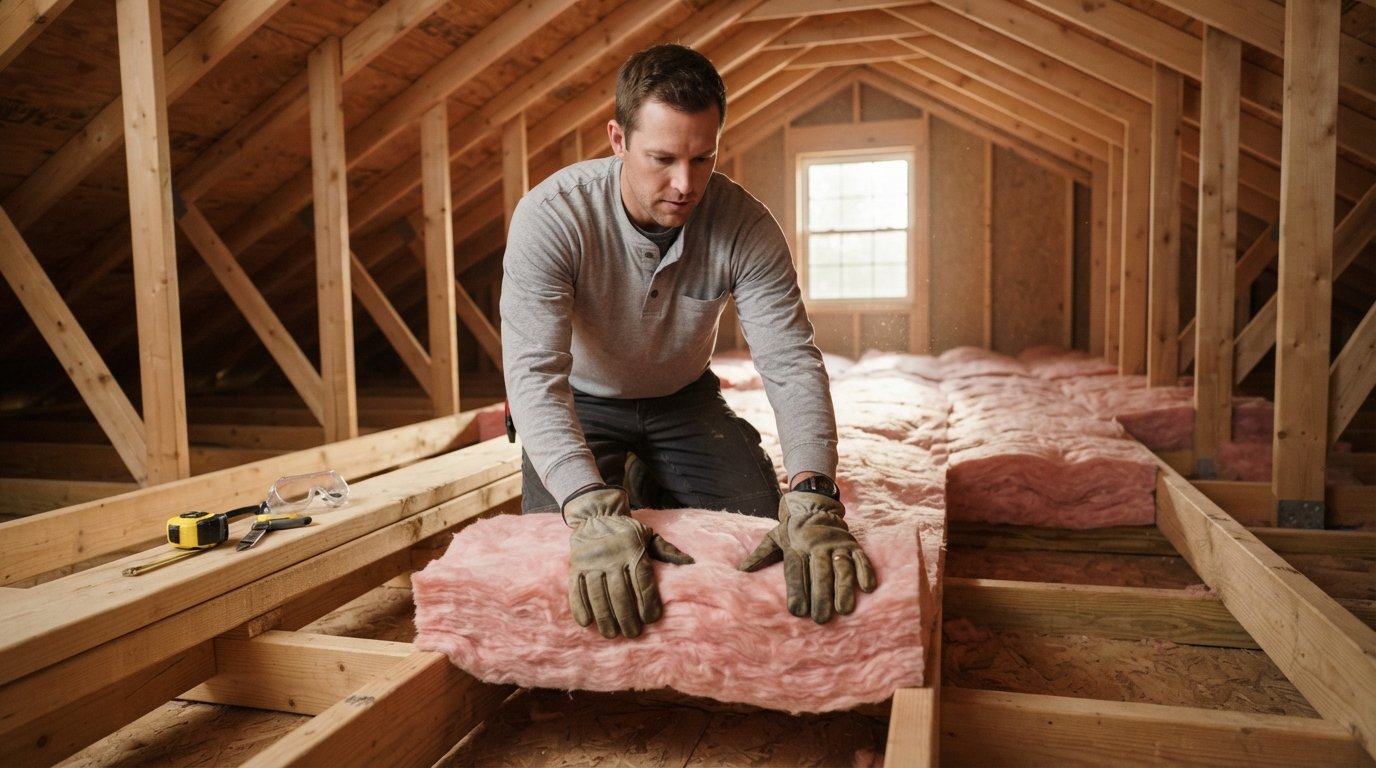
Attic Insulation Cost and Savings: 2026 Payback Guide
See how attic insulation cost and savings impact your budget: average prices, energy bill reductions, and payback timelines in this clear 2026 guide.

By Sarah Thomas
Learn more about Insulation Installation or Upgrade for guides, costs, and what to expect.
Compare Insulation Installation or Upgrade Pros Near You

Enter your ZIP code to compare top-rated local professionals and request free quotes.
When you think about home improvements that pay you back, attic insulation might not be as exciting as a kitchen remodel, but it is one of the smartest investments you can make. In fact, the U.S. Department of Energy estimates that you can save up to 15 percent on heating and cooling costs by adding proper insulation to your attic. That is why understanding the true attic insulation cost and savings is so important before you decide to tackle this project. Whether your goal is to lower monthly bills, improve comfort in every room, or increase your home's resale value, the numbers often tell a compelling story. This guide breaks down current pricing, factors that affect your final quote, and how quickly you can expect to see a return on your investment.
For most homeowners, the attic is the easiest and most cost-effective place to improve energy efficiency. Heat rises, which means without proper insulation, a large portion of your home's warm air escapes through the roof in winter, and the summer sun beats down and radiates heat into your living spaces. Adding or upgrading insulation creates a thermal barrier that keeps conditioned air inside, where it belongs. But before you make a decision, you need a clear picture of what the project will cost and what you will get back in savings.
How Much Does Attic Insulation Cost in 2026?
The cost of attic insulation can vary widely depending on several key factors, so it is helpful to look at both national averages and the specific variables that influence your final price. On average, homeowners pay between $1,500 and $3,500 for a standard attic insulation project, with most falling around $2,400. This figure includes materials and professional installation for a typical 1,200 to 1,500 square foot attic, which is the most common size in American homes. However, your actual cost could be lower or higher depending on the type of insulation you choose, the condition of your attic, and your local labor rates.
To give you a more detailed breakdown, here are the typical price ranges for different insulation materials installed by a professional:
- Fiberglass batts: $0.80 to $1.50 per square foot for materials, plus $0.50 to $1.00 per square foot for labor. This is often the most budget-friendly option, with total costs ranging from $1,200 to $2,800.
- Blown-in fiberglass: $1.00 to $1.80 per square foot for materials, with installation costs around $0.70 to $1.20 per square foot. Total project costs usually land between $1,300 and $3,000.
- Cellulose (blown-in): $1.20 to $2.00 per square foot for materials, plus $0.70 to $1.20 for labor. Expect to pay between $1,400 and $3,200 for a full job.
- Spray foam: $1.50 to $3.50 per square foot for open-cell, and $2.50 to $5.00 for closed-cell, including installation. This premium option can cost anywhere from $2,500 to $6,000 or more.
While spray foam offers the highest R-value per inch and excellent air sealing, it is also the most expensive. Most cost-conscious homeowners find that blown-in fiberglass or cellulose provides the best balance of performance and price, especially when you are simply adding insulation on top of existing material.
Key Factors That Determine Your Final Quote
Several variables beyond just the type of material can push your attic insulation cost up or down. Being aware of these factors will help you get accurate estimates and avoid unexpected surprises during the project.
Attic size and accessibility. Larger attics require more material and more labor hours, which directly increases the total price. Additionally, if your attic has low clearance, tight corners, or limited access points, the installer may need extra time to work safely and effectively. Some contractors charge a premium for difficult-to-reach spaces, so be sure to ask about this during your consultation.
Current insulation condition. If your attic already has old, compacted, or moisture-damaged insulation, it will need to be removed before new material is installed. Removal adds anywhere from $300 to $800 to your project, depending on the amount and the ease of access. On the other hand, if your existing insulation is in good shape but simply too thin, a contractor can often blow new insulation directly on top, which is a faster and more affordable process.
Air sealing requirements. Insulation alone cannot stop air leaks. Before adding insulation, a professional should seal gaps around recessed lights, chimneys, plumbing vents, and attic hatches with caulk or spray foam. This air sealing step is critical for maximizing performance, and it typically adds $200 to $500 to the overall cost. Skipping this step is one of the biggest mistakes homeowners make, because even the best insulation will underperform if air can still flow around it.
R-value needs. The recommended R-value for attic insulation depends on your climate zone. In colder northern regions, you may need R-49 to R-60, while warmer southern areas might only require R-30 to R-38. Your contractor will assess the current R-value and advise you on the right target, which directly influences how much material is needed and therefore the total cost.
How Much Can You Really Save on Energy Bills?
The most important question for any homeowner is, "How much will I save each month?" While the answer varies based on your local climate, home size, and previous insulation levels, the savings are often substantial enough to make the project worthwhile. The U.S. Department of Energy states that you can save an average of 15 percent on heating and cooling costs by properly insulating and air sealing your attic. For a household that spends $200 per month on utilities, that translates to roughly $30 in monthly savings, or about $360 per year.
However, many homeowners report even higher savings if their attic was completely uninsulated or severely under-insulated. In older homes, where insulation may be sparse or settled, the improvement can cut energy use by 20 to 30 percent. For example, a family in a 2,000 square foot home in the Midwest might see their winter heating bill drop from $250 to $180 per month after a professional attic insulation upgrade. Over a full year, that adds up to significant money back in your pocket.
It is also important to consider the non-energy benefits. Proper attic insulation keeps your home warmer in winter and cooler in summer, which means your HVAC system does not have to work as hard. This reduces wear and tear on your equipment, potentially extending its lifespan and reducing the frequency of expensive repairs. Additionally, consistent indoor temperatures reduce the formation of ice dams on your roof in snowy climates, protecting your shingles and preventing costly water damage.
Estimating Your Payback Period
Payback period is the time it takes for your monthly energy savings to equal the upfront cost of the insulation. To calculate your own payback, divide the total project cost by your annual savings estimate. For example, if you spend $2,000 on insulation and save $400 per year, your payback period is five years. Considering that quality insulation can last 20 to 30 years or more, that means you could enjoy 15 to 25 years of pure savings after the payback period ends.
Here is a practical example to illustrate the potential return on investment:
- Current annual energy bill: $2,400 (or $200 per month)
- Estimated savings after insulation (15%): $360 per year
- Project cost (professional install, 1,200 sq ft attic with fiberglass): $2,100
- Payback period: $2,100 divided by $360 equals roughly 5.8 years
- Net savings over 10 years after payback: $360 x 4.2 years equals about $1,512
- Net savings over 20 years after payback: $360 x 14.2 years equals roughly $5,112
These numbers become even more attractive if you are eligible for federal tax credits or local utility rebates. Current federal tax credits offer up to $1,200 for home energy improvements, including insulation, which can cut your upfront cost by a significant margin. Many utility companies also provide rebates for attic insulation, sometimes covering 10 to 20 percent of the project cost. Be sure to check with your energy provider and local government for incentives available in your area.
DIY vs. Professional Installation
One of the biggest decisions you will make is whether to install attic insulation yourself or hire a contractor. While DIY can save you money on labor, it is not always the best choice, especially if you are dealing with large areas or difficult access. Let's weigh the pros and cons.
DIY installation: For small attics with easy access and no major air sealing needs, buying fiberglass batts from a home improvement store can cost as little as $0.50 to $0.80 per square foot. You can rent a blower machine for blown-in insulation, but you must also handle the heavy bags and spend hours in a hot, dusty attic. Improper installation can lead to gaps, compression, and missed spots, which significantly reduces effectiveness. Additionally, working with fiberglass or cellulose requires protective gear, and you must be careful not to cover ventilation baffles or recessed lighting fixtures.
Professional installation: Hiring a licensed insulation contractor ensures the job is done correctly and safely. Professionals have the experience to identify and seal air leaks, install the correct R-value, and ensure proper ventilation. They also have the right equipment to blow insulation evenly and reach every corner. While professional labor adds to the cost, it often pays off in the form of higher energy savings and fewer callbacks. If you are planning to stay in your home for more than five years, professional installation is usually the more cost-effective choice over time.
If you are on a tight budget and have a straightforward attic, you might consider a hybrid approach: do the air sealing yourself and hire a professional for the insulation installation. This can save you a few hundred dollars while still ensuring the most critical part, the insulation, is done right. However, always check local building codes and safety guidelines before attempting any DIY work.
Hidden Benefits Beyond Energy Savings
While energy savings are the primary financial benefit, attic insulation delivers several other returns that are not always obvious. One of the most valuable is increased home comfort. Proper insulation eliminates cold drafts in winter and prevents excessive heat buildup in summer, making upstairs bedrooms and living areas more comfortable year-round. This can reduce the need for space heaters or extra air conditioners, which also cuts your energy usage.
Another hidden benefit is improved indoor air quality. By sealing gaps and reducing air infiltration, you limit the entry of outdoor pollutants, pollen, and moisture. This is especially beneficial for families with allergies or asthma. Additionally, consistent temperatures in your attic help prevent moisture condensation, which can lead to mold growth and wood rot. Protecting your home's structure and air quality adds long-term value that is difficult to measure in dollars but is undeniably important.
Attic insulation also increases your home's resale value. Energy-efficient homes are increasingly attractive to buyers, who are willing to pay a premium for lower utility bills and sustainable features. A well-insulated attic is a strong selling point during a home inspection, and it can help your home stand out in a competitive market. If you ever decide to sell, you can confidently highlight the upgraded insulation and the associated savings.
Choosing the Right Contractor and Getting Quotes
Successfully completing an attic insulation project starts with selecting the right contractor. This is not a job for a general handyman unless they have specific experience with insulation. Look for licensed and insured contractors who specialize in insulation or energy efficiency. Check online reviews, ask for references, and confirm that they are familiar with local building codes and rebate programs. A reputable contractor will provide a detailed written estimate that outlines the materials, R-value, air sealing work, and total cost.
Before you commit, it is wise to get at least three quotes from different companies. This allows you to compare pricing, services, and professionalism. Be wary of quotes that are significantly lower than others, as they may indicate subpar materials or rushed work. Instead, focus on the value each contractor offers, including warranties on both materials and workmanship. A solid warranty protects your investment for years to come.
If you are ready to move forward, BuySellRemodel can help you connect with experienced local contractors who specialize in insulation and energy efficiency. Their platform simplifies the process of finding reliable professionals, and you can receive free estimates without any obligation. This makes it easier to compare options and choose the right pro for your project, all while staying within your budget. For a deeper look at how attic improvements fit into larger renovation plans, you can also review our attic conversion cost guide for related pricing and savings details.
When you meet with contractors, be prepared to ask about their experience with your type of insulation, whether they will perform air sealing, and how they handle ventilation. Also, ask about their process for working around attic fixtures like lights and HVAC equipment. A thorough contractor will walk you through the entire plan before starting, so you know exactly what to expect. Taking the time to choose the right professional ensures that your attic insulation cost and savings work out in your favor, both in the short term and for many years ahead.
In the end, attic insulation is one of the most effective and affordable home improvements available. With careful planning and the right help, you can reduce your energy bills, increase your comfort, and add lasting value to your home. Start by getting free estimates from trusted local pros, and take the first step toward a more efficient and comfortable home today.