
Basement Waterproofing Cost: Interior vs Exterior Options
Compare basement waterproofing cost and interior versus exterior options to protect your home. Call (833)-439-3727 for a free estimate today.

By Irene Parker
Learn more about Home Waterproofing for guides, costs, and what to expect.
Compare Home Waterproofing Pros Near You

Enter your ZIP code to compare top-rated local professionals and request free quotes.
A damp basement is more than a nuisance: it threatens your home's structural integrity, indoor air quality, and the value of any finished living space. If you have noticed musty odors, efflorescence on the walls, or water seeping across the floor after heavy rain, you are likely weighing the cost of basement waterproofing and whether an interior or exterior solution makes more sense for your situation. This guide breaks down the real numbers, explains how each method works, and helps you choose a fix that protects your home without overstretching your budget.
Diagnose the Moisture Source Before You Choose a Fix
Before you request a single estimate, you need to understand where the water is coming from. Waterproofing a basement without diagnosing the source is like painting over mold: it may look better for a while, but the underlying problem will return. Moisture can enter through several distinct pathways, and each one calls for a different strategy.
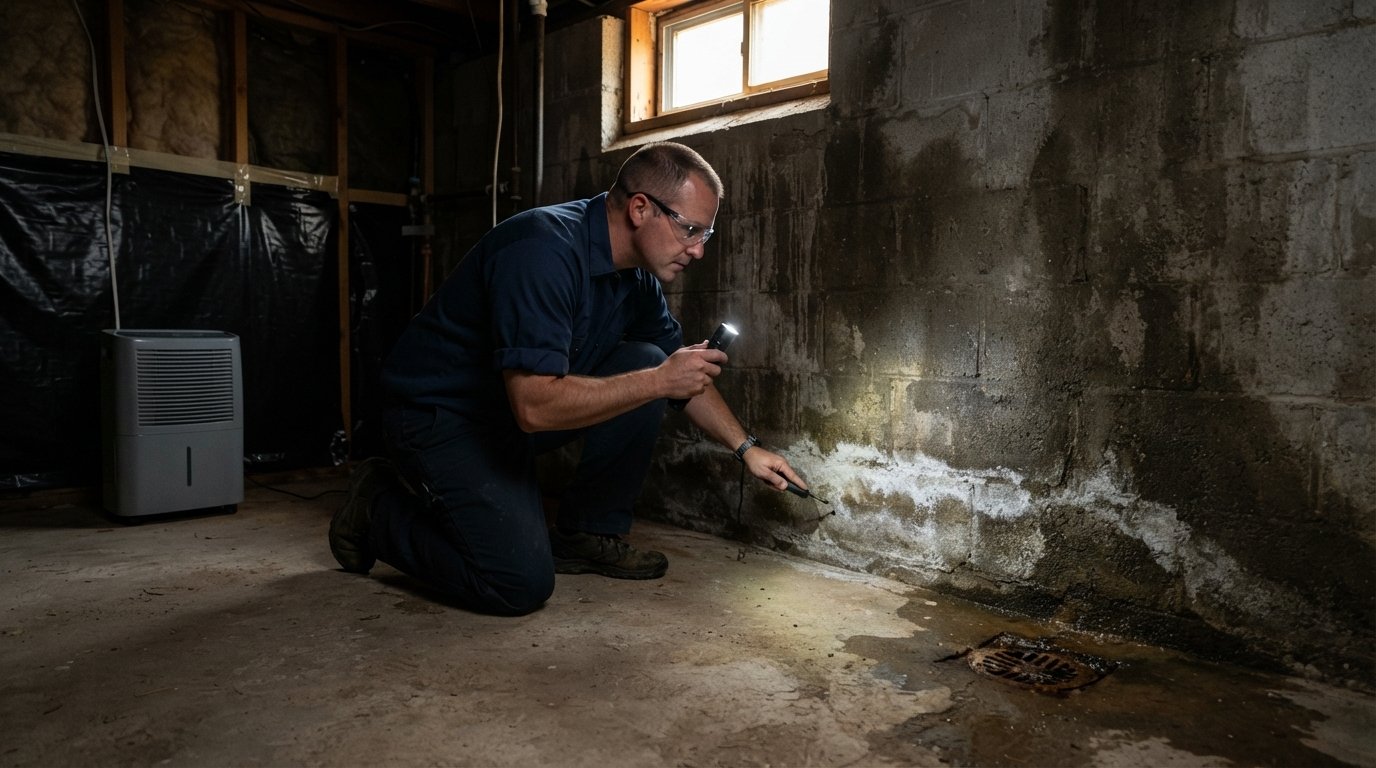
Common culprits include hydrostatic pressure from saturated soil pushing water through the cove joint where the floor meets the wall, capillary action drawing moisture up through porous concrete, leaky window wells, clogged gutters that dump water against the foundation, and poor exterior grading that slopes toward the house. During your inspection, look for white powdery deposits (efflorescence), rust stains, peeling paint, and dark patches on the lower walls. A simple plastic-sheet test taped to the floor for 24 hours can reveal whether you have a vapor issue rather than a liquid water problem.
Once you know the source, you can match the solution to the problem. For example, if water is pooling outside the foundation because downspouts discharge within two feet of the wall, extending them four to six feet away and regrading the soil may solve the issue for a few hundred dollars. If the cove joint weeps during heavy rain, an interior drainage system is often the most cost-effective fix. If the walls themselves are bowing or the basement is finished and you want maximum protection, an exterior approach may be warranted. Taking the time to diagnose properly will save you from paying for a system you do not need or, worse, missing the real cause.
Interior Waterproofing Options and Costs
Interior waterproofing focuses on managing water that has already entered the basement. Instead of blocking water at the exterior, these systems collect it and route it away from the foundation. This approach is less invasive, can often be completed in one to three days, and typically costs less than exterior excavation. However, it does not stop water from entering the walls, so it is not a true barrier.
Here is a comparison of the most common interior methods:
- Interior sealants and crystalline coatings: $500 to $2,500. These products are applied to the interior walls to reduce vapor transmission and minor seepage. They work best for hairline cracks and dampness, not for active leaks.
- Interior drainage systems (French drains or baseboard systems): $2,000 to $7,000. A channel is installed along the perimeter of the floor to capture water at the cove joint and direct it to a sump pit. This is the go-to solution for hydrostatic pressure and is often paired with a vapor barrier.
- Sump pump installation: $500 to $1,500 for a primary pump, plus $1,000 to $2,500 for a battery backup system. A sump pump is essential for any interior drainage system, as it moves collected water up and out of the basement.
- Crack injection (epoxy or polyurethane): $300 to $800 per crack. This method seals individual cracks from the inside and is highly effective for non-structural leaks.
Keep in mind that interior systems require ongoing maintenance: sump pumps need annual testing, and the drainage channels can clog with sediment over time. Most reputable installers offer warranties ranging from five to twenty years, but the warranty often depends on proper maintenance. Interior waterproofing is generally the right choice for homeowners who want a reliable, budget-friendly solution and are not dealing with structural wall issues or a finished basement that requires maximum protection.
Exterior Waterproofing: Excavation and Membrane Approaches
Exterior waterproofing addresses the problem at its source by preventing water from ever reaching the foundation walls. This typically involves excavating the soil around the perimeter of the house down to the footing, applying a waterproof membrane or coating to the exterior walls, and installing a drainage board and footing drain. It is the most thorough approach and can also include foundation repair if cracks or bowing are present.
The cost is significantly higher than interior methods, typically ranging from $8,000 to $25,000 or more depending on the size of the home, the depth of excavation, and the condition of the foundation. The high price tag is due to the labor-intensive nature of digging, the need for heavy equipment, and the cost of restoring landscaping and hardscaping afterward. For example, removing and replacing a deck, patio, or driveway can add thousands to the project.
Despite the cost, exterior waterproofing offers several compelling advantages. It stops water at the source, protecting the structural integrity of the foundation. It eliminates the need for interior drainage systems and sump pumps in many cases. It also increases the usable lifespan of the foundation and can be combined with insulation to improve energy efficiency. Exterior solutions are often the best choice for homes with visible foundation damage, persistent leaks that interior systems cannot fully resolve, or homeowners who plan to finish the basement and want the highest level of protection. It is also worth noting that exterior waterproofing can sometimes be phased: addressing the most problematic side of the house first can spread the cost over time.
When comparing interior versus exterior options, think about your long-term goals. If you are planning to finish your basement, you will want to ensure the space stays dry. In our guide on basement waterproofing and moisture fixes before finishing, we explain how to sequence waterproofing and finishing to avoid costly rework. For many homeowners, a combination of exterior grading improvements and interior drainage provides a balanced approach that delivers strong protection without the full cost of excavation.
When Waterproofing Must Come Before Finishing a Basement
Finishing a basement can add valuable living space, but it is a costly project that can be ruined by a single water event. If you are planning to convert your basement into a family room, home office, or guest suite, waterproofing must be addressed first. Moisture trapped behind drywall can lead to mold growth, wood rot, and ruined insulation. Even small amounts of seepage can destroy flooring and furniture over time.
Before you frame walls or install drywall, take these steps:
- Perform a thorough moisture inspection: Check for leaks, efflorescence, and high humidity. Use a hygrometer to measure relative humidity; it should stay below 50 percent.
- Address any active leaks: Repair cracks, improve grading, and extend downspouts. If the basement has a history of water problems, invest in an interior drainage system or exterior waterproofing.
- Install a vapor barrier: A heavy-duty polyethylene sheet or spray-on membrane on the walls and floor helps control moisture vapor.
- Ensure proper ventilation: A bathroom fan or a dedicated dehumidifier can keep humidity in check, especially in tight, well-insulated basements.
Once the waterproofing is in place and you have observed the basement through at least one wet season, you can proceed with finishing. This sequencing protects your investment and ensures that your new living space remains comfortable and dry for years to come. If you are unsure whether your basement is ready, consider hiring a waterproofing specialist to perform a moisture audit before you commit to a finishing budget.
Maintenance, Warranties, and Long-Term Costs
Both interior and exterior waterproofing systems require some maintenance to remain effective. Interior systems rely on sump pumps that must be tested regularly (at least annually) and drainage channels that should be kept clear of debris. Exterior systems are generally low-maintenance, but the drainage board and footing drains can become clogged with roots or sediment over time. Homeowners should plan for periodic inspections, especially after heavy storms.
Warranties vary widely by contractor and system. Interior drainage systems often come with warranties of five to twenty years, while exterior waterproofing warranties can range from ten years to a lifetime, depending on the materials and the installer. Always read the fine print: some warranties are transferable to a new owner, which can be a selling point, while others require annual maintenance by the original contractor to remain valid. It is also wise to check whether the warranty covers labor and materials or just materials.
Long-term costs include electricity for the sump pump (typically $50 to $150 per year), occasional pump replacement ($300 to $600 every 7 to 10 years), and the potential for exterior drain cleaning. When comparing estimates, ask contractors to provide a detailed breakdown of these ongoing expenses so you can budget accordingly. A cheap installation that fails in five years is no bargain; prioritize quality materials and a reputable installer with a solid warranty.
How to Choose the Right Contractor for Your Waterproofing Project
Selecting a qualified contractor is just as important as choosing the right method. Start by getting at least three written estimates from local waterproofing companies. Each estimate should include a diagnosis of the moisture source, a detailed description of the proposed work, the materials to be used, the warranty terms, and a timeline. Be wary of contractors who pressure you into a quick decision or offer vague, one-size-fits-all solutions.
Ask for references from recent customers and check online reviews. Verify that the contractor is licensed, bonded, and insured. A good contractor will be willing to explain why they recommend a particular approach and will not oversell you on exterior excavation if a simpler interior fix will solve the problem. To make comparing options easier, you can use a service like BuySellRemodel to connect with experienced local contractors and request free estimates. This can save you time and help you gauge fair market pricing for your area.
Finally, do not overlook the importance of a written contract that specifies the scope of work, payment schedule, and warranty details. A reputable contractor will stand behind their work and be transparent about the process from start to finish.
Waterproofing your basement is an investment in your home's health and value. By understanding the costs, comparing interior and exterior options, and choosing a qualified professional, you can make a confident decision that keeps your basement dry and your budget intact for years to come.