
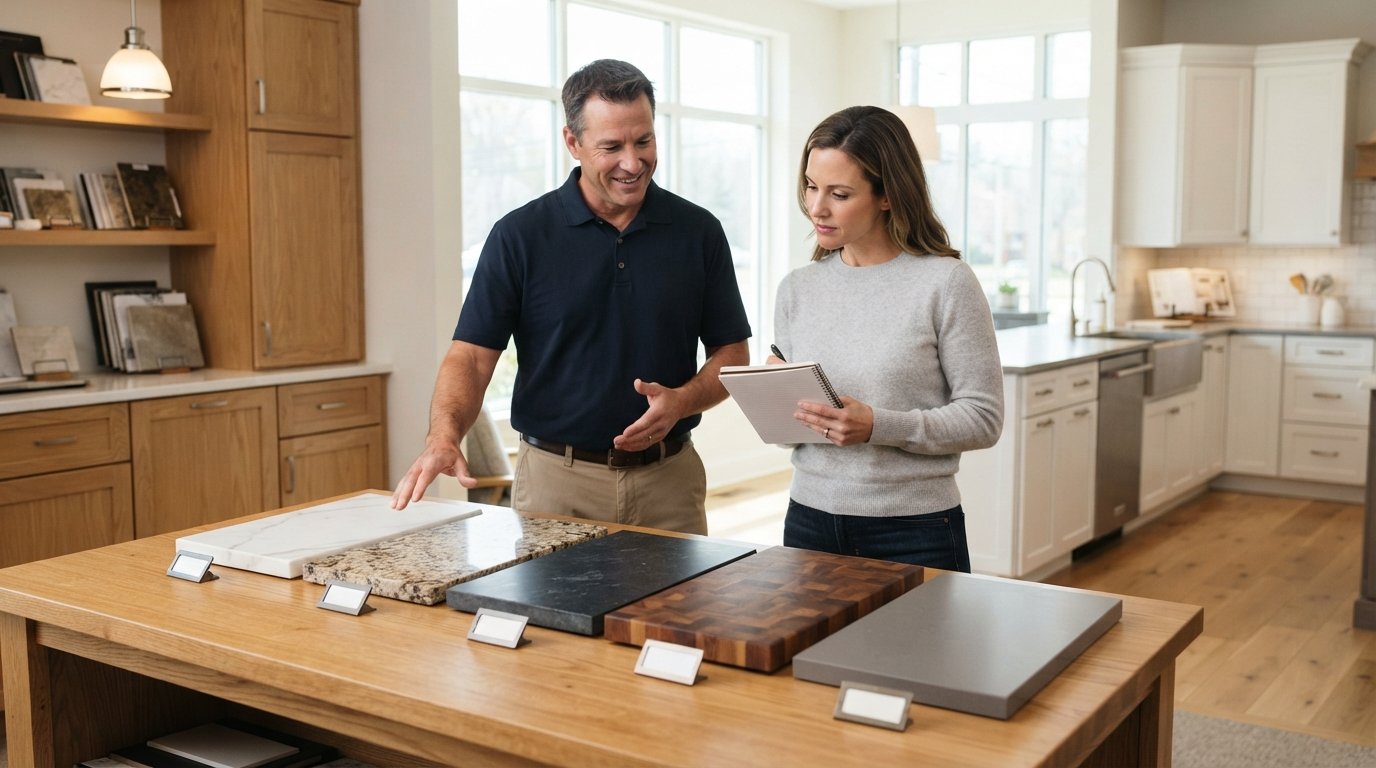
Countertop Materials Compared by Cost: Kitchen and Bath Guide
Compare kitchen and bathroom countertop materials by cost, from laminate to quartzite, and learn how to pick a surface that fits your budget and lifestyle.

By Sarah Thomas
Learn more about Countertop Installation for guides, costs, and what to expect.
Compare Countertop Installation Pros Near You

Enter your ZIP code to compare top-rated local professionals and request free quotes.
Countertops take up a small fraction of your home's square footage, yet they absorb a huge share of your remodeling budget and almost all of the daily wear. They are the surface where you chop vegetables, rest a hot pan, wipe up toothpaste, and set down groceries. When they crack, stain, or look dated, the whole room feels tired, and when they are chosen well, they quietly anchor the design for decades. That is why a careful kitchen and bathroom countertop materials comparison by cost is one of the smartest exercises you can do before signing a contract. The wrong pick can mean spending thousands on a surface that chips within a year or demands sealing every few months. The right pick balances price, durability, maintenance, and resale appeal for your specific home.
This guide breaks down the most common countertop materials by realistic installed cost, explains where each option performs best, and shows how to plan a countertop project that fits your budget without cutting corners on quality. You will also find guidance on how countertop pricing fits into a larger remodel, how to compare contractor bids, and when it makes sense to bring in a professional rather than attempt a DIY install. If you are already mapping out a bigger renovation, our guide to the bathroom remodel cost breakdown pairs well with this material-by-material analysis.
Why Countertop Costs Vary So Much Between Kitchen and Bath
Homeowners are often surprised to learn that the same slab can cost noticeably different amounts per square foot depending on whether it lands in a kitchen or a bathroom. The material itself is only part of the story. Fabrication, edge profiles, sink cutouts, backsplash height, and the number of seams all change the final invoice. A kitchen typically needs 30 to 50 square feet of surface, while a standard bathroom vanity needs only 5 to 12 square feet. That difference matters because many fabricators charge a minimum project fee, so a small bathroom job can carry a higher cost per square foot than a large kitchen job using the same stone.
Kitchen countertops also face heavier demands. They handle knife marks, hot pots, citrus spills, and constant traffic, so materials must be thick enough and finished properly to survive daily cooking. Bathroom counters see water, cosmetics, hair tools, and cleaning chemicals, which puts more emphasis on stain and moisture resistance than on heat tolerance. A material that performs brilliantly in a bathroom, such as a polished marble vanity top, may be a frustrating choice next to a stove. Understanding these use patterns helps you compare prices fairly instead of assuming a cheaper material is automatically the better value.
Labor markets matter too. Installation costs fluctuate by region, so the same quartz slab might run $60 per square foot installed in one metro area and $85 in another. Always request local quotes rather than relying on national averages alone. A free estimate from a local countertop contractor will reflect your actual market, your layout, and any tricky angles or cutouts in your design.
Kitchen and Bathroom Countertop Materials Comparison by Cost: The Main Options
The table below summarizes typical installed costs for the most popular materials, followed by a closer look at how each one earns its price. Figures reflect common U.S. ranges for mid-grade selections and standard edge profiles. Premium slabs, waterfall edges, and complex layouts can push costs higher.
- Laminate: $20 to $50 per square foot installed. Affordable, easy to clean, and available in many patterns, but prone to scorching and chipping at seams.
- Ceramic and porcelain tile: $25 to $60 per square foot installed. Durable and water resistant, though grout lines require regular scrubbing.
- Butcher block: $40 to $75 per square foot installed. Warm, repairable, and forgiving on knives, but needs periodic oiling and careful water management.
- Quartz (engineered stone): $55 to $95 per square foot installed. Non-porous, low maintenance, and highly consistent, with strong stain and scratch resistance.
- Granite: $50 to $100 per square foot installed. Natural beauty and heat resistance, but requires sealing and varies slab to slab.
- Solid surface (acrylic and polyester): $45 to $85 per square foot installed. Seamless look with repairable scratches, though it can scorch under hot pans.
- Marble: $70 to $120 per square foot installed. Luxurious and cool, but soft, porous, and prone to etching from acids.
- Quartzite: $80 to $150 per square foot installed. Extremely hard and heat resistant, with marble-like movement at a higher price.
Those ranges show why a kitchen and bathroom countertop materials comparison by cost is never just about the sticker price. Laminate at $30 per square foot looks like an easy win until you factor in replacement every 10 to 15 years, while quartz at $70 per square foot may last 25 years or more with almost no maintenance. The better metric is cost per year of service, combined with how much time and money you are willing to spend on upkeep.
Budget Tier: Laminate, Tile, and Butcher Block
Laminate remains the most affordable way to refresh a kitchen or bathroom, and modern designs mimic stone convincingly. It resists stains and everyday scratches well, but heat is its weakness: a hot skillet can leave a permanent scorch mark, and water can swell the particleboard core if seams are not sealed. Tile offers a step up in durability and works especially well in bathrooms, where grout can be sealed against moisture. Butcher block brings warmth and is the friendliest surface for knives, which makes it popular in kitchens, provided you oil it regularly and wipe up standing water promptly.
These materials make sense for rental properties, starter homes, budget flips, and laundry rooms where appearance matters but heavy cooking does not. They also let you save money on counters so you can invest in cabinets, lighting, or plumbing upgrades that deliver more visible impact. If you are planning a full renovation on a tight budget, pairing an affordable counter with professional installation from experienced local contractors keeps the project moving without draining your savings.
Mid-Range Tier: Quartz, Granite, and Solid Surface
Quartz has become the default choice for many homeowners because it combines stone-like looks with minimal maintenance. Because it is engineered from ground quartz and resin, it is non-porous, so it resists stains, bacteria, and moisture without annual sealing. Granite offers one-of-a-kind natural patterns and excellent heat resistance, but it is porous and needs sealing every one to three years depending on the stone. Solid surface materials such as acrylic blends provide a seamless appearance, hide seams well, and can be sanded out if scratched, which makes them a strong pick for bathrooms and busy family kitchens.
This tier is where most remodeling budgets land, and it is also where the kitchen and bathroom countertop materials comparison by cost gets interesting. A mid-grade quartz might cost $65 per square foot installed, while a comparable granite runs $70, and a solid surface lands near $55. The differences are small enough that performance and style should drive the decision more than a few dollars per square foot.
Premium Tier: Marble, Quartzite, and High-End Stone
Marble delivers timeless elegance and is a classic choice for bathroom vanities, where its cool surface and veined beauty shine. In kitchens, however, marble etches easily from lemon juice, vinegar, and wine, so it demands a relaxed attitude toward patina. Quartzite offers the drama of marble with far greater hardness and heat resistance, making it a favorite for luxury kitchens, though it commands premium pricing and limited availability in some regions. Both materials reward homeowners who plan to stay in the home long enough to enjoy them and who do not mind professional sealing and careful cleaning.
Premium stone also carries higher fabrication costs because fabricators must handle heavy slabs carefully, plan seams around veining, and often reinforce overhangs. Those labor details add up quickly, so budget an extra 15 to 25 percent above the slab price for a realistic installed total.
Hidden Costs That Change Your Comparison
The per-square-foot price quoted by a fabricator rarely includes everything. Before you commit, ask for an itemized estimate that spells out each line item, because small additions can add hundreds or thousands of dollars to a project. Common extras include sink cutouts, faucet holes, edge profiles, backsplash runs, removal and disposal of old counters, and plumbing disconnection and reconnection.
Layout complexity is another cost driver. L-shaped kitchens, islands, and peninsulas increase the number of seams, and seams require precise templating and skilled installation. Bathroom vanities with vessel sinks need taller backsplashes and sometimes reinforced supports. If your cabinets are not level, installers may need to shim or repair them first, which is a separate charge. Understanding these variables helps you compare bids apples to apples instead of chasing the lowest headline number.
Finally, consider the cost of ownership over time. Sealing granite, oiling butcher block, and replacing laminate every decade all carry ongoing expenses. Quartz and quartzite cost more upfront but ask almost nothing of you afterward. Run the numbers for a 15-year horizon, and the gap between tiers often narrows more than expected.
How to Choose the Right Material for Your Budget
Start by defining how you actually use the space. A busy family kitchen with daily cooking, hot pans, and kids doing homework needs a surface that tolerates abuse. A guest bathroom that sees light use can justify a beautiful but delicate material. Write down your top three priorities, whether that is stain resistance, heat tolerance, or a specific look, and let those priorities eliminate options quickly.
Next, set a realistic budget that includes fabrication, installation, and a contingency of 10 to 15 percent. Then gather at least three local estimates so you can see how pricing varies by fabricator and material availability. Ask each contractor about lead times, warranty terms, and whether they template with lasers or physical templates, since precision affects seam quality.
- Measure your countertop square footage and note any cutouts, angles, or islands.
- List your must-have performance traits, such as heat resistance or low maintenance.
- Set a total budget including removal, installation, and a contingency fund.
- Request three itemized estimates from licensed local contractors.
- Compare cost per year of expected service, not just upfront price.
Once you have estimates in hand, walk through each one line by line. A quote that looks cheaper may exclude old counter removal or backsplash material, while a higher quote may include premium edge fabrication and a longer warranty. When you are ready to move forward, BuySellRemodel helps homeowners plan affordable home improvement projects and connect with experienced local contractors, from free estimates to remodeling, repairs, and upgrades, so you can find the right pro and get the job done right.
Installation and Contractor Tips for Countertop Projects
Countertop installation is not a typical weekend DIY project for most materials. Stone slabs weigh hundreds of pounds, require specialized cutting tools, and demand precise templating to avoid gaps at walls and seams. Even laminate and butcher block benefit from professional measuring and cutting, especially around sinks and cooktops. A poor installation can ruin an expensive slab, and repairs are rarely invisible.
When vetting contractors, ask for proof of licensing and insurance, request references from similar projects, and confirm who handles plumbing and electrical disconnects. A reputable installer will template after cabinets are set, schedule fabrication, and return for a clean installation with minimal disruption. They should also explain how to care for the surface and what voids the warranty.
Timing matters as well. Countertops are usually installed after cabinets and before backsplash tile and final plumbing. If your project includes new appliances, confirm their dimensions before templating so cutouts align properly. Planning these details early prevents costly rework and keeps your renovation on schedule.
Matching Material to Room and Resale Value
Kitchens and bathrooms sell homes, and countertops are one of the first features buyers notice. In kitchens, quartz and granite remain the safest bets for resale because they signal durability and low maintenance. In bathrooms, quartz, solid surface, and marble-topped vanities all photograph well and feel luxurious. Laminate can still work in a budget-conscious sale, but it may limit your asking price in competitive markets.
Think about your neighborhood too. Installing quartzite in a modest starter home may not return the investment, while laminate in a luxury property can look out of place. The goal is to match the material to the home's price point and the expectations of local buyers. A local contractor who works in your area every day can advise on what resonates in your specific market.
Whatever you choose, keep a record of the material name, color, and installer for future reference. If you ever need to repair or expand the counter, matching the original slab is far easier when you have documentation on hand.
A smart kitchen and bathroom countertop materials comparison by cost comes down to matching performance to your daily life and your long-term plans. Budget materials can serve beautifully in the right rooms, and premium stone can be worth every dollar in the right home. Gather local estimates, ask detailed questions, and choose the surface that fits your budget today without creating expensive problems tomorrow.