
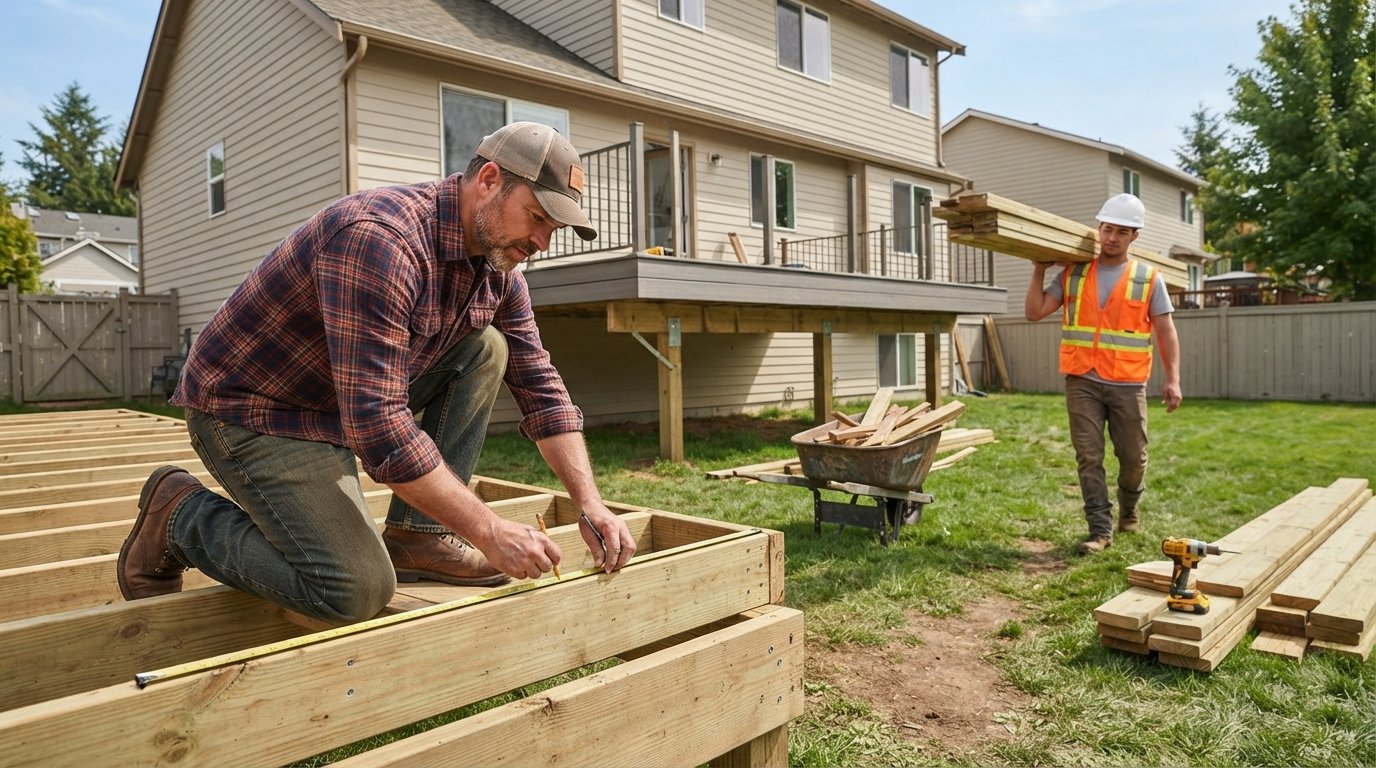
Deck Building Cost Per Square Foot: 2026 Pricing
Learn what drives deck building cost per square foot in 2026, plus tips to budget accurately and save on your new deck project.

By Sarah Thomas
Learn more about Deck or Porch Remodel or Addition for guides, costs, and what to expect.
Compare Deck or Porch Remodel or Addition Pros Near You

Enter your ZIP code to compare top-rated local professionals and request free quotes.
Planning a new deck is exciting, but the budget can feel like a guessing game. The single most useful number you can get is the deck building cost per square foot, because it turns a vague project into a concrete number you can plan around. In 2026, that figure typically ranges from $25 to $60 for basic materials and labor, but the final price depends on your choices for materials, size, height, and site conditions. This guide breaks down what drives that per-square-foot number, how to estimate your total project, and how to get accurate bids from local pros.
What Drives the Average Cost per Square Foot?
No two decks are priced exactly alike, but several key factors push the deck building cost per square foot up or down. Understanding these variables before you talk to contractors helps you ask smarter questions and avoid sticker shock. The biggest cost drivers are material choice, deck height, site accessibility, and local labor rates.
Material selection alone can swing the price by more than $30 per square foot. Pressure-treated pine is the budget champion, while composite and PVC products cost significantly more but offer lower maintenance over time. Deck height matters because taller decks require more structural support, additional footings, and more labor to build safely. Site access also plays a role: if your backyard is hard to reach with equipment, contractors will charge more for the extra time and effort.
Material Choices and Their Price Ranges
The material you choose is the largest single factor in your per-square-foot cost. Here is a quick comparison of common decking materials and their typical installed price ranges per square foot:
- Pressure-treated pine: $25 to $35 per square foot, the most affordable option with a lifespan of 15 to 20 years if maintained.
- Cedar or redwood: $30 to $45 per square foot, offering natural beauty and resistance to insects and rot.
- Composite decking (like Trex or TimberTech): $40 to $60 per square foot, with low maintenance and a 25 to 30 year lifespan.
- PVC (plastic) decking: $45 to $65 per square foot, fully waterproof and highly durable, often with the longest warranties.
These ranges include both materials and labor for a standard ground-level or low-elevation deck. Premium brands, hidden fasteners, and custom designs will push you toward the higher end. If you are weighing durability against upfront cost, consider that composite and PVC decks may save you money over time because they never need staining or sealing, which can cost $200 to $600 every couple of years.
How to Estimate Your Total Deck Cost
To estimate your total project cost, start by multiplying your planned square footage by the per-square-foot price for your chosen material. For example, a 300-square-foot deck built with pressure-treated wood at $30 per square foot would cost roughly $9,000. The same deck in composite at $50 per square foot would be around $15,000. But this simple math only gets you in the ballpark.
You also need to account for extras that are often not included in a basic per-square-foot quote. Railings, stairs, built-in seating, lighting, and permits can add 10% to 30% to your total. A deck with multiple levels or a second-story platform will cost more per square foot because of the added structural work. Always ask contractors for a detailed breakdown that lists these line items separately, so you can compare bids fairly.
To get a more accurate estimate for your specific project, use an online cost calculator or request free quotes from local contractors. Many homeowners find that the final bid comes in higher than their initial estimate, so it is wise to add a 10% to 15% contingency buffer to your budget. This cushion covers unexpected site conditions, material price fluctuations, or minor changes you decide to make during construction.
Labor Costs and Regional Differences
Labor is a major portion of the deck building cost per square foot, and it varies widely by region. In areas with a high cost of living, such as the Northeast or West Coast, labor rates can be 20% to 50% higher than in the Midwest or South. A deck that costs $40 per square foot in Ohio might cost $55 per square foot in Massachusetts, even with the same materials.
Contractors also factor in the complexity of your specific site. A simple, ground-level deck on flat ground is the cheapest to build. A deck that requires digging deep footings, leveling a sloped yard, or working around obstacles like trees and utility lines will take more time and therefore cost more. If your yard has limited access, the contractor may need to hand-carry materials, which adds labor hours.
When you receive bids, make sure each quote includes the same scope of work. Ask for a written contract that specifies the materials, square footage, labor, timeline, and warranty. A low bid might look appealing, but it could mean cheaper materials or less experienced workers. The goal is to find a contractor who offers a fair price for quality workmanship, not just the cheapest number.
DIY vs. Hiring a Professional
Many cost-conscious homeowners consider building their own deck to save on labor, which can be 40% to 60% of the total cost. While a DIY deck can cut the deck building cost per square foot down to just the materials, it is not a decision to take lightly. Building a deck requires knowledge of local building codes, structural engineering, and proper fastening techniques. Mistakes can lead to safety hazards or costly repairs down the road.
If you have solid carpentry experience and the time to dedicate to the project, DIY can be a rewarding way to save money. However, most homeowners are better off hiring a professional, especially for decks that are elevated, attached to the house, or larger than 200 square feet. A professional contractor will handle permits, inspections, and any surprises that come up during construction, giving you peace of mind.
If you are leaning toward hiring a pro, the smartest move is to get multiple quotes. Use a service like BuySellRemodel to connect with experienced local contractors who offer free estimates. This lets you compare pricing and approach without any obligation, and you can see which contractor makes you feel most comfortable. Remember, the cheapest bid is not always the best value, but the right contractor will give you a fair price and stand behind their work.
Hidden Costs and Budget Pitfalls
Even with a careful estimate, there are hidden costs that can catch homeowners off guard. One common surprise is the cost of permits. Depending on your city or county, a deck permit can range from $100 to $500 or more. Some areas also require a site inspection, which may come with an additional fee. Always factor permitting into your budget and timeline.
Another hidden cost is the condition of your existing structure. If you are attaching the deck to your house, the contractor may need to update the ledger board, flashing, or even the foundation if it is not up to code. These repairs can add $500 to $2,000 to the project. Similarly, if your yard has poor drainage or requires excavation, you may need to budget for grading or additional footings.
Finally, do not forget about the finishing touches. Staining or sealing a wood deck costs $1 to $3 per square foot, and you will need to repeat it every few years. Composite decks, while more expensive upfront, eliminate this ongoing cost. If you plan to add lighting, a pergola, or built-in planters, those features will also increase your total. To avoid surprises, ask your contractor for a complete itemized quote that includes every component of the project.
How to Get Accurate Quotes and Compare Bids
Getting accurate bids is the best way to pin down the deck building cost per square foot for your specific project. Start by reaching out to at least three local contractors. Provide them with the same information: your deck size, desired materials, and any special features. This ensures that the quotes you receive are comparable and that you are not comparing apples to oranges.
When you receive bids, look beyond the total price. Review the scope of work in each proposal, including the type of wood or composite, the quality of the fasteners, and the number of posts and footings. A slightly higher bid may include thicker joists or better flashing, which can extend the life of your deck. Ask each contractor to explain their process and what is included in the price, so you can make an informed decision.
Using a free quote service can simplify this process. HomeReModelingsContractors.com connects you with vetted local pros who specialize in deck building and other home improvements. You can submit your project details once and receive multiple estimates, making it easy to compare options and choose the contractor that fits your budget and style. This approach saves you time and helps you find a pro who understands your vision.
Smart Ways to Reduce Your Deck Cost
If your budget is tight, there are several strategies to lower the deck building cost per square foot without sacrificing quality. One of the most effective is to keep the design simple. A rectangular deck with straight stairs is much cheaper than a multi-level deck with curves, angles, and built-in features. The less complex the geometry, the less time it takes to build, and the lower your labor costs.
Another way to save is to choose materials wisely. Pressure-treated wood is the most affordable, but if you want the look of exotic hardwoods without the price, consider a wood-composite hybrid. Some mid-range composites offer a good balance of price and durability. You can also save by doing some of the work yourself, such as demolition of an old deck or painting and sealing after construction, but only if you have the skills and time to do it safely.
Finally, plan your project during the off-season, typically late fall or winter in colder climates. Many contractors offer discounts during slower months to keep their crews busy. You can also ask about package deals if you are planning other outdoor improvements, like a patio or fence, at the same time. Bundling projects can give you leverage to negotiate a better overall price.
Final Thoughts on Deck Pricing
Understanding the deck building cost per square foot is essential for planning a successful project. Whether you choose pressure-treated pine for affordability or composite for low maintenance, the key is to get detailed quotes from reputable contractors and budget for the unexpected. A well-built deck adds value to your home and years of enjoyment, so it is worth investing in quality materials and skilled labor.
Before you commit to a contractor, take the time to compare bids and ask questions. A clear contract with a detailed breakdown of costs will protect you and ensure there are no surprises. And remember, the right contractor will be happy to explain their pricing and help you make choices that fit your budget. With careful planning and the right team, you can build the deck of your dreams without breaking the bank.