
Dryer Vent Cleaning and Fire Safety Maintenance Guide
Protect your home from dryer fires with expert vent cleaning and safety maintenance. Call (833)-439-3727 to schedule a professional inspection today.

By Irene Parker
Learn more about Duct and Vent Cleaning for guides, costs, and what to expect.
Compare Duct and Vent Cleaning Pros Near You

Enter your ZIP code to compare top-rated local professionals and request free quotes.
Every year, thousands of home fires start in a laundry room, and the culprit is often a simple, preventable problem: a clogged dryer vent. Lint is highly flammable, and when it accumulates in the exhaust path, a routine load of laundry can turn into a dangerous situation. Dryer vent cleaning and fire safety maintenance are not glamorous chores, but they are among the most important tasks a homeowner can perform to protect their property and family. This guide explains why vent cleaning matters, how to spot warning signs, when to call a professional, and how to avoid common installation mistakes that increase fire risk.
Why Lint Buildup and Long Vent Runs Create Fire Risk
Lint is the fine, fluffy material that accumulates in your dryer's lint trap after every load. While the trap catches a significant amount, some lint inevitably escapes and travels into the vent duct. Over time, this lint coats the inside of the duct, narrowing the passage and reducing airflow. When airflow is restricted, the dryer overheats, and the combination of heat and highly combustible lint creates the perfect conditions for a fire. The U.S. Fire Administration reports that failure to clean dryer vents is the leading cause of dryer fires, accounting for roughly one-third of incidents.
Long vent runs amplify the problem. The longer the duct, the more opportunity for lint to settle and accumulate. Bends and elbows in the duct also trap lint, creating choke points. Flexible foil or plastic ducts, which are common in older homes, have ribbed interiors that catch lint more easily than smooth metal ductwork. When a vent run exceeds the manufacturer's recommended length (typically 25 feet for a straight run, less with elbows), the dryer's blower struggles to push air through, leading to overheating and increased fire risk. Even a single clogged vent can cause the dryer to run hotter than designed, and over time, that heat can ignite the accumulated lint.
Signs of a Clogged Dryer Vent
Your dryer often gives clear signals when the vent is becoming restricted. Recognizing these signs early can prevent a dangerous situation and also save energy, since a clogged vent forces the dryer to run longer and consume more electricity or gas. Here are the most common warning signs:
- Clothes take longer to dry: If a typical load now requires two cycles instead of one, airflow is likely restricted.
- The dryer feels unusually hot: The exterior of the dryer or the laundry room may feel excessively warm, indicating poor ventilation.
- Lint accumulates around the lint trap or outside the vent: Lint around the door, on the floor, or near the exterior vent hood is a red flag.
- A musty or burning smell: A burning odor is a serious warning sign that requires immediate attention.
- The exterior vent flap does not open fully: Weak airflow means the flap barely moves when the dryer is running.
If you notice any of these signs, stop using the dryer until the vent is inspected and cleaned. Continuing to operate a dryer with a clogged vent is risky and can lead to a fire. A qualified technician can quickly assess the vent and remove the lint buildup, restoring safe operation.
How Often to Clean and When to Call a Professional
The frequency of dryer vent cleaning depends on several factors, including how often you use the dryer, the length of the vent run, and whether you have pets. As a general rule, homeowners should clean the lint trap after every load, inspect the vent duct at least twice a year, and schedule a professional cleaning annually. If you have a large family, use the dryer multiple times per day, or have long-haired pets, more frequent cleaning may be necessary. The National Fire Protection Association recommends professional cleaning as needed based on usage and vent configuration.
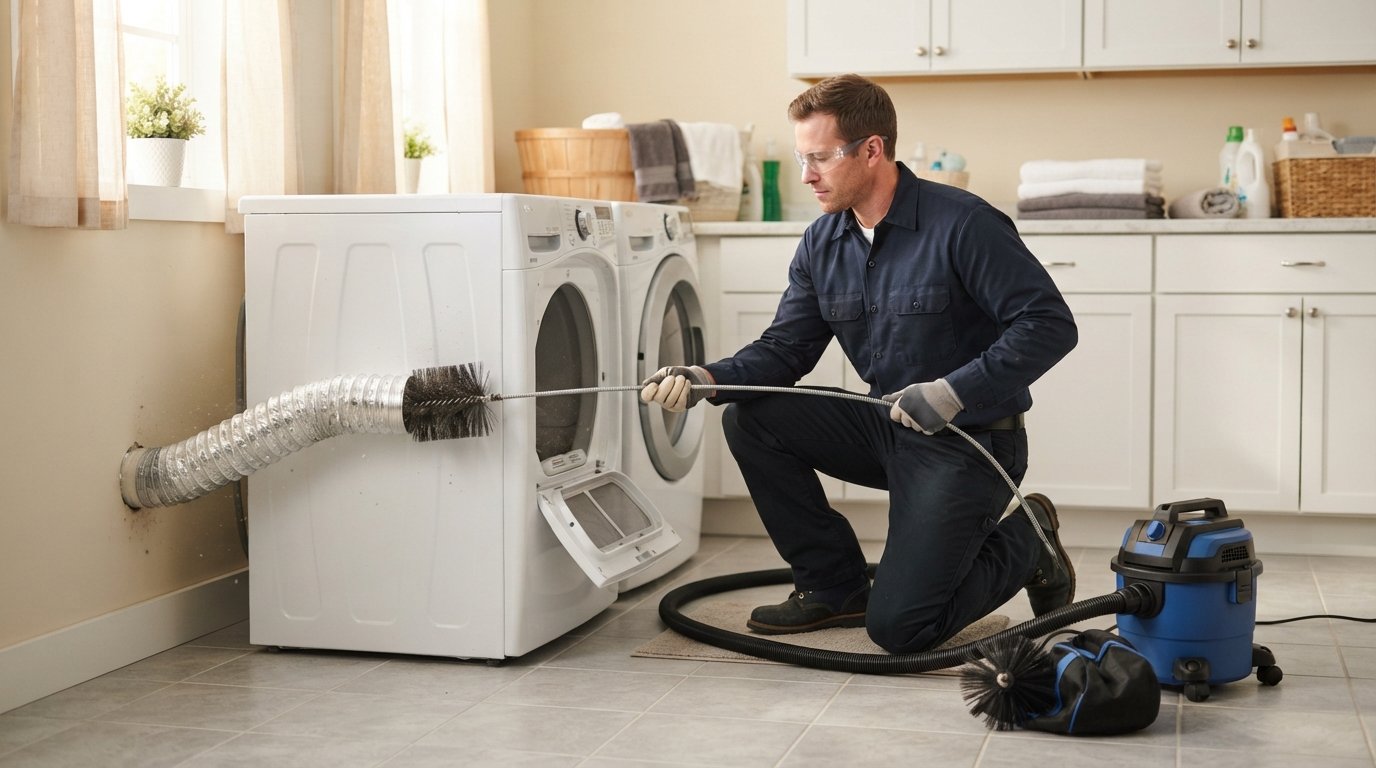
While some homeowners attempt do-it-yourself cleaning with a vacuum or a vent brush kit, certain situations require a professional. Call a pro if you notice any of the warning signs mentioned earlier, if the vent run is long or has multiple elbows, if you have not cleaned the vent in over a year, or if you recently moved into a home and do not know the last cleaning date. Professionals have specialized tools such as rotary brushes and high-powered vacuums that thoroughly remove lint from the entire duct, including hard-to-reach areas. They can also inspect for damaged ductwork, disconnected joints, or improper materials that could compromise safety.
Cost of Professional Cleaning vs. Ductwork Replacement
Professional dryer vent cleaning is a relatively small investment compared to the potential cost of a fire or a major appliance replacement. The national average cost for professional cleaning ranges from $100 to $200, depending on the length and complexity of the vent run. Some companies charge extra for roof vent cleaning or for removing bird nests and other obstructions. In contrast, replacing rigid ductwork can cost significantly more, typically $300 to $800 or more, depending on the length of the run and the accessibility of the duct. If your current vent uses flexible foil or plastic ducting, upgrading to smooth rigid metal duct is a worthwhile safety improvement that can also improve dryer efficiency.
When considering the financial aspect, weigh the cleaning cost against the risk of a fire, which can cause tens of thousands of dollars in damage and put lives at risk. Homeowners insurance may cover fire damage, but the emotional and logistical toll is far greater. Many homeowners find that scheduling an annual cleaning is a small price to pay for peace of mind. If you need help finding a qualified professional for dryer vent cleaning and fire safety maintenance, consider using a service like BuySellRemodel to connect with experienced local contractors who can handle the job safely and affordably.
Safe Venting Materials and Installation Mistakes to Avoid
The materials used for your dryer vent and the quality of installation play a critical role in fire safety. The safest option is smooth, rigid metal ductwork, preferably galvanized steel or aluminum. Rigid duct has a smooth interior that resists lint accumulation and allows for easy cleaning. Flexible transition ducts are acceptable for the short connection between the dryer and the wall, but they should be kept as short as possible and should be made of metal, not plastic or foil. Plastic and foil flexible ducts are more prone to sagging, which traps lint and creates fire hazards. They can also crush easily, restricting airflow.
Common installation mistakes include using too many elbows, exceeding the manufacturer's maximum vent length, and terminating the vent in an enclosed space such as an attic or crawl space. The vent should always terminate outdoors, with a proper hood that keeps out rain and pests while allowing lint to escape. Another mistake is connecting the duct with screws that protrude into the duct interior; these screws catch lint and should be avoided or taped over. Also, ensure that the duct is not crushed behind the dryer, which can happen if the dryer is pushed too close to the wall. Regularly inspect the duct for kinks, tears, or disconnections. If you are unsure about your venting setup, a professional can evaluate it and recommend upgrades to bring it up to current safety standards.
Preventive Maintenance Tips for Homeowners
Beyond annual professional cleaning, homeowners can take simple steps to reduce fire risk and keep the dryer running efficiently. First, clean the lint trap before or after every load. This is the easiest and most effective habit. Second, periodically vacuum the area around the dryer and behind it to prevent lint accumulation. Third, check the exterior vent hood to ensure it opens freely and is not blocked by lint, nests, or snow. Fourth, avoid drying items that have been soaked in flammable substances such as gasoline, cooking oil, or paint thinner; even after washing, residue can ignite. Fifth, keep the laundry area free of clutter and store flammable items away from the dryer. Finally, consider scheduling a professional inspection every year as part of your home safety maintenance routine. These small actions add up to significant risk reduction.
Final Thoughts
Dryer vent cleaning and fire safety maintenance are essential responsibilities for every homeowner. By understanding the risks of lint buildup, recognizing warning signs, and taking proactive steps, you can protect your home and family from a preventable tragedy. Whether you choose to clean the vent yourself or hire a professional, make it a priority. And if you need assistance finding a reliable contractor for this or any other home safety project, reach out to a trusted local pro who can help you get the job done right.