
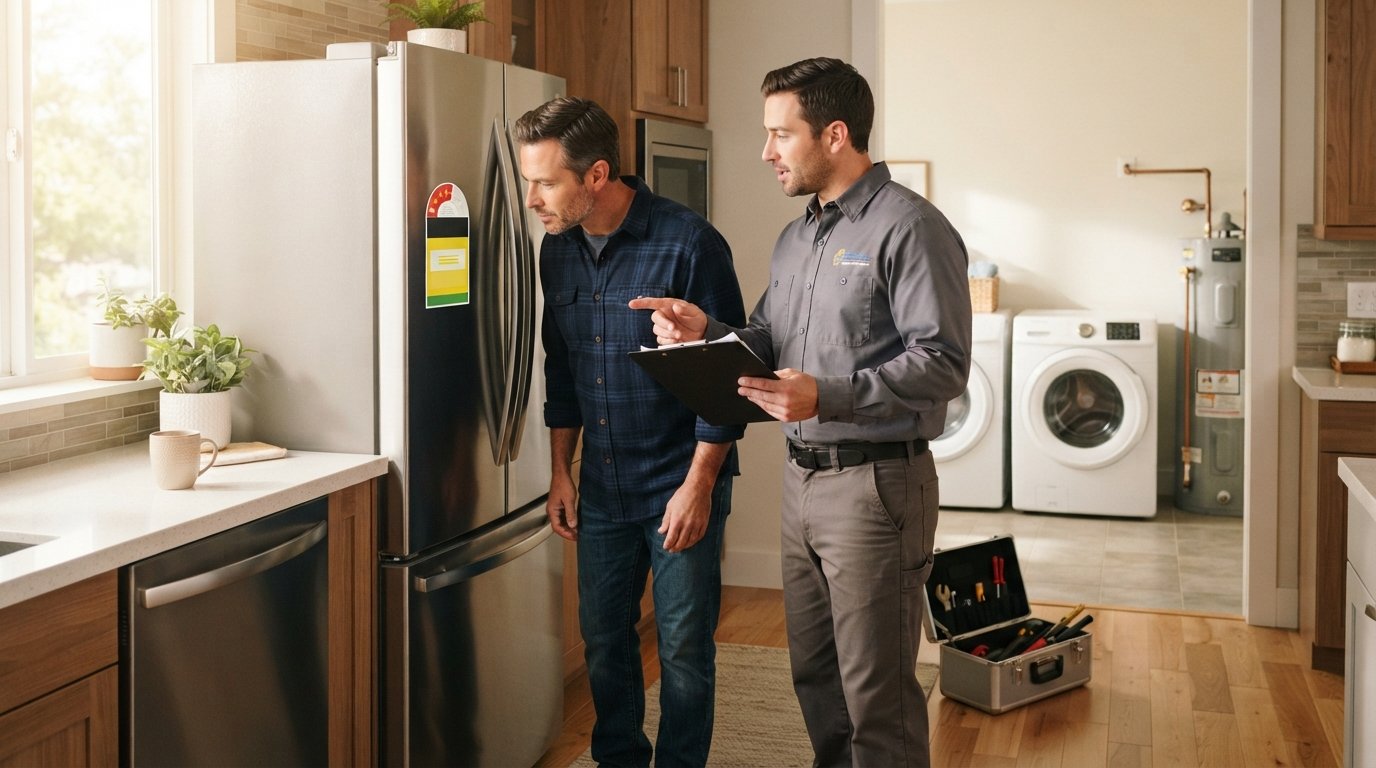
Energy Efficient Appliance Upgrades: Costs and Savings
Energy efficient appliance upgrades costs and savings explained: which upgrades pay off fastest. Call (833)-439-3727 for free quotes.

By Sarah Thomas
Learn more about Appliance Installation for guides, costs, and what to expect.
Compare Appliance Installation Pros Near You

Enter your ZIP code to compare top-rated local professionals and request free quotes.
Your refrigerator hums around the clock. Your water heater silently drains energy dollars every month. Meanwhile, that ancient washing machine rattles through another cycle. If you have ever winced at your utility bill, you have probably wondered whether replacing these aging workhorses with modern, energy efficient models is worth the expense. The short answer: it depends on the appliance, your local energy rates, and the incentives available in your area. But the longer answer reveals a clear pattern. Certain upgrades pay for themselves in just a few years, while others take a decade or more to break even. Understanding which is which can save you thousands.
This guide breaks down the real numbers behind energy efficient appliance upgrades costs and savings. We will look at which appliances deliver the best returns, how tax credits and rebates can slash your upfront investment, and what installation and disposal really involve. By the end, you will have a practical framework for deciding when to repair, when to replace, and how to maximize your savings. For homeowners planning a broader efficiency push, our guide on energy efficient window replacement cost and savings pairs well with appliance upgrades for a whole-home approach.
Which Appliances Offer the Best Energy Savings?
Not all appliances are created equal when it comes to efficiency gains. The biggest energy hogs in a typical home are heating and cooling systems, water heaters, refrigerators, and clothes dryers. However, the savings potential from upgrading varies widely. A new refrigerator might cut energy use by 20 percent compared to a 15-year-old model, while a heat pump water heater can slash water heating costs by 60 percent or more. To prioritize your upgrades, start with the appliances that run the most hours and consume the most wattage.
Here is a quick ranking of the appliances that typically deliver the strongest energy savings per dollar spent, based on average usage and current efficiency standards:
- Heat pump water heaters: Up to 60 percent more efficient than standard electric resistance models, with payback often in 3 to 5 years.
- High-efficiency refrigerators: Modern ENERGY STAR models use 15 to 20 percent less energy than conventional units, and older fridges can be real energy vampires.
- Heat pump clothes dryers: These use roughly 50 percent less energy than conventional dryers, though upfront costs are higher.
- ENERGY STAR dishwashers: Save about 12 percent on energy and 30 percent on water compared to standard models.
- High-efficiency washing machines: Front-loaders and high-efficiency top-loaders cut water and energy use by 25 to 50 percent.
Of course, the exact savings depend on your local energy rates, household size, and usage habits. A family of five running multiple loads of laundry daily will see faster payback on a new washer than a single occupant. Similarly, a heat pump water heater in a mild climate may perform differently than in a cold basement. The key is to focus on the appliances that run the most and are oldest. If your refrigerator predates 2010, replacing it is almost always a smart financial move. If your water heater is over 10 years old, a heat pump model could be a game-changer.
For a deeper dive into specific appliance costs, our article on tankless water heater costs and savings offers a useful comparison point, though heat pump water heaters often outperform both tankless and standard tank models in overall efficiency. Remember that the best appliance for your home depends on your energy source (gas vs. electric), climate, and budget. A qualified contractor can help you evaluate your options and calculate expected savings based on your utility bills.
Tax Credits and Rebates for Efficient Appliances
One of the biggest myths about energy efficient appliance upgrades is that they are always expensive. In reality, a patchwork of federal tax credits, state rebates, and utility incentives can dramatically reduce your out-of-pocket costs. The Inflation Reduction Act (IRA) introduced generous credits for high-efficiency appliances, and many of these remain available through 2032. Understanding what you qualify for can turn a marginal investment into a no-brainer.
At the federal level, the Energy Efficient Home Improvement Credit (Section 25C) offers a tax credit of up to $2,000 per year for qualifying heat pump water heaters, and up to $600 for other eligible appliances like energy-efficient refrigerators and washing machines (though appliance-specific caps apply). Additionally, the High-Efficiency Electric Home Rebate Act (HEEHRA) provides point-of-sale rebates for low- and moderate-income households, covering up to 100 percent of the cost of certain electric appliances, including heat pump water heaters and clothes dryers. These rebates are administered by states, so availability varies.
State and local utility rebates often stack on top of federal incentives. Many utilities offer $50 to $500 rebates for ENERGY STAR certified appliances, and some provide free haul-away of old units. To find what is available in your area, check your state energy office website and your utility provider's rebate center. A qualified contractor can also help you navigate the paperwork and ensure you choose qualifying models. Here are a few common incentive types to look for:
- Federal tax credits: Up to $2,000 for heat pump water heaters, $600 for other appliances (subject to annual caps).
- State rebates: Varies by state, often $100 to $1,000 for qualifying appliances.
- Utility rebates: $50 to $500 for ENERGY STAR appliances, sometimes with free installation or haul-away.
- Low-income programs: Up to 100 percent of project costs covered through HEEHRA and similar initiatives.
It is important to note that most incentives require the appliance to meet specific efficiency criteria (e.g., ENERGY STAR certification or a certain SEER rating). Always save your receipts and proof of purchase, as you will need them for tax credit claims. And beware of scams: only work with reputable contractors and verify rebate offers through official government or utility websites. When planning your upgrade, factor in these incentives to calculate your true net cost. In many cases, a $1,500 heat pump water heater can cost less than $500 after rebates, making the payback period almost immediate.
Upfront Cost Versus Long-Term Savings
The core of any energy efficient appliance decision is the trade-off between higher upfront cost and lower operating expenses. To make a smart choice, you need to compare the total cost of ownership over the appliance's lifespan, not just the sticker price. A cheap appliance that costs $100 more per year to operate will end up costing you more than a slightly pricier efficient model. Let us walk through a few real-world examples to illustrate the math.
Consider a refrigerator. A standard 18-cubic-foot top-freezer model might cost $700 and use 450 kWh per year. An ENERGY STAR certified model might cost $900 and use 350 kWh per year. At an average electricity rate of $0.14 per kWh, the standard fridge costs $63 annually to run, while the efficient one costs $49. That $14 annual savings means a payback period of about 14 years, which is longer than the fridge's typical lifespan. However, if you are replacing a 20-year-old fridge that uses 800 kWh per year, the savings jump to $63 per year, and the payback drops to about 3 years. The lesson: replacing an old, inefficient appliance yields much faster returns than swapping a relatively new one.
Now consider a heat pump water heater. A standard electric water heater costs about $800 installed and uses 4,500 kWh per year (about $630 annually). A heat pump water heater costs $1,800 installed but uses only 1,800 kWh per year (about $252 annually). The annual savings are $378, giving a simple payback of about 2.6 years. Add in a $2,000 federal tax credit (if you qualify) and the net cost drops to zero or even negative, making it a no-brainer. Even without incentives, the payback is well within the unit's 10- to 15-year lifespan. This is why heat pump water heaters are often the first upgrade recommended by energy auditors.
For clothes dryers, the math is trickier. A standard electric dryer costs $500 and uses 900 kWh per year ($126 annually). A heat pump dryer costs $1,200 and uses 450 kWh per year ($63 annually). The annual savings are $63, resulting in a payback of over 11 years. Unless you dry many loads per week or have high energy rates, the financial case is weaker. However, heat pump dryers also run cooler, which is gentler on fabrics, and they qualify for some rebates. It is a judgment call.
To simplify your decision, use this framework: calculate the annual energy savings (old appliance kWh minus new appliance kWh times your rate), then divide the net upfront cost (after incentives) by the annual savings. If the payback period is less than half the appliance's expected lifespan, it is generally a good investment. For most homeowners, the priority order should be: water heater first (if electric), then refrigerator (if old), then washer, then dishwasher, then dryer. And do not forget installation costs, which can add $100 to $500 depending on the appliance and whether you need electrical or plumbing modifications.
Installation and Disposal Considerations
Even the most efficient appliance will underperform if it is installed incorrectly. Proper installation ensures safety, maximizes efficiency, and protects your warranty. For simple appliances like dishwashers and washing machines, a DIY install is feasible for handy homeowners, but for water heaters, heat pump systems, and any gas appliance, professional installation is strongly recommended. A qualified contractor will also handle permits, which are often required for water heater replacements and electrical upgrades.
Disposal of your old appliance is another factor to plan for. Many retailers offer haul-away services for a fee ($20 to $50), but some utilities and municipalities provide free pickup, especially for refrigerators and freezers (to properly recover refrigerants). Never dump an old appliance on the curb without checking local regulations. Refrigerators and freezers contain refrigerants that must be recovered by certified technicians. Similarly, old water heaters can often be recycled for scrap metal, but you will need to drain them first. When budgeting for your upgrade, include disposal costs, which can range from $0 (if you sell or give away a working appliance) to $100 or more for proper recycling.
Installation specifics vary by appliance. For a heat pump water heater, you may need a dedicated 240-volt circuit, condensate drainage, and adequate space for air circulation. For a heat pump dryer, you need a 240-volt outlet and a location that can handle the condensate. For a new refrigerator, measure your doorway and kitchen space carefully; some efficient models are deeper than older ones. Always read the manufacturer's installation requirements and consider hiring a pro if you are unsure. A licensed contractor can also advise on whether your electrical panel can handle the load, especially if you are switching from gas to electric appliances.
Finally, do not overlook the importance of proper maintenance after installation. Clean your refrigerator coils, replace HVAC filters, and descale your water heater annually to keep efficiency high. Many manufacturers require proof of professional installation for warranty coverage, so keep your receipts. If you are planning multiple upgrades, consider bundling them into one project to save on installation costs. For example, replacing your water heater and furnace at the same time can reduce labor fees. And if you are remodeling your kitchen, upgrading to efficient appliances during the project is cost-effective because the walls are already open.
Maximizing Your Savings with a Whole-Home Approach
Appliance upgrades are most powerful when combined with other efficiency improvements. Sealing air leaks, adding insulation, and upgrading windows can reduce the load on your heating and cooling systems, making your new appliances even more effective. For instance, a heat pump water heater works best in a conditioned space, so insulating your basement can boost its performance. Similarly, an ENERGY STAR refrigerator will use less energy in a cooler kitchen, so addressing heat gain from windows and appliances can help.
To get started, consider scheduling a home energy assessment. Many utilities offer free or low-cost audits that identify the biggest opportunities for savings. The auditor will analyze your utility bills, test for air leaks, and recommend a prioritized list of upgrades with estimated costs and paybacks. This takes the guesswork out of your planning. You can also use online calculators from ENERGY STAR and your utility to estimate savings for specific appliances.
When you are ready to hire a contractor for installation or a larger efficiency project, BuySellRemodel can help you find experienced local pros and request free estimates. They make it easy to compare options and move forward with confidence. Whether you need a simple appliance swap or a whole-home energy makeover, getting multiple quotes ensures you get a fair price and quality workmanship.
In summary, energy efficient appliance upgrades can deliver substantial savings, but the returns depend on which appliances you choose, your local incentives, and installation details. Focus on the biggest energy users first, take advantage of tax credits and rebates, and always calculate payback before you buy. With careful planning, you can lower your utility bills, increase home comfort, and reduce your environmental footprint, all while adding value to your property.