
Hidden Costs of Home Renovation Beyond the Estimate
Hidden costs of home renovation beyond the estimate can wreck your budget. Call 8334393727 to connect with trusted local contractors and get free quotes.

By Ethan Owens
Learn more about Home Remodeling for guides, costs, and what to expect.
Compare Home Remodeling Pros Near You

Enter your ZIP code to compare top-rated local professionals and request free quotes.
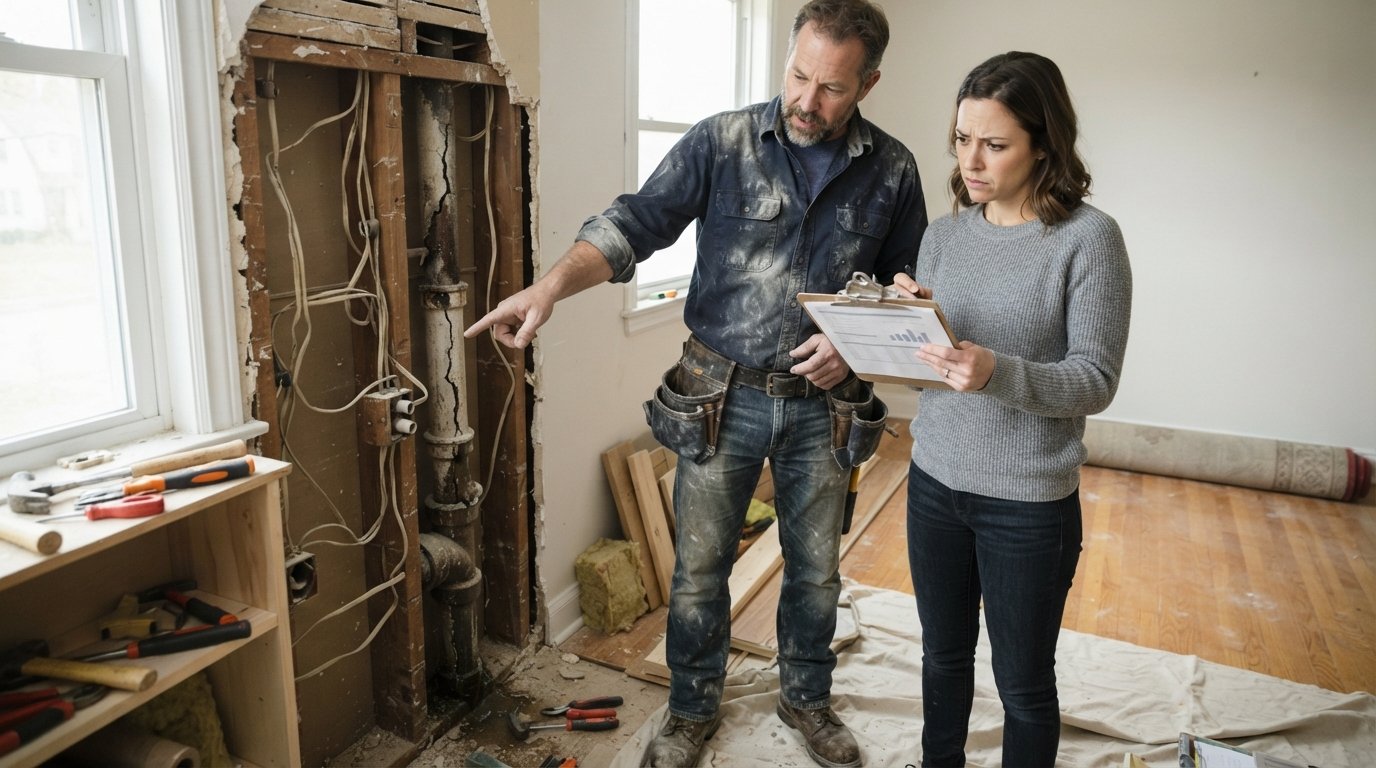
You have signed the contract, written the deposit check, and mentally placed the new sofa in the finished living room. The estimate says $42,000, and your savings account says $45,000. Everything looks fine on paper. Then the contractor opens a wall and finds knob-and-tube wiring tangled around a cracked drain pipe. Suddenly your comfortable cushion is gone, and you are staring at a revised invoice that nobody predicted. This scenario plays out in kitchens, bathrooms, and basements across the country every single week, and it is the reason so many homeowners describe renovation as the most stressful financial event of their lives. The gap between the estimate and the final bill rarely comes from contractor dishonesty. It comes from the hidden costs of home renovation beyond the estimate, the expenses that live in the space between what a visual inspection can reveal and what a house actually contains.
Understanding these costs before you sign anything is the single most effective way to protect your budget. It also changes how you evaluate bids. A contractor who walks through your home in twenty minutes and hands you a firm number is not necessarily giving you a better deal than one who spends two hours poking around the attic and asking about your plumbing history. The second contractor is simply pricing reality. This guide breaks down the most common surprise expenses, explains why they appear, and shows you how to build a financial buffer that keeps your project on track instead of derailing it halfway through demolition.
Why Estimates Miss the Mark So Often
A renovation estimate is not a guarantee. It is a professional projection based on what is visible and what the contractor has learned from similar projects. The moment walls open up, floors come out, or fixtures are disconnected, new information floods in. Older homes are especially unpredictable because building codes, materials, and construction methods have changed dramatically over the decades. A house built in 1955 may have plumbing that was perfectly acceptable then but is now undersized, corroded, or connected to a sewer line that has shifted. None of that shows up in a walkthrough.
There is also a psychological factor at work. Homeowners tend to hear the estimate as a ceiling, while contractors often present it as a starting point for a defined scope of work. The contract language matters enormously here. If your agreement says "estimate" rather than "fixed bid," the final number can legally move. Even a fixed bid typically includes allowances and exclusions that create room for additional charges. Learning to read those clauses before signing is just as important as comparing the headline numbers.
Permits are a classic example of a cost that surprises homeowners. Many people assume the contractor handles everything, including fees, but that is not always true. Depending on your municipality and the scope of work, permit costs can range from a few hundred dollars to several thousand, and they often come with inspection requirements that add time and labor. If you want a clearer picture of what these fees actually look like, our home renovation permits cost guide breaks down the numbers by project type so you can plan ahead instead of getting blindsided at the counter.
The Big Hidden Costs That Blow Up Budgets
Most budget overruns trace back to a handful of recurring culprits. They are not mysterious. They are predictable enough that experienced contractors warn clients about them in advance, yet homeowners still get caught off guard because the warnings are buried in paperwork or delivered in technical language that does not translate into dollars. The following categories account for the majority of surprise expenses on residential renovation projects.
- Structural repairs: Rotted framing, sagging joists, cracked foundations, and failed load-bearing walls. These issues are often invisible until demolition begins and can add thousands in engineering, materials, and labor.
- Code compliance upgrades: New electrical panels, upgraded wiring, added outlets, improved ventilation, and stair or railing modifications required by current building codes.
- Water and moisture damage: Hidden leaks, mold behind drywall, deteriorated subflooring, and poor drainage that has been quietly damaging the structure for years.
- Hazardous materials: Asbestos in older floor tiles, pipe insulation, or popcorn ceilings, and lead paint in homes built before 1978. Both require certified abatement, which is expensive and heavily regulated.
- Outdated mechanical systems: HVAC ductwork that cannot support a new layout, plumbing supply lines that are too narrow for modern fixtures, and sewer lines that need replacement rather than repair.
Each of these items can add anywhere from a few hundred to tens of thousands of dollars to your project. The key is not to panic but to plan. A well-constructed budget includes a contingency fund specifically for unknowns, and the size of that fund should reflect the age and condition of your home. For a newer house with updated systems, 10 percent may be sufficient. For a home built before 1980 that has never had major updates, 20 percent is a more realistic cushion.
Allowances, Upgrades, and the Psychology of Choice
Allowances are line items in a contract that set a budget for a specific material or fixture, such as tile, lighting, or cabinetry. They exist because homeowners often have not chosen their finishes at the time of signing. The problem is that allowances are frequently set at the low end of the market to keep the overall bid competitive. When you walk into the showroom and realize the allowance covers basic white ceramic tile but you want the large-format porcelain you saw online, the difference comes out of your pocket.
This is not a scam. It is a structural feature of how renovation contracts work. The solution is to either choose your finishes before signing or insist on realistic allowances that reflect your actual taste. If you know you want quartz countertops and a specific brand of faucet, get those numbers into the contract. The same principle applies to fixtures, appliances, and hardware. Every upgrade you make during the project adds labor time, coordination, and sometimes structural modifications that were not in the original scope.
Change orders are the formal mechanism for these adjustments, and they come with a price. A change order is not just the cost of the new material. It includes the contractor's time to source it, the labor to install it, potential delays that push other trades out of sequence, and administrative overhead. A $500 lighting upgrade can easily become a $1,200 line item once all the ripple effects are accounted for. This is why experienced renovators make all major decisions before demolition starts.
Permits, Inspections, and the Cost of Doing It Right
Permits are not just paperwork. They represent a legal agreement that the work will meet current safety and building standards, and they trigger inspections at key milestones. Skipping permits may save money upfront, but it creates serious problems later. Unpermitted work can void your homeowner's insurance, complicate a future sale, and force you to tear out finished walls so an inspector can verify what is behind them. The cost of retroactive permitting is almost always higher than doing it correctly the first time.
Inspection failures add another layer of expense. If an inspector finds that your electrical work does not meet code, the contractor must correct it before proceeding. That means additional materials, additional labor, and additional scheduling. On a recent bathroom remodel, a homeowner discovered that the existing ventilation fan was vented into the attic rather than outside, a code violation that required running new ductwork through a finished ceiling. The fix added $1,800 and three days to the project.
These costs are not arbitrary. They exist because building codes are written to protect occupants from fire, electrical shock, structural collapse, and health hazards. When you budget for permits and inspections from the beginning, you are not just complying with the law. You are protecting your investment and ensuring that the work will hold up over time.
Time Is Money: Delays and the Costs They Create
Renovation timelines are notoriously optimistic. Contractors build schedules around ideal conditions: materials arrive on time, subcontractors show up when expected, and inspections pass on the first try. In reality, any of these can slip. A delayed cabinet delivery pushes back countertop templating, which pushes back plumbing hookup, which pushes back final inspection. Each day of delay can add costs for temporary housing, storage, equipment rental, or simply the interest on a construction loan.
Some delays are unavoidable, such as weather or supply chain disruptions. Others are self-inflicted, such as changing your mind about tile after it has been ordered. The most effective way to control time-related costs is to front-load decisions. Choose your materials, finalize your layout, and confirm your fixture selections before the first hammer swings. This reduces the number of mid-project pivots and keeps the schedule moving.
It also helps to understand the sequence of work. Demolition, rough framing, rough electrical, rough plumbing, inspections, insulation, drywall, painting, and finish work all follow a specific order. When one step is delayed, everything downstream shifts. A contractor who explains this sequence clearly and provides a written schedule is giving you a tool to manage both time and money.
How to Build a Realistic Renovation Budget
The best defense against hidden costs is a budget that anticipates them. Start by separating your total available funds into three buckets: the base project cost, a contingency reserve, and a finishing fund. The base project cost covers the contracted scope of work. The contingency reserve, ideally 15 to 20 percent of the base cost, covers unknowns. The finishing fund covers the small items that always seem to appear at the end, such as hardware, touch-up paint, and furniture.
Next, get multiple estimates and compare them line by line, not just by the bottom number. A bid that is significantly lower than the others may be missing critical items or using unrealistically low allowances. Ask each contractor to explain what is included and what is excluded. If they cannot give you a clear answer, that is a red flag.
Finally, consider working with a platform that connects you to vetted local professionals who understand the importance of transparent pricing. BuySellRemodel helps homeowners plan affordable home improvement projects and connect with experienced local contractors, offering free estimates so you can compare options and move forward with confidence. Having a trusted resource in your corner makes it easier to spot the hidden costs before they become line items on a final invoice.
Questions to Ask Before You Sign
The contract signing is your last clear opportunity to clarify expectations. Once work begins, leverage shifts. Use this moment to ask direct questions about how the contractor handles surprises. A good contractor will welcome these questions because they reduce the likelihood of disputes later.
- What is your process for handling unexpected structural or code issues, and how will you communicate cost changes?
- Are permits and inspection fees included in this estimate, or are they billed separately?
- What allowances have you included for materials, and what happens if my selections exceed them?
- How do you price change orders, and what is the typical turnaround for a revised quote?
- What is your payment schedule, and how much is due at each milestone?
Write down the answers. If the contractor is vague or defensive, take that as a signal. The right professional will appreciate a homeowner who is organized and realistic about the nature of renovation work. That mutual understanding is the foundation of a successful project.
Hidden costs of home renovation beyond the estimate are not a reason to avoid renovating. They are a reason to plan thoroughly, budget generously, and choose your contractor carefully. When you understand where the surprises come from, you can neutralize most of them before they ever appear. The result is a project that finishes closer to budget, on a timeline you can live with, and in a home you are proud to own.