
Home Systems Preventative Maintenance to Avoid Costly Repairs
Home systems preventative maintenance to avoid costly repairs starts with a simple seasonal calendar. Protect your budget and extend equipment life.

By Sarah Thomas
Learn more about Handyman for guides, costs, and what to expect.
Compare Handyman Pros Near You

Enter your ZIP code to compare top-rated local professionals and request free quotes.
A single failed water heater can flood a basement and cost thousands in flooring, drywall, and mold remediation. A clogged HVAC filter can strain a compressor until it dies, turning a twenty dollar fix into a two thousand dollar replacement. Most homeowners do not learn this lesson until after the damage is done, and by then the repair bill arrives with interest. The truth is that the most expensive home repairs are rarely random events. They are the predictable result of small maintenance tasks that were skipped, delayed, or forgotten. This guide breaks down a practical, room by room preventative maintenance plan for every major home system, so you can protect your budget, extend equipment life, and steer clear of emergency calls.
Why Preventative Maintenance Beats Reactive Repairs
Home systems follow a simple pattern: they degrade slowly, then fail suddenly. A furnace that has not been serviced in five years still runs, right up until the moment it does not. A water heater with a corroded anode rod still produces hot water, until the tank rusts through and soaks the garage floor. The failure always feels abrupt, but the warning signs were there for months or years.
Preventative maintenance flips that timeline. Instead of paying for emergency labor at premium rates, you pay for routine service at predictable intervals. Instead of replacing an entire system, you replace a cheap component before it takes the whole unit down with it. Industry data consistently shows that well maintained equipment lasts years longer, runs more efficiently, and fails far less often than neglected equipment of the same age.
There is also a financial planning benefit that many homeowners overlook. When maintenance is scheduled, repair costs become predictable line items in an annual budget rather than surprise emergencies. For households already managing renovation projects or saving for upgrades, that predictability matters. If you are mapping out seasonal upkeep and project spending, a structured plan like this fall home maintenance checklist budget can help you align maintenance timing with the rest of your financial calendar.
Finally, maintenance protects warranties. Most manufacturers require documented annual service for warranty coverage on HVAC systems, water heaters, and major appliances. Skip the service, and you may find yourself paying full price for a repair that should have been covered.
Your HVAC System: The Most Expensive System to Ignore
Heating and cooling typically represents the single largest equipment investment in a home, and it is also the most sensitive to neglect. A neglected system loses efficiency every year, which means higher utility bills long before it fails outright. The compressor, the most expensive component in any air conditioner or heat pump, is usually the first casualty of deferred maintenance.
The good news is that the most important tasks are simple enough for any homeowner to handle. Here is a basic monthly and seasonal routine that prevents the majority of HVAC failures:
- Replace or clean air filters every one to three months, depending on pets, dust, and usage.
- Keep outdoor condenser units clear of leaves, grass clippings, and debris, with at least two feet of clearance.
- Schedule professional servicing once per year for the furnace or heat pump and once for the air conditioner.
- Check condensate drain lines monthly during cooling season and flush them to prevent clogs and water damage.
- Listen for new noises, rattles, or short cycling, and address them before they become breakdowns.
Professional tune ups typically cost a fraction of a single major repair and often pay for themselves through improved efficiency alone. During a service visit, a technician will clean coils, check refrigerant levels, test electrical connections, lubricate moving parts, and inspect the heat exchanger for cracks that could pose a carbon monoxide risk. That last check is a safety issue, not just a performance issue.
If your system is more than twelve to fifteen years old and has needed multiple repairs, maintenance alone will not save it forever. At that point, it is worth getting quotes on replacement before it fails on the hottest or coldest day of the year, when prices and wait times both spike.
Plumbing: Small Leaks, Massive Bills
Plumbing failures are the most common source of catastrophic water damage in homes, and they are almost always preventable. A slow drip under a sink can rot a cabinet base for months before anyone notices. A failing supply line to a washing machine can release hundreds of gallons in minutes. The insurance claims from these events routinely run into five figures once flooring, drywall, and mold remediation are included.
A sensible plumbing maintenance routine focuses on the components most likely to fail and the places where damage is hardest to see. Walk through your home quarterly and check under every sink, around every toilet, behind the washing machine, and near the water heater for moisture, staining, or corrosion. Look for bulging or brittle hoses, and replace rubber washing machine hoses with braided stainless steel versions, which cost very little and dramatically reduce burst risk.
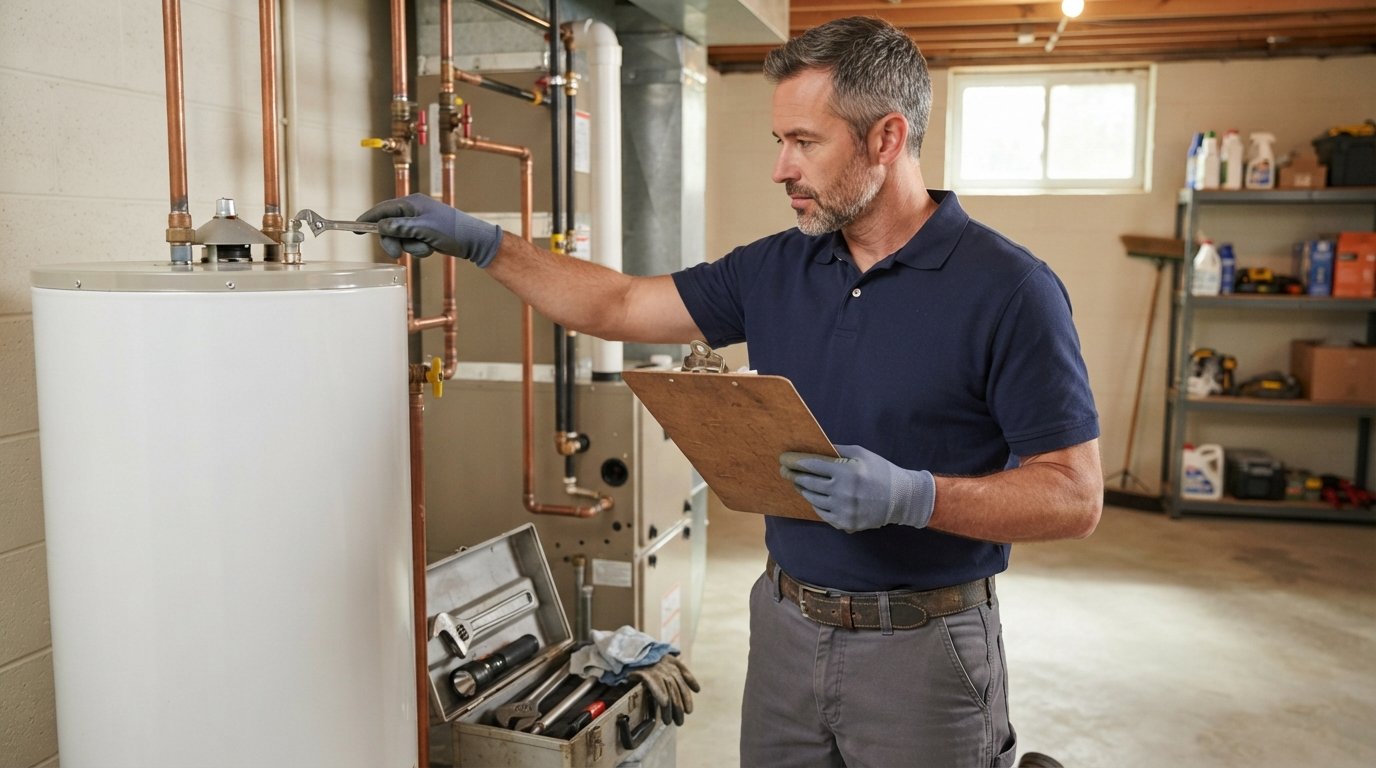
Water heaters deserve special attention because they combine heat, pressure, and corrosion. Flush the tank annually to remove sediment that causes overheating and premature failure, and test the temperature and pressure relief valve at the same time. If your anode rod has never been replaced and the tank is over five years old, have a plumber inspect it; replacing a twenty dollar rod can add years to a water heater's life.
Know where your main water shutoff valve is located and make sure it turns freely. In an emergency, being able to stop the flow in seconds is the difference between a minor cleanup and a major remodel. If your home still has old polybutylene or galvanized pipes, plan for replacement proactively rather than waiting for a failure inside a wall.
Electrical Systems: Safety First, Savings Second
Electrical problems are different from other maintenance issues because they can be genuinely dangerous. An overloaded circuit, a loose connection, or a worn outlet can cause fires that start inside walls and spread before anyone notices. Unlike a dripping pipe, an electrical fault gives little warning.
The homeowner's role in electrical maintenance is mostly about observation and knowing when to call a licensed electrician. Test ground fault circuit interrupter outlets monthly using the test and reset buttons, especially in kitchens, bathrooms, garages, and outdoors. Replace any outlet that feels warm, shows scorch marks, or holds plugs loosely. If you notice flickering lights, frequently tripped breakers, or a faint burning smell near outlets or the panel, stop using those circuits and schedule an inspection immediately.
Beyond safety, there is a cost angle. Older homes often have undersized panels and insufficient circuits for modern loads, which leads to nuisance tripping and limits what you can add later. If you are planning a kitchen remodel, an EV charger, or a home office, having an electrician evaluate your panel capacity before the project begins prevents expensive surprises mid construction. Upgrading a panel proactively is far cheaper than rewiring after a failure or fire.
Roofing, Gutters, and Drainage: Protecting Everything Below
Your roof and drainage system are the first line of defense for the entire structure, and they take a beating every season. Small issues, a lifted shingle, a clogged gutter, a cracked flashing seal, let water into places it was never meant to go. By the time a ceiling stain appears, the damage has usually been developing for months.
Inspect your roof twice a year, in spring and fall, and after any major storm. From the ground with binoculars is fine for a basic check; leave actual roof walking to professionals. Look for missing, cracked, or curling shingles, rusted or loose flashing, and granules collecting in gutters, which signal shingle wear. Inside the attic, check for daylight, water stains, or damp insulation, all of which point to roof or ventilation problems.
Gutters need cleaning at least twice a year, more often if you have mature trees overhead. Clogged gutters cause water to back up under the roof edge, rot fascia boards, and pool around the foundation, which leads to basement flooding and foundation cracks. Downspouts should direct water at least six feet away from the house. If water pools near the foundation after a storm, regrade the soil or extend the downspouts; this simple fix prevents some of the most expensive structural repairs homeowners face.
Major Appliances: Extend Life with Basic Care
Appliances fail on their own schedule, but maintenance can push that schedule out by years. The refrigerator, dishwasher, washing machine, and dryer all have simple maintenance needs that most homeowners never think about until something breaks.
For the refrigerator, vacuum the condenser coils every six to twelve months, and check the door gaskets for cracks or poor sealing. A refrigerator with dirty coils runs constantly, which shortens compressor life and raises energy bills. For the dishwasher, run a cleaning cycle with vinegar or a commercial cleaner monthly, and check the filter and spray arms for food debris. For the washing machine, leave the door slightly open between loads to prevent mold, and inspect hoses annually. For the dryer, clean the lint trap after every load and have the vent duct professionally cleaned once a year; lint buildup in dryer vents is a leading cause of house fires.
When an appliance does fail, weigh the repair against replacement honestly. As a general guideline, if the repair costs more than half the price of a new unit and the appliance is more than halfway through its expected lifespan, replacement usually makes more financial sense. Getting multiple quotes for the repair or replacement, the same way you would for any renovation project, keeps you from overpaying under pressure.
Building a Maintenance Calendar That Actually Works
The hardest part of preventative maintenance is not the work itself; it is remembering to do it. A simple calendar system solves that problem. Divide tasks into monthly, quarterly, and annual categories, and set reminders on your phone or a shared household calendar.
Monthly tasks are quick: replace HVAC filters, test GFCI outlets and smoke detectors, and glance under sinks for leaks. Quarterly tasks include flushing the water heater, cleaning gutters if trees are nearby, and testing sump pumps before rainy season. Annual tasks cover professional HVAC service, a roof and attic inspection, a plumbing walkthrough, and dryer vent cleaning. If you would rather delegate, many of these services can be bundled into a single handyman visit or seasonal service contract.
Budgeting matters as much as scheduling. Set aside a modest monthly amount for maintenance and small repairs; even a small fund prevents deferred tasks from piling up. Homeowners who plan ahead also negotiate better pricing, because they can schedule work in the off season instead of paying emergency rates. If you want help turning your maintenance list into a broader improvement plan, services like BuySellRemodel connect homeowners with local professionals who can handle repairs, upgrades, and remodeling in one coordinated effort.
When a maintenance task turns out to be a real repair, or when you decide it is time to upgrade rather than patch, the next step is finding a qualified local contractor. Get at least three quotes, ask for references and proof of licensing and insurance, and compare not just price but scope and warranty terms. Free estimates make this comparison painless, and they give you a realistic picture of costs before you commit. Whether the job is a water heater replacement, an electrical panel upgrade, or a full system overhaul, the right professional protects both your home and your budget.
Preventative maintenance is not glamorous, and it will never show up in a before and after photo. But it is the single most reliable way to keep home systems running, avoid emergency repair bills, and preserve the value of your biggest investment. Start with one system this month, put the rest on a calendar, and let consistency do the rest.