
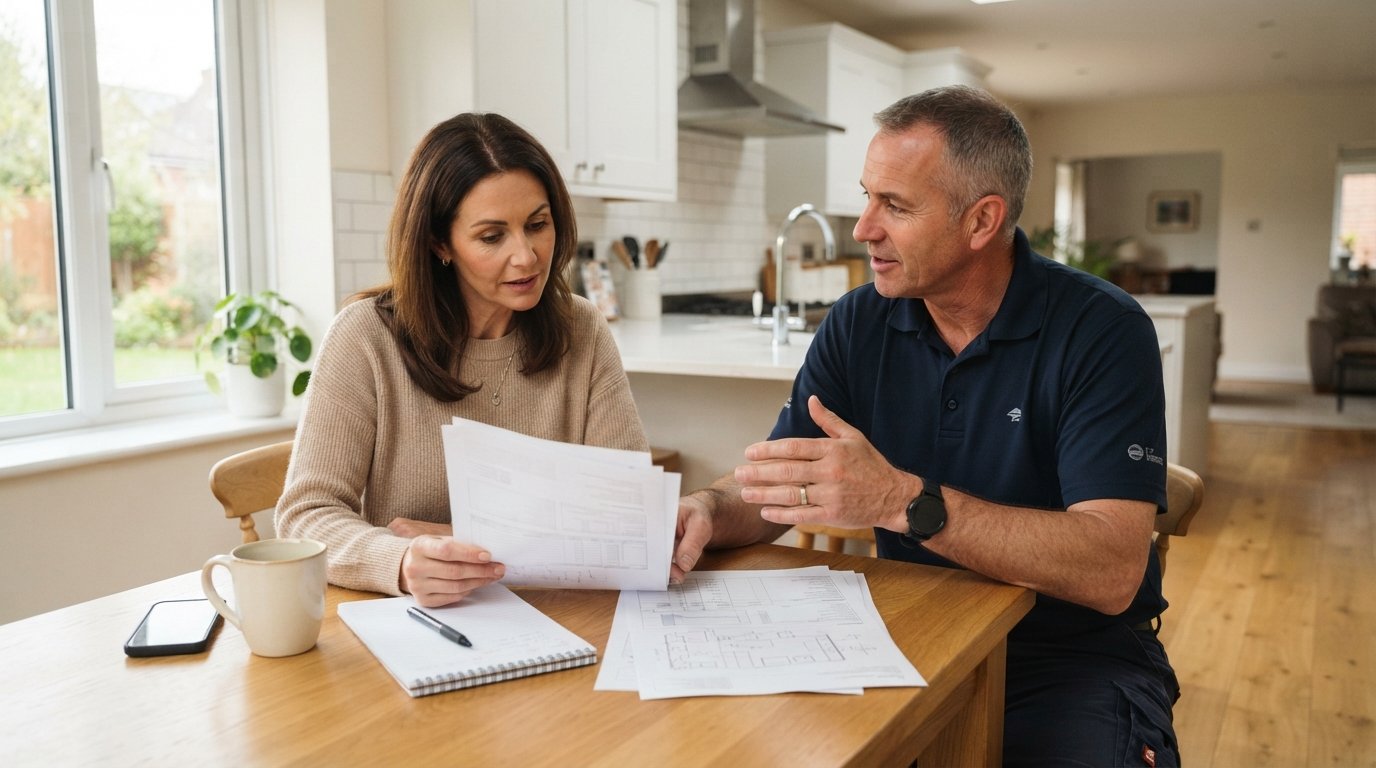
How to Evaluate a Contractor's Communication and Reliability
Evaluate a contractor's communication and reliability before you hire. Call (833)-439-3727 to compare local pros and avoid surprise delays.

By Benjamin Reed
Learn more about General Contracting for guides, costs, and what to expect.
Compare General Contracting Pros Near You

Enter your ZIP code to compare top-rated local professionals and request free quotes.
A contractor's quote can look perfect on paper, but the way they communicate before the contract is signed tells you far more about what the job will actually feel like. Homeowners often focus on price and timeline, yet the most common source of remodeling stress is not a bad tile job; it is silence, vague answers, and missed commitments. Learning how to evaluate a contractor's communication and reliability during the bidding stage is one of the highest-return skills you can develop, because it protects your budget, your schedule, and your sanity.
This guide walks through the specific signals to watch for in early messages, the questions that reveal how clearly a contractor thinks, the red flags that show up long before demolition day, and the simple systems you can put in place to keep communication strong once work begins. The goal is not to find the most charming contractor; it is to find the one whose words and actions match, consistently.
What Early Response Speed and Detail Reveal About a Contractor
Response time is the first data point you get, and it is rarely an accident. A contractor who replies to your initial inquiry within one business day, even if only to say when they will follow up, is demonstrating that they have a system for managing leads and that they respect your time. A contractor who takes four days to answer a simple question, or who only responds after a second and third nudge, is showing you how they will behave when you are waiting on a critical decision mid-project.
Speed alone is not enough, though. Look at the quality of the reply. A strong early message acknowledges your specific project, asks one or two clarifying questions, and proposes a concrete next step such as a site visit or a call. A weak reply is a generic template that could have been sent to anyone, or worse, a one-line text that says "call me" with no context. The combination of reasonable speed and tailored detail is the strongest early signal of a professional operation.
Pay attention to how they handle the first small inconvenience. If you ask them to reschedule a walkthrough and they respond promptly and flexibly, that is a good sign. If they disappear or seem annoyed, note it. Small frictions during the bidding stage are low-stakes rehearsals for how they will handle the inevitable frictions of construction. For a broader framework on vetting professionals, our guide on how to choose home renovation contractors explains the full selection process step by step.
Finally, consider the channel they use. A contractor who insists on a single, clear channel (email for documents, phone for urgent items) is easier to work with than one who scatters communication across texts, voicemails, and social media messages. Consistency in channel is a small but telling indicator of organization.
Questions That Test How Clearly They Explain Process, Sequencing, and Risk
The best way to evaluate a contractor's communication is to ask questions that require explanation, not just confirmation. Anyone can say "yes, we can do that." The differentiator is whether they can walk you through how the work will unfold, what could go wrong, and what they will do about it. Ask these questions during the bidding stage and listen as much for structure as for content.
Start with sequencing. Ask them to describe the order of major milestones for your specific project, from permits to final inspection. A reliable contractor will give you a step-by-step answer with dependencies (for example, rough plumbing before drywall, inspections before insulation). A vague answer like "we just get in there and go" is a warning sign. Then ask about risk: what are the two or three most likely surprises on a job like yours, and how do they typically handle them? Contractors who have done the work many times will have specific, calm answers. Those who have not will either bluff or admit they are not sure.
Use this short list of questions as a script for your next contractor conversation. Each one is designed to reveal clarity, honesty, and process thinking:
- Walk me through the first two weeks of this project, day by day if possible.
- What decisions do you need from me, and by when, so the schedule does not slip?
- What are the most common change orders on a job like this, and how do you price them?
- Who is my main point of contact, and how quickly should I expect a reply?
- How do you document progress and share it with me?
Notice how these questions invite a narrative rather than a yes or no. The contractor's ability to answer them in plain language, without defensiveness and without jargon, is a direct preview of your day-to-day experience. If they cannot explain the process clearly now, when there is no pressure, they will not explain it clearly when a pipe is leaking and the schedule is tight.
Red Flags in Vague Bids, Delayed Callbacks, and Shifting Timelines
Communication problems rarely appear suddenly on day one of construction; they almost always show up first in the bidding stage. The most common red flag is a bid so vague that it cannot be compared to anything. If a proposal lists a total price but not the scope, materials, allowances, or exclusions, you cannot tell what you are buying. A reliable contractor writes bids that are specific enough to be checked, and they are comfortable when you ask questions about line items.
Delayed callbacks are the second major signal. Everyone gets busy, and a one-time delay is forgivable. A pattern is not. If you have to chase a contractor three times to get a quote, imagine chasing them three times to get a final inspection scheduled. Track your interactions in a simple log: date, channel, response time, and whether they did what they said. After two weeks, the pattern will be obvious.
Shifting timelines deserve special attention. A contractor who gives you a different start date every time you speak, or who cannot explain why the date moved, is telling you that their scheduling is reactive rather than planned. Reliable contractors build in buffers and communicate changes early, with a reason and a new commitment. They do not wait for you to notice the date has passed.
Other red flags worth noting include:
- Pressure to sign quickly or to pay a large deposit before you have a written scope.
- Reluctance to provide references or to let you speak with past clients directly.
- Answers that change depending on who you ask on their team.
- No written change order process, or a casual attitude toward verbal agreements.
- Defensiveness when you ask reasonable questions about cost or schedule.
None of these flags is automatically disqualifying on its own, but two or more together should prompt you to slow down. The cost of switching contractors after work begins is far higher than the cost of walking away during the bidding stage.
How to Check References Specifically for Communication and Problem-Solving
Most homeowners ask references whether the contractor did good work. That is useful, but it misses the point of this evaluation. You want to know how the contractor communicated when things went wrong, because things will go wrong. Frame your reference calls around behavior under pressure, and you will get far more actionable information.
Ask past clients to describe a moment when the project hit a snag. What happened, how quickly did the contractor respond, and who proposed the solution? Listen for specifics: names of materials, dates, and the sequence of events. Vague praise ("they were great, no problems") is less useful than a concrete story about how a delayed shipment was handled or how a surprise code issue was resolved. You are looking for evidence of proactive updates, honesty about delays, and fair handling of change orders.
It also helps to ask about documentation. Did the contractor provide written updates, photos, or a shared schedule? Did they put change orders in writing before doing the work? Clients who received clear documentation will remember it, and their answers will be detailed. Clients who did not will often say something like "we just talked about it," which is a quiet warning.
When you contact references, ask these questions directly:
- How did the contractor communicate routine updates, and how often?
- Tell me about a problem that came up and how it was handled.
- Were change orders and extra costs explained in writing before work proceeded?
- If you had to reach them urgently, how quickly did they respond?
- Would you hire them again, and what would you change about the communication?
The last question is often the most revealing. A reference who says they would hire the contractor again but would ask for more frequent updates is giving you a realistic, balanced picture, which is exactly what you want. Perfect reviews with no caveats are less credible than thoughtful ones.
Setting Expectations for Updates and Documentation Before Work Begins
The strongest communication systems are built before anyone picks up a hammer. Once you have chosen a contractor, spend part of the pre-construction period agreeing on how you will communicate, how often, and through which channels. This is not bureaucracy; it is the difference between a project that feels calm and one that feels like a series of surprises.
Put the basics in writing, even if it is a simple one-page addendum to the contract. Agree on a weekly update (a short email or call every Friday, for example), a response-time expectation for non-urgent questions (one business day is reasonable), and an urgent channel for emergencies. Agree on who your point of contact is and who their backup is when they are on vacation or on another site. Also agree on how change orders will be documented: no verbal approvals, ever.
Documentation matters as much as conversation. Ask for a shared schedule that both of you can view, and ask how progress photos will be shared. Many reliable contractors now use simple project management apps or even a shared photo album, and this is a reasonable request. If a contractor resists putting updates in writing, that is a compatibility problem worth taking seriously.
It also helps to define what "done" looks like at each stage, so that updates have something to measure against. A short written milestone list (demo complete, rough-in inspected, drywall hung, and so on) makes weekly updates concrete and keeps everyone honest. For homeowners planning affordable projects and comparing local pros, resources like BuySellRemodel can help you connect with experienced contractors and get free estimates, which makes the comparison and expectation-setting process much easier.
Finally, plan for the moments when communication is most likely to break down: the start of the project, the week a major material is delivered, and the final inspection period. Agree in advance on how updates will work during those windows. Contractors who welcome this level of planning are usually the ones who communicate well under pressure, and that is precisely the partner you want.
Evaluating a contractor's communication and reliability is not about finding someone perfect; it is about finding someone whose habits match your expectations. Watch how they respond early, ask questions that require real explanations, treat vague bids and delayed callbacks as data, check references for problem-solving stories, and set clear update and documentation expectations before work begins. Do that, and you dramatically reduce the odds of surprise bills, silent weeks, and missed deadlines, while increasing the chance that your project finishes on time and on budget.