
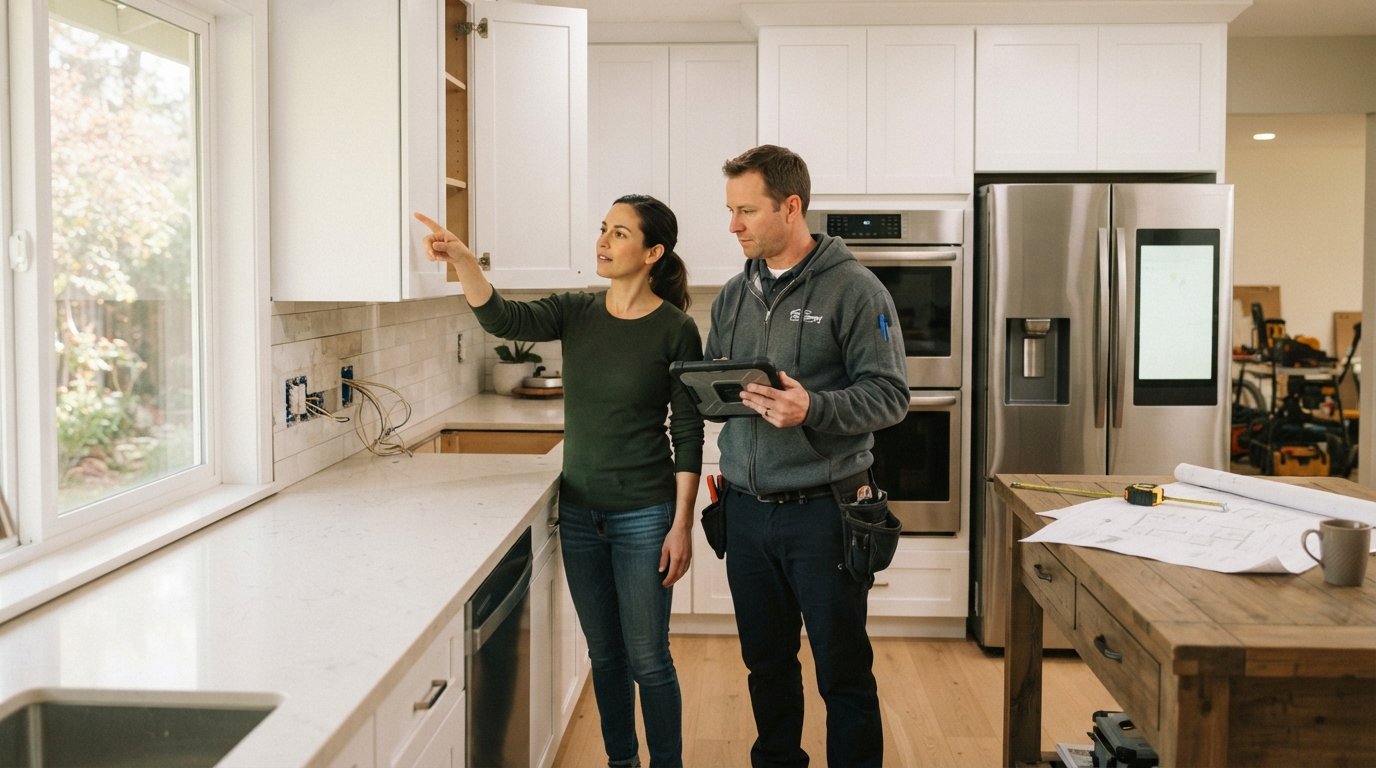
Integrating Smart Appliances in a Kitchen Remodel
Integrating smart appliances in a kitchen remodel boosts efficiency and resale value. Plan electrical, Wi-Fi, and ecosystems before you buy.

By Cameron Howard
Learn more about Kitchen Remodel for guides, costs, and what to expect.
Compare Kitchen Remodel Pros Near You

Enter your ZIP code to compare top-rated local professionals and request free quotes.
A kitchen remodel is one of the most rewarding investments a homeowner can make, and in 2026, the definition of a modern kitchen has expanded well beyond granite countertops and soft-close drawers. Smart appliances now sit at the center of the conversation, promising convenience, energy savings, and a home that adapts to your daily routines. Yet integrating smart appliances in a kitchen remodel is not as simple as swapping out an old refrigerator for a Wi-Fi-enabled model. It requires planning around electrical capacity, connectivity, cabinetry dimensions, and long-term compatibility.
For cost-conscious homeowners, the stakes are real. A poorly planned smart appliance package can add thousands to a project budget, create installation headaches, and leave you with devices that do not talk to each other. A well-planned one, however, can lower utility bills, increase resale appeal, and make everyday cooking and cleanup noticeably easier. This guide walks you through the practical steps, costs, and decisions involved so you can integrate smart appliances with confidence and avoid expensive surprises.
Why Smart Appliances Belong in a Modern Kitchen Remodel
The case for smart appliances starts with energy efficiency. Many modern refrigerators, dishwashers, and ovens use inverter compressors, adaptive sensors, and scheduling features that reduce wasted power. A smart refrigerator can shift its defrost cycles to off-peak hours, while a connected dishwasher can run during lower-rate energy windows. Over a year, those small adjustments can add up to meaningful savings on utility bills, especially in regions with time-of-use pricing.
Convenience is the second major driver. Imagine preheating your oven from your phone on the drive home, or asking a voice assistant to check whether the freezer door was left open. Smart appliances also support maintenance reminders, filter replacement alerts, and diagnostic reporting, which can extend the life of expensive equipment. For busy households, these features reduce friction and help appliances perform at their best.
Resale value matters too. Buyers in 2026 increasingly expect at least a few connected appliances in a renovated kitchen. A cohesive smart appliance package signals that the home has been updated thoughtfully, not just cosmetically. That said, the value only materializes when the integration is clean and reliable, which is why planning during the remodel, rather than after, is essential.
There is also the matter of future-proofing. Kitchen remodels are typically designed to last 15 to 20 years. Choosing appliances and infrastructure that can adapt to new standards, such as Matter or Thread, helps ensure your kitchen does not feel outdated in five years. The goal is not to chase every trend but to build a foundation that accommodates sensible upgrades over time.
Planning Electrical and Connectivity Before You Buy
The most common mistake homeowners make is purchasing smart appliances before confirming their electrical panel can support them. Many smart ranges, wall ovens, and induction cooktops require dedicated 240-volt circuits, and older homes may not have enough capacity. Before you finalize your appliance list, have a licensed electrician evaluate your panel, available circuits, and outlet locations. This step alone can prevent costly change orders once cabinets are installed.
Connectivity is equally important. Smart appliances rely on a stable Wi-Fi network, and kitchen walls, metal cabinetry, and large appliances can weaken signals. If your router is far from the kitchen, consider adding a mesh node or access point during the remodel. Running Ethernet or conduit behind walls at this stage is far cheaper than retrofitting later. You should also map out where each appliance will sit and confirm that power, water, and data connections align with the manufacturer's requirements.
Ventilation deserves attention as well. Smart ranges and cooktops often pair with smart hoods that adjust fan speed automatically based on cooking activity. These hoods may require specific ducting or electrical connections. Planning ventilation alongside appliance selection keeps the kitchen safe and compliant with local codes.
Finally, think about surge protection and dedicated circuits. Sensitive electronics inside smart appliances can be damaged by power fluctuations. A whole-home surge protector or dedicated circuit for high-value appliances is a relatively small investment that protects expensive equipment. Your electrician can recommend the right approach based on your home's wiring and local code requirements.
Choosing a Smart Appliance Ecosystem That Works Together
One of the biggest frustrations homeowners report is buying appliances from multiple brands that do not communicate well. Each manufacturer tends to favor its own app and voice assistant integration, which can leave you juggling several apps just to run your kitchen. The solution is to decide on an ecosystem before you buy, not after.
There are three broad approaches. The first is a single-brand ecosystem, where you purchase most appliances from one manufacturer. This typically delivers the smoothest integration and a single app experience. The second is a platform-agnostic approach built around a smart home hub that supports Matter, the interoperability standard that has gained strong momentum. The third is a hybrid approach, where core appliances share a brand while smaller devices come from other manufacturers that support the same standards.
To evaluate your options, consider the following criteria:
- App quality and reliability: Read recent reviews and check how often the app is updated.
- Voice assistant support: Confirm compatibility with the assistant your household already uses.
- Matter and Thread support: These standards improve long-term compatibility across brands.
- Local control: Some systems work without cloud dependency, which improves privacy and reliability.
- Warranty and service network: Local repair support matters when something goes wrong.
After narrowing your list, visit a showroom if possible and test the app interface. A slick product demo can hide a clunky user experience. Ask specifically about firmware update history and whether the manufacturer has a track record of supporting older models. A brand that abandons app support after a few years can turn a smart appliance into a dumb one overnight.
Budgeting for Smart Appliances in Your Remodel
Smart appliances carry a premium, but the gap between standard and connected models has narrowed in recent years. A smart refrigerator might cost a few hundred dollars more than a comparable standard model, while a smart wall oven could add $500 to $1,500 depending on features. The larger budget risk is not the appliance itself but the supporting infrastructure: electrical upgrades, dedicated circuits, networking improvements, and cabinetry modifications.
A realistic budget should account for the following categories:
- Appliance cost: The purchase price of each smart device, including delivery and haul-away.
- Electrical work: New circuits, panel upgrades, and outlet relocation.
- Networking: Mesh nodes, access points, and any low-voltage wiring.
- Cabinetry and countertop adjustments: Custom sizing for larger or differently shaped appliances.
- Installation and setup: Professional installation, app configuration, and testing.
Homeowners often overlook the last two categories. Smart refrigerators can be deeper than standard models, which affects counter depth and walkway clearance. Smart ranges may require different clearance for ventilation. Addressing these details during the design phase is far cheaper than modifying finished cabinets later.
If you are working with a tight budget, prioritize appliances that deliver the greatest daily benefit. A smart dishwasher and refrigerator often provide more value than a connected microwave or coffee maker. You can also phase the project, installing infrastructure now and upgrading individual appliances over time. To compare realistic cost ranges and find local pros who understand smart integration, it helps to explore affordable remodeling resources that connect homeowners with vetted contractors and free estimates.
Working With Contractors Who Understand Smart Integration
Not every contractor has experience with smart appliance installation. A general remodeler may be excellent at cabinetry and tile but unfamiliar with the networking and electrical nuances that smart devices require. Before hiring, ask specific questions about their experience with connected appliances, low-voltage wiring, and smart home hubs.
When you interview contractors, request examples of past projects that included smart appliances. Ask how they handled Wi-Fi coverage, circuit capacity, and app setup. A knowledgeable contractor will coordinate with an electrician and possibly a low-voltage specialist to ensure everything works together. They should also be comfortable reviewing manufacturer installation manuals and confirming clearances before ordering appliances.
It is equally important to clarify who is responsible for final setup and testing. Some contractors will unbox and install appliances but leave app configuration to the homeowner. Others include full commissioning, where every device is connected, updated, and tested. Clarifying this upfront avoids awkward conversations at the end of the project.
For homeowners who want a smoother process, working with a platform that pre-screens local contractors can save time and reduce risk. If you are still deciding how to hire, this guide on how to choose kitchen remodeling contractors walks through the vetting questions, red flags, and bid comparison tips that matter most.
Installation Day: Sequencing and Setup Tips
The order in which appliances are installed matters more than most homeowners realize. Cabinets and countertops typically go in first, followed by electrical and plumbing rough-in, then appliance installation. However, smart appliances sometimes require network access before they are fully pushed into place, so plan a temporary power and Wi-Fi connection during the installation phase.
Before installation day, confirm the following:
- All circuits are labeled and tested.
- Wi-Fi credentials are available and the network is running.
- Manufacturer apps are downloaded and accounts are created.
- Installation clearances match the manufacturer's specifications.
- A plan exists for firmware updates and initial testing.
Once appliances are installed, take time to test each function. Run a cycle on the dishwasher, check the oven's temperature calibration, and confirm the refrigerator's temperature and door alerts. Connect each device to the app and verify that notifications work as expected. Document model numbers, serial numbers, and warranty information in one place for future reference.
It is also wise to set up routines and automations gradually. Start with simple tasks, such as a nightly dishwasher schedule or a morning coffee maker trigger, then expand as you become comfortable. Overcomplicating the setup on day one often leads to frustration and abandoned features.
Common Pitfalls and How to Avoid Them
Even well-planned projects can run into trouble. One frequent issue is insufficient Wi-Fi coverage, which causes appliances to drop offline or respond slowly. Another is mismatched ecosystems that force homeowners to use multiple apps. A third is inadequate electrical capacity, which can lead to tripped breakers or, worse, safety hazards.
To avoid these problems, start with infrastructure and work outward. Confirm electrical capacity, improve network coverage, and choose an ecosystem before purchasing appliances. Read the fine print on warranty terms, especially regarding connectivity features, because some manufacturers exclude software-related issues from standard coverage.
Finally, resist the urge to buy every smart device at once. A phased approach lets you learn what you actually use and where additional investment makes sense. It also spreads the cost over time, which is easier on the budget and reduces the risk of buyer's remorse.
Integrating smart appliances in a kitchen remodel is ultimately about building a kitchen that works for your household today and adapts to tomorrow. With careful planning around electrical, networking, and ecosystem choices, you can enjoy the convenience and efficiency of a connected kitchen without the headaches. Take the time to plan, ask the right questions, and work with experienced local contractors who understand both the technology and the construction. When the project is done, your kitchen will not just look modern, it will function like it too.