
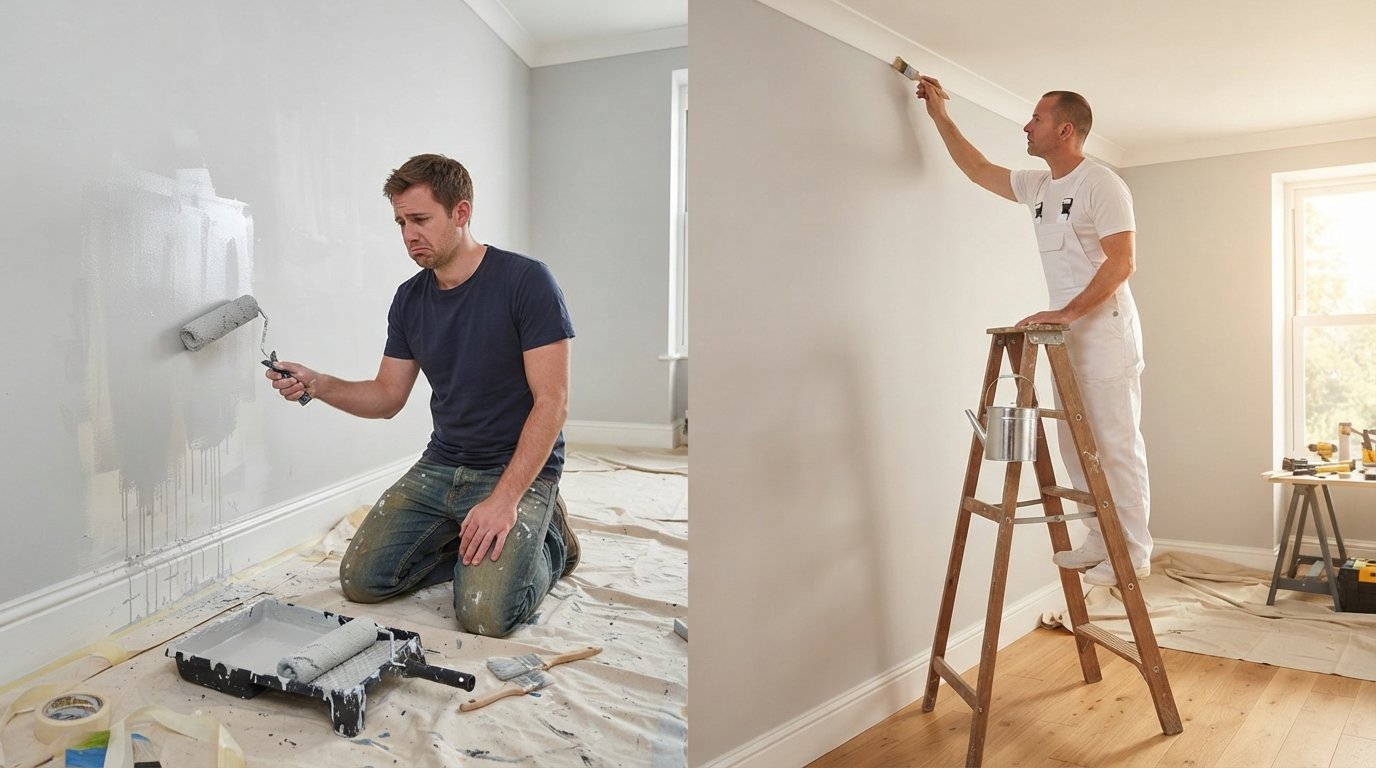
Interior Painting: DIY or Hire a Pro in 2026
Deciding when to diy vs hire a pro for interior painting? We break down cost, time, and skill factors to help you choose wisely.

By Sarah Thomas
Learn more about Interior Painting for guides, costs, and what to expect.
Compare Interior Painting Pros Near You

Enter your ZIP code to compare top-rated local professionals and request free quotes.
You have the paint samples, the drop cloths, and the weekend free. But before you crack open that first can, a bigger decision looms: should you roll up your sleeves or call a professional? The answer is rarely a simple yes or no. It depends on your skill level, the condition of your walls, the size of the room, and your budget. Getting this choice right can save you hundreds of dollars or prevent a costly, frustrating mess. This guide breaks down the real factors behind when to diy vs hire a pro for interior painting, so you can decide with confidence and get the finish you actually want.
Assess Your Skill Level Honestly
The first step is a candid self-assessment. Painting a single accent wall in a bedroom is a far cry from repainting an entire two-story staircase or a vaulted living room. If you have steady hands, patience, and a decent eye for detail, basic cutting in and rolling might be well within your reach. However, if the thought of taping off trim makes you anxious, or if you have never held a paintbrush since a high school art class, that is a signal to lean toward a pro.
Consider your past projects. Did your last DIY paint job look crisp, or did you end up with drips, roller marks, and paint on the ceiling? If you are still learning, starting with a small, low-stakes space like a powder room or a child's playroom is a smart way to build skills. For larger, more visible areas, the risk of a botched job is simply higher. In our guide on interior painting costs and tips for a flawless finish, we note that professional results often come down to preparation and technique, not just the paint itself.
Evaluate the Scope of the Project
Project size is one of the most reliable indicators for making the DIY versus pro call. A single room with minimal furniture and easy access might take a skilled amateur a full weekend. A whole home, on the other hand, involves moving furniture, patching drywall, dealing with multiple coats, and managing drying times across several rooms. That level of work can stretch into weeks for a DIYer, disrupting your daily life.
Here is a quick breakdown to help you gauge the scope:
- DIY friendly: One or two small rooms, touch-ups, furniture makeovers, or spaces with low ceilings and little trim.
- Hire a pro: Whole-home repaints, rooms with high ceilings or complex architectural details, extensive drywall repairs, or any project on a strict timeline.
- Somewhere in between: A medium-sized bedroom or hallway with moderate prep work. You might handle it yourself, but be ready to invest significant time.
Once you list the rooms and the condition of the surfaces, you can better estimate the hours required. Remember that pros work in teams. Two painters can finish in a day what might take you four days solo. If your weekends are precious or your schedule is packed, the time savings alone can justify hiring a professional.
Calculate the True Cost of DIY
Many homeowners assume DIY is always cheaper, but that is not necessarily true once you account for everything. Professional painters get trade discounts on paint and supplies, which can offset their labor fees. Meanwhile, a DIYer pays retail prices for paint, brushes, rollers, tape, drop cloths, and any tools they do not already own. If you need to rent a sprayer or buy a ladder tall enough for a stairwell, those costs add up quickly.
There is also the hidden cost of mistakes. A gallon of premium paint is not cheap, and if you apply it poorly, you might need to buy another gallon to fix blotches or drips. If you damage trim or drywall while removing tape, you could be looking at repair costs. In many cases, the gap between DIY and professional pricing is narrower than you think. For accurate numbers, get a few free estimates from local contractors. This gives you a baseline to compare against your own supply list.
Factor in Time and Your Schedule
Time is a resource that many DIYers underestimate. A professional crew can prep, paint, and clean up a standard bedroom in a day. A DIYer might spend three or four evenings after work, plus a full weekend, to achieve the same result. If you are juggling a job, kids, or other commitments, finding those blocks of uninterrupted time is tough. And once you start, you cannot simply pause mid-project without leaving your home in disarray.
Consider the drying time between coats as well. You cannot rush a second coat, and you need to keep the room ventilated. If you are painting a hallway or a bathroom that you use daily, a prolonged DIY timeline can be genuinely inconvenient. Hiring a pro means you get your space back faster. That speed is a tangible benefit, especially if you are preparing for a move or hosting guests.
Know When Surface Prep Is Beyond You
Paint is only as good as the surface beneath it. Cracks, holes, water stains, and old gloss paint all require specific preparation. Filling nail holes with spackle is manageable, but repairing significant drywall damage or smoothing out textured walls takes skill. If your walls have been painted with a high-gloss finish, you may need to sand and prime before new paint will adhere properly. Skip these steps, and your fresh paint will peel or bubble within months.
Professional painters are trained to handle these challenges. They know the right primers for stains, the correct techniques for patching, and how to sand between coats for a smooth finish. They also have the tools for tricky jobs like popcorn ceilings or wallpaper removal. If your project involves any of these complexities, the expertise of a pro becomes invaluable. Attempting them yourself can lead to a finish that looks worse than the original, and you will likely end up paying a professional to fix it anyway.
Compare the Quality of Finish
There is a visible difference between a professional paint job and an amateur one. Pros achieve crisp, straight lines at the ceiling and trim without using excessive tape. They know how to load a roller to avoid streaks and how to maintain a wet edge to prevent lap marks. Their work looks even and flawless under natural light, which is the harshest test of any paint job.
DIYers often struggle with these details. It is common to see roller marks, uneven sheen, or paint bleeding under the tape. While small imperfections might be acceptable in a closet, they are glaring in a formal living room or a dining area. If you are a perfectionist or you plan to sell your home soon, a professional finish is a smart investment. A high-quality paint job can boost your home's appeal and value, but a sloppy one can have the opposite effect.
Weigh the Risks and Hidden Costs
Every DIY project carries some risk. You could fall off a ladder while cutting in a high ceiling. You could spill paint on your carpet or hardwood floors. You could discover that the old paint is lead-based, which requires specialized handling. These risks are not just about money; they involve your safety and the integrity of your home.
Professionals carry insurance, so accidents or property damage are covered. They also know how to handle hazardous materials safely. If you are dealing with older homes, lead paint is a serious concern. Disturbing it without proper precautions can release toxic dust. For any project that involves potential hazards, hiring a licensed and insured painter is the responsible choice. It protects your health and your wallet.
For a broader perspective on managing home improvement projects, platforms like BuySellRemodel connect you with vetted contractors who can provide estimates and guidance, helping you avoid common pitfalls.
Consider the Resale Value and Long-Term Impact
If you are painting with an eye toward selling your home, professional quality is almost always worth the cost. Real estate agents often advise that fresh paint is one of the most cost-effective ways to boost curb appeal and interior appeal. However, a DIY paint job with visible flaws can actually deter buyers. They may see it as a sign of deferred maintenance, or they may factor in the cost of repainting before they even make an offer.
Professionals also use high-quality paints that last longer and resist fading and scrubbing. That durability matters if you are painting high-traffic areas like hallways or kids' rooms. In the long run, a professional job can save you money by delaying the need for a repaint. Conversely, a rushed DIY job might need to be redone in a few years, costing you more in supplies and your own labor the second time around.
Make the Final Call: A Simple Framework
To bring it all together, ask yourself these three questions before deciding:
- What is my experience level? If you have successfully painted before and felt good about the results, DIY is a reasonable option for small spaces.
- How big and complex is the job? Large rooms, high ceilings, intricate trim, and significant wall repairs tilt the scale firmly toward hiring a pro.
- What is my budget for both money and time? If you are short on time or the cost of supplies and potential mistakes approaches a professional quote, hire someone.
If your answers point to hiring a professional, the next step is simple. Reach out to a few local painters and request free estimates. Compare their prices, ask about their preparation process, and check their references. You will likely find that the peace of mind and the flawless finish are well worth the investment. On the other hand, if you decide to tackle it yourself, start small, prepare your surfaces meticulously, and invest in quality tools. With the right approach, you can achieve a result that makes you proud to say, "I did it myself."