
Landscaping Ideas That Increase Home Value
Discover landscaping ideas that increase home value, from curb appeal boosts to hardscaping projects that offer strong returns.

By Sarah Thomas
Learn more about Outdoor Landscaping and Design for guides, costs, and what to expect.
Compare Outdoor Landscaping and Design Pros Near You

Enter your ZIP code to compare top-rated local professionals and request free quotes.
When you think about adding value to your home, the kitchen and bathrooms often steal the spotlight. However, the exterior of your property is the first thing potential buyers see, and its condition sets the tone for the entire showing. Strategic landscaping is not just about aesthetics; it is a smart investment that can yield a significant return when you sell. In fact, well-planned outdoor spaces can boost your home's perceived value by as much as 12 percent, according to some real estate studies. If you are looking for practical ways to enhance your property's curb appeal and market price, these landscaping ideas that increase home value will guide you toward the most impactful improvements without breaking the bank.
This guide is designed for cost-conscious homeowners who want to make informed decisions. We will focus on projects that offer the best return on investment, from simple cleanups to more involved hardscaping. You will also learn which upgrades are worth doing yourself and when it is wiser to call in a professional. By the end, you will have a clear roadmap to transform your yard into a valuable asset, not just an expense.
Start with a Solid Plan and a Realistic Budget
Before you dig up the lawn or order a truckload of mulch, take a step back. A successful landscaping project, like any home improvement, begins with a clear plan and a budget. Walk around your property and note the areas that need the most attention. Is the front walkway cracked? Are the shrubs overgrown and blocking windows? Is the lawn patchy and uneven? Make a list of all the issues, then prioritize them based on impact and cost.
Your budget should reflect the potential return on investment. For example, a complete landscape overhaul can cost anywhere from $15,000 to $50,000 or more, but you may not recoup all of that at resale. Focus on high-impact, moderate-cost changes first. Simple tasks like edging, mulching, and planting annuals can transform a tired yard for under $1,000. A new front door or a fresh coat of paint on the trim can also work wonders for curb appeal. The key is to allocate your funds where they will be most visible and appealing to future buyers.
When planning, consider the long-term maintenance of your landscape. A lush, high-maintenance garden may be a turn-off for busy families. Choose plants that are native to your region, as they require less water and care. Also, think about how the landscaping will look in all four seasons. Evergreens provide year-round structure, while flowering shrubs and perennials offer seasonal color. A well-balanced design is more attractive to a broader range of buyers.
High-Impact Landscaping Ideas That Increase Home Value
Not all landscaping projects are created equal. Some offer a much higher return on investment than others. Here is a breakdown of the most effective upgrades, ranked by their potential to increase your home's value and appeal.
- Fresh Mulch and Edging: This is the cheapest and quickest win. A fresh layer of mulch in flower beds, combined with crisp edging along walkways and driveways, instantly gives your yard a manicured look. It is a low-cost project you can do in a single afternoon.
- Mature Trees and Shrubs: Strategically placed trees provide shade, privacy, and a sense of permanence. A mature tree can add significant value, but planting one takes time. If you are planning to sell soon, opt for larger, more established plants that will have an immediate impact.
- Stone Walkways and Patios: Hardscaping elements like a flagstone path or a brick patio extend your living space outdoors. These features are highly desirable and can be a major selling point. They also define the flow of your yard and create inviting areas for entertaining.
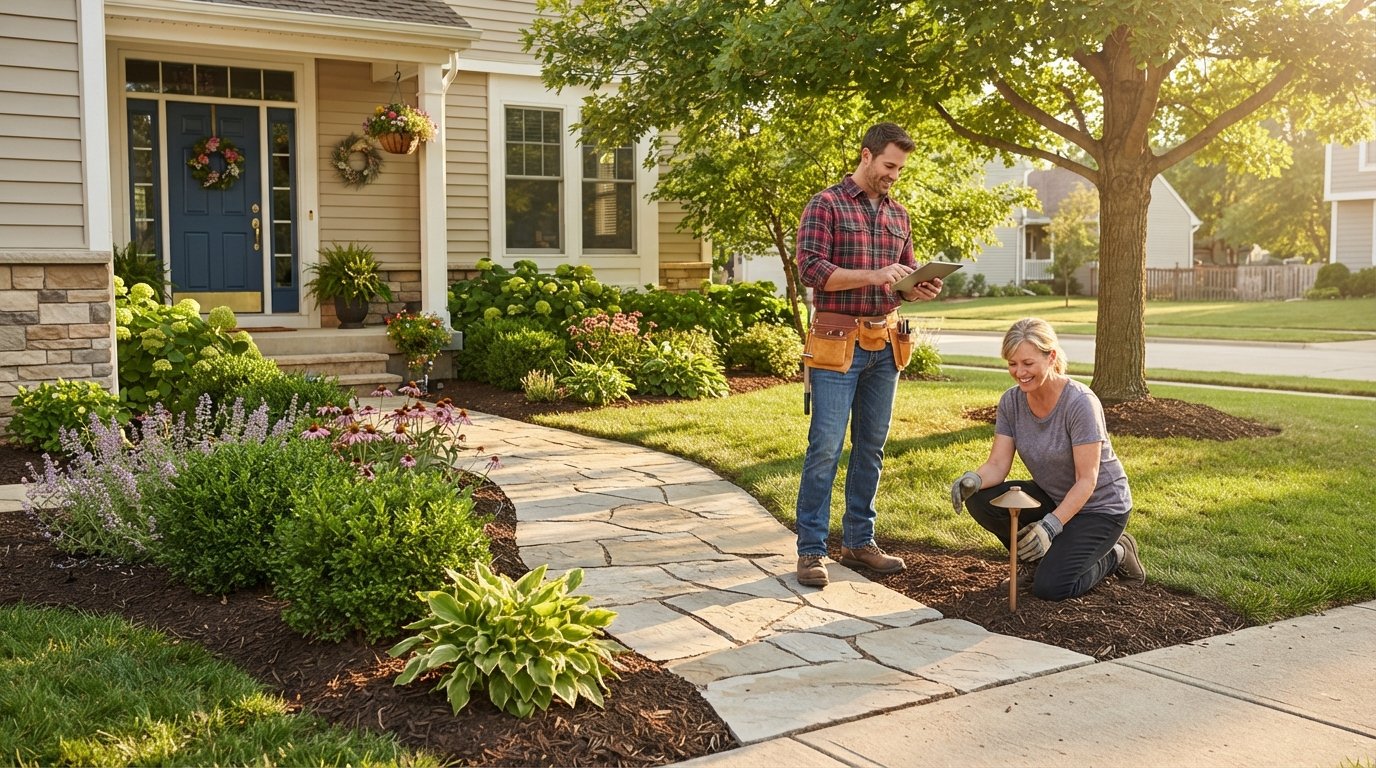
- Outdoor Lighting: Low-voltage landscape lighting improves safety and highlights your home's best features after dark. Path lights, uplights on trees, and spotlights on the house facade add a layer of sophistication and security that buyers love.
Each of these projects can be scaled to fit your budget. For instance, instead of installing an expensive stone patio, you could start with a stamped concrete pad or a gravel seating area. The goal is to create a polished, cohesive look that suggests the home has been well cared for. As you plan, keep in mind that a new patio or walkway is a major project that often requires professional help. For a complete cost breakdown and planning tips, you can refer to our guide on home improvement projects for resale value.
The Power of a Welcoming Front Entry
The front entry is the focal point of your home's exterior. It is the first thing people touch and the last thing they see. A welcoming front entry can significantly influence a buyer's emotional connection to the house. Simple upgrades here can yield a high return. Start by ensuring your front door is in good condition. If it is faded or outdated, a fresh coat of paint in a bold, classic color like deep navy or forest green can make a huge difference. Updating the door hardware, house numbers, and porch light fixture also adds a touch of polish.
Frame the entry with potted plants or a pair of symmetrical shrubs. This creates a sense of balance and formality that appeals to many buyers. Add a new welcome mat and consider a stylish bench or a small bistro table if space allows. These small touches show that the home has been cared for with attention to detail. If your porch is large enough, adding a porch swing or a couple of rocking chairs can create an inviting spot for future owners to imagine themselves relaxing.
Do not forget the path leading to your front door. A cracked or uneven walkway is a safety hazard and an eyesore. Repairing or replacing it is a worthwhile investment. If you have the budget, consider upgrading to a more durable and attractive material like pavers or natural stone. This not only improves the look of your home but also adds a layer of durability that reduces future maintenance costs.
Lawn Care: The Foundation of Curb Appeal
A lush, green lawn is the classic symbol of a well-maintained home. It is also one of the most important factors in curb appeal. If your lawn is patchy, brown, or full of weeds, it can drag down the perceived value of the entire property. Regular mowing, edging, and fertilizing are non-negotiable. However, if your lawn is in poor shape, you may need to go further. Overseeding, aerating, and applying a quality fertilizer can revive a tired lawn. In some cases, you may need to replace sections of sod.
Watering is another critical aspect. A well-hydrated lawn is more resilient and looks healthier. But overwatering can lead to fungus and wasted resources. Invest in a simple irrigation system or use a timer on your hose to ensure your lawn gets the right amount of water. Also, consider the environmental impact. Using native grasses that require less water is a smart, eco-friendly choice that can save you money on your water bill and appeal to eco-conscious buyers.
If you have areas where grass is difficult to grow, such as under large trees or in high-traffic zones, consider alternatives. Ground cover plants like clover or creeping thyme are low-maintenance and can provide a green, textured look. You could also replace grass with a mulch bed or a rock garden in these spots. These solutions reduce maintenance and add visual interest.
Hardscaping Projects That Pay Off
Hardscaping refers to the non-living elements of your landscape, such as patios, decks, walkways, and retaining walls. These features are highly valued by homebuyers because they expand the usable space of the yard and require minimal upkeep. A well-designed deck or patio can be a major selling point, especially in areas with favorable climates. According to Remodeling Magazine's Cost vs. Value report, a wooden deck addition recoups about 65% of its cost, while a patio can offer a similar return.
When planning a hardscaping project, think about how the space will be used. Will it be for outdoor dining, a fire pit gathering spot, or a quiet reading nook? The layout should be functional and flow naturally from the house. Materials matter too. Natural stone and brick offer a classic, timeless look, while concrete pavers are more affordable and come in a variety of styles. If you are on a tight budget, a well-built gravel patio with a fire pit can be a cost-effective alternative that still provides an attractive outdoor living space.
Another valuable hardscaping addition is a retaining wall. If your yard has a slope, a retaining wall can prevent erosion, create level planting areas, and even add a decorative element. This project requires proper engineering and drainage, so it is best to hire a professional. A poorly built retaining wall can collapse and cause significant damage, so this is not a DIY project for most homeowners. Always get multiple quotes and check references before hiring a contractor.
Low-Maintenance and Water-Wise Landscaping
Modern homebuyers are increasingly looking for low-maintenance and water-efficient landscapes. This trend is driven by environmental concerns and a desire to reduce ongoing upkeep costs. Xeriscaping, which uses drought-tolerant plants and efficient irrigation, is a popular approach in arid regions. But you can incorporate water-wise principles anywhere. Choose native plants that are adapted to your local climate and require less water and fertilizer. Group plants with similar water needs together to create hydrozones, which makes irrigation more efficient.
Replacing a thirsty lawn with a mix of ornamental grasses, groundcovers, and hardscaping can dramatically reduce your water bill. For example, a clover lawn requires less mowing and water than traditional turf. Adding a layer of mulch around plants helps retain soil moisture, suppress weeds, and regulate soil temperature. This simple practice can cut your watering needs by up to 50%. These changes not only save you money but also appeal to buyers who value sustainability.
If you are planning to sell, a low-maintenance landscape is a strong selling point. Many buyers do not want to spend their weekends mowing and weeding. They are willing to pay more for a home that offers a beautiful yard without the constant upkeep. Emphasize these benefits in your listing and during showings. Features like drip irrigation, native plants, and a well-designed hardscape can set your home apart from the competition.
Working with a Professional vs. DIY
Some landscaping tasks are simple enough for a weekend DIY project, but others require professional expertise. Before you pick up a shovel, honestly assess your skills and the complexity of the job. For example, planting flowers and shrubs is a manageable DIY project for most people. However, installing a retaining wall, building a deck, or grading your yard for proper drainage are tasks best left to licensed contractors. These projects require specific skills and equipment, and mistakes can be costly to fix.
When you decide to hire a professional, it is crucial to get multiple quotes. This allows you to compare pricing, services, and timelines. Look for contractors who are licensed, insured, and have a portfolio of similar work. Ask for references and check their online reviews. A reputable contractor will provide a detailed written estimate and a clear contract. Do not be afraid to ask questions about their experience, the materials they plan to use, and their cleanup process.
Hiring a professional can save you time and ensure a high-quality result. It can also be more cost-effective in the long run if you avoid expensive mistakes. For example, a poorly installed irrigation system can waste water and damage your plants. A professional can design and install a system that is efficient and effective. If you are considering a major landscaping project, getting free estimates from local experts is a smart first step. You can do this easily through services like BuySellRemodel, which connects you with experienced local contractors. They can help you plan your project and provide a clear picture of the costs involved.
Seasonal Maintenance and Final Touches
Landscaping is not a one-time project; it requires ongoing maintenance to retain its value. A well-kept yard signals to buyers that the home has been cared for, which can justify a higher asking price. Before listing your home, invest in a thorough seasonal cleanup. This includes pruning shrubs, raking leaves, weeding beds, and refreshing mulch. If you have a lawn, keep it mowed and edged. Clean your gutters and downspouts, as clogged gutters can lead to water damage, which is a red flag for buyers.
Add some final touches to make your yard stand out. A new mailbox, a fresh coat of paint on the front door, and some colorful potted plants can make a big difference. Clean your windows and power-wash your siding, walkways, and deck. These small but impactful tasks show that the home is move-in ready. A welcoming exterior can create a positive first impression that carries through the rest of the showing.
Remember, the goal of landscaping is to create a space that is both functional and attractive. It should feel like an extension of the home, not just a yard to maintain. By focusing on these landscaping ideas that increase home value, you can enjoy your outdoor space now and reap the financial rewards when you sell. Whether you start with a simple cleanup or take on a major hardscaping project, every improvement moves you closer to a more valuable and enjoyable home.
In the end, the best landscaping investments are those that reflect the needs and tastes of the local market. A well-executed landscape can significantly boost your home's curb appeal, attract more offers, and potentially increase the final sale price. So, take the time to plan, budget, and execute your projects. Your future self, and your future buyer, will thank you.
Learn more about Outdoor Landscaping and Design for guides, costs, and what to expect.
Compare Outdoor Landscaping and Design Pros Near You
Enter your ZIP code to compare top-rated local professionals and request free quotes.