
Mudroom Addition Cost and Storage Layout Ideas for 2026
Plan your mudroom addition with realistic cost ranges and smart storage layout ideas that keep boots, coats, and clutter organized.

By Cameron Howard
Learn more about Home Remodeling for guides, costs, and what to expect.
Compare Home Remodeling Pros Near You

Enter your ZIP code to compare top-rated local professionals and request free quotes.
A mudroom is one of those spaces you never knew you needed until you have one. It catches the snow, mud, pet hair, wet umbrellas, and school backpacks before they ever reach your clean kitchen floor. For busy households, that small transition zone between the outdoors and the rest of the home can quietly become the hardest-working room in the house. If you are weighing whether to build one, the two questions that almost always come first are simple: what will a mudroom addition cost, and how should you lay out the storage so it actually works? This guide walks through realistic budget ranges, the design choices that drive price up or down, and storage layout ideas that keep the space functional for years.
What a Mudroom Addition Actually Costs
There is no single sticker price for a mudroom because the word covers everything from a quick bump-out by the back door to a fully framed, insulated, and finished room with plumbing and heating. Most homeowners who hire a contractor for a true addition land somewhere between $20,000 and $60,000, while a smaller conversion or bump-out can come in under $15,000. The gap is enormous, and it almost always comes down to three things: how much square footage you add, how much structural work is required, and how custom the storage and finishes are.
A modest bump-out of roughly 40 to 60 square feet, built on a slab or existing foundation with basic finishes, tends to be the most affordable route. A full addition that extends the footprint of the home, requires new footings, a roofline tie-in, and extends HVAC into the space, sits at the higher end. If you are also adding a second story or expanding upward at the same time, it helps to understand how those projects are priced together, since combining work can sometimes reduce per-square-foot costs. Our guide on second story addition costs and planning explains how structural additions are budgeted and sequenced.
To get a clearer picture, it helps to break the project into its main cost drivers rather than guessing at a single number. Most mudroom addition estimates are built from the same core categories, and knowing them lets you compare contractor bids apples to apples.
- Foundation and framing: Slab, crawlspace, or pier foundations plus wall framing, which can range widely depending on soil and access.
- Roofing and exterior: Tying into the existing roof, siding, windows, and doors to match the house.
- Mechanical work: Extending electrical, HVAC, and sometimes plumbing for a utility sink or washer and dryer.
- Insulation and drywall: Critical in cold climates so the room stays comfortable and does not become a drafty pass-through.
- Storage and finishes: Built-in benches, lockers, cubbies, flooring, and paint, which is where budgets often stretch.
Those five categories explain why two homeowners in the same neighborhood can get quotes that differ by tens of thousands of dollars. One is building a simple, code-compliant shell with stock cabinetry, and the other is building a custom room with site-built lockers, heated floors, and a tiled dog wash station. Neither is wrong, but only one matches a typical mid-range budget. When you request free estimates, ask each contractor to itemize these categories so you can see exactly where the money is going.
Factors That Move the Price Up or Down
Square footage is the most obvious cost driver, but it is not the only one. Location matters enormously. A mudroom added over a basement or crawlspace needs different foundation work than one built on a concrete slab at grade. If the new room sits under an existing roof valley or requires rerouting gutters and downspouts, expect change orders. Access also plays a role: if a contractor cannot get equipment or materials to the build site easily, labor hours rise.
Finishes are where homeowners have the most control. Stock benches and open shelving cost far less than custom millwork with integrated lighting and charging stations. Luxury vinyl plank or tile floors handle wet boots better than hardwood and usually cost less to install. A utility sink is convenient but adds plumbing cost, while a simple boot tray and drain-free design keeps things simple. Heating and cooling choices also matter: extending an existing HVAC duct is often cheaper than adding a mini-split or baseboard heat, but it depends on how far the room sits from your current system.
Permits and inspections are non-negotiable for most additions, and their cost varies by municipality. Skipping permits to save money is a mistake that can haunt you at resale and create safety issues. A reputable contractor will handle the paperwork and build the permit cost into the estimate, so ask upfront whether it is included. If a bid looks unusually low, permits, insulation, or proper foundation work are often the missing pieces.
Storage Layout Ideas That Actually Work
Storage is the whole point of a mudroom, and a bad layout can turn a beautiful new addition into a cluttered hallway. The best mudrooms are designed around a simple principle: every family member and every item type gets a designated spot, and the flow from door to house is unobstructed. Before you choose cabinetry, sketch how your household actually moves through the space on a busy morning.
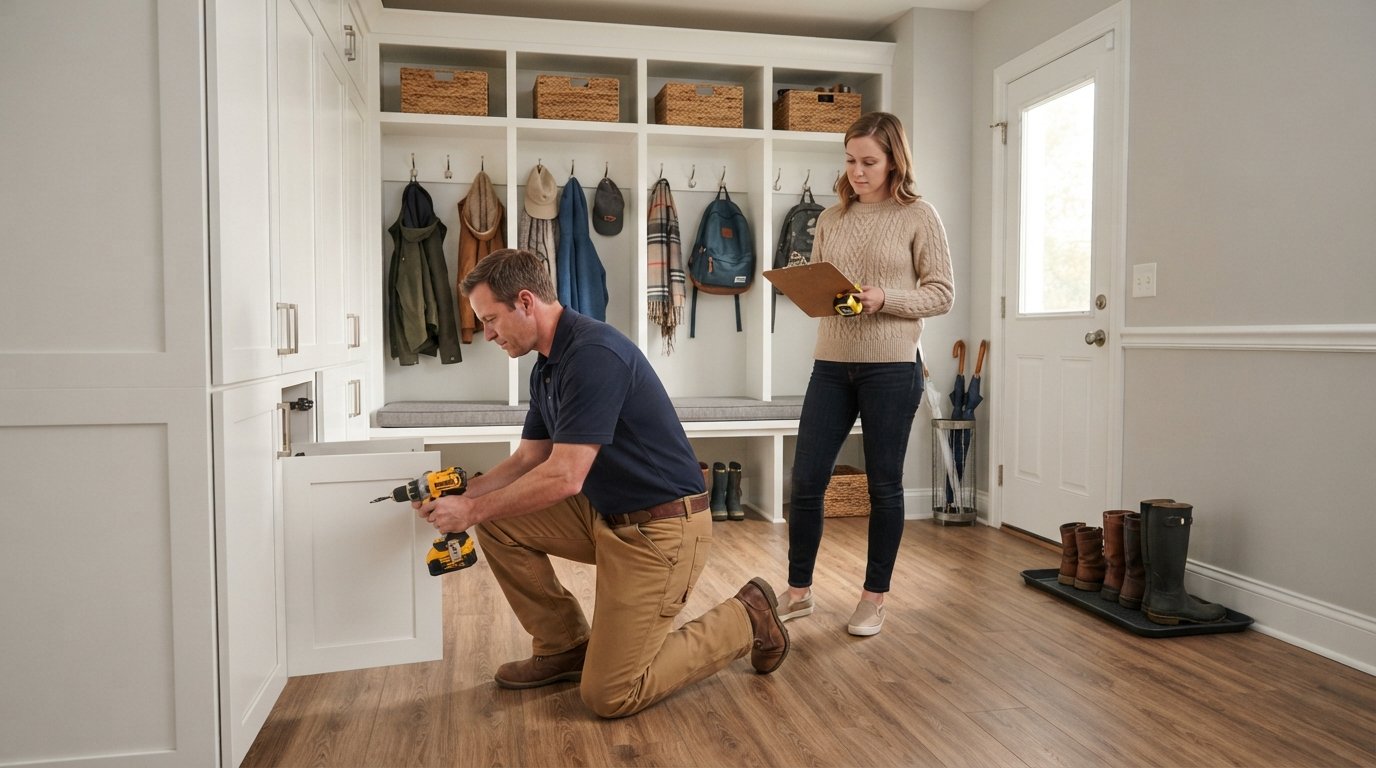
Start with vertical zones. Tall lockers or cubbies, roughly 18 to 24 inches wide per person, give each family member a dedicated column with a hook, a shelf for shoes, and a basket for gloves and hats. Above the lockers, add closed cabinets for seasonal items you do not need daily. Below, a bench at seat height (about 18 inches) gives a place to sit and put on boots, and the space underneath can hold pull-out bins for shoes. If space is tight, a single long bench with open cubbies below and a shelf above can serve the same purpose for less money.
Consider these layout patterns, which cover most household sizes and footprints:
- The single-wall run: All storage along one wall, ideal for narrow mudrooms and galley-style entries.
- The L-shape: Storage wraps two walls, creating a corner for a bench and separating tall lockers from lower cabinets.
- The U-shape: Storage on three sides, best for larger rooms and households with many kids or pets.
- The island or bench-in-the-middle: A freestanding bench or small island adds seating and a drop zone without blocking traffic.
The layout you choose should follow your traffic pattern, not fight it. If the door swings into the room, keep at least 36 inches of clear path. If you have pets, reserve a low hook or bin for leashes and a washable floor area near the door. If you live in a snowy climate, plan for wet boots and dripping coats by choosing water-resistant flooring and avoiding carpet entirely.
Materials and Features That Add Value
The materials you choose affect both durability and long-term cost. Mudrooms take a beating, so spending a little more on surfaces that resist moisture and scratches often saves money later. Tile and luxury vinyl plank are the most practical flooring choices, and both handle wet boots far better than hardwood or laminate. Beadboard or moisture-resistant drywall on the lower walls protects against splashes, while a durable paint or wainscoting stands up to scuffs.
Lighting is often overlooked but matters more than people expect. A combination of overhead light and task lighting inside lockers or above a bench makes the room usable on dark winter mornings. Adding a few outlets and USB charging ports turns the mudroom into a practical charging station for phones, tablets, and even cordless tool batteries. A small utility sink is a nice upgrade for rinsing muddy gear or filling pet bowls, though it adds plumbing cost.
Heating and ventilation keep the room comfortable and prevent moisture problems. If the mudroom is sealed and insulated well, it will not drag down your energy bills. If it doubles as a laundry room, plan for venting and proper dryer exhaust. These details are exactly the kind of thing a qualified local contractor will flag during the estimate, which is why comparing multiple bids is so valuable. If you want to explore how different projects and budgets come together, resources like BuySellRemodel can help homeowners plan affordable improvements and connect with experienced local pros.
How to Budget and Hire the Right Contractor
Once you have a rough design in mind, the next step is turning it into a realistic budget. Start by setting a target number and then deciding which features are must-haves versus nice-to-haves. Most homeowners find that a clear priority list makes it easier to stay on budget without feeling like the project is compromised. If the estimate comes in higher than expected, you can adjust finishes, reduce square footage, or phase the project rather than abandoning it.
Getting multiple free estimates is the single best way to understand fair pricing in your area. When you compare quotes, look beyond the bottom line. Ask each contractor to explain what is included, how long the project will take, and how they handle changes. A detailed, transparent bid is usually a sign of a professional who will communicate well during construction. Vague bids with no line items are a red flag.
Before you sign anything, confirm licensing, insurance, and references. Ask to see photos of similar additions they have completed, and follow up with past clients about timelines and workmanship. A written contract should spell out the scope, payment schedule, and warranty. Never pay the full amount upfront, and always keep a final payment until the work passes inspection and you are satisfied.
A mudroom addition is an investment in how your home functions every single day. When it is designed well, it reduces mess, organizes clutter, and adds usable square footage that buyers notice. When it is designed poorly, it becomes an expensive closet. The difference comes down to planning your storage layout around real life and hiring a contractor who builds to code and communicates clearly. Take the time to compare estimates, ask questions, and choose a team you trust. The result is a hardworking space that pays you back in convenience for years.