
Patio Door Installation: Cost, Steps, and Pro Tips
Discover the true cost of patio door installation, key steps, and expert tips to avoid mistakes. Get free quotes from local pros today.

By Sarah Thomas
Learn more about Door Installation for guides, costs, and what to expect.
Compare Door Installation Pros Near You

Enter your ZIP code to compare top-rated local professionals and request free quotes.
Sliding glass doors bring natural light into a room and open up your living space to the outdoors. But when the old unit sticks, fogs up, or lets in a draft, you face a decision: repair or replace. A full patio door installation can transform your home's comfort and energy efficiency, yet many homeowners hesitate because they worry about cost and complexity. This guide breaks down everything you need to know, from budgeting and choosing materials to hiring the right contractor and avoiding common mistakes.
Why Patio Door Installation Matters More Than You Think
Your patio door is one of the largest openings in your home's envelope. A poorly performing unit can account for up to 25% of your heating and cooling loss. Modern doors with double-pane glass, low-E coatings, and proper weatherstripping make a measurable difference in your monthly utility bills. Beyond energy savings, a new door improves security, reduces outside noise, and instantly updates the look of your room.
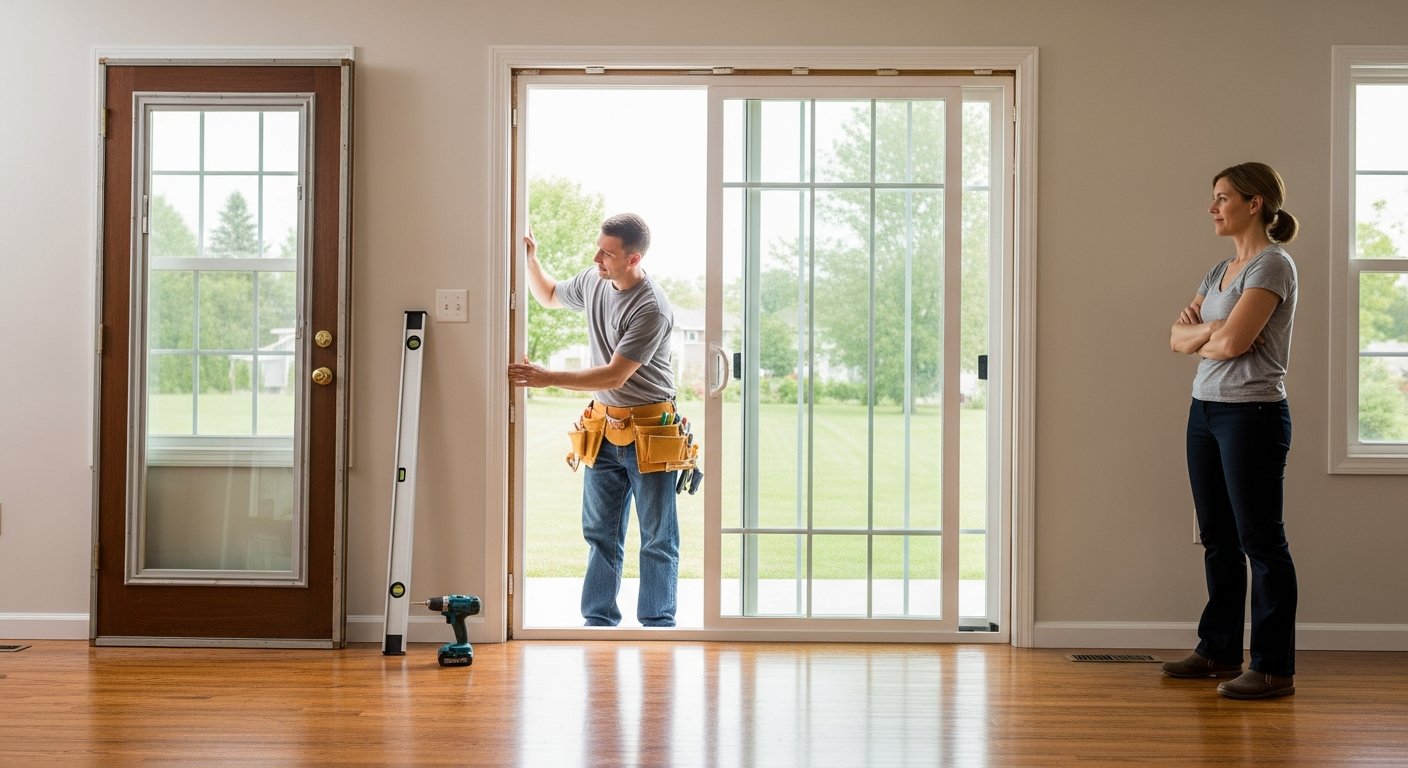
Patio door installation is not a simple DIY swap for most homeowners. The old unit must be removed without damaging the surrounding framing, the rough opening often needs adjustment, and the new door must be perfectly plumb, level, and square. A small error in alignment can cause the door to bind, leak, or fail prematurely. That is why most experts recommend hiring a professional installer, especially for larger or heavier units.
Types of Patio Doors: Which One Fits Your Home?
Before you request quotes, you need to decide which style of door matches your space, budget, and lifestyle. Each type has its own installation requirements and cost profile.
Sliding Glass Doors
Sliding doors are the most common and often the most affordable option. They consist of two or more panels, with one or more panels that slide horizontally on a track. They are ideal for tight spaces because they do not require swing clearance. Installation is generally straightforward, but the track must be perfectly level to ensure smooth operation.
French Doors
French doors feature two hinged panels that swing inward or outward. They offer a wider, unobstructed opening and a classic, elegant look. However, they need more floor space for the swing, and the installation is more complex because each panel must be hung and adjusted individually. Expect a higher cost for both the door and the labor.
Multi-Slide and Folding Doors
For homeowners who want to blur the line between indoors and outdoors, multi-slide or folding (bi-fold) doors create a wide, dramatic opening. These systems are heavy, require structural reinforcement, and cost significantly more. Installation is a specialized job that demands precise engineering and experience. Only consider these if you have a large budget and a clear vision for indoor-outdoor living.
How Much Does Patio Door Installation Cost?
Cost is often the first question on a homeowner's mind. The total price depends on the door type, size, material, glass options, and labor rates in your area. Here is a rough breakdown to help you budget.
- Basic sliding door (vinyl or aluminum): $800 to $2,500 for the door, plus $300 to $800 for installation.
- Mid-range sliding door (fiberglass or wood-clad): $1,500 to $4,000 for the door, plus $400 to $1,000 for installation.
- French doors (pre-hung, fiberglass or wood): $1,200 to $3,500 for the door, plus $500 to $1,200 for installation.
- Multi-slide or folding systems: $5,000 to $15,000 or more, with installation often adding 20% to 30% to the total.
These figures are estimates. Your actual quote will depend on your location, the complexity of the installation, and whether the installer needs to repair the surrounding framing or drywall. Always get at least three written estimates from local contractors before making a decision.
Signs You Need a New Patio Door
Not every drafty door needs to be replaced. Sometimes a simple adjustment or new weatherstripping solves the problem. But if you notice any of the following, it is likely time to invest in a new patio door installation.
- You feel a noticeable draft near the door, even when it is closed and locked.
- The glass is foggy or has condensation between the panes, which means the seal has failed.
- The door is difficult to slide or lock, indicating worn rollers or misalignment.
- You see water damage, rot, or mold around the frame or on the adjacent floor.
- The door is single-pane glass or lacks a low-E coating, making it inefficient.
- Your energy bills are creeping up without a clear explanation.
If any of these sound familiar, start planning your replacement. Ignoring the problem only leads to higher energy costs and potential structural damage.
The Patio Door Installation Process: What to Expect
Understanding the steps involved helps you communicate with your contractor and ensures you are not caught off guard. Here is a typical sequence for a professional patio door installation.
1. Measuring and Ordering
The installer measures the rough opening, which is the framed hole in your wall. They will order a pre-hung door that fits exactly. Never assume a standard size will work; every home is different.
2. Removing the Old Door
The old door is carefully removed, including the frame and any existing flashing. The installer inspects the rough opening for rot, water damage, or structural issues. If problems are found, they must be repaired before the new door goes in.
3. Preparing the Opening
The opening is cleaned, and a sill pan is installed to direct any water that gets behind the door back outside. The installer may also add shims to ensure the opening is level and plumb.
4. Setting the New Door
The new pre-hung door is lifted into place. The installer checks it with a level and uses shims to adjust it until it is perfectly square. Then they screw the frame securely to the studs.
5. Flashing and Sealing
Flashing tape is applied around the exterior edges to create a watertight seal. This step is critical for preventing leaks and rot. The installer also applies exterior caulk and interior foam insulation to fill gaps.
6. Final Adjustments
The door panels are installed, the rollers or hinges are adjusted, and the locking mechanism is tested. The installer ensures the door opens, closes, and locks smoothly. They will also clean up the work area and haul away the old door.
DIY vs. Professional Patio Door Installation
Some handy homeowners are tempted to save money by installing the door themselves. While it is possible, the risks are substantial. A misaligned door can lead to air and water infiltration, which can damage your home's structure. The door itself is heavy and awkward, making it a two-person job at minimum. You also need specialized tools and a thorough understanding of flashing and weatherproofing.
Professional installers bring experience, insurance, and a workmanship warranty. They know how to handle unexpected issues, such as unlevel floors or rotted framing. If something goes wrong, you have recourse. Most experts agree that the few hundred dollars you save on DIY is not worth the risk of a failed installation.
Choosing the Right Contractor for Your Patio Door Installation
Selecting a qualified contractor is the most important decision you will make. A good installer will not only do the job right but also help you choose the best door for your climate and budget.
- Look for a licensed and insured contractor with experience in door installation.
- Read online reviews and ask for references from recent patio door projects.
- Get at least three written estimates that include the door cost, labor, and disposal fees.
- Ask about the warranty on both the door and the installation workmanship.
- Inquire about energy-efficient options, such as low-E glass and argon gas fills.
When you request a free estimate through HomeReModelingsContractors.com, you can compare quotes from vetted local pros who specialize in door installation. This approach helps you find a qualified installer at a price that fits your budget.
Energy Efficiency and Building Codes
Modern patio doors come with a range of energy-efficient features. Low-E glass reflects heat back into your home in winter and keeps it out in summer. Argon gas between the panes reduces heat transfer. Warm-edge spacers and insulated frames further improve performance. Look for the ENERGY STAR label, which guarantees the door meets strict efficiency guidelines.
Your local building code may also require specific performance ratings for doors in your climate zone. A professional installer will know these requirements and ensure your new door complies. This is especially important if you plan to sell your home in the future, as non-compliant installations can be flagged during inspections.
Preparing for Your Patio Door Installation Day
Once you have chosen your door and contractor, a little preparation goes a long way. Clear the area around the door, both inside and outside. Move furniture, rugs, and window coverings out of the way. If the installation is on the second floor, make sure the installer has clear access with a ladder. Discuss the work schedule and any potential disruptions with your contractor in advance.
Common Mistakes to Avoid
Even with a professional on the job, you can make choices that impact the final result. Avoid these common pitfalls.
- Choosing the cheapest door without considering energy efficiency or durability.
- Ignoring the orientation of your home. A west-facing door will get more sun, so you may want a door with a lower solar heat gain coefficient.
- Forgetting to ask about the warranty on the glass and the frame.
- Hiring a general handyman instead of a specialist, unless you have strong references.
- Delaying the installation because you worry about cost. Energy savings and improved comfort often offset the initial expense.
If you take the time to plan and hire the right professional, your new patio door will be a source of enjoyment and value for years to come.
Maximizing Your Return on Investment
A new patio door is more than a functional upgrade. It is a home improvement that can increase your property's resale value and curb appeal. According to industry estimates, replacing an old sliding glass door with a new energy-efficient model can recoup a significant portion of its cost when you sell. The key is to choose a timeless style and neutral finish that appeals to a broad range of buyers.
To get the best value, pair your new door with complementary improvements. Adding a low-maintenance deck or patio, improving outdoor lighting, and refreshing the landscaping near the door can create a seamless transition that buyers love.
Ready to Start Your Patio Door Installation?
Replacing a patio door is a smart investment in your home's comfort, efficiency, and value. By understanding the types, costs, and installation process, you are already ahead of most homeowners. The next step is to gather quotes from qualified local contractors. Use a free estimate service to compare options and choose the professional who meets your needs and budget. With the right plan and the right team, you will soon be enjoying a bright, comfortable, and beautiful entry to your outdoor space.