
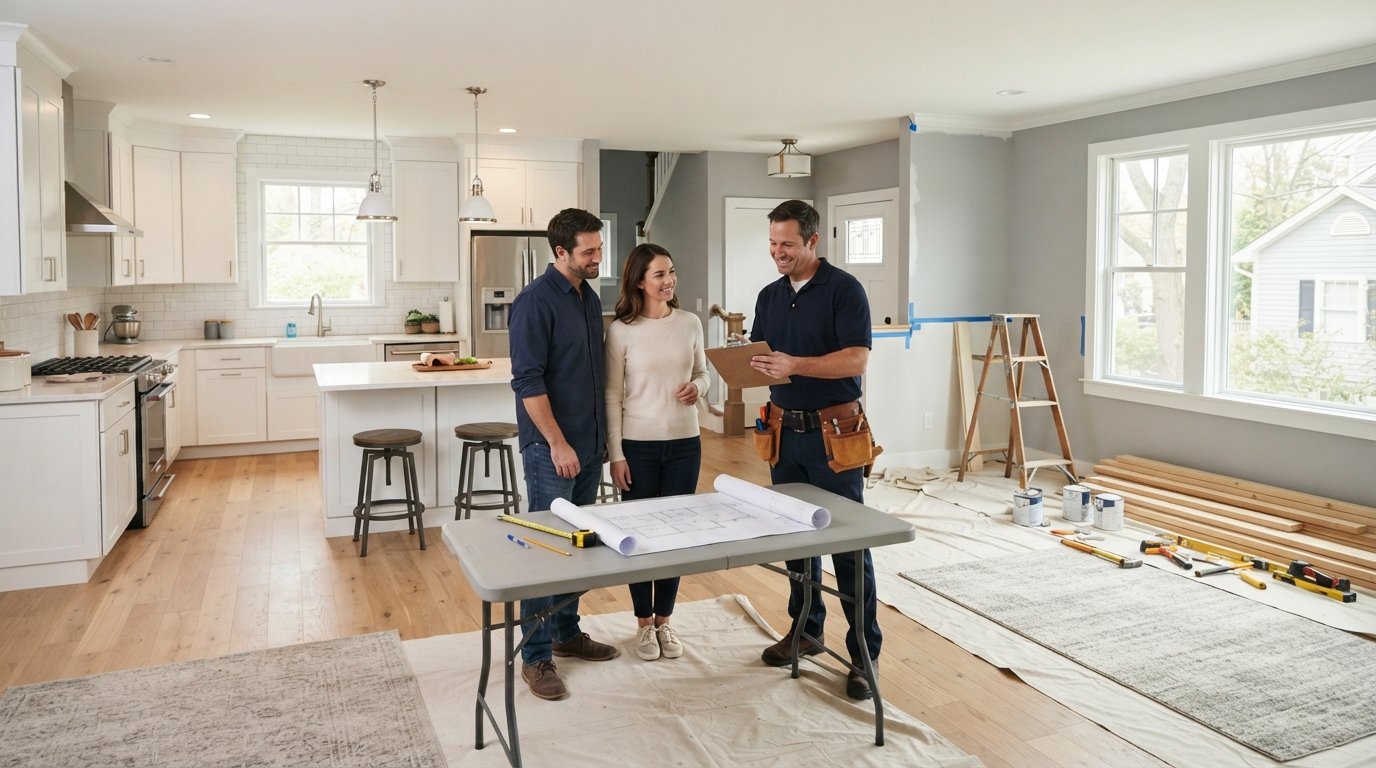
Phased Home Renovation Plan: Budget Big Projects in Stages
A phased home renovation plan for budgeting big projects in stages helps you fund each phase with cash, avoid debt, and keep your home livable throughout.

By Sarah Thomas
Learn more about Home Remodeling for guides, costs, and what to expect.
Compare Home Remodeling Pros Near You

Enter your ZIP code to compare top-rated local professionals and request free quotes.
That dream kitchen or spa bathroom does not have to happen all at once. In fact, trying to fund a whole-house transformation in a single construction push is exactly how homeowners end up with maxed-out credit lines, half-finished rooms, and contractor disputes. A phased home renovation plan for budgeting big projects in stages flips the script: you break the work into logical, self-contained projects, fund each one as cash flow allows, and keep your home livable the entire time. The result is a renovation you can actually afford, with fewer surprises and more control over quality.
Why Phasing Beats a Single Lump-Sum Renovation
The biggest reason homeowners stall on major renovations is not a lack of desire, it is the sticker shock. A full kitchen remodel often lands between $25,000 and $75,000 depending on size, materials, and labor market. A second-story addition can easily exceed six figures. When you see that number as one lump sum, the project feels impossible. When you split it into four or five phases spread over two to three years, each phase becomes a manageable financial event.
Phasing also gives you flexibility. If material prices spike in one season, you can pause and wait for a better window. If your income changes, you adjust the timeline instead of abandoning the project. And because each phase is smaller, you can pay as you go rather than relying entirely on financing. That reduces interest costs and keeps your debt-to-income ratio healthier for future borrowing.
There is a practical construction benefit too. Contractors often charge less for smaller, well-defined jobs because the scope is clear and the risk is lower. A phased plan lets you request competitive bids for each stage, which means you can compare pricing across multiple pros instead of accepting one giant bid from a single general contractor. To understand how permits factor into each stage, review this home renovation permits cost guide before you finalize your budget.
How to Build Your Phased Renovation Plan Step by Step
Creating a phased plan is not complicated, but it does require discipline. You need to define the end goal, break it into logical chunks, and sequence those chunks so each one builds on the last without creating rework. Skipping the sequencing step is the most common mistake. For example, if you install new flooring before running electrical lines for under-cabinet lighting, you may have to tear up that floor later.
Start by listing every improvement you want in the next three to five years. Then group those improvements by system or room. Structural work (foundation, framing, load-bearing changes) always comes first. Next comes rough-in work: plumbing, electrical, and HVAC lines that run inside walls. After that, insulation, drywall, and painting. Finally, finishes: flooring, cabinets, countertops, fixtures, and trim. This order prevents you from opening finished surfaces twice.
Once you have your groups, assign each one a rough cost range and a target season. Then run the numbers against your savings and income. Here is a simple framework for prioritizing phases when money is tight:
- Safety and structural integrity: Roof leaks, foundation cracks, failing electrical panels, and plumbing leaks come first. These protect your home and prevent more expensive damage later.
- Highest-return upgrades: Kitchen and bathroom updates typically recoup 60 to 80 percent of their cost at resale. Energy-efficient windows and insulation reduce monthly bills immediately.
- Quality-of-life improvements: A home office, a larger closet, or a better layout for daily traffic flow.
- Cosmetic and luxury finishes: Designer tile, premium countertops, smart home automation, and decorative lighting.
After you rank your phases, add a 15 to 20 percent contingency buffer to each one. Renovation budgets almost always grow once walls are opened. A buffer keeps a small surprise from derailing your entire plan. If you finish a phase under budget, roll the surplus into the next phase rather than spending it elsewhere.
Financing Each Phase Without Drowning in Debt
One of the strongest arguments for phasing is that it lets you mix funding sources intelligently. Instead of taking one massive loan, you can use cash savings for smaller phases, a home equity line of credit for mid-size phases, and short-term financing only when a phase cannot wait. This layered approach keeps interest payments lower and gives you more negotiating power with contractors because you are not desperate to close a loan on someone else's timeline.
Here are the most common funding options homeowners use for phased renovations:
- Cash savings: Best for phases under $10,000. No interest, no applications, no delays.
- Home equity line of credit (HELOC): Good for mid-range phases. You draw only what you need and pay interest only on the drawn amount.
- Cash-out refinance: Useful if you can lower your overall interest rate at the same time. Closing costs can be high, so run the math carefully.
- Personal loans: Fast funding for smaller projects, but interest rates are usually higher than secured options.
- Contractor financing: Some remodelers offer payment schedules tied to project milestones. Always read the terms and compare against a bank loan.
A practical rule is to never let total renovation debt exceed 20 percent of your home's appraised value. That keeps you from becoming house-poor and preserves your ability to sell or refinance later. If a phase would push you past that threshold, delay it and save more cash first.
It also helps to time your phases around seasonal contractor demand. Late winter and early spring are often slower for remodelers, which means more competitive pricing and faster schedules. If you can be flexible on timing, you may save 5 to 10 percent on labor simply by booking during off-peak months.
Sequencing Phases to Avoid Rework and Waste
Sequencing is where a phased plan either saves you money or costs you money. The golden rule is simple: never finish a surface that a later phase will need to open. That means structural and rough-in work must be complete before drywall, and drywall must be complete before paint and flooring. If you plan to add a bathroom later, rough in the plumbing now while the walls are open, even if you install the fixtures in a future phase.
Consider a typical whole-home renovation broken into four phases over 24 months. Phase one addresses the roof, foundation, and electrical panel. Phase two covers kitchen rough-in and structural changes. Phase three handles bathrooms and flooring. Phase four finishes with paint, trim, and exterior landscaping. Each phase is independently functional, so you can live in the home comfortably between phases.
Communication with your contractor is critical here. Tell every contractor you hire that this is part of a larger phased plan. A good pro will note future connection points, leave access panels, and avoid sealing walls that will need to be opened. If you are still searching for the right professional, BuySellRemodel helps homeowners plan affordable home improvement projects and connect with experienced local contractors, from free estimates to remodeling and repairs. Getting multiple quotes for each phase also protects you from overpaying, since you can compare line-item pricing rather than accepting a bundled bid.
Document everything. Keep a folder with permits, inspection reports, receipts, and photos of open walls before they are closed. This record is invaluable if you sell the home or need to prove code compliance later. It also helps the next contractor understand what was done and when.
Staying Flexible When Costs or Timelines Shift
Even the best phased plan will face surprises. Material costs fluctuate, contractor availability changes, and life events happen. The key is to build flexibility into the plan from day one. Instead of a rigid two-year schedule, use a priority-based roadmap. If phase three becomes too expensive, swap it with a lower-cost phase and come back to it later. The project still moves forward, just in a different order.
Review your plan every six months. Check current material prices, revisit your savings progress, and confirm that your priority list still matches your goals. A renovation plan is a living document, not a contract carved in stone. Homeowners who review and adjust regularly are far more likely to finish their projects without financial stress.
Finally, do not underestimate the value of professional guidance. A local contractor who has completed phased renovations in your area can spot sequencing problems you might miss, recommend cost-saving alternatives, and help you time each phase to your budget cycle. Requesting free estimates for each phase is the simplest way to test the waters without committing to a full renovation contract.
A phased home renovation plan for budgeting big projects in stages turns an overwhelming dream into a series of achievable steps. You protect your finances, keep your home livable, and end up with the same finished result, just on a timeline that works for you. Start with the phase that protects your home, fund it wisely, and let each completed stage build momentum toward the next.