
Red Flags When Hiring a Remodeling Contractor
Learn the top red flags when hiring a remodeling contractor, from upfront cash demands to vague contracts, and protect your home from a costly mistake.

By Sarah Thomas
Learn more about Home Remodeling for guides, costs, and what to expect.
Compare Home Remodeling Pros Near You

Enter your ZIP code to compare top-rated local professionals and request free quotes.
You have finally saved enough to remodel your kitchen or add that master suite. You start interviewing contractors, and everyone sounds great on the phone. But a charming pitch can hide serious problems that lead to delays, cost overruns, and shoddy work. Knowing the red flags when hiring a remodeling contractor is the difference between a smooth project and a costly nightmare. This guide walks you through the warning signs that should make you walk away before you sign anything.
Lack of Proper Licensing and Insurance
One of the first things to verify is whether the contractor holds the required state and local licenses. A legitimate professional will gladly share their license number and proof of insurance. If they hesitate, make excuses, or claim they are "fully covered" without showing certificates, treat that as a major red flag. Licensing ensures the contractor has met basic competency standards, and insurance protects you if someone gets hurt on your property or if the work causes damage.
Ask for a copy of their general liability policy and workers compensation certificate. Call the insurance agency listed on the certificate to confirm the policy is active. Many homeowners skip this step, only to find out later that the contractor was uninsured when an accident happened. That mistake can leave you paying medical bills or repair costs out of pocket. If a contractor cannot provide current documentation, move on to the next candidate.
Requests for Large Upfront Payments
Another common red flag when hiring a remodeling contractor is demanding a hefty deposit before any work begins. While some down payment is normal to secure materials, anything above 10 to 20 percent of the total project cost should raise concerns. Scammers often collect large upfront sums and then vanish, leaving you with an unfinished project and empty pockets. Legitimate contractors have credit lines with suppliers and do not need your money to buy every nail and board.
Be especially wary of contractors who ask for cash only or who pressure you to pay the full amount before the job starts. A reputable professional will set up a payment schedule tied to project milestones, such as after framing, after rough inspections, and upon final completion. If a contractor insists on cash or tries to rush you into a big deposit, that is a clear sign to pause and reconsider. You can also check a contractor's reputation through local building departments and online reviews before committing.
No Written Contract or Vague Estimates
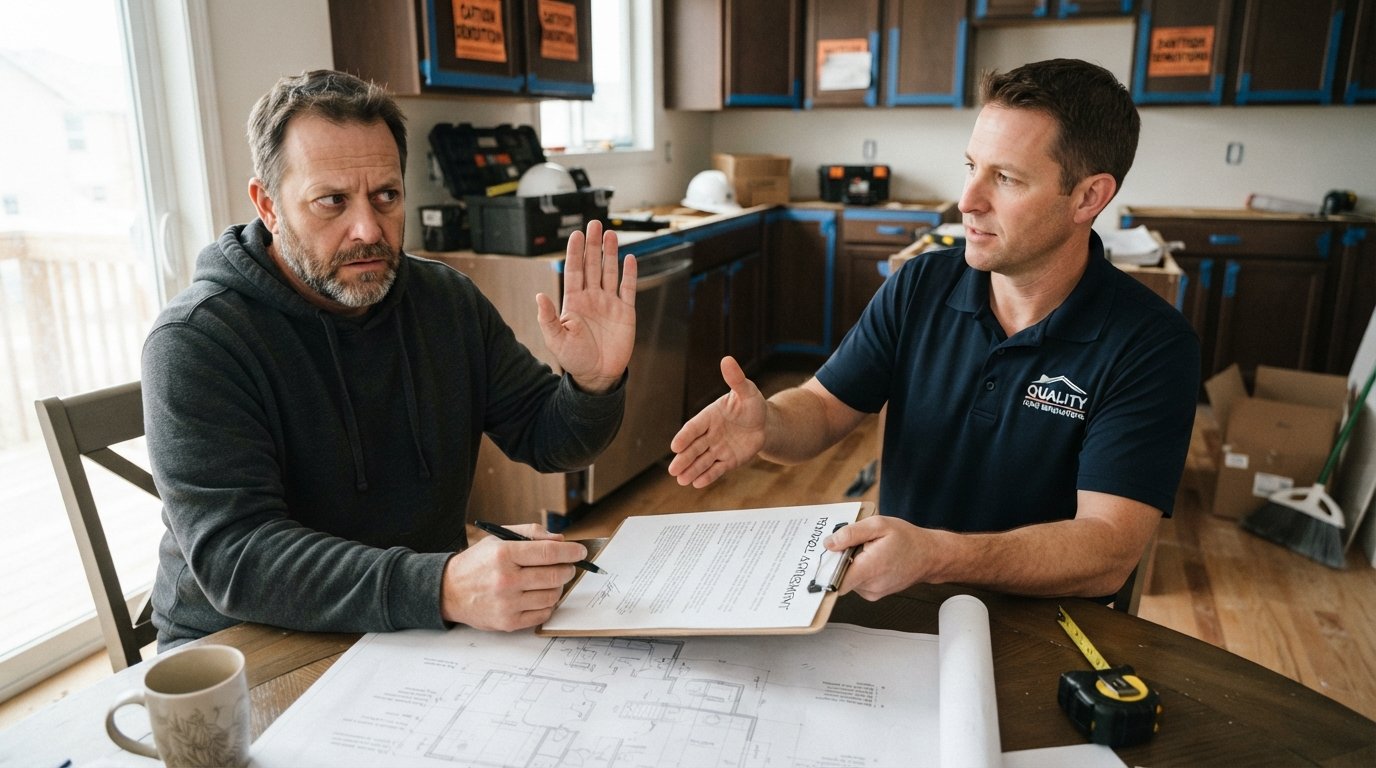
Verbal agreements might work for minor repairs, but a full remodel demands a detailed written contract. If a contractor refuses to put the scope of work, materials, timeline, and payment terms in writing, that is a massive red flag. A vague one-page estimate with no specifics is equally dangerous. Without a clear contract, you have no legal protection if the project goes sideways, and you cannot hold anyone accountable for missed deadlines or poor workmanship.
A solid contract should include the project start and completion dates, a description of all work, specific product names and models, cleanup responsibilities, and a procedure for handling change orders. It should also outline warranty terms and how disputes will be resolved. Before signing, review the document carefully and ask questions about anything unclear. If the contractor seems annoyed by your requests for clarity, that tells you how they will handle problems during the job. Take time to compare bids from multiple pros, and check out our guide to finding the best remodeling contractors for a step by step process.
Lack of Local Presence and References
Contractors who cannot provide a physical business address or who only work through a cell phone and a P.O. box are harder to track down if issues arise. Local contractors have a reputation to protect in the community, and they are more likely to stand behind their work. When a contractor gives you references, actually call those past clients. Ask about the quality of work, whether the crew showed up on time, how the contractor handled problems, and if the project stayed within budget.
If a contractor avoids giving references or says all their clients are too busy to talk, treat that as a serious warning sign. You can also drive by a current job site to observe the crew's professionalism and cleanliness. A messy, chaotic site often reflects the contractor's overall management style. Remember that a legitimate contractor should have a portfolio of completed work and a list of suppliers who can vouch for them. No local presence and no verifiable references means no accountability, so keep searching.
High Pressure Sales Tactics
Some contractors use high pressure tactics to push you into signing quickly. They might claim they have another client ready to take your project date or that the special discount ends today. These tactics are designed to bypass your careful judgment and make you commit before you have done proper research. A trustworthy contractor respects your need to compare options and will not threaten to withdraw a quote if you ask for time to think.
Take note of how the contractor responds when you ask questions. Do they become defensive or dismissive? Do they avoid discussing potential challenges with your home? A professional who is confident in their work will welcome your inquiries and provide honest answers. If you feel pressured, rushed, or manipulated, that is one of the clearest red flags when hiring a remodeling contractor. Walk away and find someone who treats you as a partner, not a sale.
Unusually Low Bids
Everyone loves a bargain, but an estimate that comes in far below the others is not always a blessing. A low bid might mean the contractor plans to cut corners on materials, hire unskilled labor, or add hidden charges later. It could also signal that they do not understand the full scope of the work. While a higher bid is not always better, an unusually low one should make you dig deeper into what is included and what is left out.
Ask the contractor to explain line by line how they arrived at that number. Compare the scope of work, material grades, and labor costs across bids to spot discrepancies. Sometimes a low bid is a legitimately great deal from a contractor who found efficiencies, but more often it is a warning sign of future change orders. A contractor who gives a low bid to win the job and then inflates the price mid project is a classic problem. Protect yourself by getting at least three bids and reading the fine print before choosing.
Poor Communication and Unprofessional Behavior
How a contractor communicates before you hire them is a preview of the entire project. If they do not return calls promptly, show up late to appointments, or seem distracted during meetings, those habits will only get worse once work begins. A remodeling project requires constant coordination, so you need someone who is responsive and organized. Missed calls and vague answers about timelines are red flags when hiring a remodeling contractor.
Also observe their general professionalism. Do they arrive in a marked vehicle with a clean uniform? Do they provide written estimates on company letterhead? Do they have a professional website and email address? These details reflect their business practices. A contractor who operates out of an unmarked truck with no company branding may be difficult to reach later. Trust your instincts: if something feels off during the initial conversation, it probably is.
No Building Permits or Inspection Plans
Major remodeling work usually requires building permits from your local municipality. Permits ensure the work meets safety codes and is inspected at key stages. A contractor who suggests you skip permits to save time or money is putting you at risk. If unpermitted work is discovered later, you could face fines, trouble selling your home, or even the need to tear out and redo the work. A reputable contractor will handle the permit process as part of the job.
Ask the contractor who will pull the permits and schedule the inspections. If they seem unfamiliar with local requirements or try to convince you that permits are unnecessary, that is a major red flag. You want a contractor who values code compliance and safety over speed. Proper inspections protect your investment and give you peace of mind that the work is done correctly. If a contractor does not mention permits on their own, bring it up and see how they react.
No Written Warranty or Guarantee
A quality contractor stands behind their work with a written warranty that covers materials and labor for a defined period. If a contractor only offers a verbal promise or says "we guarantee everything" without documenting it, that is a red flag. Warranties protect you if defects appear weeks or months after the job is done. Without a written warranty, you have little recourse if the tile starts cracking or the roof begins leaking shortly after installation.
Review the warranty terms carefully. What exactly is covered, and for how long? Are there exclusions or conditions you must follow? A contractor who is confident in their craftsmanship will have no problem putting the warranty in writing. If they hesitate or give vague answers, consider it a sign that they may not be around to honor it later. You can also check if the contractor uses materials from reputable manufacturers that offer their own warranties, adding another layer of protection.
How to Protect Yourself Before You Sign
Now that you know the red flags when hiring a remodeling contractor, take steps to protect yourself. Start by getting at least three written bids and comparing them side by side. Check licenses, insurance, and references for each candidate. Never pay more than 20 percent upfront, and always pay by check or credit card, never cash. Keep a paper trail of all communications and change orders.
If a contractor shows any of the warning signs described above, trust your gut and move on. There are plenty of skilled professionals who operate with integrity. Your home is too valuable to risk on a contractor who raises red flags. For help planning your next project and connecting with vetted local pros, BuySellRemodel offers free estimates and a network of trusted contractors. A little extra research now can save you from a world of stress later.
Choosing the right contractor is one of the most important decisions in a remodeling project. By staying alert to these warning signs, you set yourself up for a smoother build, a fair price, and a finished space you truly love. Take your time, ask hard questions, and never let anyone rush you into a decision that feels wrong.