
Resolve Contractor Disagreements Professionally: A Calm Guide
A calm, documented approach to contractor disputes that protects your budget. Call (833)-439-3727 to compare local pros and keep your project on track.

By Irene Parker
Learn more about Construction Services for guides, costs, and what to expect.
Compare Construction Services Pros Near You

Enter your ZIP code to compare top-rated local professionals and request free quotes.
Your kitchen is half-finished, the cabinets do not align, and your contractor just shrugged when you pointed it out. The temptation to fire off an angry text is strong, but a heated exchange rarely fixes drywall. Disagreements on remodeling projects are common, and they escalate fastest when homeowners react emotionally instead of methodically. The good news is that most conflicts, from a mismatched tile pattern to a blown timeline, can be settled without lawyers, liens, or a half-built addition sitting in your yard for months. What separates a quick resolution from a costly standoff is knowing how to resolve disagreements with your contractor professionally, using documentation, calm communication, and a clear process.
This guide walks you through that process step by step. You will learn how to define the problem in writing, review your contract before pointing fingers, request a walkthrough instead of trading messages, and recognize the red flags that mean it is time to pause work and get outside help. Along the way, we will connect these tactics to the realities of budget-conscious remodeling, because protecting your money matters as much as protecting the relationship.
Start With a Written Summary, Not a Confrontation
The single most effective move in any contractor dispute is to write down the problem before you speak. When you summarize the issue in plain language, you force yourself to separate facts from frustration. A written summary also gives your contractor something concrete to respond to, which lowers the odds of a defensive reaction. Think of it as a project memo, not a complaint letter.
Your summary should cover three things: what you expected, what you observed, and what you want done about it. For example, instead of writing "the bathroom tile looks terrible," write "The shower tile on the north wall has three tiles that are visibly uneven and two that are cracked at the edge. The contract specifies a level installation with no cracked tiles. I would like the affected tiles replaced and the wall re-inspected before grouting continues." That version is specific, references the agreement, and proposes a fix. It is far harder to argue with than a vague accusation.
Keep the tone neutral and factual. Avoid words like "cheated," "incompetent," or "unacceptable." Those words invite a fight, and they can be used against you later if the dispute ends up in mediation or court. Stick to dates, locations, photos, and the contract language. Attach photos or short videos to the summary so there is no debate about what you are seeing. A written record created early also protects you if the disagreement grows, because it shows you raised the issue promptly and reasonably.
Review the Contract and Scope Before Accusing Anyone
Before you send that summary, reread the contract, the scope of work, and any change orders. A surprising number of disputes dissolve the moment a homeowner realizes the contract never promised what they assumed. Maybe the bid excluded site cleanup, or the paint grade was specified as builder-grade rather than premium. Maybe a verbal promise about "matching the existing floor" was never written down. If the scope does not support your position, you need to know that before you escalate.
Pay close attention to these areas, which are where most conflicts originate:
- Payment schedule and what each payment is tied to (for example, completion of rough-in rather than a calendar date)
- Allowances for materials and what happens when actual costs exceed them
- Change order procedures and who must sign off before extra work begins
- Timeline language, including weather delays, permit delays, and material lead times
- Warranty terms, punch list procedures, and dispute resolution clauses
If the contract supports your position, quote the relevant clause in your written summary. If it does not, adjust your expectations or negotiate a change order rather than demanding free work. This step also protects you financially. Many homeowners lose leverage because they paid ahead of schedule or approved verbal changes that were never documented. Keeping payments tied to milestones and requiring written change orders are habits that prevent disputes from forming in the first place.
While you are reviewing paperwork, confirm that your contractor is properly insured and bonded. If coverage is unclear, our guide on contractor insurance and bonding explains what to verify before a dispute turns into a liability problem.
Request a Walkthrough Instead of Trading Messages
Texts and emails are useful for creating a record, but they are terrible for resolving nuance. Tone gets misread, messages pile up, and each side starts performing for an audience instead of solving the problem. Once you have your written summary ready, ask for a scheduled walkthrough on site. A face-to-face conversation, with the work in front of both of you, settles most disagreements faster than a week of messages.
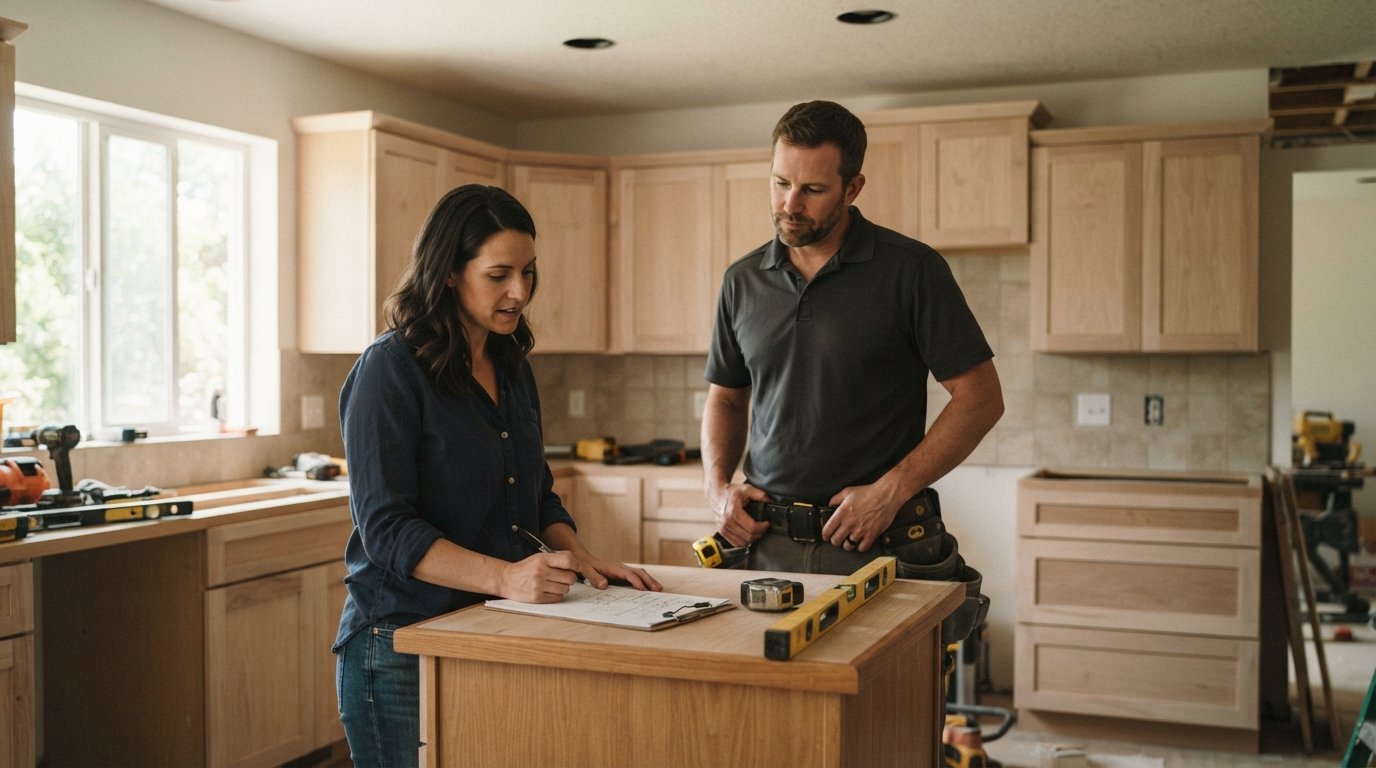
Prepare for the walkthrough like a meeting. Bring a printed copy of your summary, the contract, photos, and a notebook. Walk the space together and point out each issue one at a time, starting with the most objective problems (cracked tile, a door that does not latch, a light fixture installed off-center) before moving to judgment calls like finish quality. Ask open questions: "What is your plan to correct this?" and "When can it be done?" Listen to the answer without interrupting, and take notes. If the contractor proposes a fix you can live with, say so and confirm it in writing afterward.
Set a follow-up date before the meeting ends. A resolution without a deadline is just a conversation. Write down who will do what and by when, then email a short recap the same day. That recap becomes the shared record of the agreement, and it keeps the project moving instead of stalling while both sides wait for the other to blink. If the contractor refuses to meet or keeps rescheduling, treat that as information: avoidance is a warning sign, not a scheduling quirk.
Escalate Carefully: Inspections, Mediation, and Payment Leverage
Some disagreements cannot be settled between the two of you. When the walkthrough fails or the contractor disputes clear evidence, it is time to bring in a neutral third party. A licensed home inspector or a trade-specific inspector (electrical, plumbing, structural) can document defects in writing. That report costs money, but it converts a he-said-she-said argument into an expert opinion, which often convinces a contractor to fix the work rather than risk a formal complaint.
Mediation is the next step before legal action. Many contracts include a mediation clause, and small claims courts often expect you to try it first. A mediator does not decide who is right; they help both sides reach a settlement, usually for a fraction of what litigation costs. Before you get there, review your payment position. If you still owe a final payment or a retainage, you have leverage. If you have paid in full, your leverage is mostly reputational and legal, which is slower and more expensive. This is why milestone-based payments matter so much.
Keep every communication in writing from this point forward, and avoid withholding payment for work that was actually completed, since that can flip the dispute against you. Instead, state clearly in writing which items remain unresolved and what payment is being held pending correction. If you need to find a replacement contractor to finish or repair the work, compare local options carefully and get multiple free estimates before committing. Platforms like BuySellRemodel help homeowners plan affordable projects and connect with experienced local contractors, which is useful when you need a second opinion or a new bid.
Red Flags That Mean It Is Time to Pause Work
Not every disagreement is a negotiation. Some are warnings that the project is heading toward a much bigger problem, and continuing work only deepens your exposure. Pausing the job is a serious step, so document your reasons in writing and give the contractor notice as required by your contract. Then bring in an inspector or attorney before work resumes.
Watch for these signals, which justify hitting pause:
- The contractor asks for large payments ahead of completed milestones, or demands cash outside the contract
- Work is being covered up (walls closed, floors laid) before required inspections have passed
- Licensing, insurance, or permit information cannot be produced on request
- Subcontractors or suppliers report they have not been paid
- The contractor becomes hostile, threatens liens, or refuses to communicate in writing
Any one of these can justify a pause; two or more together usually mean you should consult a construction attorney promptly. A mechanic's lien is the biggest financial risk in these situations, and it can attach to your property even if you paid the general contractor in full. Pausing work, documenting everything, and getting legal advice early is far cheaper than untangling a lien after the project ends.
Build Habits That Prevent the Next Dispute
The best time to resolve a disagreement is before it starts. Homeowners who avoid disputes share a few habits: they put every change in writing, they tie payments to milestones, they photograph progress weekly, and they raise small issues the day they appear instead of saving them up for a blowout. None of this requires conflict; it requires a system. A short weekly check-in with your contractor, even ten minutes, catches problems while they are still cheap to fix.
It also helps to choose the right contractor in the first place. Verify licensing and insurance, read reviews, ask for references from similar projects, and compare at least three bids with itemized scopes. A contractor who communicates well during the bidding process usually communicates well during the build. If you are still shopping for a pro, start by requesting free estimates from local contractors so you can compare pricing, timelines, and professionalism side by side before you sign anything.
Disagreements with contractors are stressful, but they are rarely unsolvable. Write down the issue, check the contract, meet in person, escalate only with evidence, and pause the job when the red flags appear. Handled that way, most conflicts end with a repaired wall and a finished project, not a courtroom. And when a project does go sideways, the homeowners who recover fastest are the ones who kept calm, kept records, and kept the lines of communication open from day one.