
Sump Pump Maintenance and Backup System Costs
Sump pump maintenance and backup system costs, explained with real numbers and simple seasonal steps. Call (833)-439-3727 for local pro estimates.

By Irene Parker
Learn more about Sump Pump Installation or Replacement for guides, costs, and what to expect.
Compare Sump Pump Installation or Replacement Pros Near You

Enter your ZIP code to compare top-rated local professionals and request free quotes.
A finished basement, a home office, or a season's worth of stored belongings can be destroyed in minutes when a sump pump fails during a heavy storm. The frustrating part is that most failures are preventable. A few minutes of testing each season, plus a modest investment in a backup system, can mean the difference between a dry floor and a five-figure cleanup bill. This guide breaks down what sump pump maintenance and backup system costs actually look like in 2026, how to spot trouble before it floods your home, and when it makes more sense to replace a pump instead of repairing it.
How a Sump Pump Works and How Often to Test It
A sump pump sits in a pit at the lowest point of a basement or crawl space. As groundwater rises, it flows into the pit through drain tile or a gravel bed. A float switch triggers the pump, which pushes the water out through a discharge pipe and away from the foundation. If the pump does not kick on, or if it cannot handle the volume of water, the pit overflows and the surrounding area floods.
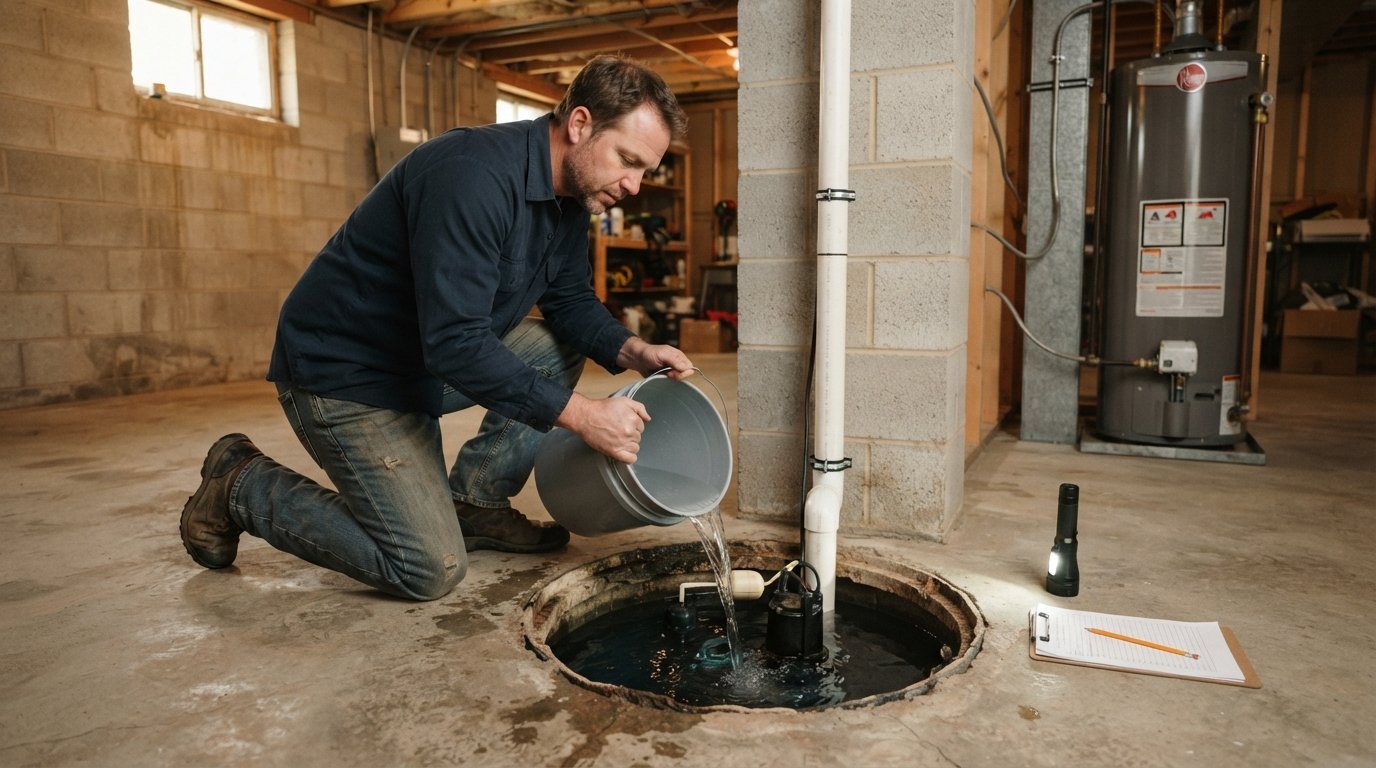
Testing a pump is simple, and it should happen more often than most homeowners realize. The general rule is to test once every two to three months, and always before the rainy season or spring thaw. To test, pour a bucket of water into the pit until the float rises. The pump should start within a few seconds and shut off cleanly when the water level drops. While the pump runs, listen for grinding or rattling, and check that water is flowing out of the discharge line outside.
If the pump hums but does not move water, the intake may be clogged or the impeller may be jammed. If nothing happens at all, the float may be stuck, the breaker may have tripped, or the pump may have reached the end of its life. Catching these problems during a controlled test is far cheaper than discovering them at 2 a.m. during a downpour.
Common Failure Causes: Clogged Intakes, Stuck Floats, and Power Loss
Most sump pump failures fall into three categories, and each one has a different fix and cost profile. Understanding them helps you decide whether to troubleshoot on your own or call a plumber.
- Clogged intakes: Silt, gravel, and debris can block the screen or impeller, causing the pump to overheat or stop moving water. Cleaning the intake is usually a low-cost DIY task, but a badly damaged impeller may require a rebuild or replacement.
- Stuck floats: The float switch is the most common point of failure. It can jam against the pit wall, become coated in sediment, or simply wear out. A stuck float means the pump never turns on, which is why testing matters so much.
- Power loss: Storms that bring heavy rain often knock out power, which is exactly when the pump is needed most. Without a backup, a power outage turns a working pump into a dead one.
Discharge line problems are a fourth, often overlooked cause. If the pipe freezes, kinks, or drains too close to the foundation, water can flow right back into the pit, forcing the pump to run continuously until it burns out. Check that the discharge line slopes away from the house and that the outlet is clear of leaves and ice.
Battery Backup vs. Water-Powered Backup: Options and Costs
A backup system is the single most valuable upgrade for any home with a sump pump. It keeps the pump running when the power goes out, and it can also take over if the primary pump fails. There are two main types, and the right choice depends on your water pressure, budget, and how often your area loses power.
Battery backup systems use a charged battery and a separate pump (or the same pump through an inverter) to move water during an outage. They work in any home, regardless of water pressure, and they can run for hours or even days depending on the battery size and water volume. The tradeoff is upfront cost and battery maintenance. Expect to pay roughly $400 to $1,200 for a quality battery backup unit installed, with premium systems and larger batteries pushing toward $1,500 or more. Batteries typically need replacement every three to five years, which adds $150 to $300 to the long-term cost.
Water-powered backup systems use municipal water pressure to create a vacuum that pulls water out of the pit. They have no battery to maintain and can run indefinitely as long as the water supply is on. They cost less upfront, often $200 to $600 installed, but they use a significant amount of water (roughly one to two gallons for every gallon pumped) and they will not work if the municipal supply is also lost or if you are on a well. In areas with reliable city water and moderate flooding risk, they are a practical, low-maintenance option.
Many homeowners choose a combination: a primary electric pump, a battery backup for power outages, and a water-powered unit as a second layer of defense. That setup offers the highest level of protection, but it also represents the top of the cost range. For most households, a primary pump plus one well-chosen backup is enough.
Seasonal Maintenance Steps Before Heavy Rain or Spring Thaw
Sump pump maintenance is not a one-time task. It follows a seasonal rhythm, and a little preparation before the wettest months can prevent the most expensive emergencies. Here is a practical checklist to run through each spring and fall.
- Test the pump and the float. Pour water into the pit and confirm the pump starts, runs smoothly, and shuts off. Test the backup system the same way, following the manufacturer's instructions.
- Clean the pit and intake. Remove silt, gravel, and debris from the pit. Check that the intake screen is clear and that the pump sits level on a solid base.
- Inspect the discharge line. Make sure the pipe is connected, free of kinks, and sloped away from the foundation. Clear the outdoor outlet of leaves and ice, and confirm water actually exits the line during a test.
- Check the power source. Confirm the pump is plugged into a working GFCI outlet and that the breaker has not tripped. If the pump shares a circuit with other appliances, consider a dedicated circuit.
- Service the backup battery. Test the battery under load, clean the terminals, and check the water level if it is a wet-cell type. Replace the battery on schedule, even if it still seems to work.
Beyond the checklist, it helps to know your pump's age. Most sump pumps last about 8 to 12 years. If yours is near the end of that range and you have had to reset it or clean a clogged intake more than once, start budgeting for a replacement before it fails. A proactive replacement costs far less than emergency water removal, drywall repair, and mold remediation.
If you would rather hand the work to a professional, a local plumbing contractor can inspect the pump, test the backup, and clean the pit in a single visit. Platforms like BuySellRemodel help homeowners compare local pros and request free estimates, which makes it easier to get a fair price on maintenance and backup installation without calling around for days.
Repair or Replace? How to Decide
The repair-versus-replace decision usually comes down to age, repair cost, and reliability. As a general rule, if the pump is under six years old and the repair is a simple fix like a new float switch or a cleared intake, repair is the sensible choice. A float switch replacement typically runs $100 to $250 installed, and a thorough cleaning might cost $100 to $200.
If the pump is older than eight years, has a cracked housing, a burned-out motor, or a failing impeller, replacement is usually the better investment. A new primary pump installed costs roughly $300 to $800 depending on horsepower, pit condition, and whether the discharge line needs updating. Spending $250 to repair a pump that is likely to fail again next season is rarely worthwhile.
There is also a middle path: replace the pump but keep the existing pit and discharge line if they are in good condition. This keeps costs down while restoring reliability. A qualified plumber can tell you which parts are worth saving and which should be upgraded, and they can confirm whether your backup system is compatible with the new pump.
Budgeting for Sump Pump Maintenance and Backup System Costs
When homeowners search for sump pump maintenance and backup system costs, they usually want a realistic number to plan around, not just a range. The honest answer is that costs depend on your pump type, your backup choice, and how much of the work you do yourself. Here is a practical way to think about the annual and one-time expenses.
- Routine maintenance: $0 if you DIY the quarterly testing, or $150 to $300 per year for a professional inspection and cleaning.
- Battery backup installation: $400 to $1,200 installed, plus $150 to $300 every three to five years for a replacement battery.
- Water-powered backup installation: $200 to $600 installed, with little ongoing maintenance cost.
- Primary pump replacement: $300 to $800 installed, typically every 8 to 12 years.
- Emergency repairs: $300 to $1,000 or more, plus water damage costs that can reach thousands.
Seen this way, a backup system pays for itself the first time it prevents a flooded basement. The same is true of a $200 maintenance visit that catches a failing float before the rainy season. Homeowners who treat the pump as a set-and-forget appliance tend to learn this lesson the hard way. Those who test, clean, and budget for a backup spend far less over the life of the system.
It also helps to coordinate sump pump work with other basement or plumbing upgrades. If you are already planning a basement finishing project or a plumbing update, ask your contractor to inspect the sump system while they are on site. Bundling the work can reduce labor costs and ensure the pump and backup are sized correctly for the space. For homeowners planning a broader project, resources like HomeReModelingsContractors.com can connect you with local contractors who handle plumbing, waterproofing, and basement upgrades, so you can get free estimates and compare options before committing.
A sump pump is one of the few home systems that protects everything else in the house, and it deserves the same attention as the furnace or the roof. Test it each season, keep the pit and discharge line clear, and invest in a backup that matches your risk. The costs are predictable and modest compared with the price of a flooded basement, and the peace of mind is worth every dollar.