
Tankless Water Heater Costs and Savings for Homeowners
See how a tankless water heater cuts energy bills, lasts decades, and ends cold showers. Learn real costs and get pro installation tips.

By Sarah Thomas
Learn more about Water Heater Installation or Replacement for guides, costs, and what to expect.
Compare Water Heater Installation or Replacement Pros Near You

Enter your ZIP code to compare top-rated local professionals and request free quotes.
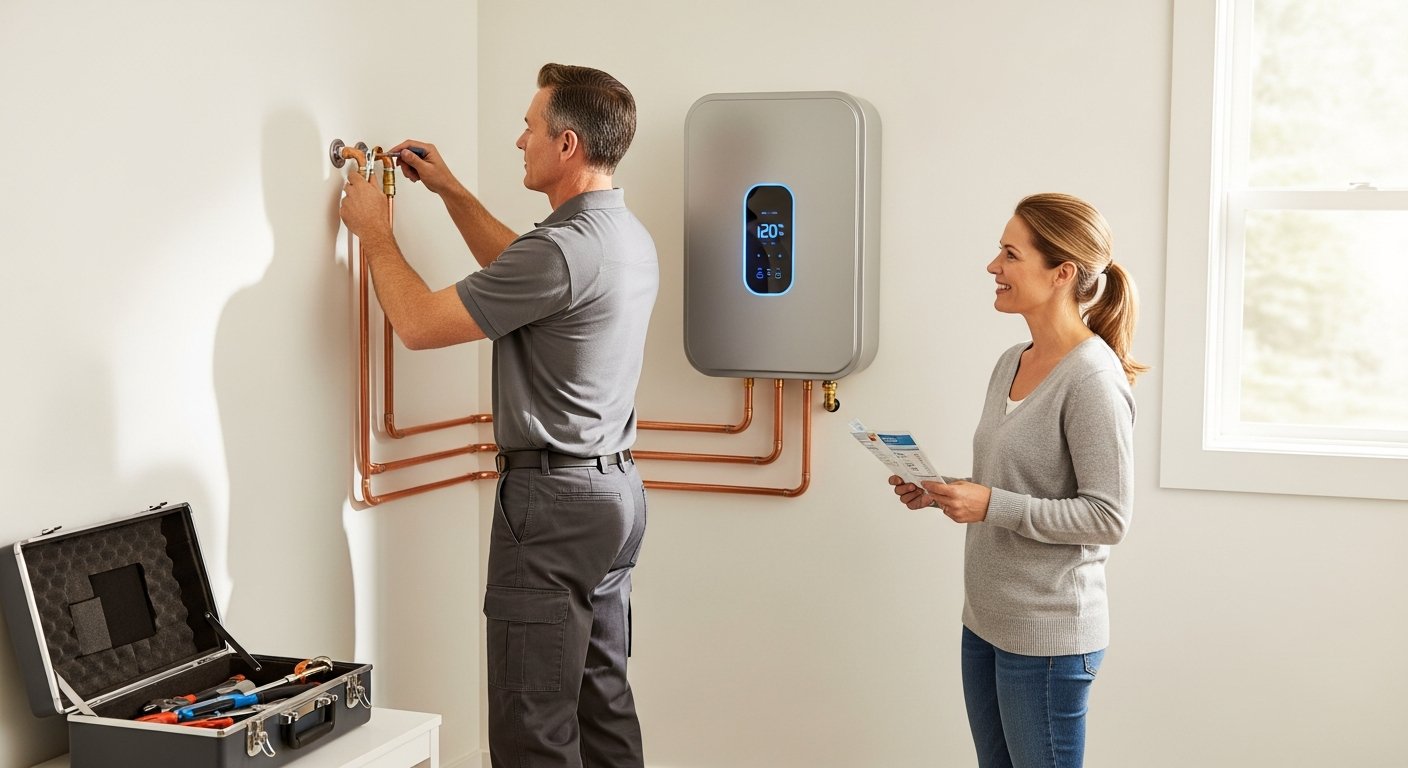
When your old storage tank water heater starts rumbling or runs out of hot water mid-shower, you face a decision. Replace it with the same bulky model, or consider something different. A tankless water heater, also called an on-demand unit, heats water only when you need it. That simple change can lower your energy bills, free up closet space, and give you an endless supply of hot water. But it also comes with a higher upfront price and a few installation quirks. This guide walks through the real costs, benefits, and trade-offs so you can decide if going tankless is the right move for your home.
For many homeowners, the appeal is clear: no more waiting for the tank to refill, no more pilot light burning all day, and no more rust-colored water from a corroded tank. Instead, a gas or electric unit kicks on the moment you turn on the tap, heating water as it flows through a heat exchanger. The result is a steady stream of hot water that never runs out, at least for standard household use. That convenience comes with a price, though, and understanding the full picture is key before you call a contractor.
How a Tankless Water Heater Works
Unlike a storage tank heater that keeps 40 to 60 gallons of water hot around the clock, a tankless unit uses a high-powered burner or electric element to heat water on demand. When you open a hot water faucet, cold water travels through the unit, gets heated to your set temperature, and flows out of the tap. When you close the faucet, the unit shuts off. There is no standby heat loss, which is the energy wasted keeping water warm when no one uses it.
That design is what makes tankless systems more energy efficient. The U.S. Department of Energy estimates that tankless heaters can be 24% to 34% more energy efficient than storage tank models for homes that use 41 gallons or less of hot water daily. Even homes that use more, around 86 gallons per day, can see efficiency gains of 8% to 14%. Over a year, those percentages translate into real dollar savings, though the exact amount depends on your fuel type, usage habits, and local utility rates.
It is also worth noting that tankless units come in two main types: gas and electric. Gas models use a burner and venting system, which makes them more powerful and better for whole-house use. Electric models are smaller, often fit in tight spaces, and cost less upfront, but they may struggle to keep up with simultaneous high-demand uses like running the dishwasher and showering at the same time. Your home's existing infrastructure, such as gas lines or electrical panel capacity, often determines which type is practical.
Upfront Costs and Installation Expenses
The initial price of a tankless water heater is higher than a comparable tank model. A quality gas tankless unit typically costs between $800 and $1,500 for the equipment alone. Electric models run a bit less, usually $400 to $900. But the equipment is only part of the story. Installation labor, venting, gas line upgrades, and electrical work can add another $1,000 to $2,500 or more, depending on your home's layout and the complexity of the job.
For example, if you are replacing a tank heater with a tankless unit, the contractor may need to install a new venting system, upgrade the gas line to handle higher BTU demand, and add a dedicated electrical outlet for the unit's controls. Older homes often require extra work because their gas lines or electrical panels were sized for the original appliances. In contrast, a straight tank-to-tank replacement is usually simpler and cheaper, which is why many homeowners stick with the familiar option when budgets are tight.
To get a clear picture of your own costs, it is wise to request free estimates from local plumbers or HVAC contractors. They can inspect your home, check the gas line or electrical panel, and give you a firm quote for the complete installation. Comparing multiple bids is one of the best ways to avoid overpaying, and it is exactly the kind of step that HomeReModelingsContractors.com recommends before any major project.
Long-Term Savings That Offset the Price
While the upfront cost is higher, the day-to-day operating costs of a tankless water heater are lower. Since there is no standby heat loss, you are not paying to keep 50 gallons of water hot when you are asleep or at work. The U.S. Department of Energy says that for a typical family, the annual savings can range from $80 to $110 or more compared to a standard tank heater. Over the 20-year lifespan of a quality tankless unit, those savings can add up to thousands of dollars.
Another financial advantage is the longer lifespan. A conventional tank water heater lasts about 10 to 12 years before the tank corrodes and leaks. A tankless unit, especially a gas model with quality components, can last 20 years or more if you maintain it properly. That means you may avoid one or two replacement cycles over the same period, which saves you the cost of new equipment and installation labor.
There is also a potential rebate or tax credit angle. Many utility companies offer rebates for installing energy-efficient water heaters, and some states provide incentives for high-efficiency appliances. Federal tax credits for ENERGY STAR certified heat pump water heaters exist, but for tankless models, the credits are less common. Still, it is worth checking with your local utility and your state's energy office to see what programs are available in your area. A quick online search or a call to your provider can uncover savings you did not know existed.
Endless Hot Water and Space Savings
The most tangible benefit for many homeowners is the endless supply of hot water. With a tank heater, you have a fixed amount of hot water, and once it is gone, you wait for the tank to reheat. That can mean cold showers during back-to-back morning routines or when guests are visiting. A tankless unit heats water as it flows, so you can take a long shower, run the washing machine, and fill the bathtub without worrying about running out.
That said, there is a limit to how much hot water a tankless unit can deliver at once. The flow rate, measured in gallons per minute (GPM), determines how many fixtures can run simultaneously. A typical gas unit delivers 6 to 10 GPM, which is enough for one or two showers plus a faucet. But if you have a large family and often run multiple showers, the dishwasher, and the washing machine at the same time, you may need a larger unit or a second unit to keep up. A contractor can help you calculate your home's peak demand and size the system correctly.
Space savings are another strong point. A tankless unit is roughly the size of a carry-on suitcase and mounts on a wall, freeing up floor space in your garage, basement, or utility closet. That extra room can be used for storage, a workshop, or even a small home office. For homes with tight spaces, this alone can justify the switch.
Choosing the Right Size and Fuel Type
Selecting the right tankless water heater is not a one-size-fits-all decision. You need to match the unit's capacity to your household's hot water demand. The key factors are the incoming water temperature in your region, the number of people in your home, and how many fixtures you might use at once. A family of four in a cold climate will need a larger unit than a couple in a warm climate.
Here is a quick checklist to guide your decision:
- Determine your peak hot water demand by listing all fixtures and appliances that might run at the same time (showers, sinks, dishwasher, washing machine).
- Calculate the total flow rate in GPM using average fixture flow rates (shower heads use about 2.5 GPM, faucets about 1.5 GPM).
- Check the ground water temperature in your area; colder incoming water requires more energy to heat, reducing the unit's output.
- Choose gas if you have natural gas service and need high flow rates; choose electric if you have limited gas access or only need hot water in a small area.
- Consider a condensing gas model for even higher efficiency, though these cost more upfront.
Once you have a shortlist of models, talk to a licensed plumber or HVAC contractor. They can verify the specifications, check your home's venting and gas line capacity, and recommend the right unit for your situation. They can also help you avoid the common mistake of buying a unit that is too small, which leads to lukewarm water during peak demand, or too large, which wastes money on unnecessary capacity.
Installation Considerations and Permits
Installing a tankless water heater is not a DIY project for most homeowners. The unit involves gas connections, venting, and often electrical work, all of which require permits and inspections in most jurisdictions. A professional contractor will handle the permit process, ensure the installation meets local building codes, and verify that the venting is safe and compliant. This is not a place to cut corners, since a poorly installed gas unit can create a carbon monoxide hazard.
Before you hire anyone, ask for proof of licensing and insurance, and check references. A reputable contractor will walk you through the entire process, from sizing to final inspection, and will be transparent about costs. They should also explain the maintenance requirements, such as descaling the unit every year or two to remove mineral buildup, especially if you have hard water. Regular maintenance extends the lifespan of the unit and keeps it running efficiently.
If you are already planning a larger remodel, such as a bathroom or kitchen renovation, it is a smart time to consider going tankless. The walls are open, plumbing is accessible, and a contractor can integrate the new unit into the overall design. Bundling the water heater replacement with your remodel can save on labor costs and reduce the disruption to your daily life.
Comparing Tankless to Other Options
To make a fully informed decision, it helps to compare tankless water heaters with the other main types: storage tank, heat pump, and solar. Storage tanks are the cheapest upfront and the easiest to install, but they waste energy through standby heat loss and have a shorter lifespan. Heat pump water heaters are highly efficient but require more space and work best in warm, semi-conditioned areas. Solar systems are the most eco-friendly but have the highest upfront cost and depend on your climate and roof orientation.
Tankless units sit in the middle: higher upfront cost than tanks, lower operating costs, and a longer lifespan. They are a strong choice for homeowners who plan to stay in their home for many years and want to save on energy bills over time. If you are unsure which option fits your budget and lifestyle, a free consultation with a local contractor can help you weigh the trade-offs. They can provide a side-by-side cost comparison based on your home's specifics, so you are not guessing.
One more factor to consider is resale value. Energy-efficient upgrades like a tankless water heater can be a selling point when you put your home on the market. Many buyers appreciate the idea of lower utility bills and modern equipment, and a recent installation can give you an edge in a competitive market. While it is unlikely to add the full cost to your home's value, it can make your listing more attractive.
Making the Switch with Confidence
Deciding whether to install a tankless water heater comes down to your budget, your household's hot water needs, and your long-term plans. If you are tired of running out of hot water, want to lower your energy bills, and are willing to invest more upfront, a tankless system is a strong upgrade. If you are on a tight budget or plan to move in a few years, a traditional tank heater may be the more practical choice.
Whichever route you choose, the smartest move is to get professional advice and multiple quotes. A qualified contractor can assess your home, recommend the right size and fuel type, and give you a clear picture of the total cost. HomeReModelingsContractors.com makes it easy to connect with experienced local pros who can handle the installation, permits, and maintenance. Start by requesting free estimates from a few contractors in your area, compare their recommendations, and move forward with confidence knowing you made an informed decision.
The right water heater is out there, and with the right help, you will enjoy reliable hot water for years to come.