
Top Home Features Buyers Pay More for in Resale
Discover the top home features buyers pay more for in resale, from updated kitchens and bathrooms to energy efficiency, so you can upgrade where it counts.

By Sarah Thomas
Learn more about Home Remodeling for guides, costs, and what to expect.
Compare Home Remodeling Pros Near You

Enter your ZIP code to compare top-rated local professionals and request free quotes.
When you list your home, some upgrades quietly add zero to your bottom line while others spark bidding wars. Buyers walk through a house and mentally calculate what they will need to spend after closing. If your home already has the features they value most, they will pay a premium to avoid the hassle of installing them later. Understanding which improvements actually move the needle helps you spend your renovation budget where it counts instead of guessing. This guide breaks down the top home features buyers pay more for in resale, explains why each one commands a higher offer, and shows how to plan upgrades that hold their value without draining your savings.
Why Some Features Command a Premium
Buyers are not just purchasing walls and a roof. They are buying convenience, efficiency, and peace of mind. A feature adds resale value when it solves a real problem, reduces future maintenance, or matches what similar homes in the neighborhood already offer. A finished basement matters in a market where comparable homes all have one, but the same basement adds little in an area where storage space is abundant and basements are rare.
Scarcity and demand drive the premium. When most listings lack a desirable feature, the few homes that have it stand out immediately and attract stronger offers. That is why a modern kitchen, an updated bathroom, or a functional home office often produces a higher return than a cosmetic change buyers can replicate cheaply on their own. The key is to focus on features that are expensive or disruptive to add later, because that is where buyers perceive the most value.
Location, price point, and buyer demographics also shape what pays off. A starter home in a family-friendly suburb rewards extra bedrooms and fenced yards. A downtown condo rewards smart storage, in-unit laundry, and low-maintenance finishes. Before you commit to a project, look at what nearby listings advertise and what recent sales included. Our guide on the best home improvement projects for resale value covers how to prioritize upgrades by return, and it pairs well with the feature-by-feature breakdown below.
Kitchen Upgrades That Buyers Pay More For
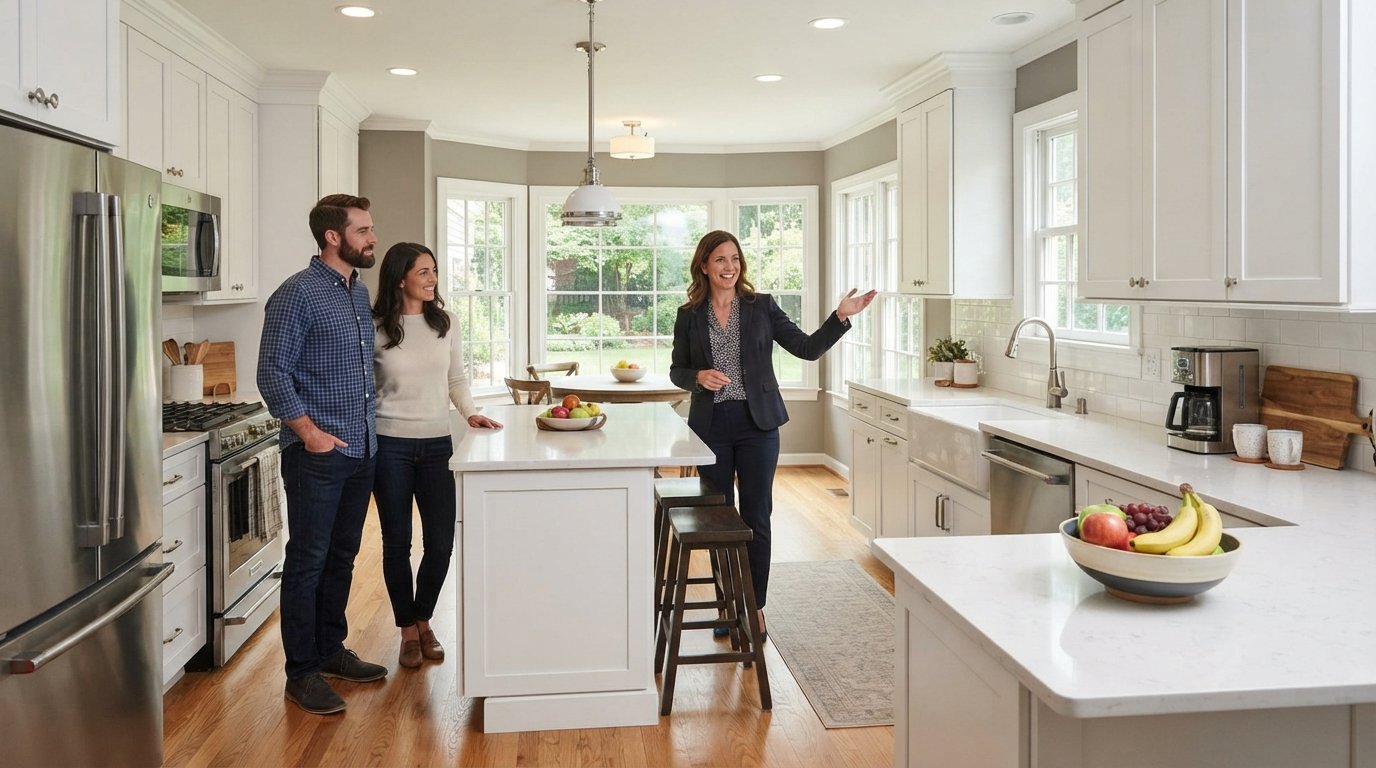
The kitchen remains the single most influential room in most home sales. Buyers see it as the heart of daily life and the most expensive room to renovate, so a kitchen that already works feels like a major win. You do not need a luxury overhaul to capture a premium. What matters is that the space looks current, functions smoothly, and does not signal an imminent project.
Updated countertops, a functional layout, and quality cabinets top the list of kitchen features that raise offers. Solid surface or quartz counters, soft-close drawers, and a practical work triangle tell buyers the kitchen was cared for. Energy-efficient stainless appliances add appeal, particularly when they match and are included in the sale. Even modest updates, like new hardware, a modern faucet, and improved lighting, can shift perception without a full remodel.
Buyers also pay more when the kitchen connects well to adjacent spaces. An open or semi-open layout that keeps the cook involved in conversation consistently outperforms a closed-off galley in buyer surveys. If a wall removal is not in your budget, consider a pass-through or a peninsula to improve flow. For homeowners weighing a full renovation against smaller fixes, a free quote from local contractors can clarify which changes deliver the strongest return in your specific market. You can also read our affordable home improvement planning resources to compare options before you commit.
Bathroom Features With Strong Resale Returns
After the kitchen, bathrooms drive buyer decisions. A home with one outdated bathroom feels like a project, while a home with a clean, updated primary bath feels move-in ready. The features buyers pay more for are consistent: double vanities, a walk-in shower, adequate storage, and modern, water-efficient fixtures.
A primary bathroom with two sinks is a major selling point because it removes a daily friction point for couples. Walk-in showers with glass doors read as modern and easier to maintain than a tub-shower combo, though a bathtub still matters if you are selling to families with young children. Heated floors, good ventilation, and bright, neutral tile round out the features that justify a higher price.
Smaller bathrooms benefit from smart storage and updated finishes. A new vanity, a framed mirror, fresh grout, and a water-efficient toilet cost relatively little but change how buyers perceive the whole home. Avoid over-customizing with bold colors or niche layouts that narrow your buyer pool. The goal is a bathroom that feels clean, current, and effortless.
Energy Efficiency and Smart Home Features
Rising utility costs have pushed energy efficiency from a nice-to-have to a genuine selling point. Buyers pay more for homes that promise lower monthly bills, and they notice when a listing advertises new windows, upgraded insulation, or a high-efficiency HVAC system. These features reduce ongoing expenses, which effectively increases what a buyer can afford.
Specific efficiency features that consistently add value include double-pane or triple-pane windows, a tankless or high-efficiency water heater, proper attic insulation, and a smart thermostat. Solar panels can be attractive, but their value depends on whether they are owned or leased and how the agreement transfers. Be ready to explain the details clearly, because uncertainty about solar contracts can scare buyers away rather than attract them.
Smart home technology adds a smaller but real premium. Video doorbells, smart locks, connected lighting, and security systems appeal to buyers who value convenience and safety. The trick is to keep these features simple and interoperable. A tangle of incompatible apps and subscription fees can feel like a burden instead of a benefit. For more on safety-focused upgrades, see our coverage of home safety improvements that buyers actively look for.
Outdoor Living Spaces Buyers Seek Out
Outdoor living has moved from a bonus to a priority for many buyers, especially in warmer markets. A well-designed deck, patio, or covered porch expands usable square footage without the cost of a full addition. Buyers pay more for outdoor spaces that feel private, low-maintenance, and ready to use on day one.
Features that drive the strongest premiums include a durable deck or paver patio, a covered area for shade and rain protection, built-in seating, and low-maintenance landscaping. An outdoor kitchen or a fire pit can push offers higher in the right neighborhood, but only if it matches local expectations. A basic fire pit in an upscale area may look out of place, while an elaborate outdoor kitchen in a modest neighborhood may not return its cost.
Fencing and privacy also matter, particularly for buyers with children or pets. A quality fence signals security and usability. Keep plantings tidy and avoid high-maintenance features that demand constant watering or replacement. The best outdoor upgrades look intentional and require little work from the new owner.
Layout, Space, and Functional Improvements
Buyers pay a premium for layouts that fit how people actually live. Open-concept living areas, a dedicated home office, and a mudroom or entryway storage all rank high because they solve everyday problems. These features are hard to add later, which is exactly why buyers value them in an existing home.
Extra bedrooms and bathrooms still command higher prices, but the return depends on the local market. In a neighborhood of three-bedroom homes, adding a fourth can lift your price above the ceiling. In an area where four-bedroom homes are standard, the same addition may simply keep you competitive. Finished basements and attic conversions add usable space at a lower cost than a full addition, and they often deliver strong returns when done to code with proper permits.
Storage is an underrated feature that buyers notice. Walk-in closets, pantry space, a functional laundry room, and a garage with organized storage all add perceived value. These improvements are rarely the reason someone buys a home, but their absence can cost you an offer. If you are considering a larger structural change, our guide to space optimization and home additions can help you weigh cost against return.
Features That Do Not Always Pay Off
Not every upgrade earns its keep. Highly personalized features, such as a custom mural, an unusual floor plan, or a luxury feature that neighbors do not share, can narrow your buyer pool. Pools are a classic example: they add value in some markets and become a liability in others because of maintenance costs and safety concerns.
Over-improving for your neighborhood is another common mistake. If you install a chef-grade kitchen in a modest home, you may never recover the cost because the surrounding comps cap your sale price. Likewise, trendy finishes that date quickly can hurt you within a few years. Buyers pay more for timeless quality, not novelty.
Cosmetic changes that buyers can easily do themselves, like paint color or staging, rarely justify a higher price on their own. They help your home sell faster, but they do not usually raise the offer amount. Spend your budget on the features that are expensive or disruptive to add later, and let paint and decor do their job of presentation.
How to Prioritize Your Upgrades
Smart homeowners plan upgrades around return, not personal preference alone. Start by identifying the features local buyers expect, then compare your home against nearby listings. The gaps that appear most often are the ones worth closing first.
A simple priority framework can keep your budget focused:
- Fix what is broken or outdated first, because condition issues scare buyers more than missing extras.
- Upgrade the kitchen and bathrooms, since these rooms drive the strongest emotional response and the highest returns.
- Improve energy efficiency to lower utility bills and appeal to cost-conscious buyers.
- Add or refine outdoor living space if your climate and neighborhood support it.
- Address layout and storage problems that make daily life harder.
Once you have a shortlist, get professional input before you spend. Contractors can flag hidden costs, permitting requirements, and code issues that affect both budget and resale. They can also tell you which upgrades are worth doing now and which can wait. Comparing multiple free estimates gives you a realistic price range and helps you avoid overpaying for the same work.
Timing matters too. If you plan to sell within a year, focus on high-visibility, fast-return projects. If you have several years, you can tackle larger improvements and enjoy them before you sell. Either way, document your permits and warranties, because buyers pay more when they trust the work was done correctly.
Final Thoughts on Features That Sell
The top home features buyers pay more for in resale share a common thread: they solve problems, reduce future costs, or match what the local market expects. Kitchens, bathrooms, energy efficiency, outdoor living, and smart layout choices consistently deliver stronger offers than cosmetic changes or highly personalized upgrades. By focusing on features that are difficult to add later and verifying your plan with local professionals, you can improve your home, enjoy it now, and sell for more when the time comes. Start with a clear budget, compare free estimates from experienced contractors, and let the market guide your choices rather than guesswork. BuySellRemodel