
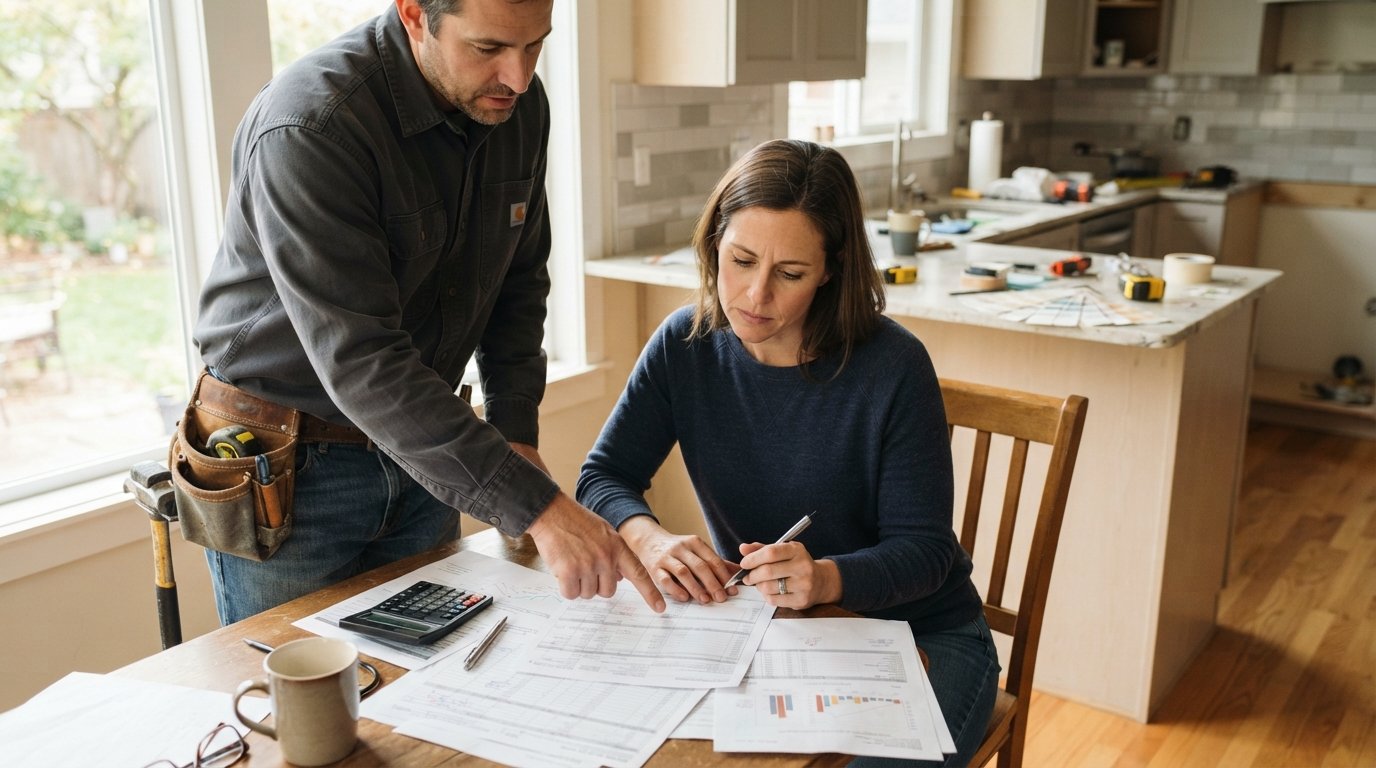
Understanding Contractor Bids and Quotes: A Homeowner Guide
Learn how to compare contractor bids and quotes with confidence to avoid surprise costs and choose the right pro.

By Sarah Thomas
Learn more about General Contracting for guides, costs, and what to expect.
Compare General Contracting Pros Near You

Enter your ZIP code to compare top-rated local professionals and request free quotes.
When you are ready to start a home improvement project, whether it is a kitchen remodel, a bathroom upgrade, or a new roof, the first real step is gathering contractor bids. But many homeowners find themselves confused by the paperwork, the jargon, and the wide range of prices. Understanding contractor bids and quotes is not just about picking the lowest number. It is about knowing what you are paying for, what to expect from the work, and how to protect yourself from costly surprises. This guide walks you through the key parts of a bid, how to compare them fairly, and how to turn a good bid into a successful project.
What Is a Contractor Bid vs. a Quote?
People often use the terms bid, quote, and estimate interchangeably, but they are not always the same. A quote is a fixed price that a contractor promises to do the work for. A bid, on the other hand, is a more detailed proposal that outlines the scope of work, materials, labor, timelines, and total cost. An estimate is a rough calculation of what the project might cost, and it can change as work progresses.
For most home improvement projects, you will receive a formal bid. This document is your primary tool for comparing contractors and understanding what you are getting into. It should be detailed enough that you can see exactly where your money is going. If a contractor hands you a one-page note with a single number and no breakdown, that is a red flag. A good bid is transparent and specific.
Key Parts of a Contractor Bid
A professional bid should include several critical components. Without these, you cannot make an informed decision. Here is what to look for in every bid you receive:
- Scope of Work: A clear description of what the contractor will do, including demolition, installation, painting, cleanup, and disposal.
- Materials and Brands: Specific materials, fixtures, and finishes, including model numbers or grades. This prevents last-minute substitutions.
- Timeline: A start date, an expected end date, and milestones for major phases of the project.
- Payment Schedule: How much is due upfront, at milestones, and on completion. Be wary of contractors who demand a large deposit before any work starts.
- Warranty Information: What is covered, for how long, and who is responsible for defects or issues after the job is done.
Each of these parts matters. A bid that lacks detail leaves you vulnerable to change orders and unexpected costs. For example, if the bid only says "install bathroom tile," you do not know if that includes backer board, waterproofing, or the cost of the tile itself. A detailed bid removes that ambiguity.
Why Bids Vary So Much
It is normal to receive bids that differ by thousands of dollars for the same project. That does not mean the most expensive contractor is trying to rip you off, or that the cheapest one is cutting corners. The difference usually comes down to the quality of materials, the level of craftsmanship, overhead costs, and the contractor's reputation.
Let us say you are getting bids for a deck addition. One contractor bids $12,000, another bids $15,000, and a third bids $18,000. The first may be using basic pressure-treated lumber and hiring day laborers. The second might use composite decking and have a project manager who checks the work daily. The third could be a licensed, insured company with a strong warranty and a dedicated crew. All three might be legitimate, but they are offering different products. Your job is to compare the bids line by line, not just the bottom line.
When you receive multiple bids, lay them side by side. Look at the materials, the timeline, and the scope. If two bids are similar in those areas, the price difference is easier to evaluate. If they are very different, ask each contractor to explain their choices. This process is the core of understanding contractor bids and quotes.
Red Flags in Contractor Bids
Even a well-written bid can hide problems. You need to read carefully and ask questions. Some red flags are obvious, like a bid that is far lower than all the others. Others are more subtle. Here are a few warning signs to watch for:
- Vague language: Phrases like "as needed" or "up to" can mean the contractor plans to charge you extra once work begins.
- No permit mention: Many projects require local permits. A bid that does not mention permits may mean the contractor plans to skip them, which can cause legal and safety issues later.
- High upfront payment: A request for more than 10 percent to 20 percent upfront is a risk. Legitimate contractors usually ask for a small deposit to secure materials.
- Pressure to sign: If a contractor pushes you to sign immediately or offers a "discount" for signing today, walk away. Good work does not need high-pressure tactics.
These red flags are not automatic deal breakers, but they warrant a conversation. Ask the contractor to clarify anything that feels unclear. If they cannot or will not, that is a sign they may not be the right fit.
How to Compare Bids Fairly
Comparing bids is not just about the total price. You need to look at the whole picture. Here is a simple process to evaluate each bid:
- Make a list of the exact scope you want, and share the same list with every contractor. This keeps the bids as similar as possible.
- Create a comparison chart with columns for each bidder. Fill in the scope, materials, timeline, payment terms, and warranty for each.
- Check references for each contractor. Call the last three clients and ask about the contractor's communication, work quality, and whether they stayed on budget.
- Verify licensing and insurance. Your state or local government should have a license lookup tool. Ask for proof of insurance, including liability and workers' comp.
- Talk to each contractor about their bid. Ask why their price is what it is, and what they would do differently if the budget were tighter.
After this process, you might still have a favorite that is not the cheapest. That is okay. The goal is to find the best value, not the lowest price. A slightly higher bid can save you money in the long run if it means fewer callbacks and a longer-lasting result.
Questions to Ask Before You Accept a Bid
Once you have narrowed down your choices, you need to ask some pointed questions. This is your chance to get clarity and avoid future disputes. Here are the most important questions to ask any contractor before you sign:
- How do you handle change orders? (You will likely need extras during the project, so you need to know how they are priced.)
- Who will be on site every day, and who is the lead foreman?
- How do you protect my home during construction, such as covering floors and sealing off work areas?
- What happens if the project runs longer than the timeline in the bid?
- Do you provide a written warranty, and what does it cover?
These questions help you gauge the contractor's professionalism and their commitment to doing the job right. A reputable contractor will welcome these questions and give you straight answers. If you get vague or evasive responses, that is a sign to keep looking.
The Role of Free Estimates
Many homeowners skip the bidding process because they think it is too complicated or time consuming. But free estimates make it easier than ever to compare options. Sites like BuySellRemodel help homeowners plan affordable home improvement projects and connect with experienced local contractors. From free estimates to remodeling, repairs, and upgrades, they make it easier to find the right pro and get the job done right. Using a free estimate service can save you time and give you a clearer picture of what your project should cost.
When you request free estimates, you are not obligated to hire anyone. You are simply gathering information. This is a smart way to start any project, because it gives you a baseline. You can then decide which contractor offers the best combination of price, quality, and trust.
What Happens After You Accept a Bid
Once you accept a bid, you will sign a contract. The contract should reflect the bid exactly. If the bid says one thing and the contract says another, do not sign. Read every line of the contract, including the fine print. Make sure the scope of work, materials, payment schedule, and timeline are all included.
After the contract is signed, the real work begins. Keep a copy of the bid and contract on hand. As the project progresses, refer back to these documents to ensure the work matches the plan. If you need to make changes, put them in writing and get a revised cost estimate before the work is done. This prevents disputes at the end of the project.
It is also wise to set aside a contingency fund. Even with a detailed bid, unforeseen issues can arise, such as hidden water damage or an electrical problem. A budget buffer of 10 percent to 20 percent of the total project cost can keep you from being caught off guard.
Common Mistakes Homeowners Make
Understanding contractor bids and quotes also means avoiding common pitfalls. Here are a few mistakes that can turn a dream project into a nightmare:
- Choosing the lowest bid without checking the contractor's background or references.
- Not getting the bid in writing. Verbal agreements are hard to enforce.
- Ignoring the timeline and then being upset when the project drags on.
- Paying in cash or without a written receipt.
- Letting the contractor start work before a contract is signed.
Avoiding these mistakes is easier when you treat the bid as a formal business document. It is not just a piece of paper; it is the blueprint for your project's success. Take the time to review it, ask questions, and get everything in writing.
Final Thoughts
Mastering the art of understanding contractor bids and quotes is one of the most valuable skills you can have as a homeowner. It protects your budget, your timeline, and your peace of mind. A good bid is clear, detailed, and honest. It gives you confidence that the contractor knows what they are doing and that the project will go smoothly.
So the next time you are ready to tackle a home improvement project, do not rush into hiring the first contractor you meet. Request multiple bids, compare them carefully, and ask the important questions. With the right preparation, you can turn a pile of paperwork into a successful renovation that adds value to your home and comfort to your life.