
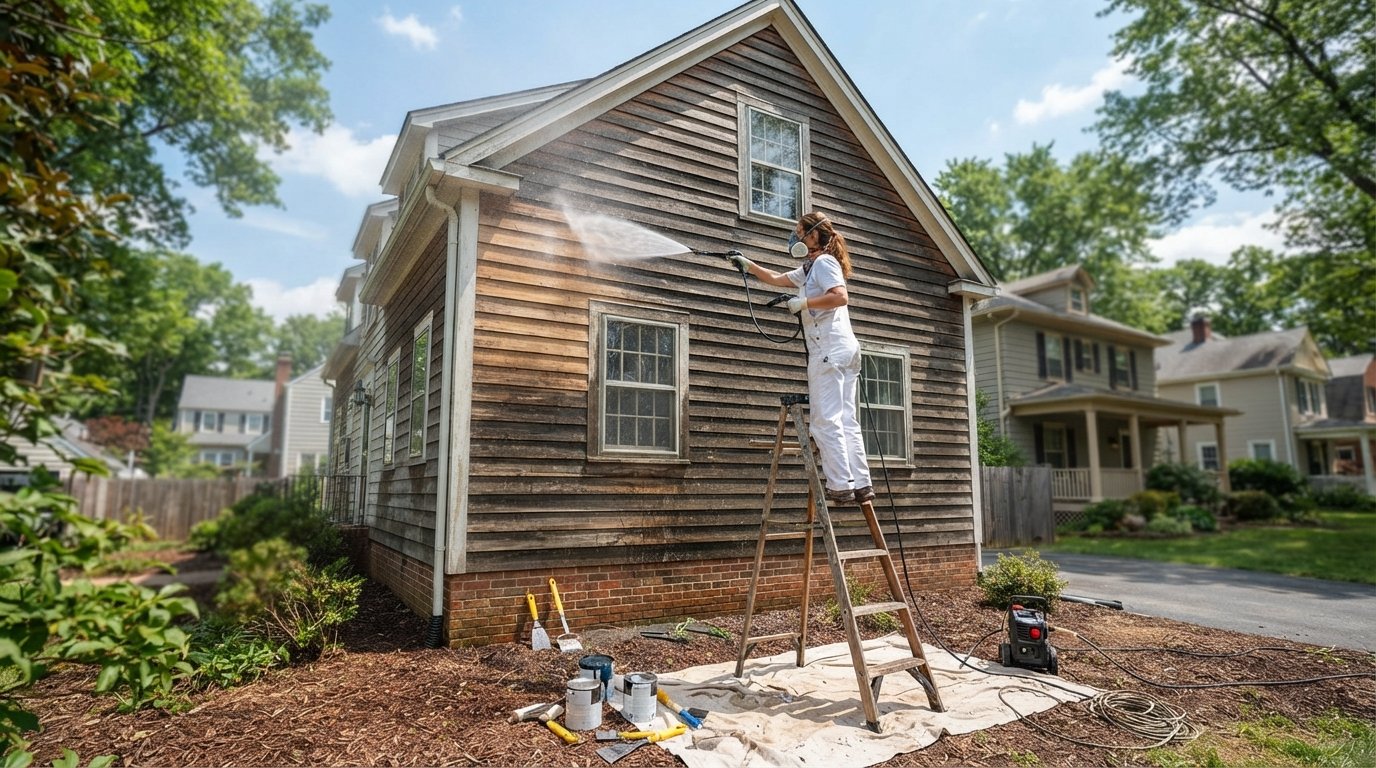
When to Hire a Pro for Exterior Painting: 7 Clear Signs
Know when to hire a pro for exterior painting. Height, prep work, and weather are key factors. Get free estimates and protect your home's curb appeal.

By Cameron Howard
Learn more about Exterior Painting for guides, costs, and what to expect.
Compare Exterior Painting Pros Near You

Enter your ZIP code to compare top-rated local professionals and request free quotes.
Your home's exterior takes a beating every single year. Sun, rain, wind, and temperature swings all work together to break down paint, caulk, and wood. At some point, every homeowner faces the same question: can I handle this myself, or is it time to call in a professional? The answer depends on more than just the size of your house. Height, surface condition, prep work, and even local weather rules all play a role in whether a DIY job will hold up or fail within a season. This guide walks you through the specific situations where hiring a pro for exterior painting makes sense, how to spot the warning signs, and what you should expect when you start collecting estimates.
Why Exterior Painting Is Harder Than It Looks
Most homeowners have painted a bedroom or a hallway at some point. Exterior painting feels like the same job scaled up, but that assumption leads to trouble. Outside surfaces face constant moisture, direct UV exposure, and dramatic temperature shifts. Paint that looks fine on a drywall interior can peel, blister, or chalk within months when applied to siding that was not properly prepped or when the weather was not right during application.
Prep work is where most DIY exterior painting projects fall apart. Professionals spend the majority of their time on preparation: pressure washing, scraping loose paint, sanding rough edges, filling cracks, priming bare wood, and masking windows, doors, and trim. Skipping or rushing these steps is the single biggest reason exterior paint fails early. A pro knows that a flawless finish starts long before the first brushstroke.
There is also the physical reality of the job. Ladders, scaffolding, and extension poles are not just inconvenient; they are genuinely dangerous without training and the right equipment. Falls from height remain one of the most common home improvement injuries. If your project requires working above the first story, on steep rooflines, or around complex architectural features, the risk factor alone may justify hiring a professional.
Signs It Is Time to Call a Professional Painter
Not every exterior painting project demands a crew. A single-story ranch with simple siding and minimal prep might be a reasonable DIY weekend project. But certain conditions push the job firmly into professional territory. Here are the clearest indicators that you should start looking for local painting contractors.
- Your home is two or more stories tall. Working at height requires ladders, harnesses, and experience. The risk of injury and the difficulty of achieving an even finish increase dramatically with every additional story.
- The existing paint is peeling, cracking, or blistering. These symptoms usually point to moisture problems or poor surface preparation underneath. A pro will diagnose the root cause before painting, not just cover it up.
- Your siding or trim has rot, mold, or structural damage. Painting over damaged wood is a waste of money. A professional can identify what needs repair or replacement before the paint goes on.
- You live in an area with strict HOA or historic district rules. Color approvals, application methods, and even the type of paint you can use may be regulated. A local pro already knows these requirements.
- Your schedule does not allow for proper weather windows. Exterior paint needs specific temperature and humidity conditions to cure correctly. Missing those windows means redoing the work.
Each of these situations adds complexity, risk, or both. When two or more apply to your project, the math almost always favors hiring a professional. The cost of fixing a failed DIY paint job, including stripping, sanding, and repainting, typically exceeds what you would have paid a pro in the first place.
The Real Cost of Getting It Wrong
Homeowners often focus on the upfront price of hiring a painter and overlook the long-term cost of a failed job. Exterior paint that peels within a year or two does not just look bad; it exposes your siding to moisture damage, which can lead to rot, mold, and expensive structural repairs. Repainting over a failing surface without addressing the underlying problem just delays the inevitable and adds another layer of material that will eventually need to come off.
Professional exterior painting services typically come with a warranty, often covering labor and materials for several years. That warranty has real value. If something goes wrong, the contractor returns and fixes it. When you paint it yourself, you own every mistake, every drip, every missed spot, and every early failure. For a job that should last seven to ten years, that is a significant risk to carry alone.
There is also the hidden cost of your own time. A proper exterior paint job on a typical single-family home involves 40 to 80 hours of work for an experienced crew. For a homeowner doing it for the first time, that number can easily double. When you factor in equipment rental, paint, primer, caulk, and the value of your weekends, the gap between DIY and professional narrows considerably. If your time is valuable and your tolerance for risk is low, hiring a pro is the more economical choice in real terms.
What to Look for in an Exterior Painting Contractor
Once you have decided to hire a professional, the next step is finding the right one. Not all painting contractors are equal. Some specialize in new construction, others focus on repaints and restoration. You want someone with direct experience on homes similar to yours, in your climate, with your type of siding.
Start by asking for local references and photos of completed exterior projects. A reputable contractor will have a portfolio and be happy to share it. Check licensing and insurance before anything else. General liability insurance and workers compensation coverage protect you if someone gets hurt or something gets damaged on your property. If a contractor cannot provide proof of both, walk away.
Get written estimates from at least three contractors. Each estimate should break down labor, materials, prep work, and timeline. Be wary of bids that are dramatically lower than the others; they often signal skipped prep work or cut-rate materials. For a deeper look at how to evaluate contractor bids and avoid common hiring mistakes, see our guide on DIY vs professional: when to hire a contractor.
Ask specifically about the prep work included in the quote. A quality contractor will describe pressure washing, scraping, sanding, priming, and caulking in detail. If the estimate just says "paint exterior," ask for a written scope of work. The prep is where the value lives.
DIY vs Professional: A Practical Decision Framework
If you are still on the fence, run your project through a simple decision framework. Answer these questions honestly:
- How tall is the highest point you need to paint? If it requires more than a standard step ladder, consider a pro.
- How much prep work is needed? If you are looking at scraping, sanding, and priming more than a small area, the job is bigger than it appears.
- What is your weather window? Exterior paint needs dry conditions and moderate temperatures. If your local climate is unpredictable, scheduling becomes a professional advantage.
- What is your comfort level with heights and power equipment? Pressure washers and extension ladders are unforgiving.
- What is your budget for mistakes? If a failed job would strain your finances, hire a pro with a warranty.
If you answer "high," "a lot," "unpredictable," "low," or "none" to any of these, the scale tips toward professional help. The good news is that getting estimates is free and fast. You can compare options and make a decision without pressure. Services like BuySellRemodel help homeowners plan affordable home improvement projects and connect with experienced local contractors, making it easier to find the right pro and get the job done right.
How to Prepare for a Professional Exterior Paint Job
Hiring a pro does not mean you have zero role in the project. The best outcomes happen when homeowners and contractors communicate clearly before work begins. Start by clearing the area around your home. Move vehicles, patio furniture, grills, and anything else that could block access or get splattered. Trim back bushes and shrubs at least a few feet from the siding so the crew can work efficiently.
Discuss the color selection process early. Your contractor can help you understand how different colors and finishes perform on your specific siding material. Some colors fade faster than others, and darker colors absorb more heat, which can affect how long the paint lasts. Ask about the brand and grade of paint being used. Top-tier exterior paints cost more but typically last several years longer than budget options.
Confirm the timeline and daily work hours. Exterior painting projects are weather-dependent, so build in some flexibility. Ask how the crew will protect your windows, doors, and landscaping during the job. A professional operation will have clear answers for all of these questions and will put the details in writing.
When DIY Makes Sense
To be fair, there are situations where DIY exterior painting is a reasonable choice. If you have a single-story home with simple siding, minimal prep work, and you genuinely enjoy the process, you can save money by doing it yourself. You will need to invest in quality tools, take your time with prep, and wait for the right weather conditions.
Small projects like painting a front door, shutters, or a single section of trim are also good DIY candidates. These jobs are low-risk, quick, and hard to get catastrophically wrong. But when the scope expands to the full exterior of a multi-story home with complex prep needs, the risk-to-reward ratio shifts quickly.
Be honest with yourself about your skills and your schedule. A rushed DIY job is worse than no job at all. If you cannot commit the time and attention the project deserves, hiring a professional is the responsible choice.
Exterior painting protects your home from the elements and shapes its curb appeal for years to come. Whether you hire a pro or take it on yourself, the key is matching the approach to the actual demands of the job. For most homeowners facing two-story walls, peeling paint, or unpredictable weather, the smartest move is getting a few free estimates and letting a professional handle the prep, the height, and the warranty. Your house, and your weekends, will thank you.