
Attic Encapsulation Cost and Energy Savings Guide
Attic encapsulation cost and energy savings explained, plus a 15-30% bill cut. Call (833)-439-3727 for expert help.

By Irene Parker
Learn more about Insulation Installation or Upgrade for guides, costs, and what to expect.
Compare Insulation Installation or Upgrade Pros Near You

Enter your ZIP code to compare top-rated local professionals and request free quotes.
Your attic might be the most overlooked room in your house, but it could also be the biggest drain on your energy budget. If you have ever felt a draft in winter, noticed your upstairs baking in summer, or cringed at your monthly utility bill, the culprit is often an underperforming attic. Attic encapsulation is a whole-home upgrade that seals the attic from the outside environment, and for many homeowners, it delivers a noticeable drop in energy costs and a major boost in comfort. But what does attic encapsulation cost, and how much can you really save on energy? This guide breaks down the numbers, the process, and the practical tradeoffs so you can decide if it is the right move for your home.
What Attic Encapsulation Actually Involves
Attic encapsulation is not just blowing more insulation onto the floor. It is a comprehensive air-sealing and insulation strategy that turns your attic into a conditioned space, or at least a semi-conditioned one. The goal is to stop outside air from entering the attic and to stop conditioned air from leaking out of the living space below. When done correctly, encapsulation addresses the roof deck, the gable walls, the attic floor, and every penetration where air can sneak through.
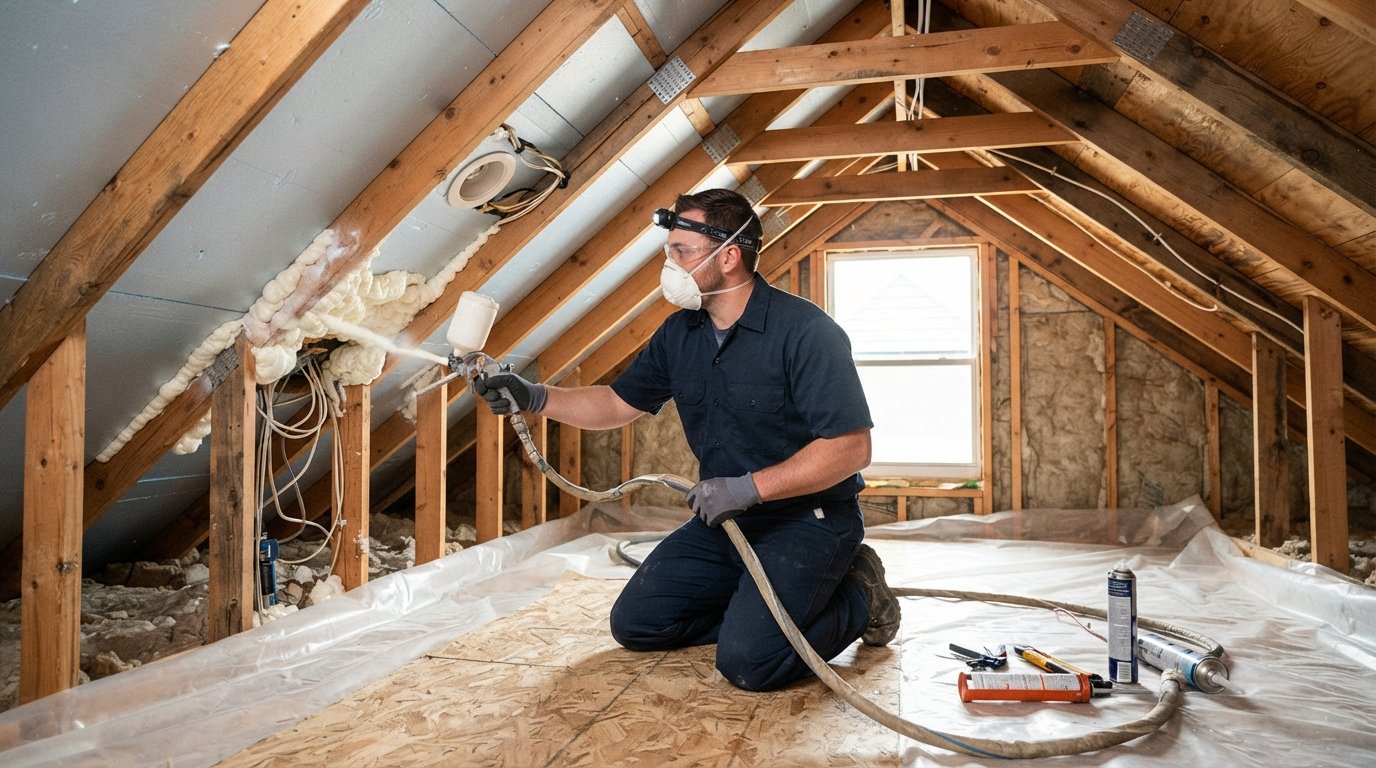
A typical encapsulation project includes sealing gaps around wiring, plumbing, and recessed lights; installing a radiant barrier or rigid foam board against the roof rafters; and applying spray foam insulation to create a continuous air barrier. In some cases, the contractor will also cover the attic floor with a durable liner and add a dehumidifier to manage moisture. The result is an attic that stays closer to the temperature of your living space, which reduces the workload on your HVAC system.
This approach differs from traditional insulation because it focuses on the building envelope rather than just adding R-value. Traditional insulation slows heat transfer, but it does not stop air movement. Encapsulation stops both, which is why the energy savings can be more dramatic. If you are also planning to upgrade your electrical service to support a modern HVAC system or a dehumidifier, our guide on electrical panel upgrades and savings can help you plan for that added capacity.
The Real Cost of Attic Encapsulation vs. Traditional Insulation
Cost is the first question most homeowners ask, and the answer varies based on your attic size, location, and the condition of your roof. On average, attic encapsulation costs between $3,000 and $8,000 for a typical single-family home, with some projects reaching $12,000 or more for larger or more complex spaces. The price per square foot usually falls between $2.50 and $6.00. Traditional blown-in insulation, by contrast, often costs $1,500 to $3,500 installed, which is why some homeowners hesitate. But the comparison is not apples to apples.
Encapsulation includes air sealing, moisture control, and often a radiant barrier, which are separate line items in a traditional insulation project. When you factor in those upgrades, the gap narrows. More importantly, encapsulation can reduce energy bills by 15 to 30 percent in many homes, while traditional insulation alone might only trim 10 to 15 percent. The payback period for encapsulation is often five to ten years, depending on climate and energy prices.
Here is a breakdown of what drives the price:
- Attic size and accessibility: Larger attics require more material, and tight spaces or steep roof pitches increase labor.
- Insulation type: Spray foam is more expensive than fiberglass or cellulose but provides superior air sealing.
- Moisture and ventilation work: If your attic has existing moisture problems, remediation adds cost.
- Local labor rates: Urban areas and regions with strict building codes tend to be pricier.
It is also worth noting that encapsulation can be paired with other efficiency upgrades, such as sealing ductwork or upgrading your HVAC system. If you are comparing bids, ask contractors to itemize the air sealing and moisture control components so you can see what you are paying for. For a broader look at remodeling costs and budgeting, you can also explore resources that help you plan multiple projects at once.
Energy Savings and Comfort Benefits You Can Expect
The energy savings from attic encapsulation come from two directions: you stop losing conditioned air through the attic, and you reduce the heat gain or loss that occurs through the roof. In summer, an encapsulated attic stays cooler, which means your air conditioner does not have to work as hard to keep the living space comfortable. In winter, the sealed attic prevents warm air from escaping, so your furnace runs less often. Homeowners often report a 15 to 30 percent reduction in heating and cooling costs, though results depend on the starting condition of the home.
Comfort improvements are often more noticeable than the dollar savings. Rooms that were once too hot or too cold become more usable. Drafts disappear, and the overall humidity level in the home becomes easier to manage. Encapsulation also reduces the amount of dust and allergens that enter through the attic, which can be a welcome benefit for allergy sufferers. If you have ever avoided using a bonus room or upstairs bedroom because of temperature swings, encapsulation can change that.
Another benefit is the reduced risk of ice dams in cold climates. Ice dams form when warm air escapes into the attic, melts snow on the roof, and then refreezes at the eaves. By keeping the attic cool and sealed, encapsulation helps prevent this costly problem. Similarly, in humid climates, encapsulation can reduce the chance of mold growth in the attic by controlling moisture. These secondary benefits add value beyond the energy bill.
To put the savings in perspective, consider a home with a $2,400 annual energy bill. A 20 percent reduction saves $480 per year. Over ten years, that is $4,800, which can offset a significant portion of the installation cost. If you also factor in the avoided cost of ice dam repairs or mold remediation, the return on investment can be even stronger.
Moisture and Ventilation: The Critical Details
Encapsulation changes the way moisture moves through your attic, and that is why proper ventilation and moisture control are non-negotiable. In a traditional vented attic, outside air flows through soffit and ridge vents to carry away moisture. When you encapsulate, you are intentionally closing those vents to create a sealed environment. If this is done without addressing moisture, you can create a recipe for condensation, mold, and wood rot.
A reputable contractor will assess your attic's moisture profile before recommending encapsulation. They may install a dehumidifier, add a vapor barrier, or use spray foam that is specifically designed for closed cavities. In some cases, they will leave a small amount of ventilation to prevent pressure imbalances. The key is to ensure that any moisture generated inside the home, from cooking, bathing, or laundry, does not get trapped in the attic. Proper air sealing at the ceiling plane helps, but it is not a substitute for a holistic moisture management plan.
Ventilation also matters for roof longevity. If your roof deck is not properly protected, trapped heat and moisture can shorten the life of your shingles. Encapsulation contractors often install a radiant barrier or a layer of closed-cell spray foam directly to the underside of the roof deck, which protects the shingles from temperature extremes. This is one reason why encapsulation can extend the life of your roof, but it also means the installation must be done correctly. Cutting corners on moisture control can lead to costly repairs down the road.
Before you commit, ask your contractor about their approach to moisture testing and ventilation. A good contractor will perform a blower door test before and after the project to measure air leakage and confirm the encapsulation is working. They should also provide a written moisture management plan. If you are unsure about the right approach for your climate, consider consulting a home energy auditor for an independent assessment.
Is Attic Encapsulation Worth the Investment?
For many homeowners, attic encapsulation is worth the investment because it addresses the root cause of high energy bills and uncomfortable rooms. Unlike cosmetic upgrades, encapsulation improves the performance of your home in a way that pays you back every month. The upfront cost is higher than traditional insulation, but the combination of energy savings, comfort improvements, and moisture control often justifies the expense. If you plan to stay in your home for at least five years, the math usually works in your favor.
However, encapsulation is not the right choice for every situation. If your roof is near the end of its life or if you have existing structural issues, you may need to address those first. In some cases, a simpler air sealing and insulation upgrade can capture most of the savings for a fraction of the cost. A trusted contractor can help you weigh the options and choose the approach that fits your budget and goals. You can start by requesting a free estimate from local professionals who specialize in attic and insulation work.
When you are ready to explore your options, BuySellRemodel is a helpful resource for planning affordable home improvement projects and connecting with experienced local contractors. They offer free estimates and can help you compare bids so you can move forward with confidence. Whether you choose full encapsulation or a targeted insulation upgrade, the key is to work with a contractor who understands building science and takes moisture control seriously.
In the end, attic encapsulation cost and energy savings are two sides of the same coin. The upfront investment can feel significant, but the monthly savings and improved comfort make it a smart long-term play for many homeowners. By understanding the process, the costs, and the critical role of moisture management, you can make an informed decision that improves your home's efficiency and your family's comfort for years to come.