
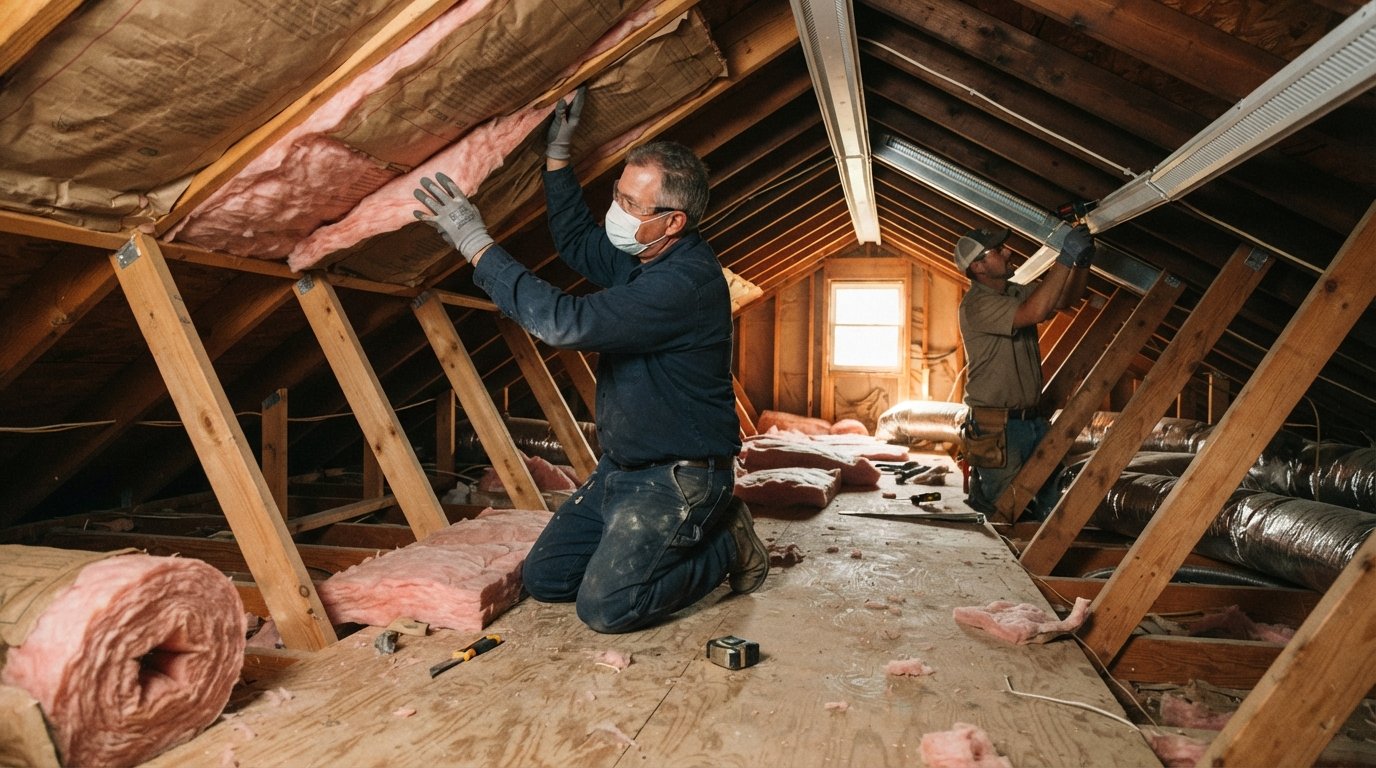
Attic Ventilation and Insulation Upgrades for Energy Savings
Upgrade attic ventilation and insulation for energy savings. Call (833)-439-3727 to connect with local pros and get free estimates.

By Benjamin Reed
Learn more about Insulation Installation or Upgrade for guides, costs, and what to expect.
Compare Insulation Installation or Upgrade Pros Near You

Enter your ZIP code to compare top-rated local professionals and request free quotes.
Your attic is one of the most overlooked spaces in your home, yet it plays a critical role in how much you spend on energy each month. During summer, an under-insulated and poorly ventilated attic can trap heat, forcing your air conditioner to work harder. In winter, the same flaws allow warm air to escape while moisture builds up, leading to condensation, mold, and even structural damage. The good news is that attic ventilation and insulation upgrades for energy savings are among the most cost-effective home improvements you can make. With the right combination of proper airflow and adequate insulation, you can reduce your energy bills, improve indoor comfort, and extend the life of your roof and HVAC system.
This guide walks you through how insulation and ventilation work together, the R-values you should target for your climate, common pitfalls to avoid, and what you can expect to pay for professional upgrades. Whether you are a seasoned DIYer or prefer to hire a pro, understanding the fundamentals will help you make informed decisions and maximize your return on investment.
How Insulation and Ventilation Work Together to Control Heat and Moisture
Insulation and ventilation are often treated as separate concerns, but they are deeply interconnected. Insulation slows the transfer of heat, keeping your home cooler in summer and warmer in winter. Ventilation, on the other hand, allows air to flow through the attic, carrying away excess heat and moisture. When one is compromised, the other becomes less effective, and your energy savings suffer.
In winter, warm air from your living space rises into the attic. Without adequate insulation, that heat escapes through the roof, wasting energy and creating a cycle of higher heating costs. At the same time, warm, moist air from cooking, showering, and laundry can migrate into the attic. If ventilation is poor, that moisture condenses on cold roof sheathing, leading to mold growth, rot, and reduced insulation performance. Proper ventilation keeps the roof deck cool and dry, preventing these issues.
In summer, the sun beats down on your roof, heating the attic to temperatures that can exceed 150 degrees Fahrenheit. Without ventilation, that heat radiates down into your living space, straining your air conditioner. Insulation acts as a barrier, but if the attic is not vented, trapped heat can degrade the insulation over time. A balanced system, with intake vents at the soffits and exhaust vents at the ridge or gables, ensures continuous airflow that removes hot air and extends the life of your insulation.
The key is balance: you need enough insulation to slow heat transfer and enough ventilation to manage moisture and temperature. Upgrading both together is the most effective way to achieve attic ventilation and insulation upgrades for energy savings.
Recommended R-Values for Different Climates
R-value measures a material's resistance to heat flow. The higher the R-value, the better the insulation. The U.S. Department of Energy recommends different R-values for attics based on climate zones. Here is a quick breakdown:
- Zone 1 (hot, humid): R-30 to R-49
- Zones 2-4 (mixed climates): R-38 to R-60
- Zones 5-8 (cold climates): R-49 to R-60+
For most homeowners, aiming for R-49 to R-60 in the attic is a safe bet, especially if you live in a region with cold winters. However, the right R-value also depends on your existing insulation, the type of heating and cooling system you have, and your budget. A professional energy audit can help you determine the optimal target for your home. Keep in mind that adding insulation without addressing ventilation can lead to moisture problems, so always consider both together.
When upgrading, you can choose from several insulation types: fiberglass batts, blown-in cellulose, spray foam, and rigid foam boards. Blown-in insulation is popular for attics because it fills gaps and voids, while spray foam offers superior air sealing. The cost and complexity vary, so it is wise to get quotes from local contractors to compare options.
Common Mistakes That Undermine Attic Performance
Even homeowners who invest in attic upgrades can fall victim to avoidable mistakes. One of the most common is blocking soffit vents. Soffit vents provide intake air that feeds the ventilation system. If they are covered by insulation or debris, airflow is restricted, and the entire system fails. Always use baffles or rafter vents to maintain a clear path for air to enter the attic.
Another frequent error is compressing insulation. Insulation works by trapping air; if you compress it, you reduce its R-value. This happens when insulation is stuffed into tight spaces or when too much is piled on top of itself. Similarly, failing to air-seal before adding insulation can allow warm air to bypass the insulation, reducing its effectiveness. Air sealing around light fixtures, wiring penetrations, and the attic hatch is essential.
Other mistakes include:
- Installing insulation over recessed lights without proper clearance (a fire hazard)
- Using the wrong type of insulation for the application (e.g., using batts in an area that needs blown-in)
- Ignoring moisture barriers, which can lead to condensation and mold
- Neglecting to vent a newly insulated attic properly, trapping moisture
These pitfalls highlight why professional guidance can be valuable. A qualified contractor can assess your attic, recommend the right materials, and ensure that ventilation and insulation work in harmony.
Cost and Payback Expectations for Attic Upgrades
Attic insulation and ventilation upgrades are generally affordable compared to other home improvements, and they offer some of the fastest payback periods. According to industry data, the average cost to insulate an attic ranges from $1,500 to $3,500, depending on the size, insulation type, and whether air sealing is included. Adding ventilation, such as ridge vents or soffit baffles, can add $300 to $1,000. For a more detailed breakdown of costs and savings, you can refer to our guide on attic insulation cost and savings.
The payback period for attic upgrades is often just a few years. Homeowners typically see a 10-20% reduction in heating and cooling costs after proper insulation and ventilation improvements. Over time, these savings add up, and the upgrade also improves home comfort and resale value. Many utility companies offer rebates and incentives for energy-efficient upgrades, further shortening the payback period. When planning your budget, consider these potential offsets.
To get a precise estimate for your home, it is best to consult with local contractors who can assess your specific situation. They can provide free quotes and help you understand the scope of work required.
DIY Versus Professional Installation: Baffles, Vents, and Blown-In Insulation
Some homeowners may be tempted to tackle attic upgrades themselves, but the complexity varies by task. Installing baffles and vents can be a DIY project if you are comfortable working in tight spaces and have basic carpentry skills. However, blown-in insulation requires specialized equipment and proper safety gear, making it a job best left to professionals. Spray foam insulation also requires expert application to ensure safety and effectiveness.
Here is a quick comparison:
- Baffles and vents: DIY-friendly for handy homeowners, but must be installed correctly to avoid blocking airflow.
- Blown-in insulation: Professional installation recommended due to equipment and safety concerns.
- Spray foam: Always hire a professional; improper application can be hazardous.
- Air sealing: Can be DIY for small gaps, but a pro will be more thorough.
If you choose to hire a contractor, look for one with experience in attic ventilation and insulation. They should be able to assess your attic, recommend a balanced system, and execute the work safely. When selecting a contractor, ask for references, verify licensing and insurance, and get multiple quotes. To connect with experienced local contractors and get free estimates, visit BuySellRemodel for trusted professionals in your area.
Remember that proper installation is just as important as the materials themselves. A poorly installed system can fail to deliver the promised savings, so it is worth investing in quality workmanship.
Maximizing Energy Savings with a Holistic Approach
Attic ventilation and insulation upgrades are most effective when considered as part of a whole-house energy strategy. Sealing air leaks in the attic floor, insulating ductwork, and upgrading to a programmable thermostat can amplify the benefits. Additionally, regular maintenance, such as checking vents for blockages and ensuring insulation stays dry, will help sustain performance over time.
Before starting any project, consider scheduling a home energy audit. An audit will identify areas of heat loss and moisture issues, giving you a roadmap for improvements. Many utility companies offer free or discounted audits, and the insights can save you money by prioritizing the most impactful upgrades.
Finally, keep in mind that attic upgrades are an investment in your home's comfort and efficiency. By addressing both ventilation and insulation together, you create a healthier indoor environment, reduce your carbon footprint, and enjoy lower utility bills for years to come.
For homeowners ready to take the next step, contacting local professionals is the best way to ensure a job well done. With free estimates and expert advice, you can move forward with confidence and start enjoying the benefits of a properly upgraded attic.