
Bathroom Tile Installation Cost and Material Choices
Get a clear picture of bathroom tile installation cost and material choices, from porcelain to stone, and learn how to budget. Call (833)-439-3727 for free estimates.

Learn more about Tile Installation and Replacement for guides, costs, and what to expect.
Compare Tile Installation and Replacement Pros Near You

Enter your ZIP code to compare top-rated local professionals and request free quotes.
Planning a bathroom refresh? The tile you choose and how it is installed will shape both your budget and the room's long-term durability. Bathroom tile installation cost and material choices go hand in hand: a beautiful porcelain can be affordable, while a complex natural stone layout might strain your wallet. This guide breaks down the real numbers, compares popular materials, and helps you decide whether to hire a pro or tackle the job yourself. By the end, you will have a clear picture of what to expect and how to avoid costly surprises.
What Drives Bathroom Tile Installation Cost
Several factors push the final price up or down. The biggest is the tile material itself, but labor, surface preparation, and layout complexity also play major roles. For a typical 50-square-foot bathroom floor, professional installation ranges from $700 to $2,500, while walls or shower surrounds can cost more due to waterproofing requirements. Understanding these variables helps you budget accurately and spot when a quote seems off.
Tile type is the first cost lever. Ceramic is generally the most budget-friendly, porcelain sits in the middle, and natural stone like marble or travertine commands a premium. Layout complexity matters too: a simple grid pattern is quick to install, but herringbone, chevron, or mosaic designs require more cuts and time, adding 20 to 50 percent to labor costs. Surface prep is another hidden expense. If your subfloor is uneven or your walls need backer board, expect extra charges. Waterproofing membranes are non-negotiable in wet areas and add $2 to $5 per square foot. Finally, removal and disposal of old flooring typically costs $1 to $3 per square foot. Always ask contractors whether these items are included in their bid.
Porcelain, Ceramic, and Natural Stone: A Material Comparison
Porcelain and ceramic are both clay-based, but porcelain is fired at higher temperatures, making it denser, harder, and less porous. That density means porcelain is more durable and water-resistant, which is why it is a favorite for bathroom floors and shower walls. Ceramic is softer and easier to cut, so it costs less, but it may chip more easily and is not ideal for heavy-traffic areas. Natural stone, including marble, granite, slate, and travertine, offers unique beauty but requires more maintenance. Stone is porous and must be sealed regularly to prevent stains and water damage. It also tends to be heavier and more fragile, so installation is trickier and more expensive.
When weighing bathroom tile installation cost and material choices, consider the total cost of ownership. Porcelain might cost $3 to $10 per square foot, ceramic $1 to $5, and natural stone $5 to $20 or more. But stone also needs periodic sealing and gentler cleaning products, which adds to long-term costs. For a family bathroom, porcelain often strikes the best balance of price, durability, and low maintenance. For a master suite where aesthetics matter most, marble or travertine can be worth the splurge if you are prepared for the upkeep.
DIY vs. Professional Installation: Trade-Offs and Hidden Costs
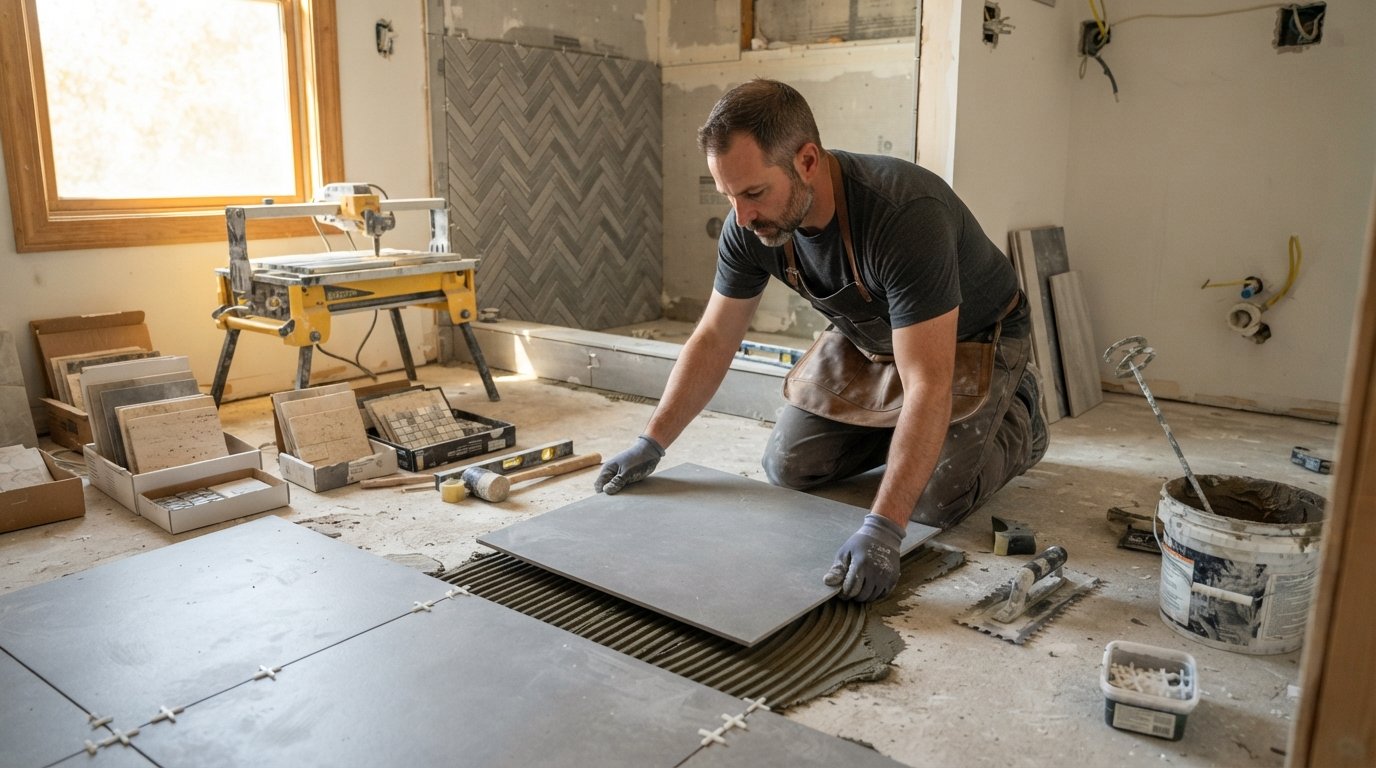
DIY tile installation can save on labor, but it is not for everyone. A simple floor in a small bathroom might take a weekend, but errors in leveling, spacing, or waterproofing can lead to cracked tiles, leaks, or mold. Professional installation ensures proper substrate preparation, correct adhesive, and precise cuts, which extends the life of your tile. Labor typically accounts for 40 to 60 percent of the total project cost, so skipping it can seem tempting. However, if you lack experience, the risk of costly rework often outweighs the savings.
Pros also handle the messy parts: removing old flooring, hauling debris, and coordinating with plumbers or electricians if needed. They carry insurance and can warranty their work. If you decide to DIY, budget for tool rentals (wet saw, trowel, spacers) and allow extra time. For a stress-free result, many homeowners find that hiring a vetted contractor is the smarter move. You can compare local tile installers and request free estimates through Patio Door Installation: Cost, Steps, and Pro Tips, which also covers project planning and contractor selection tips that apply to any remodel.
Waterproofing and Grout: Critical Details That Protect Your Investment
Water damage is the enemy of any bathroom, and tile alone is not waterproof. In wet areas like showers and tub surrounds, a waterproofing membrane such as cement backer board with a liquid-applied coating or a sheet membrane is essential. This step adds cost but prevents moisture from reaching the framing and subfloor. Grout also plays a role: epoxy grout is more stain-resistant and water-resistant than cementitious grout, though it costs more and is harder to install. For floors, a cementitious grout with a sealer is often sufficient.
Do not overlook the importance of proper slope in shower floors and around drains. Improper slope can cause standing water and eventual leaks. A qualified installer will ensure the substrate is sloped correctly before tiling. When comparing quotes, ask specifically about waterproofing methods and grout type. A lower bid that skips membrane installation is not a bargain; it is a future repair bill. Investing in quality waterproofing now will save you thousands later.
How to Budget for Your Bathroom Tile Project
Start by measuring the square footage of the areas to be tiled: floor, walls, and shower. Add 10 to 15 percent for cuts and waste. Multiply by the tile price per square foot to get material cost. Then estimate labor: $4 to $12 per square foot for basic installation, more for complex patterns or stone. Add removal and disposal ($1 to $3 per square foot), waterproofing ($2 to $5 per square foot), and any plumbing or electrical changes. For a 50-square-foot floor with porcelain tile at $5 per square foot and mid-range labor at $8 per square foot, expect roughly $1,000 to $1,500 total. Get at least three written estimates and ask for a breakdown of materials and labor. This transparency helps you compare apples to apples and avoid surprise charges.
For personalized guidance and to connect with experienced local contractors, consider reaching out to BuySellRemodel, a resource that helps homeowners plan affordable projects and find trusted pros. They offer free estimates and can match you with professionals who specialize in bathroom tile installation.
Frequently Asked Questions
How much does bathroom tile installation cost per square foot?
Expect $4 to $12 per square foot for labor, plus tile material costs of $1 to $20 per square foot depending on the type. Total installed cost typically ranges from $10 to $30 per square foot, with natural stone and complex patterns at the higher end.
Is porcelain better than ceramic for bathroom floors?
Porcelain is denser and more water-resistant, making it a better choice for floors and wet areas. Ceramic is softer and less expensive, suitable for walls or low-traffic areas, but it may not hold up as well to moisture and heavy use.
Can I install tile over existing tile?
Sometimes, but it is risky. The old tile must be sound, clean, and level, and the new tile will raise the floor height. In wet areas, it is usually better to remove the old tile to inspect and waterproof the substrate properly. Consult a professional for an assessment.
Do I need a waterproofing membrane in my shower?
Yes, building codes and best practices require waterproofing behind tile in showers and other wet areas. Skipping it can lead to hidden water damage, mold, and structural issues. Always confirm your installer uses a proven membrane system.
Bathroom tile installation cost and material choices are deeply connected. By understanding the factors that influence price and performance, you can select a tile that fits your budget and lifestyle. Whether you choose porcelain, ceramic, or natural stone, prioritize proper waterproofing and professional installation to protect your investment. With careful planning and the right contractor, your bathroom will look great and last for years.