
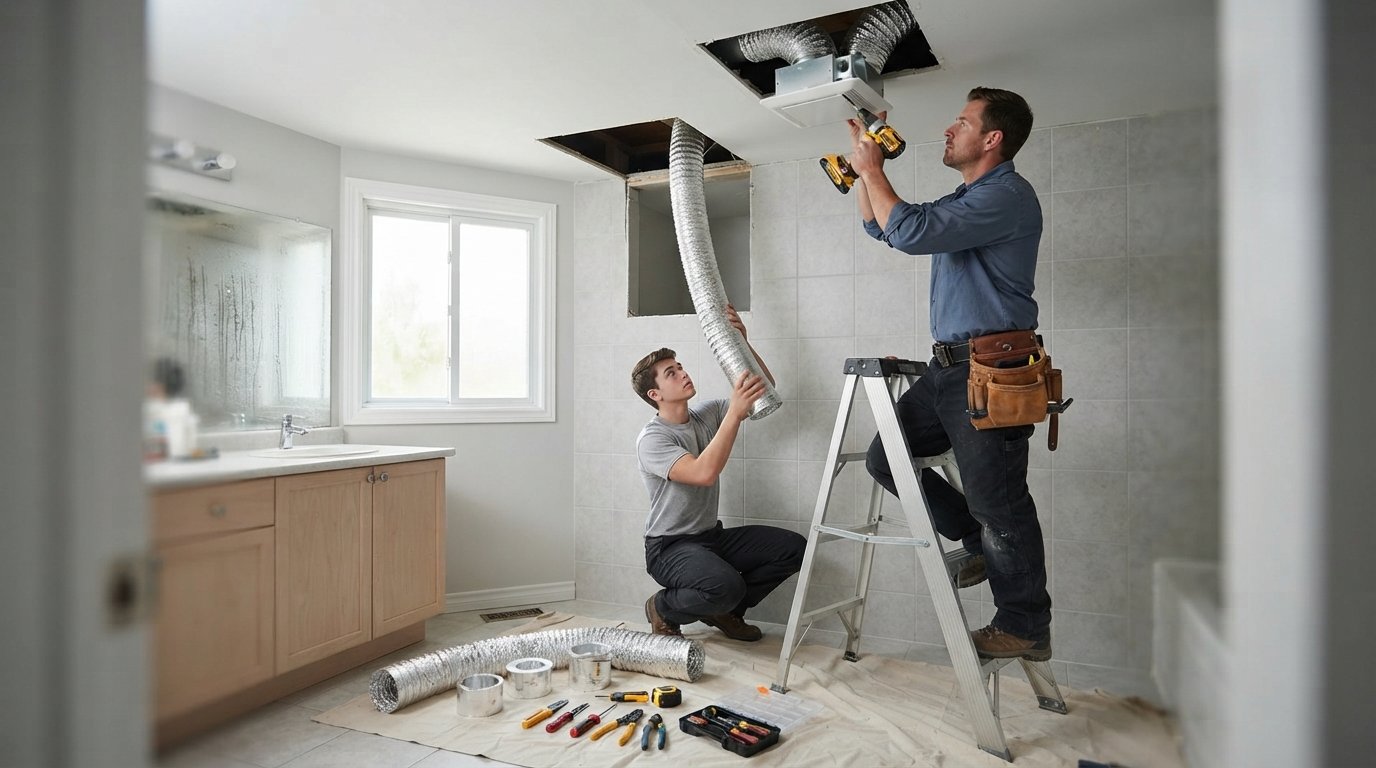
Bathroom Ventilation Options and Mold Prevention Costs
Compare bathroom ventilation options and mold prevention costs, from fan sizing to duct fixes. Call (833)-439-3727 for free local estimates.

By Victor Bennett
Learn more about Fan Installation for guides, costs, and what to expect.
Compare Fan Installation Pros Near You

Enter your ZIP code to compare top-rated local professionals and request free quotes.
Steam from a hot shower can push indoor humidity past 70 percent within minutes. That moisture has to go somewhere, and in too many homes it settles into drywall, grout, and ceiling joists until black spots appear and paint starts peeling. The fix is not complicated, but the choices and costs confuse many homeowners. This guide breaks down bathroom ventilation options and mold prevention costs so you can size the right fan, route the duct correctly, and decide when a repair is worth it.
The stakes are real. A $200 exhaust fan that runs for years can prevent thousands of dollars in drywall replacement, insulation damage, and professional mold remediation. Conversely, a cheap fan that vents into the attic can create a bigger problem than no fan at all. Understanding the equipment, the installation rules, and the repair math is the difference between a healthy bathroom and a recurring moisture battle.
Why Bathroom Moisture Becomes a Mold Problem
Mold needs three things: moisture, organic material (like drywall paper or wood), and warmth. A bathroom provides all three. When relative humidity stays above 60 percent for extended periods, mold spores that are always present in the air begin to colonize porous surfaces. The first signs are usually cosmetic, but the damage goes deeper than appearance.
Watch for these early warning signals that ventilation is failing:
- Mirrors fog over and stay foggy for ten minutes or more after a shower.
- Paint or caulk peels, bubbles, or cracks near the tub and ceiling.
- Dark speckles appear along grout lines, window frames, or the corner where walls meet the ceiling.
- A musty smell lingers even after cleaning.
If you notice any of these, the fan is either undersized, clogged, or venting into a dead space. Left alone, the problem moves from surface mildew to structural rot. That progression is why mold prevention spending is almost always cheaper than mold remediation spending.
Exhaust Fan Sizing, Placement, and Venting Requirements
An exhaust fan is rated in cubic feet per minute (CFM). The general rule is one CFM per square foot of bathroom floor area, with a minimum of 50 CFM for any bathroom. A 5 by 8 foot bathroom (40 square feet) needs at least 50 CFM. A 10 by 12 foot bathroom (120 square feet) needs a 120 CFM fan. For bathrooms with jetted tubs or multiple shower heads, add 50 CFM per fixture above the baseline.
Placement matters as much as size. The fan should sit over or near the shower and tub, where steam concentrates, but not directly above a shower enclosure if local code requires a certain clearance. Ceiling mounting in the center of the wet zone is typical. In half baths or powder rooms, a wall-mounted fan near the toilet is acceptable.
Venting requirements are strict for good reason. The duct must terminate outdoors, either through the roof or a side wall, with a louvered cap and a backdraft damper. Never terminate in the attic, crawlspace, or garage. Short, straight runs of rigid metal duct perform best. Flexible corrugated duct is allowed but adds friction and should be kept as short as possible. Insulate ducts that pass through unconditioned space to prevent condensation inside the pipe.
Budgeting for Ventilation and Mold Prevention
Costs vary by region and by whether you are replacing an existing fan or adding ventilation where none exists. The table below reflects typical 2026 ranges for professional work, not including cosmetic repairs to drywall or paint.
- Standard replacement fan (50 to 110 CFM): $150 to $400 installed.
- High-capacity or quiet fan (150 CFM and up): $350 to $800 installed.
- New installation with new duct run: $500 to $1,200.
- Fan timer or humidity sensor upgrade: $50 to $150.
- Professional mold remediation (small area): $500 to $1,500.
- Mold remediation with drywall removal and rebuild: $2,000 to $6,000 or more.
Compare the two columns. A $300 fan replacement is a fraction of a $3,000 remediation job. This is the core financial argument for proactive ventilation. The payback period is not measured in energy savings but in avoided repair costs. If you are already planning a larger renovation, it is smart to fold ventilation upgrades into that project. For example, if your bathroom sits above a failing foundation or you are reworking adjacent spaces, our foundation repair cost guide explains how structural work can affect moisture control and project sequencing.
Homeowners often ask whether to replace just the motor or the entire unit. If the housing and duct are sound, a motor replacement ($50 to $120 in parts) can work. But older fans are noisy and inefficient, so most contractors recommend a full replacement with a modern, quiet unit rated at 1.0 sone or less. The labor difference is minimal once the ceiling is open.
Ducting Mistakes That Push Moist Air into the Attic
The most common and most damaging installation error is dumping exhaust air into the attic. It feels like a shortcut: the duct disappears into the ceiling and the installer moves on. But that moist air condenses on cold roof sheathing, creating a perfect environment for mold and wood rot. In winter, it can also lead to ice dams.
Other frequent mistakes include:
- Long, winding flexible duct runs: each bend reduces airflow and traps moisture.
- Uninsulated duct in cold space: condensation forms inside the pipe and drips back into the bathroom.
- Missing backdraft damper: outside air and pests can enter when the fan is off.
- Undersized duct for the fan: a 150 CFM fan choked by a 3-inch duct moves far less air than its rating.
- Terminating too close to a window or intake vent: exhausted moisture gets pulled right back inside.
Correcting a bad duct run is often more expensive than the fan itself, because it may require opening ceilings or roofs. When hiring a contractor, ask specifically where the duct terminates and inspect the exterior cap before signing off. A reputable pro will show you the termination point and explain the routing. If you are comparing bids, use a service that vets local contractors and provides free estimates, such as BuySellRemodel, so you can confirm the scope includes proper exterior venting.
Maintenance Habits That Keep Ventilation Working
Even a perfectly sized and installed fan loses effectiveness if it is neglected. Dust and lint clog the grille and the fan blades, reducing airflow. In a busy bathroom, the grille should be vacuumed or washed every one to two months. The fan housing and blades benefit from a deeper cleaning once or twice a year.
Runtime is the other half of the equation. Many people flip the fan off as soon as they leave the room, but moisture lingers in grout, towels, and drywall. The U.S. Department of Energy and most building codes recommend running the fan for at least 20 minutes after a shower, and some energy codes require timers or humidity sensors that automate this. A simple upgrade is a timer switch that runs the fan for 20, 40, or 60 minutes. Humidity-sensing fans cost a bit more but adjust automatically.
Also check the exterior damper periodically. It should open freely when the fan runs and close snugly when it stops. A stuck damper can either block exhaust or let cold air pour in. If you hear rattling or feel a draft, the damper or the duct connection needs attention.
When to Repair Mold Versus Prevent It
If mold covers less than about 10 square feet and sits on a non-porous surface like tile or glass, a homeowner can often clean it with a commercial mold remover or a diluted bleach solution while wearing gloves and eye protection. But mold that has penetrated drywall, insulation, or wood framing requires professional remediation. Disturbing it without containment can spread spores through the house.
The decision point is straightforward: if the moisture source is not fixed, cleaning is temporary. That is why mold prevention costs should be evaluated alongside remediation quotes. A remediation contractor who does not address ventilation is only selling you a repeat visit. Insist that the scope include correcting the fan, duct, or humidity control that caused the problem.
For homeowners planning a bathroom remodel, the smartest approach is to budget ventilation as a line item from the start. A mid-range fan, proper ducting, and a timer typically add $400 to $900 to a remodel, a small fraction of the overall project. That investment protects the new drywall, paint, and cabinetry you are paying for.
Moisture control is one of the highest-return upgrades in any home because it protects everything else. Whether you are replacing a noisy old fan, fixing a duct that dumps into the attic, or planning a full bathroom refresh, the goal is the same: move moist air outdoors and keep it there. Start by getting a free estimate from a local ventilation or remodeling pro, confirm where the duct terminates, and set a maintenance reminder for the grille. Small, consistent habits and the right equipment keep mold prevention costs low and your bathroom dry for years.