
DIY vs Professional Landscaping: Best Curb Appeal Value
Compare DIY versus professional landscaping for curb appeal, from true costs to long-term value. Call (833)-439-3727 for free local estimates.

By Victor Bennett
Learn more about Outdoor Landscaping and Design for guides, costs, and what to expect.
Compare Outdoor Landscaping and Design Pros Near You

Enter your ZIP code to compare top-rated local professionals and request free quotes.
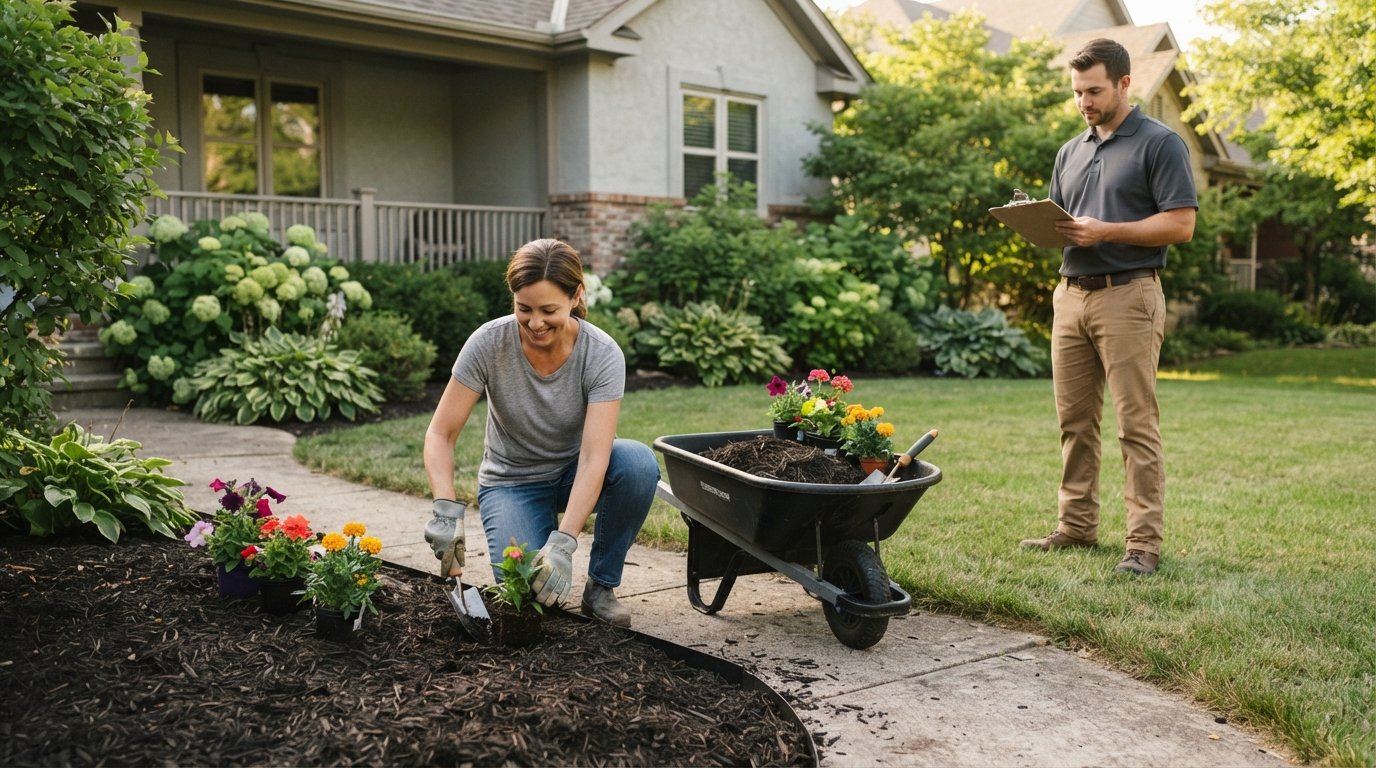
A freshly mulched bed and a crisp edge along the walkway can change how a buyer or neighbor sees your home in seconds. That first impression is curb appeal, and it directly influences property value, neighborhood pride, and even how quickly a house sells. But when you stand in your yard with a shovel in one hand and a contractor quote in the other, the real question is not whether landscaping matters. It is whether you should do the work yourself or hire a professional. The answer is rarely all or nothing, and the smartest homeowners treat DIY versus professional landscaping for curb appeal as a budget decision, a skills decision, and a timing decision rolled into one.
The Real Cost Comparison: Tools, Plants, Soil, and Sweat Equity
On paper, DIY landscaping looks dramatically cheaper. A few bags of mulch, some annuals, and a Saturday afternoon can transform a front bed for under $200. Professional landscaping for the same bed might come in at $800 to $2,500 depending on design fees, plant size, and labor. But the gap narrows once you account for the true cost of doing it yourself. Tools you do not own, soil amendments, plant replacement when something dies, and the value of your weekends all belong in the calculation.
Start with a realistic materials list before you decide. Most homeowners underestimate soil prep, which is the least glamorous and most important part of any planting project. Compacted soil, poor drainage, and the wrong pH will kill even expensive plants. A professional soil test costs $15 to $30 and tells you exactly what amendments you need, whether you plant yourself or hire out. Skipping that step is the most common DIY mistake and the fastest way to waste money.
Here is a practical breakdown of what each path typically includes so you can compare apples to apples:
- DIY true costs: plants and mulch, soil amendments, tool purchases or rentals, water and fertilizer, replacement plants, and 20 to 60 hours of your time for a typical front yard refresh.
- Professional true costs: design fee (often $200 to $1,500), plant and material markup, labor, equipment, disposal of debris, and a warranty on plants and workmanship.
- Hidden DIY expenses: a rototiller rental at $60 to $100 per day, a wheelbarrow, edging, and the gas and trips to the nursery that add up fast.
- Hidden professional value: wholesale plant pricing, proper grading, irrigation adjustments, and a crew that finishes in two days what would take you three weekends.
When you add it all up, DIY often saves 40 to 60 percent on labor, but only if you already own the tools and your time is genuinely flexible. If you need to rent equipment, buy plants at retail, and take unpaid days off work, the savings shrink quickly. The break-even point usually lands around projects with a materials budget under $1,500 and simple scope: mulch refresh, annual color, small shrub replacement, and basic edging.
Which Projects Suit DIY and Which Demand a Professional
Not all landscaping tasks are created equal. Some are ideal weekend projects that reward a careful amateur, while others carry real risk of injury, property damage, or expensive rework. Knowing the difference protects your budget and your back. A good rule of thumb: if the job involves moving heavy material, changing how water flows, or working near utilities, bring in a pro. If it involves planting, pruning, mulching, and cleaning, you can likely handle it.
DIY-friendly curb appeal projects tend to be repeatable, low-risk, and easy to correct. Professional-only projects involve design judgment, heavy equipment, or code compliance. Here is where the line usually falls:
- Great DIY candidates: mulching beds, planting annuals and perennials, trimming shrubs, edging beds, pressure washing walkways, adding container planters, and refreshing mailbox and house number areas.
- Better left to pros: grading and regrading, French drains and drainage correction, retaining walls over three feet, tree removal, irrigation system installation, and large hardscaping like patios and walkways.
- Hybrid projects: foundation planting design, lawn renovation, and landscape lighting, where a pro designs or installs the core and you handle maintenance and finishing touches.
Tree work deserves special caution. A homeowner with a chainsaw and a leaning oak is a liability claim waiting to happen. Professional tree services carry insurance, know how to rig limbs safely, and can remove stumps that would otherwise haunt your lawn for years. The same logic applies to anything that touches gas lines, electrical conduit, or the structural grade around your foundation. Saving $1,000 on a DIY retaining wall is a poor trade if the wall fails and water ends up in your basement. If you are unsure whether a project crosses the line, a free estimate from a local contractor is the cheapest insurance you can buy. You can also read our guide on DIY versus professional drywall repair to see how the same logic applies indoors.
How Professional Grading, Drainage, and Planting Protect Long-Term Value
Curb appeal is not just about what you see on the surface. The most valuable landscaping work happens below the grass line, where grading and drainage determine whether your yard stays healthy and your foundation stays dry. This is where professional landscaping earns its keep in ways that are hard to see but easy to feel in your wallet. Water that pools against the house, soil that erodes after every storm, and plants that drown in soggy beds are all symptoms of poor site work.
Proper grading slopes the ground away from the foundation at roughly one inch per foot for the first six to ten feet. That sounds simple, but achieving it requires moving significant amounts of soil, which means equipment and experience. A pro will also assess where downspouts discharge, whether the yard needs a swale or French drain, and how planting beds interact with the slope. Getting this wrong can lead to basement water intrusion, foundation cracks, and mosquito-breeding puddles, all of which cost far more to fix than the original landscaping quote.
Planting depth and selection matter just as much. Trees planted too deep develop girdling roots and die within a decade. Shrubs placed without regard to mature size swallow windows and walkways within three years. A professional designer chooses plants for your USDA zone, sun exposure, soil type, and maintenance tolerance, then spaces them for how they will look in year ten, not just year one. That foresight is why professionally designed landscapes often appraise higher and hold their value longer. If you want to blend professional guidance with your own labor, ask a designer for a planting plan you can install yourself. Many landscape designers offer hourly consultations for exactly this purpose, and the fee is usually a few hundred dollars well spent.
Seasonal Timing: When DIY Makes Sense and When It Does Not
Timing can tip the DIY versus professional landscaping for curb appeal decision more than most homeowners expect. Spring and fall are the best planting seasons in most climates, which means nurseries are crowded, contractors are booked, and weekend warriors are competing for the same stock. If you plan to DIY, shopping early and ordering materials ahead of the rush is essential. If you plan to hire, booking two to three months in advance often secures better pricing and priority scheduling.
Summer heat makes DIY planting risky in many regions. New plants need consistent watering, sometimes twice a day during heat waves, and a homeowner who works full time may come home to wilted beds. Professionals install irrigation or set up watering schedules and often include a plant warranty that covers heat stress. Winter, meanwhile, limits what can be planted at all, though it is an excellent time for design consultations, hardscaping planning, and scheduling spring work. Dormant-season pruning is also a manageable DIY task that improves curb appeal without much risk.
Seasonal practicality also affects tool availability and material prices. Mulch is cheapest in bulk during spring sales but harder to schedule delivery. Sod laid in midsummer needs far more water than sod installed in fall, which raises your water bill and the risk of failure. A simple way to decide is to ask whether you can commit to the watering and maintenance schedule the project requires for the first 60 days. If the answer is no, hire the installation and let a pro handle establishment. If the answer is yes, DIY planting in early fall is often the sweet spot: cooler weather, cheaper plants, and less watering pressure.
Blending DIY Planting With Professional Hardscaping for Cost-Effective Results
The best curb appeal value usually comes from a hybrid approach. Let professionals handle the expensive, technical, and permanent elements, then take over the planting and maintenance yourself. This strategy captures most of the savings of DIY while avoiding the risks that make professional landscaping worthwhile. It also gives you a landscape that looks cohesive because the hardscape and grading were done to a plan.
Consider a typical front yard refresh with a budget of $3,000. A full professional installation might run $6,000 to $9,000, while pure DIY might cost $1,200 but take a month of weekends and risk drainage mistakes. The hybrid version might spend $1,800 on professional grading, a new walkway, and bed shaping, then $800 on plants you install yourself using a designer's planting plan. You save thousands, the water flows correctly, and the plants are placed with purpose. This is the approach we recommend most often to budget-conscious homeowners.
To make the hybrid model work, sequence the work correctly. Start with a design or consultation, then complete hardscape and grading, then install irrigation if needed, and finish with planting and mulch. If you want help finding vetted local pros for the hardscape portion, BuySellRemodel connects homeowners with experienced contractors for affordable improvement projects, from grading and walkways to full landscape installations. Getting two or three free estimates on the professional portion lets you compare scope and pricing before you commit your own sweat equity to the rest.
Making the Decision: A Simple Framework for Budget-Minded Homeowners
When you are staring down a long to-do list and a limited budget, a simple decision framework keeps you from overthinking. Score each potential project on four factors: risk of damage, skill required, time available, and tool cost. If risk and skill are low and you have time, DIY. If risk is high or the job requires equipment you would rent only once, hire a pro. If the project is somewhere in between, split it.
It also helps to think in terms of return on investment. Curb appeal projects generally return 100 percent or more at resale when they are well executed, according to repeated real estate industry surveys. That means the goal is not to spend the least money possible, but to spend it where it shows. A $500 professional design consultation that prevents a $5,000 drainage failure is an easy call. A $2,000 DIY patio that heaves after one winter is not a bargain. Spend on the bones of the landscape (grading, drainage, hardscape, trees) and save on the skin (annuals, mulch, seasonal color, and routine maintenance).
Finally, be honest about your schedule and stamina. Landscaping is physical work, and a project that drags on for six weeks hurts curb appeal more than it helps. If you cannot finish before the season turns, hire the installation and enjoy the result. If you have the time and temperament, DIY planting is one of the most rewarding home projects there is, and the skills you build will pay off every season.
Whether you choose to dig in yourself or hand the shovel to a crew, the goal is the same: a yard that welcomes people in and protects your home's value. Start with a clear scope, get free estimates on the parts that matter most, and put your own effort where it counts. That balance is the real secret to DIY versus professional landscaping for curb appeal, and it is how smart homeowners get a beautiful yard without blowing the budget.