
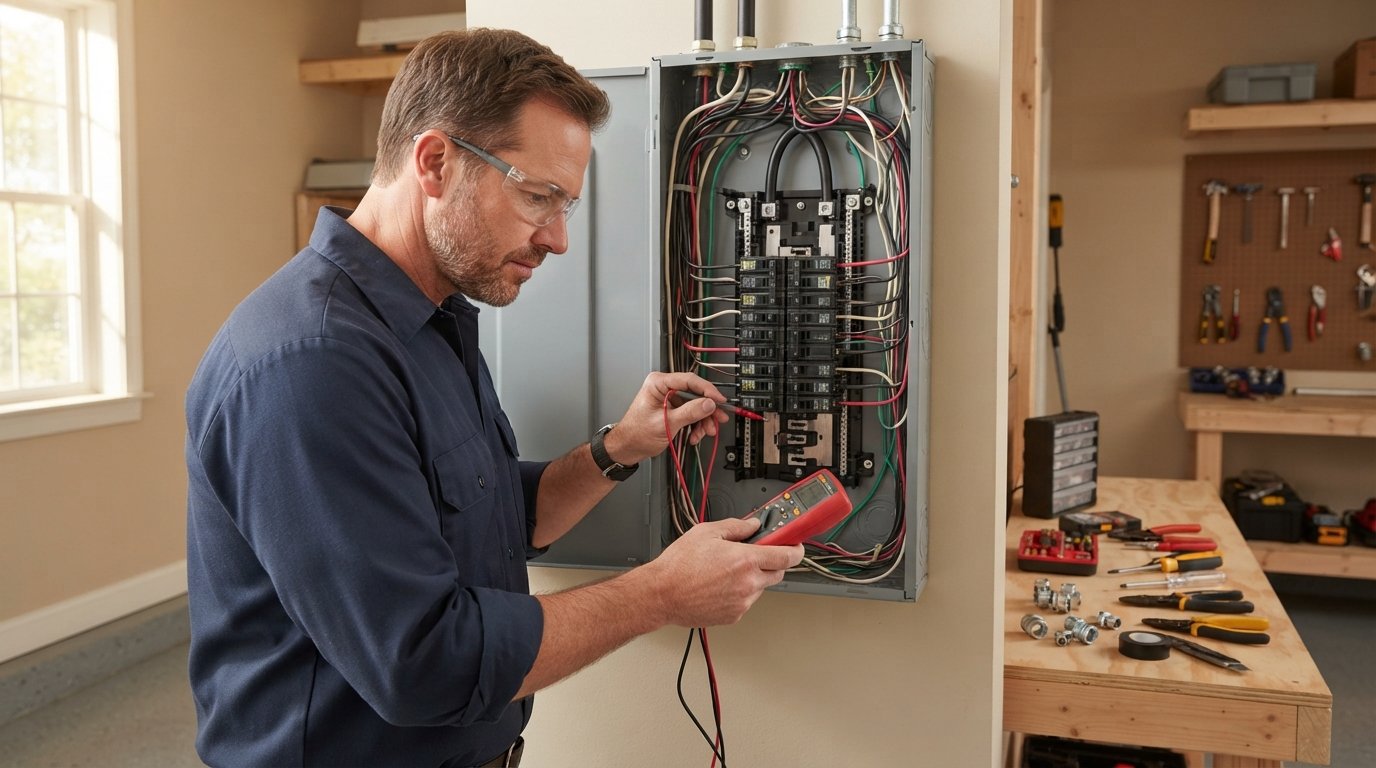
Electrical Panel Upgrade Cost and Benefits for Modern Homes
Understand electrical panel upgrade cost and benefits for modern homes. Call (833)-439-3727 to get a free estimate and plan your safe, future-ready upgrade.

By Cameron Howard
Learn more about Circuit Breaker Panel or Fuse Box Installation for guides, costs, and what to expect.
Compare Circuit Breaker Panel or Fuse Box Installation Pros Near You

Enter your ZIP code to compare top-rated local professionals and request free quotes.
Your electrical panel is the silent workhorse of your home, quietly distributing power to every outlet, appliance, and device. But if your home still runs on a 100-amp panel from the 1980s, or worse, a fuse box from decades past, you may be asking it to do far more than it was ever designed to handle. Modern households demand more electricity than ever: electric vehicles, heat pumps, induction ranges, hot tubs, and home offices all compete for power. An electrical panel upgrade cost and benefits for modern homes analysis quickly reveals that this is not just a technical upgrade; it is an investment in safety, capacity, and long-term home value. In this guide, we break down the real costs, the warning signs that you need an upgrade, and the tangible benefits that make it worth considering for any homeowner planning a remodel or major appliance addition.
Why Modern Homes Are Outgrowing Their Electrical Panels
Think about how your grandparents used electricity. A few lights, a refrigerator, maybe a radio. Today, the average home powers multiple computers, large-screen TVs, gaming consoles, smart home hubs, and often an electric vehicle charger. The load on your electrical system has grown exponentially, but the panel itself may not have changed in decades. Many older homes still have 60-amp or 100-amp service, which was standard in the mid-20th century but is now insufficient for modern living. Even homes built in the 1990s with 150-amp panels can struggle when homeowners add central air, a hot tub, or a workshop.
When you overload a panel, you risk more than just tripped breakers. Persistent overloading can cause overheating, which damages insulation and creates fire hazards. Insurance companies are increasingly scrutinizing older panels, and some may deny coverage if they spot a known problematic brand like Federal Pacific or Zinsco. If you are planning a kitchen remodel, adding a home addition, or installing an EV charger, your contractor will likely flag the panel as a potential bottleneck. Understanding the signs of an undersized or outdated panel is the first step toward making an informed decision.
Signs Your Electrical Panel Needs an Upgrade
Not every home needs a new panel immediately, but certain red flags should prompt a professional evaluation. Start by checking your panel's amperage rating, usually printed on the main breaker. If it says 60 or 100 amps, you are likely at or near capacity. Then consider your daily experience: do breakers trip frequently when you run the microwave and vacuum simultaneously? Do lights flicker when the air conditioner kicks on? These are signs that your panel is struggling to keep up. Another clear indicator is the presence of fuses instead of circuit breakers. Fuse boxes are obsolete and often unsafe because homeowners sometimes replace fuses with higher-rated ones, defeating the safety mechanism.
Physical condition matters too. Rust, corrosion, burn marks, or a burning smell near the panel are immediate safety concerns that warrant a call to a licensed electrician. If your panel is a known hazardous brand, such as Federal Pacific Stab-Lok or Zinsco, replacement is strongly recommended regardless of amperage. Finally, if you are planning to add major electrical loads like a Level 2 EV charger, a heat pump, or a solar system, your current panel may not have enough open breaker slots or capacity to support them. A qualified electrician can perform a load calculation to determine exactly how much capacity you have available.
What a Panel Upgrade Involves: From Permit to Inspection
An electrical panel upgrade is not a simple swap. It is a regulated process that involves permits, utility coordination, and multiple inspections. Understanding the steps helps you plan your budget and timeline. The process typically begins with a load calculation, which determines the appropriate amperage for your home based on square footage and the appliances you plan to use. Most modern homes require at least 200 amps, but larger homes with electric heating and EV charging may need 320 or 400 amps.
Once the panel size is determined, your electrician will pull a permit from your local building department. This step is non-negotiable; upgrading a panel without a permit can void your insurance and create legal headaches when you sell your home. The next step involves coordinating with your utility company to disconnect power temporarily. This is usually a scheduled outage lasting several hours. The electrician then removes the old panel, installs the new one, and rewires the circuits. After the work is complete, the utility reconnects power, and a local inspector verifies that the installation meets code. Only then is the job considered finished.
The timeline can vary from a single day to several weeks depending on permit processing and utility scheduling. Costs can also fluctuate if the utility needs to upgrade the service drop or meter, which is sometimes the homeowner's responsibility. For a detailed breakdown of typical price ranges and what affects them, our guide on electrical panel upgrade costs, signs, and savings provides additional context and real-world examples.
Electrical Panel Upgrade Cost Factors
When homeowners ask about electrical panel upgrade cost and benefits for modern homes, the answer is rarely a single number. Costs vary widely based on the amperage, the complexity of the installation, and local labor rates. On average, a 200-amp panel upgrade ranges from $1,500 to $4,000, but that range can stretch higher if significant rewiring or utility work is required. A simple 100-amp replacement might cost less, but it may not provide the capacity you need for future upgrades. It is important to view the panel as the foundation for all your electrical plans; skimping now could mean paying twice later.
Several factors influence the final price. The amperage rating is the biggest driver: a 200-amp panel costs more than a 100-amp, and a 400-amp service for a large home with electric everything will be at the top of the range. Panel location matters too. If the panel is in a finished basement or a tight closet, the electrician may need to spend extra time on code compliance and access. Utility work, such as upgrading the service drop or moving the meter, can add $1,000 or more. Permits and inspection fees vary by municipality, typically ranging from $100 to $500. Finally, if your home has aluminum wiring or outdated knob-and-tube wiring, the electrician may need to address those issues during the upgrade, adding to the overall cost.
To get a precise estimate, it is best to consult a licensed electrician who can assess your specific situation. Many contractors offer free estimates, and comparing multiple quotes can help you understand the local market. You can also use resources like BuySellRemodel to connect with experienced professionals and get free estimates for your project.
Benefits of a Modern Electrical Panel
Upgrading your panel is not just about avoiding problems; it is about unlocking possibilities. A modern 200-amp panel provides the capacity to support the technologies that define modern homes. If you are considering an electric vehicle, a Level 2 charger requires a dedicated 240-volt circuit, which often necessitates a panel upgrade. Similarly, heat pumps, induction cooktops, and tankless water heaters all demand significant electrical capacity. By upgrading your panel, you future-proof your home and avoid the need for costly electrical work later when you add these features.
Safety is another major benefit. Modern panels include advanced safety features like arc fault circuit interrupters (AFCIs) and ground fault circuit interrupters (GFCIs), which protect against electrical fires and shocks. Older panels lack these protections. Additionally, replacing a hazardous panel (such as Federal Pacific or Zinsco) eliminates a known fire risk and can lower your homeowner's insurance premiums. Some insurers offer discounts for homes with updated electrical systems, so the upgrade can pay for itself over time.
Finally, a panel upgrade can increase your home's resale value. Home inspectors and buyers are increasingly savvy about electrical systems, and a modern panel is a strong selling point. It signals that the home has been well-maintained and is ready for modern living. For homeowners planning to sell in the next few years, the investment can yield a higher sale price and a smoother transaction.
How to Choose the Right Electrician for Your Panel Upgrade
Electrical work is not a do-it-yourself project. The risks of shock, fire, and code violations are too high, and most municipalities require a licensed electrician to pull permits and perform the work. When selecting a contractor, start by verifying their license and insurance. Ask for proof of both, and check with your state licensing board to confirm their status. Experience with panel upgrades specifically is important; not all electricians are equally familiar with the nuances of service upgrades and utility coordination.
Get at least three written estimates. A good estimate should include the amperage, panel brand, permit fees, utility coordination, and a clear scope of work. Be wary of quotes that seem unusually low; they may cut corners on permits or use inferior equipment. Ask about warranties on both labor and materials. A reputable electrician will stand behind their work and offer a warranty of at least one year. Finally, check reviews and ask for references from recent panel upgrade projects. A professional who communicates clearly and shows up on time is a good sign. You can find vetted local electricians through our contractor connection service, which helps homeowners compare quotes and choose the right pro for the job.
Planning Your Upgrade: Timeline and Next Steps
If you have decided to upgrade your panel, the first step is to schedule an assessment with a licensed electrician. They will perform a load calculation and discuss your future plans, such as adding an EV charger or solar panels. This conversation helps determine the right amperage and ensures the new panel will meet your needs for years to come. Next, obtain the necessary permits and coordinate with your utility company. Your electrician will handle most of this, but you should be prepared for a temporary power outage on installation day.
Budgeting for the upgrade should include not only the panel itself but also potential rewiring, utility fees, and permit costs. It is wise to set aside a contingency fund of 10 to 20 percent for unexpected issues. Finally, plan the timing around any other remodeling projects. If you are adding a room or finishing a basement, upgrading the panel first ensures that the new electrical work can be done efficiently. For homeowners looking for affordable home improvement solutions and free estimates, connecting with the right contractor early in the planning process is key. With a modern electrical panel, your home will be safer, more capable, and ready for the demands of modern living.