
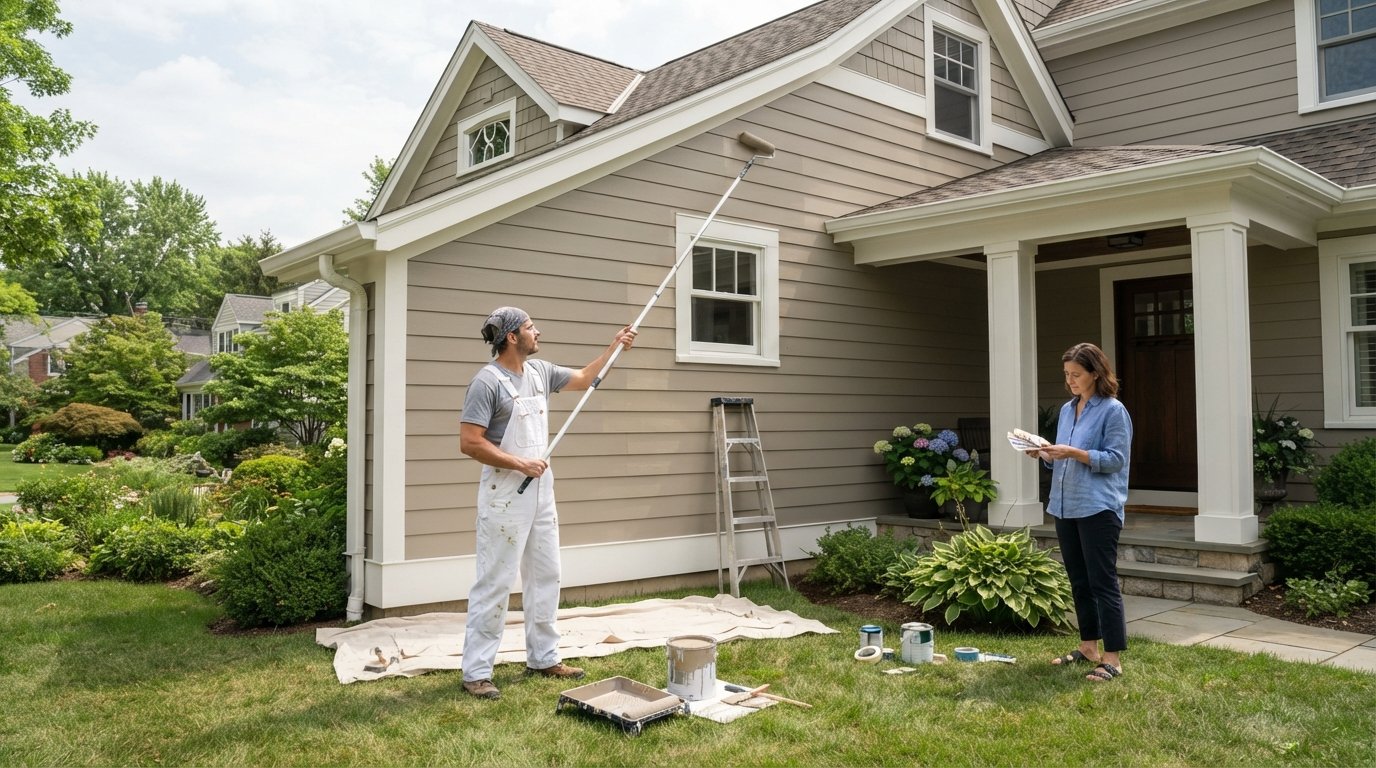
Exterior Paint Colors That Boost Home Value in 2026
Exterior paint colors that boost home value start with warm whites, soft grays, and earthy tones. Call (833)-439-3727 for expert color guidance.

By Sarah Thomas
Learn more about Exterior Painting for guides, costs, and what to expect.
Compare Exterior Painting Pros Near You

Enter your ZIP code to compare top-rated local professionals and request free quotes.
Your home's exterior is the first thing buyers see, and the paint color you choose can either draw them in or send them scrolling to the next listing. Exterior paint colors that boost home value are not about following the boldest trend or copying the house down the street; they are about selecting shades that appeal to the widest range of buyers, complement your home's architecture, and signal that the property has been well maintained. Whether you are preparing to sell in the next few months or simply want to protect your investment, the right palette can add thousands to your asking price while the wrong one can leave your home sitting on the market.
In this guide, we will walk through the exterior paint colors that consistently perform well with buyers, the condition issues that matter just as much as color, the cost of professional painting, and the mistakes that quietly erode curb appeal. Along the way, we will share practical tips and point you toward resources that make planning easier, including how to connect with experienced local contractors for a free estimate.
Why Exterior Paint Color Matters for Home Value
Curb appeal is not a vague concept; it is the cumulative impression a buyer forms in the first few seconds. According to real estate surveys, exterior paint is one of the highest-return home improvement projects, often recouping a significant portion of its cost at resale. More importantly, a fresh, neutral paint job signals that the home has been cared for, which reduces perceived risk for buyers. A peeling or faded exterior, by contrast, can trigger concerns about deferred maintenance and lead to lower offers or prolonged time on market.
Color also affects how buyers perceive size, style, and even the age of a home. A dark, saturated hue can make a small house feel cramped, while a bright, trendy shade may clash with neighboring properties and narrow your buyer pool. The goal is to choose a palette that feels current but not trendy, complements the home's materials (brick, stone, siding, roofing), and fits the character of the neighborhood. In most markets, that means leaning toward warm neutrals, soft grays, and classic whites with well-chosen accent colors.
It is also worth noting that paint color preferences vary by region. A palette that feels fresh in a coastal town may look out of place in a historic district. Before you commit, drive around your neighborhood and note the colors that look harmonious and well-maintained. Local paint stores and contractors can also advise on what sells in your area.
Exterior Paint Colors That Appeal to the Most Buyers
When it comes to resale, the safest bet is a color scheme that feels calm, cohesive, and broadly appealing. The following palettes consistently rank high with buyers because they enhance architectural details without overpowering them.
- Warm whites and creams: Off-white, ivory, and soft cream remain perennial favorites. They make homes look larger, reflect sunlight, and pair well with almost any roof color. Pair with a slightly darker trim for definition.
- Soft grays and greige: Light to medium grays with warm undertones (greige) offer a modern, sophisticated look that appeals to younger buyers while still feeling classic. They hide dirt better than pure white and work well on both traditional and contemporary homes.
- Earthy beiges and tans: These shades blend seamlessly with natural surroundings and brick exteriors. They are especially popular in suburban and rural markets where a harmonious, understated look is valued.
- Muted blues and greens: A soft slate blue or sage green can add personality without alienating buyers. These colors work best as accents on doors, shutters, or siding on homes with neutral trim.
- Classic charcoal and navy for accents: While not ideal for whole-house siding in most cases, dark charcoal or navy on shutters, doors, and trim adds contrast and a sense of quality. Use sparingly to avoid making the home look heavy.
These palettes are not just about color; they are about contrast and proportion. A common formula is to use the main color on large surfaces, a trim color that is one or two shades lighter or darker, and an accent color for the front door. This three-color approach creates visual interest and depth, which buyers perceive as higher quality. For example, a warm white body with soft gray trim and a navy front door is a combination that feels both classic and current.
It is also important to consider your roof color. Asphalt shingles in brown, gray, or black will dictate which siding colors work best. A professional painter can help you test samples against your roof and surrounding landscape before committing to a full exterior repaint.
How Paint Condition Affects Perceived Value
Even the perfect color will not boost value if the paint job is poorly executed. Buyers notice peeling, blistering, chalking, and uneven coverage, and they interpret these issues as signs of neglect. In fact, a recent survey found that a shabby exterior can reduce a home's perceived value by 5 to 10 percent. That is why preparing the surface and applying paint correctly matters as much as the color itself.
Proper preparation includes pressure washing, scraping loose paint, sanding, priming bare wood, and caulking gaps around windows and doors. Skipping these steps leads to premature failure and a finish that looks amateurish. If your home has lead-based paint (common in pre-1978 homes), you must follow safe practices and may need to hire a certified professional. A quality paint job should last 7 to 10 years, so investing in proper prep now saves money later.
If you are unsure whether your home needs a simple refresh or a full repaint, look for these signs: fading or chalking on the sunny side, peeling around joints and windowsills, and visible brush or roller marks from a previous DIY job. When in doubt, it is wise to consult a professional. For guidance on when to bring in an expert, see our article on when to hire a pro for exterior painting. It covers seven clear signs that indicate it is time to call in a professional, from extensive peeling to hard-to-reach areas.
Cost of Professional Exterior Painting
Understanding the cost of professional exterior painting helps you budget and evaluate bids. Prices vary by region, home size, number of stories, and the amount of prep work required. On average, homeowners spend between $3,000 and $8,000 for a single-story home, and $5,000 to $12,000 for a two-story home. Larger or more detailed homes can exceed $15,000. These figures typically include pressure washing, minor scraping, priming, and two coats of quality paint.
Factors that influence the final price include:
- Square footage and height: Taller homes require more scaffolding and labor.
- Surface material: Stucco, brick, and wood each require different prep and paint types.
- Extent of repairs: Replacing rotted wood, repairing siding, or fixing stucco cracks adds cost.
- Paint quality: Premium paints cost more but last longer and provide better coverage.
- Season and location: Peak season and high-cost-of-living areas command higher prices.
When comparing bids, look beyond the bottom line. A low bid may skimp on prep or use lower-grade paint, which can lead to problems within a year or two. Reputable contractors provide a detailed scope of work, a clear timeline, and a warranty. They also carry liability insurance and workers' compensation, which protects you if an accident occurs on your property. To simplify the process of finding vetted professionals, you can use a service like BuySellRemodel to connect with local contractors and request free estimates. This allows you to compare multiple quotes side by side and choose the best fit for your budget and timeline.
If you are handy and have a single-story home with minimal prep work, DIY painting can save money, but it is time-consuming and risky for anything beyond a simple ranch. Professional painters have the equipment, experience, and insurance to deliver a flawless finish that enhances curb appeal and protects your home for years.
Mistakes That Hurt Curb Appeal
Even with a good color choice, certain mistakes can undermine the value boost you are hoping for. Avoiding these common pitfalls will help you get the most from your investment.
- Choosing a color that clashes with fixed elements: Your roof, brick, and stone are expensive to change, so pick a paint color that complements them. Test samples on multiple sides of the house to see how the color looks in different light.
- Ignoring the trim and accent colors: A monochromatic paint job can look flat. Use trim to create definition and an accent color on the front door to add personality.
- Skipping surface preparation: Painting over dirt, mildew, or peeling paint leads to early failure. Proper prep is non-negotiable for a lasting finish.
- Using too many colors: More than three colors (body, trim, accent) can make a home look busy and disjointed. Stick to a cohesive palette.
- Following fleeting trends: Bold or trendy colors may appeal to you, but they can limit your buyer pool. If you plan to sell within a few years, opt for neutrals with broad appeal.
- Neglecting the front door and garage door: These are focal points. A fresh coat of paint on the front door and a matching or complementary garage door color can dramatically improve curb appeal.
Another common mistake is underestimating the importance of landscaping and lighting. Even the best paint job can be overshadowed by overgrown shrubs or a dark entryway. Trim bushes, add fresh mulch, and ensure your porch light works. These small touches, combined with a fresh exterior, create a welcoming first impression that buyers remember.
Maximizing Your Return on Investment
To get the most value from your exterior painting project, start by identifying the colors that work with your home's architecture and the local market. Then, invest in proper preparation and quality materials. If you are not confident in your ability to execute a flawless job, hire a professional. The cost of professional painting is often recouped at resale, and a well-painted home sells faster and for more money.
When planning your project, get at least three estimates from licensed and insured contractors. Ask for references and look at photos of their previous work. A reputable contractor will be happy to provide this information and will guide you on color selection based on their experience with similar homes in your area. They can also advise on the best paint types for your climate and siding material.
Finally, do not overlook the power of small accents. Painting the front door a bold color like red or navy can add a pop of personality that appeals to buyers, while painting the shutters a contrasting shade adds depth. These small changes cost little but can significantly enhance the overall look.
By choosing timeless colors, preparing surfaces properly, and hiring a qualified professional when needed, you can boost your home's value and enjoy a beautiful exterior for years to come. For homeowners planning multiple improvements, connecting with local experts through a trusted resource can streamline the process and ensure quality results. Whether you are repainting to sell or simply to refresh your home's appearance, the right exterior paint colors are a smart investment in your property's future.