
Foundation Repair Cost Signs and When to Act in 2026
Spot foundation repair cost signs early and know when to act. Call (833)-439-3727 for a free local estimate and avoid surprise repair bills.

By Leo Dawson
Learn more about Foundation Repair for guides, costs, and what to expect.
Compare Foundation Repair Pros Near You

Enter your ZIP code to compare top-rated local professionals and request free quotes.
That thin crack above the doorway seemed harmless last spring. Now it has widened, the door sticks in humid weather, and you find yourself wondering whether this is normal settling or the start of a five-figure problem. Foundation issues are among the most stressful discoveries a homeowner can face, partly because the damage unfolds slowly and partly because the price tag is invisible until a professional looks underneath your home. Understanding the foundation repair cost signs and when to act can save you thousands, protect your home's value, and spare you from emergency repairs that always seem to arrive at the worst possible moment.
The good news is that foundations rarely fail overnight. They telegraph distress through cracks, uneven floors, sticking doors, and exterior clues long before a wall bows or a pier sinks. Your job as a homeowner is not to diagnose the problem yourself but to recognize the pattern of symptoms and know when a small observation warrants a professional evaluation. This guide walks through the warning signs worth watching, the repair methods contractors actually use, realistic cost ranges for 2026, and the point at which you should stop researching and start calling.
Warning Signs That Point to Foundation Trouble
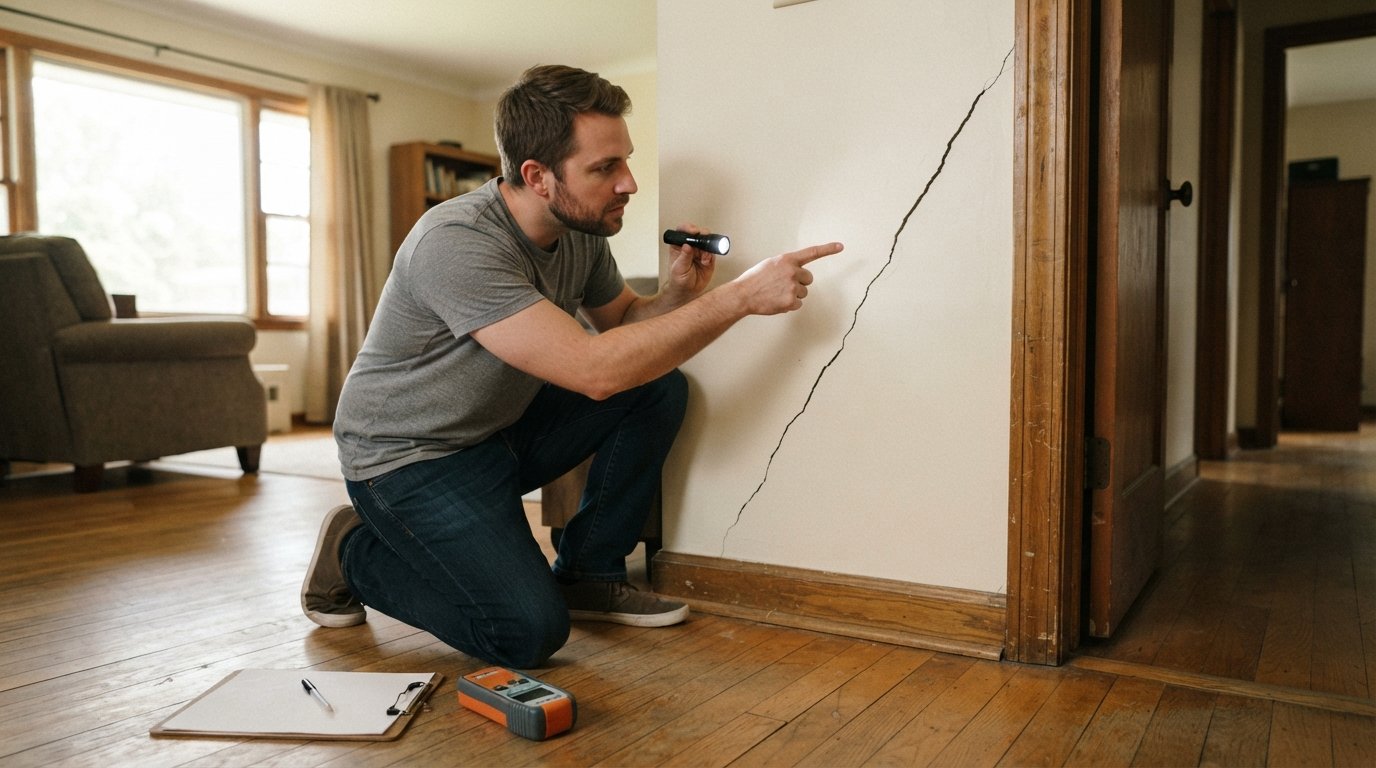
Not every crack is a crisis. Hairline cracks in drywall, mortar joints, and concrete slabs are common in homes of every age, especially in regions with expansive clay soil or dramatic seasonal moisture swings. The trick is distinguishing cosmetic settling from structural movement. A crack that appears suddenly, grows over a few months, or is wider than the thickness of a nickel deserves attention. So does any crack that runs diagonally from the corner of a window or door frame, since that pattern often follows the stress lines of a shifting foundation.
Doors and windows are excellent diagnostic tools. If a door that closed smoothly last year now drags or latches only with effort, the frame has likely racked out of square. The same holds for windows that stick in one season and glide in another. Some seasonal variation is normal, but a persistent change that worsens over time suggests the foundation beneath that wall is moving rather than the hardware failing.
Floors tell their own story. Sloping floors, springy sections, or tiles that crack in a straight line across a room all point to movement below. On the exterior, look for stair-step cracks in brick or block walls, gaps where siding meets the foundation, and soil that has pulled away from the house. Standing water near the foundation after rain, or downspouts that dump water within a few feet of the wall, compounds the risk because saturated soil expands and contracts with the seasons.
Here are the symptoms that most reliably justify a professional inspection:
- Cracks wider than 1/4 inch, or any crack that has visibly grown since you first noticed it
- Doors and windows that stick, especially if the problem appeared within the last year
- Uneven or sloping floors, or tiles cracking in a continuous line
- Stair-step cracks in exterior brick, block, or stone walls
- Gaps between the foundation and the frame, or visible tilting of a chimney
If you see two or more of these signs together, treat it as a pattern rather than a coincidence. One sticking door is a nuisance; a sticking door plus a diagonal crack plus a sloping hallway is a foundation conversation. Document what you see with photos and dates, because a contractor or engineer will ask when each symptom appeared, and that timeline helps determine whether movement is active or historic.
Typical Repair Methods and What They Cost
Foundation repair pricing depends on the cause, the access, and the method. A home with minor settlement along one wall might need spot underpinning, while a home with a bowing basement wall requires carbon fiber straps or wall anchors. Before you panic at a quote, it helps to understand what each method does and why the prices vary so widely. Most homeowners encounter one of four repair categories: crack sealing, piering or underpinning, wall stabilization, and drainage correction.
Crack sealing is the least expensive option and applies to poured concrete walls with non-structural cracks. Contractors inject polyurethane or epoxy into the crack to stop water intrusion and bond the concrete back together. Expect to pay roughly $300 to $900 per crack depending on depth and accessibility, with epoxy injection at the higher end. This is maintenance, not structural repair, and it does not correct movement that has already occurred.
Piering, also called underpinning, addresses settlement by driving steel or concrete piers down to stable soil and lifting the home back toward level. This is the classic remedy for a house that has sunk on one side. Prices vary by region and depth, but homeowners typically see $1,000 to $3,000 per pier, and a typical job uses five to ten piers. That puts many full underpinning projects in the $5,000 to $25,000 range, with larger or more complex jobs exceeding that. Helical piers tend to cost more than push piers because of the installation equipment, but they perform better in certain soil conditions.
Wall stabilization comes into play when a basement or crawlspace wall is bowing inward. Carbon fiber straps are the budget-friendly option at roughly $500 to $1,500 per strap, while steel wall anchors run $1,000 to $3,000 per anchor and can actually pull a wall back toward plumb. For severe bowing, contractors may recommend helical tiebacks or full wall replacement, which can climb past $30,000. If you want a deeper breakdown of pricing tiers, the foundation repair cost guide walks through 2026 pricing and the options behind each number.
Drainage correction is often the cheapest and most overlooked fix. If water is the root cause, regrading soil, extending downspouts, and installing French drains can cost $1,000 to $5,000 and prevent future movement. Skipping this step is like fixing a leaky roof without patching the hole: the repair fails because the cause remains. A reputable contractor will recommend drainage work alongside structural repair rather than after it.
When to Bring in a Structural Engineer
A foundation contractor sells foundation repair, which means their assessment carries an inherent conflict of interest, even when they are honest. A structural engineer sells an opinion, not a repair, which makes their evaluation the gold standard when the diagnosis is unclear or the stakes are high. The general rule: if a contractor recommends a repair exceeding a few thousand dollars, or if the symptoms are ambiguous, hire an independent engineer before signing anything.
Engineers typically charge $300 to $800 for a residential foundation evaluation, and many will provide a written report with repair recommendations you can hand to multiple contractors for bids. That fee is trivial compared to the cost of unnecessary piers or, worse, a repair that fails because the wrong problem was addressed. Situations that clearly warrant an engineer include bowing walls, settlement that has moved more than an inch, cracks that reappear after sealing, and any home where a previous repair was attempted. If you are buying or selling a home and the inspection flags foundation concerns, an engineer's letter also protects you at the negotiating table.
There is a practical middle path. Many homeowners start with a free foundation inspection from a reputable local contractor, which identifies obvious issues and gives a ballpark scope. If the contractor's recommendation is straightforward crack sealing or drainage work, you can proceed with confidence. If the recommendation involves piers, anchors, or anything structural, spend the money on an engineer to validate the diagnosis. You can connect with experienced local contractors who offer free estimates and can help you decide whether an engineer is warranted before you commit to a large repair.
Preventive Steps to Avoid Future Damage
Foundation problems are cheaper to prevent than to fix. The single most effective habit is managing water. Soil should slope away from the house at roughly six inches over the first ten feet, downspouts should discharge at least four to six feet from the foundation, and gutters should be cleaned often enough to prevent overflow. In dry climates, soaker hoses run during drought periods keep expansive clay soil from shrinking and pulling away from the foundation, which is a common cause of settlement in the South and Midwest.
Tree placement matters more than most homeowners realize. Large trees within fifteen to twenty feet of the foundation can extract enough moisture to cause differential settlement, especially during dry summers. You do not necessarily need to remove the tree, but you should monitor the soil moisture on that side of the house and consider a root barrier if the tree is close. Similarly, avoid piling soil or mulch too high against siding, since that traps moisture and invites both foundation deterioration and pest problems.
Routine observation is the cheapest preventive tool available. Walk the perimeter twice a year, once in spring and once in fall, and look for new cracks, gaps, or changes in grade. Photograph anything suspicious with a ruler or coin for scale so you can compare later. Keep a simple log of when you first noticed each issue. This record is invaluable when you eventually call a contractor, because it turns a vague worry into a documented timeline that speeds up diagnosis.
Finally, address small problems while they are small. A $500 crack injection today can forestall a $15,000 piering job five years from now. The foundation repair cost signs and when to act are really about timing: the earlier you respond to the signals, the more options you have and the less you spend. Waiting for certainty usually means waiting until the damage is obvious, and obvious damage is expensive damage.
Budgeting for Repairs Without Surprise Bills
Foundation work is rarely planned, which makes it a budget killer. Homeowners who suspect an issue should get at least three written estimates and compare not just the total but the scope. A low bid that seals cracks without addressing drainage is not comparable to a bid that includes drainage correction and a transferable warranty. Ask each contractor what happens if the repair does not hold, whether the warranty transfers to a future buyer, and whether the company carries both general liability and workers' compensation insurance.
Financing options exist for larger repairs, and many foundation companies partner with lenders that offer monthly payment plans. That said, be wary of pressure to sign on the spot. A legitimate contractor will give you time to review the proposal and will not manufacture urgency beyond the real urgency of active movement. If a wall is bowing rapidly or a pier has failed, speed matters, but a week to compare bids rarely changes the outcome and often improves the price.
When selling a home, disclose known foundation issues and the repairs performed. A documented repair with a transferable warranty is often a selling point rather than a red flag, because it removes uncertainty for buyers. Undisclosed problems, by contrast, invite renegotiation or litigation. Treat foundation maintenance as part of homeownership the same way you treat roof and HVAC upkeep: routine, documented, and budgeted.
If you are weighing a repair against other projects, remember that foundation work protects everything above it. A kitchen remodel in a house with active settlement is money poured into a moving target. Fix the bones first, then finish the surfaces. Contractors who specialize in foundations can often coordinate with other trades, and a free estimate request through a local contractor network is the fastest way to get a realistic scope and price without committing to anything.
Foundation repair is one of those expenses that feels unfair until you compare it to the alternative. Catching the signs early, understanding what each repair method costs, and knowing when to call an engineer keeps you in control of the process. Start with a careful walk around your home this week, document what you find, and request a free estimate from a local professional if anything looks new or growing. Acting on the early signs is almost always cheaper than reacting to the late ones.