
Garage Door Repair Cost and Common Issues Guide
Garage door repair costs range from $120 to $400. This guide covers common issues and tips to avoid surprise bills.

By Sarah Thomas
Learn more about Garage Door Repair for guides, costs, and what to expect.
Compare Garage Door Repair Pros Near You

Enter your ZIP code to compare top-rated local professionals and request free quotes.
Your garage door is likely the largest moving part of your home, and when it stops working, it can disrupt your entire day. A loud grinding noise, a door that refuses to open, or a broken spring can turn a simple morning into a stressful situation. For most homeowners, the first question after noticing a problem is about cost: what will this repair set me back? The answer varies widely, but understanding the common issues and their typical price ranges can help you budget effectively and avoid being overcharged. This practical guide breaks down garage door repair costs, highlights frequent problems, and shows you how to make smart decisions, whether you choose a professional or consider a DIY approach.
Average Garage Door Repair Costs in 2026
Nationwide, homeowners typically spend between $150 and $350 for a single repair visit, with the average repair cost landing near $250. This figure includes the service call, labor, and standard parts, but it can change based on your location, the complexity of the problem, and the contractor you hire. For example, a simple sensor alignment might cost only $120, while replacing a broken torsion spring can run from $200 to $300. More extensive repairs, such as a full cable replacement or fixing a damaged panel, can push the total above $500.
To give you a clearer picture, here are the common repair scenarios and their estimated price ranges for 2026:
- Broken torsion spring replacement: $200 to $300
- Extension spring replacement: $100 to $200
- Off-track door repair: $150 to $250
- Cable replacement: $150 to $200
- Opener motor or gear replacement: $200 to $400
These figures assume you hire a professional. If the problem is simple, such as a misaligned safety sensor that you can fix yourself, your only cost might be a few minutes of time and a level. However, for most homeowners, the peace of mind that comes with a professional repair is worth the expense, especially when dealing with high-tension springs that can cause serious injury.
Top 5 Common Garage Door Issues and Their Fixes
1. Broken Springs
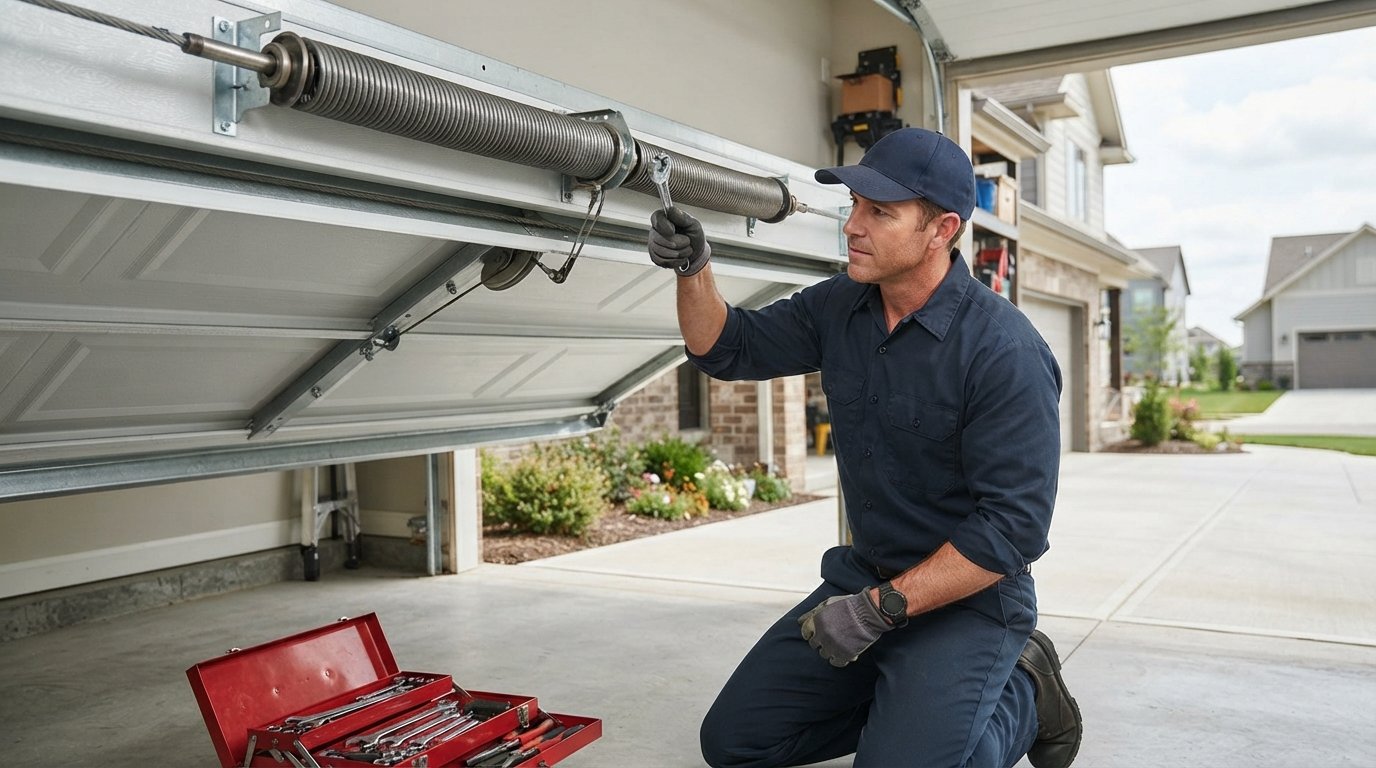
Springs are the workhorses of your garage door system. They counterbalance the door's weight, making it easy to lift and lower. Torsion springs, which mount above the door, typically last 10,000 to 20,000 cycles, or about 7 to 10 years with average use. When they break, you will often hear a loud bang, and the door will refuse to open or will slam shut if you try to lift it manually. Replacing torsion springs is dangerous due to the high tension involved. Professional replacement costs $200 to $300, and it is not a job for DIY amateurs. Extension springs, which run along the sides of the door, are slightly cheaper but still require careful handling.
2. Misaligned or Faulty Sensors
Modern garage doors have safety sensors near the floor that prevent the door from closing if something is in the path. If these sensors are dirty, misaligned, or have a wiring issue, the door may refuse to close, or it may reverse unexpectedly. A common fix is simply wiping the lenses with a soft cloth and adjusting the sensors so they face each other perfectly. If that does not work, the problem might be a short in the wiring or a faulty sensor unit. A professional can diagnose and replace sensors for around $100 to $150, but many homeowners solve this issue in minutes with a basic level and a screwdriver.
3. Off-Track Door
If your garage door has come off its tracks, you will likely notice a crooked door, a loud scraping sound, or a door that is stuck. This can happen after a car accident or from worn rollers and loose hardware. Attempting to force the door back on track is risky because the door is heavy and under tension. A professional will realign the tracks, replace any damaged rollers, and ensure the door operates smoothly. This repair usually costs between $150 and $250, depending on the extent of the damage. Ignoring an off-track door can lead to more serious damage to the door panels and opener system.
4. Worn-Out Rollers and Hinges
Garage door rollers and hinges see a lot of friction. Over time, rollers can crack, and hinges can become loose, causing the door to run roughly or vibrate excessively. If you hear a grinding noise or notice the door jerking as it moves, it is likely time for maintenance. Replacing a set of rollers (usually 10 to 12) costs between $100 and $200, including parts and labor. Some homeowners with basic mechanical skills can do this themselves, using a socket wrench and a pair of pliers, but it is a task that requires care to avoid damaging the door or injuring yourself.
5. Faulty Garage Door Opener
Sometimes the door itself is fine, but the opener is failing. Issues can range from a dead remote battery to a worn-out motor or a broken gear. If the opener hums but the door does not move, the problem is often a stripped gear or a broken drive belt. Replacing these parts costs $200 to $400. If the opener is old and unreliable, you might consider a full replacement, which runs $400 to $800 for a new unit and installation. Before calling for service, check the simplest things: is the opener plugged in, is the remote battery dead, and is the lock feature on the wall console engaged?
DIY vs. Hiring a Professional: What to Consider
Some garage door repairs are perfectly safe for a handy homeowner. Replacing a remote control battery, cleaning the sensor lenses, or lubricating the moving parts are all low-risk tasks that can be done without special tools. You can also replace weather stripping along the bottom of the door, which costs about $30 to $60 for a new seal. These small fixes can prevent larger problems and save you money on service calls.
However, repairs involving springs, cables, or the door's track system are best left to professionals. Torsion springs are under extreme tension, and if they snap during a DIY attempt, they can cause severe injuries or property damage. Cables are equally dangerous because they are also under load. Additionally, professional technicians have the right tools and experience to diagnose issues quickly, which can actually save you money in the long run by preventing repeated breakdowns. When you schedule a service visit, a technician will inspect the entire door system and can often spot developing issues before they become emergencies.
How to Save Money on Garage Door Repairs
Regular maintenance is the cheapest way to avoid expensive repairs. Once a month, inspect the door for visible wear, listen for unusual noises, and test the auto-reverse feature. Every six months, apply a silicone-based lubricant to the springs, rollers, and hinges. Avoid using grease, which attracts dust and can cause build-up. Keeping the tracks clean and aligned also helps the door run smoothly. These simple habits can extend the life of your door and its components by several years.
When you do need a professional, always get multiple quotes. Many companies offer free estimates, so take advantage of that to compare prices and services. Be wary of unusually low bids, as they may indicate inferior parts or substandard workmanship. Also, ask about warranties on both parts and labor. A reputable contractor will stand behind their work. For help planning any home repair and to connect with vetted local pros, you can explore options on BuySellRemodel, which simplifies the process of getting multiple quotes for your project.
Hidden Costs to Watch For
The initial quote you receive may not cover everything. Some companies charge a separate service call fee, which ranges from $50 to $100, and this may or may not be waived if you proceed with the repair. Additionally, if the technician discovers other issues during the inspection, such as a frayed cable or a failing opener, you may face additional charges. To avoid surprises, ask for a written estimate that itemizes the parts and labor. Also, clarify whether the quote includes the service call fee or if it is extra.
Another potential hidden cost is for emergency service. If your door breaks down on a weekend or after hours, you might pay a premium of 50% or more. To minimize this risk, address small issues as soon as you notice them. A door that is starting to stick or make noise is sending you a warning sign. Ignoring it can lead to a complete failure that requires a more expensive repair or even a full door replacement, which can cost $1,000 or more.
Preventive Maintenance That Extends Door Life
Establishing a simple maintenance routine can add years to your garage door system. Here is a quick checklist to follow every few months:
- Visually inspect springs, cables, rollers, and pulleys for signs of wear, rust, or fraying.
- Test the balance of the door by disconnecting the opener and manually lifting it halfway. The door should stay put. If it falls, the springs likely need adjustment.
- Lubricate all moving parts with a silicone spray or white lithium grease.
- Tighten loose bolts and screws on the hinges and track brackets.
- Clean the sensor lenses and ensure they are aligned.
By following these steps, you can catch problems early and avoid the inconvenience and cost of a major repair. If you are not comfortable performing any of these checks, a professional maintenance visit, which costs around $100 to $150, is a worthwhile investment. Many contractors offer annual maintenance plans that include a full inspection and tune-up.
When it comes time to make a decision about repairing your garage door, weigh the age of the door against the cost of the repair. If your door is over 15 years old and needs a $400 repair, it might be smarter to invest in a new door. A new door can improve your home's curb appeal and energy efficiency, and it often comes with a warranty. For help with broader home improvement planning, including cost estimates for other projects, you can review our foundation repair cost guide to understand how similar structural repairs are priced.
Ultimately, the best way to manage garage door repair costs is to stay informed and act quickly. With this garage door repair cost and common issues guide, you now know what to expect, which repairs are safe to DIY, and when to call a professional. A little attention today can save you hundreds of dollars and a lot of frustration tomorrow. Remember to get free estimates from local contractors, ask the right questions, and always prioritize safety over savings.