
Landscaping for Energy Efficiency with Shade Trees
Landscaping for energy efficiency with shade trees can cut cooling costs by up to 50 percent. Learn which trees to plant, where, and how to save.

By Sarah Thomas
Learn more about Tree Planting for guides, costs, and what to expect.
Compare Tree Planting Pros Near You

Enter your ZIP code to compare top-rated local professionals and request free quotes.
Your air conditioner runs for hours on a July afternoon, and the electric meter spins like a top. You have probably blamed the age of the unit or the size of the windows. The real culprit is often the sun itself, beating down on your roof, walls, and driveway from morning until evening. Landscaping for energy efficiency with shade trees is one of the few home upgrades that lowers your summer cooling bills, trims winter heating costs, and adds lasting curb appeal, all without touching your HVAC system. The right trees, planted in the right spots, can cut cooling costs by 15 to 50 percent according to long-running utility studies, and the effect grows stronger as the canopy matures.
This guide walks through how shade trees work, which species deliver the best return, where to place them, and how to keep the savings coming for decades. You will also see how to split the work between your own shovel and a local pro, so a project that feels overwhelming becomes a weekend task with a clear budget.
How Shade Trees Lower Energy Bills
A tree is a free cooling system that runs on sunlight and rain. Its leaves block solar radiation before it ever reaches your walls, and its roots and canopy release water vapor that cools the air immediately around it. The combined effect is called evapotranspiration, and a single mature shade tree can deliver the cooling power of several small window air conditioners running all day.
The savings show up in three places. First, direct shade on your roof and exterior walls reduces the amount of heat that conducts indoors. Second, shade on windows and doors blocks radiant heat from entering through glass. Third, shade on your driveway, patio, and AC condenser unit keeps the surrounding air cooler, which helps your air conditioner run more efficiently. A unit sitting in full sun has to work harder to reject heat than one tucked under afternoon shade.
Winter works differently. Deciduous trees drop their leaves, letting low-angle winter sun warm your home. Evergreens planted on the north and northwest sides act as a windbreak, slowing cold air before it hits your walls. According to the U.S. Department of Energy, a well-designed landscape can reduce annual heating and cooling costs by roughly 25 percent, with the biggest gains coming from proper placement rather than sheer tree count. That is why landscaping for energy efficiency with shade trees rewards planning more than spending.
Choosing the Right Shade Trees for Your Climate
Not every tree belongs on every lot. A species that thrives in Georgia may struggle in Minnesota, and a fast grower in one region may be an invasive nuisance in another. Start with your USDA hardiness zone, then narrow the list by mature height, canopy spread, growth rate, and root behavior. A tree that outgrows its space will eventually threaten your foundation, driveway, or power lines, turning a savings project into a repair bill.
Deciduous shade trees are the workhorses of an energy-smart yard because they block summer sun and allow winter sun. Maples, oaks, elms, honey locusts, and ginkgos all fit this role, though their growth rates and soil needs vary widely. If you want quicker results, consider a fast-growing species such as a red maple or river birch, but plant it where a large canopy will still be welcome in 20 years. Slow growers like oaks pay off later but live longer and need less pruning.
Evergreens serve a different purpose. Planted as a dense windbreak on the north or northwest side, they reduce infiltration and shield your home from winter gusts. Leave a gap of at least 20 feet between the windbreak and the house so snow does not pile against the foundation. A mix of deciduous and evergreen trees gives you year-round performance rather than a one-season fix.
Before you buy, check three practical details: the tree's mature canopy spread, its water needs once established, and whether it drops heavy fruit or sap near patios and cars. A few minutes of research at the nursery prevents years of regret.
Where to Plant Shade Trees for Maximum Savings
Placement decides whether a tree saves you money or creates a maintenance headache. The goal is to shade the surfaces that absorb the most heat, and to do it on the sides that face the summer sun. In most of North America, that means the south, west, and east sides of the house, with the west side delivering the largest afternoon cooling benefit.
Use this simple placement framework before you dig:
- West side: Plant a tall deciduous shade tree 15 to 25 feet from the wall to block the hot afternoon sun that drives peak cooling demand.
- South side: Use a wide-canopy deciduous tree 15 to 20 feet out, so summer sun is blocked but winter sun still reaches south-facing windows.
- East side: A medium tree shades morning sun, which is helpful in hot climates but less critical in mild ones.
- North and northwest: Plant evergreens as a windbreak, set back at least 20 feet, to cut winter heat loss.
- AC condenser and patio: A small tree or tall shrub that shades the unit and hardscape can improve efficiency and comfort at the same time.
Distance matters as much as direction. Plant too close and roots can lift patios or invade foundation drains; plant too far and the shadow lands on the lawn instead of the roof. As a rule of thumb, a tree's mature canopy should reach your roofline without touching it. If you are unsure, a landscape contractor can mark safe planting zones based on your utility lines, septic field, and foundation depth.
Once the trees are in the ground, the payoff compounds. Shade reduces the load on your air conditioner, and that lower demand works alongside other upgrades. If you are already considering a broader efficiency push, our guide to whole home energy efficiency upgrades and combined savings explains how insulation, air sealing, and shade work together to shrink your utility bills more than any single fix alone.
Planting and Care Steps for Long-Term Savings
A shade tree is a 30-year investment, so the first few seasons determine how well it performs. Planting depth, soil preparation, and early watering matter more than fertilizer or fancy additives. Get these basics right and the tree will grow faster, live longer, and cast a denser canopy.
Follow this sequence when you plant:
- Call 811 or your local utility locator at least three business days before digging, so you avoid gas, water, and electrical lines.
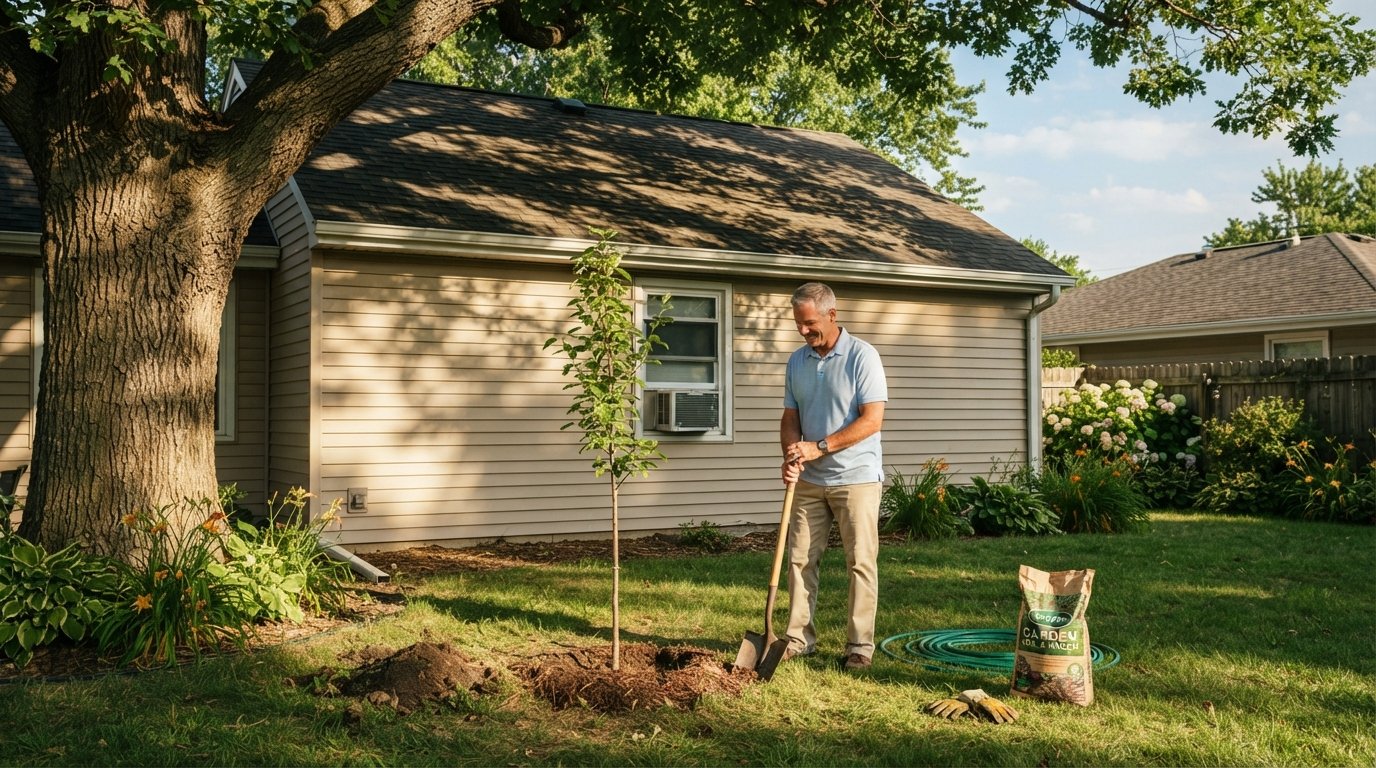
- Dig a hole two to three times as wide as the root ball but no deeper than the root flare, the spot where the trunk widens into the roots.
- Set the tree so the root flare sits at or slightly above grade, then backfill with native soil rather than amended mixes that discourage roots from spreading.
- Water deeply once a week for the first two years, tapering off as the tree establishes, and add a three-inch layer of mulch in a ring that keeps it clear of the trunk.
- Prune only dead or crossing branches for the first few years, then shape the canopy as it matures.
After planting, resist the urge to stake or fertilize heavily. A tree that sways slightly in the wind develops a stronger trunk, and overfeeding pushes leafy growth at the expense of roots. The main ongoing tasks are watering during drought, refreshing mulch, and watching for pests or disease. A certified arborist can handle larger pruning jobs safely, especially once branches reach over the roof.
Timing also matters. In most climates, early fall or early spring is the best window, when soil is warm but the air is cool. Avoid planting in the middle of summer, when transplant shock is highest and watering demands are heaviest.
Costs, Payback, and When to Hire a Pro
The cost of a shade tree project depends on size, species, and whether you plant it yourself. A bare-root sapling may cost $20 to $50, while a balled-and-burlapped tree 8 to 12 feet tall typically runs $150 to $500 before delivery and planting. Professional installation adds labor and equipment, but it also comes with a warranty and correct planting depth, which is the single biggest factor in whether a tree survives its first year.
Payback is measured in lower utility bills and higher property value, not just tree cost. A strategically placed shade tree can trim summer cooling costs by 15 to 50 percent, and mature trees can add thousands of dollars to resale value. In hot climates, the energy savings alone often cover the cost of a professionally planted tree within five to ten years, and the benefits continue for decades after that.
DIY planting makes sense for small trees, clear sites, and homeowners who enjoy the work. Hiring a pro makes sense when the tree is large, the site is tight, or utilities and irrigation are in the way. If you want help comparing bids and finding a qualified local landscaper, BuySellRemodel connects homeowners with experienced contractors who provide free estimates, so you can choose the right pro without guesswork.
Before hiring, ask for proof of insurance, a written scope that names the species and size, and a warranty that covers the first year. A reputable contractor will also advise on placement, soil, and watering rather than simply dropping a tree and leaving.
Common Mistakes That Undermine Tree Savings
Even well-intentioned plantings can miss the mark. The most common error is planting too close to the house in hopes of faster shade. Roots then lift patios, clog drains, and push against foundations, while branches scrape siding and gutters. The second most common mistake is choosing a fast-growing species without checking its mature size, which leads to expensive removal a decade later.
Other pitfalls include planting the root flare too deep, which slowly suffocates the tree; skipping mulch, which leaves soil bare and dry; and never pruning, which lets weak limbs split in storms. On the energy side, homeowners sometimes shade the wrong side of the house or forget the AC condenser, missing easy efficiency gains. A short conversation with a local landscaper or arborist can catch these issues before they cost you money.
Finally, do not treat trees as a one-time purchase. They need water, occasional pruning, and pest monitoring to keep performing. Budget a small amount each year for care, and the canopy will keep paying you back in comfort and lower bills.
Landscaping for energy efficiency with shade trees is a rare home upgrade that gets better with age. You plant once, care for a few seasons, and then collect lower utility bills, a cooler yard, and a more valuable property year after year. Start with the west and south sides, pick species suited to your climate, and plant them correctly. Whether you dig the holes yourself or bring in a local contractor for a free estimate, the shade you create this season will keep working for the next generation.