
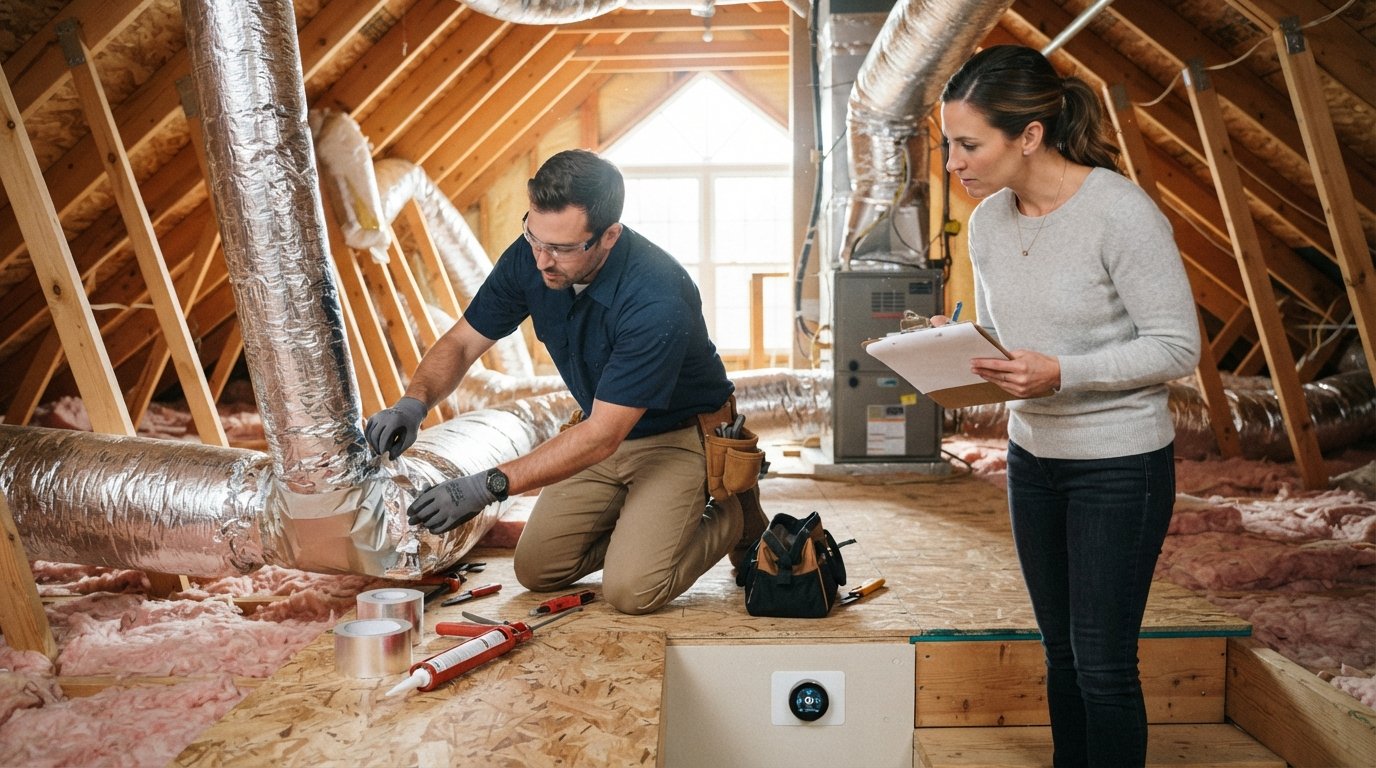
Whole Home Energy Efficiency Upgrades and Combined Savings
Whole home energy efficiency upgrades and combined savings can cut utility bills by 30 to 50 percent. Here is how to sequence projects for the best return.

By Sarah Thomas
Learn more about Weatherization for guides, costs, and what to expect.
Compare Weatherization Pros Near You

Enter your ZIP code to compare top-rated local professionals and request free quotes.
Your home is a system, not a collection of isolated rooms and appliances. When one part wastes energy, it quietly drives up costs everywhere else. That is why whole home energy efficiency upgrades and combined savings work best when you plan them together, not one random project at a time. A homeowner who seals air leaks, adds insulation, and upgrades a tired HVAC unit in the same season often saves far more than someone who spreads those same projects over five years.
The math is simple: each upgrade reduces the load on the next one. Better insulation means a smaller heat pump can keep the house comfortable. A smarter thermostat squeezes more value out of every dollar you spend on heating and cooling. New windows and doors take pressure off your aging furnace. Stack those benefits, and the combined savings can reach hundreds of dollars per year, sometimes more, depending on your climate and utility rates.
This guide walks through the highest-impact upgrades, explains how they interact, and shows you how to plan a sequence that fits your budget. It also covers how to find experienced local contractors, request free estimates, and avoid the mistakes that turn a smart efficiency project into an expensive headache.
Why Combined Savings Beat Single Upgrades Every Time
A single upgrade delivers a single benefit. A whole home plan delivers compounding benefits. That difference matters because energy waste rarely comes from one source. It leaks out through the attic, slips around door frames, escapes through old windows, and gets burned up by inefficient appliances and outdated lighting. Fix one leak and the others still drain your wallet.
Consider a typical older home. The attic is under-insulated, the ductwork leaks conditioned air into the crawlspace, and the water heater is more than a decade old. If you only replace the water heater, you save on hot water costs but still lose money through the attic and ducts. If you tackle all three within a year, the savings stack. The insulation reduces how hard the HVAC system works. Sealed ducts deliver more of that conditioned air to living spaces. The new water heater uses less energy to do its job. Each improvement makes the others more effective.
Combined savings also improve your return on investment. Energy-efficient upgrades tend to raise resale value, reduce monthly bills, and make the home more comfortable year round. Buyers increasingly ask about utility costs, and a documented efficiency record gives you a strong negotiating position.
There is also a practical planning benefit. When you bundle upgrades, you often pay for one round of contractor mobilization instead of three. That alone can save several hundred dollars. Bundling also makes it easier to qualify for utility rebates and federal tax credits that reward comprehensive improvements rather than piecemeal work.
The Highest-Impact Upgrades to Prioritize
Not every upgrade delivers the same return. Some are cheap and fast, others require a contractor and a larger budget. The smartest approach is to start with the upgrades that reduce the biggest energy losses, then layer on the rest as your budget allows.
Here are the upgrades that consistently deliver the strongest combined savings for most homeowners:
- Air sealing and insulation: Sealing gaps around windows, doors, plumbing penetrations, and attic hatches, then adding insulation to recommended R-values, reduces heating and cooling losses more than almost any other single measure.
- High-efficiency HVAC systems: A modern heat pump or furnace with a high SEER2 or AFUE rating can cut heating and cooling costs significantly, especially when paired with a programmable or smart thermostat.
- Window and door upgrades: ENERGY STAR rated windows and insulated exterior doors reduce drafts, block solar heat gain in summer, and lower the load on your HVAC system.
- Water heating improvements: Tankless or high-efficiency tank water heaters, plus pipe insulation and low-flow fixtures, cut one of the largest single energy expenses in most homes.
- Smart energy management: Smart thermostats, occupancy sensors, LED lighting, and advanced power strips reduce waste without requiring major construction.
Each of these upgrades pays back differently. Air sealing and insulation usually deliver the fastest payback because they are relatively inexpensive and attack the biggest source of loss. HVAC and window replacements cost more upfront but last for decades and improve comfort dramatically. Smart energy management is the cheapest entry point and works well as a first step while you save for larger projects.
The key is to treat them as one plan. A new HVAC system installed in a leaky, under-insulated house will never perform at its rated efficiency. Fix the envelope first, and every dollar you spend on equipment afterward goes further.
How to Sequence Upgrades for Maximum Combined Savings
Sequence matters. If you install a high-efficiency furnace before sealing your attic, you have paid premium prices for equipment that still has to fight the same leaks. The right order is to reduce demand first, then upgrade the systems that meet that demand.
A practical whole home sequence looks like this:
- Start with an energy audit. A professional audit or a utility-sponsored assessment identifies exactly where your home loses energy. It gives you a prioritized list instead of guesswork.
- Air seal and insulate. Seal the attic, basement, and crawlspace, then bring insulation up to recommended levels. This is the foundation of every other upgrade.
- Address windows and doors. If they are single-pane or drafty, upgrade them. If they are in decent shape, weatherstrip and caulk instead.
- Upgrade HVAC and water heating. With the envelope tightened, size your new system correctly. A smaller, right-sized unit costs less to buy and less to run.
- Add smart controls and lighting. Finish with thermostats, sensors, and LEDs that keep the whole system running efficiently.
This sequence also helps you budget. The early steps are relatively affordable. The later steps are bigger investments, but by then you have already reduced your energy load, so you can often buy smaller equipment and save money twice.
If you are planning a larger renovation, such as a kitchen or bathroom remodel, that is the ideal moment to fold efficiency work into the project. Walls will be open. Contractors will already be on site. Adding insulation, sealing penetrations, and upgrading wiring or lighting during a remodel costs far less than doing it as a standalone job later. For a closer look at how electrical capacity ties into efficiency upgrades, see our guide on electrical panel upgrade costs, signs, and savings, which explains when a service upgrade is necessary to support new appliances and systems.
Realistic Savings: What Homeowners Can Expect
Savings vary widely by climate, home age, utility rates, and how many upgrades you complete. Still, national data and utility programs give us useful benchmarks. Air sealing and insulation alone can cut heating and cooling costs by roughly 10 to 20 percent. A high-efficiency HVAC replacement can reduce those costs another 15 to 25 percent compared with an older, inefficient system. Water heating upgrades often save 10 to 30 percent on water heating costs. Smart thermostats typically save around 8 to 15 percent on heating and cooling.
Stack those numbers and the combined savings become substantial. A homeowner spending $2,400 per year on energy could realistically cut that bill by 30 to 50 percent after a comprehensive efficiency plan, depending on starting conditions. That is $700 to $1,200 per year, plus improved comfort and a higher home value.
Rebates and tax incentives improve the picture further. Many utilities offer rebates for insulation, HVAC upgrades, and smart thermostats. Federal tax credits may cover a percentage of qualifying equipment and installation costs. Your contractor or utility provider can help you identify which programs apply to your project and how to document the work.
To maximize combined savings, track your utility bills before and after each upgrade. This gives you proof of performance and helps you decide where to invest next. It also strengthens your case if you sell the home and want to market its efficiency.
Financing and Budgeting Your Efficiency Plan
Cost is the biggest barrier for most homeowners, but it does not have to stop the project. There are several ways to make whole home efficiency upgrades affordable.
Common options include:
- Utility rebates and incentives: Many providers cover part of the cost of insulation, HVAC, and smart devices.
- Federal and state tax credits: These can offset a meaningful percentage of qualifying equipment and installation expenses.
- Contractor financing: Many local contractors offer payment plans that spread the cost over months or years.
- Home improvement loans: Bank or credit union loans designed for renovations often carry competitive rates.
- Phased planning: If cash is tight, do the cheap, high-impact work first and schedule larger upgrades for the following year.
Phasing is a smart strategy as long as you follow the right sequence. Seal and insulate first, then upgrade equipment. This way, even your first-year savings help fund the next round of work.
For homeowners who want help planning affordable projects and connecting with experienced local contractors, platforms like BuySellRemodel make it easier to compare options, request free estimates, and move forward with confidence. That kind of support matters when you are coordinating multiple trades, such as insulation, HVAC, and electrical, on a single efficiency plan.
Avoiding Common Mistakes
The biggest mistake homeowners make is treating efficiency as a series of unrelated purchases. Buying a new furnace without addressing insulation, or replacing windows without sealing air leaks, leaves savings on the table. Always think in terms of the whole system.
Another common error is oversizing equipment. Contractors who do not perform a proper load calculation may recommend a larger HVAC system than you need. After you tighten the envelope, your home needs less capacity, not more. Insist on a Manual J load calculation before any HVAC purchase.
Finally, do not skip the energy audit. It is the cheapest way to find out where your home actually wastes energy. Without it, you may spend money on upgrades that deliver little benefit while ignoring the real culprits.
Finding the Right Contractors for Your Project
Whole home efficiency work involves multiple trades: insulation, HVAC, electrical, windows, and sometimes roofing or plumbing. Hiring the right professionals is as important as choosing the right upgrades.
Look for contractors who are licensed, insured, and experienced with energy efficiency work. Ask whether they perform energy audits or partner with auditors. Request references from similar projects and check reviews. Get at least three written estimates that break down labor and materials separately, so you can compare fairly.
Ask each contractor about available rebates and tax credits. Good contractors know which programs apply and will document the work properly so you can claim them. They will also help you sequence the work so each trade does not undo the previous one.
Finally, put everything in writing. A clear contract should specify scope, materials, timeline, payment schedule, and warranty terms. This protects you and ensures the project stays on track.
Whole home energy efficiency upgrades and combined savings are not about chasing the latest gadget. They are about planning a sequence of improvements that work together, reducing demand first and upgrading systems second. Start with an audit, seal and insulate, then improve your HVAC, water heating, windows, and controls in a logical order. Track your savings, claim every rebate you qualify for, and hire experienced local contractors who understand how the pieces fit together. Do that, and you will cut your bills, improve comfort, and increase the value of your home, all while spending your money where it delivers the strongest return.