
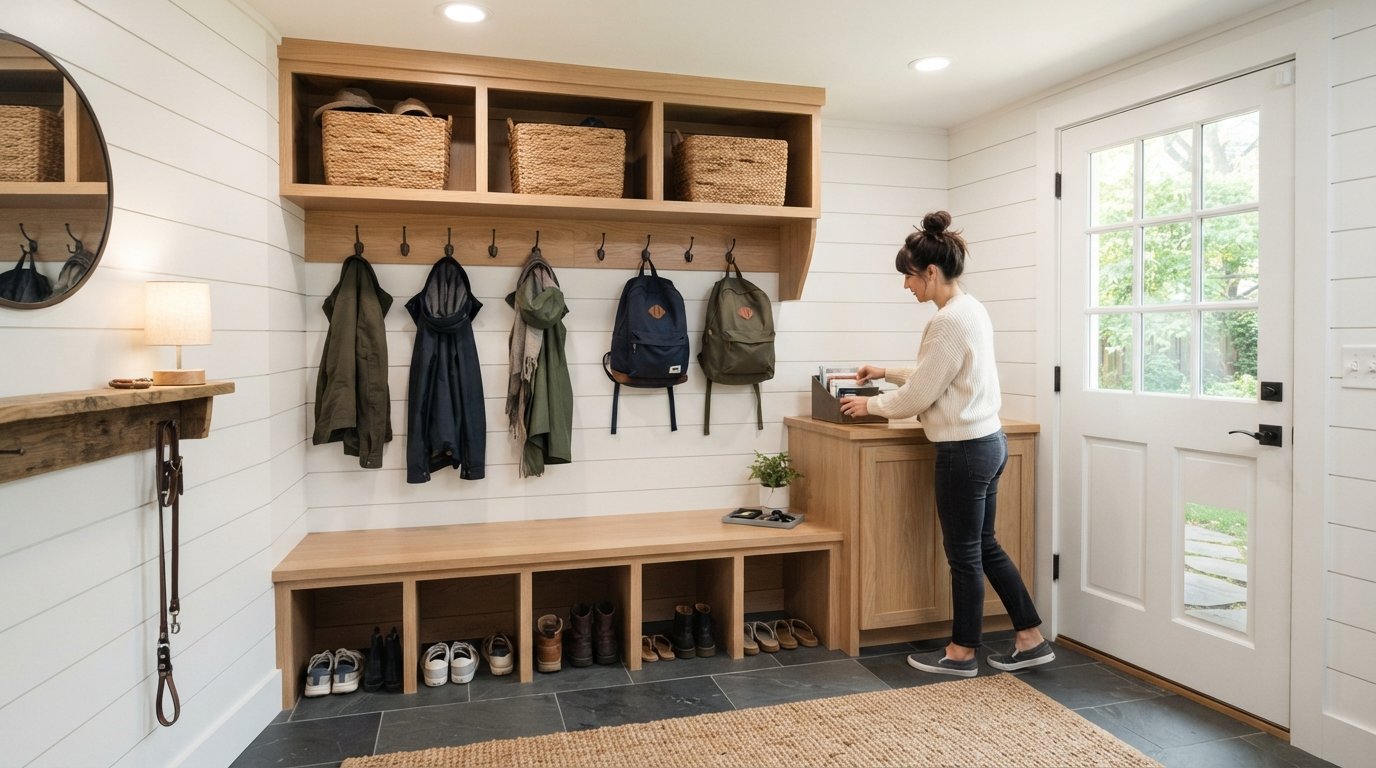
Mudroom Addition Cost and Entryway Storage Planning
Plan your mudroom addition cost and entryway storage with confidence. Call (833)-439-3727 for free estimates and expert local contractor matches.

By Cameron Howard
Learn more about Home Remodeling for guides, costs, and what to expect.
Compare Home Remodeling Pros Near You

Enter your ZIP code to compare top-rated local professionals and request free quotes.
Your back door is a war zone. Shoes pile up like debris. Backpacks slump against the wall. Coats cascade off a single hook. Every morning starts with a frantic search for a missing sneaker, and every evening ends with a trail of mud across the kitchen floor. A mudroom is the fix, but before you commit, you need a clear picture of mudroom addition cost and entryway storage planning. This guide breaks down what you will spend, how to design storage that actually works, and which choices protect your budget and your sanity.
Mudroom Addition Cost: Three Paths, Three Budgets
The cost of adding a mudroom depends less on square footage than on how you create the space. You can convert an existing room, bump out an exterior wall, or build a full new addition. Each path carries different price tags and different levels of disruption. Understanding these three options is the foundation of smart entryway storage planning.
1. Converting an existing room. If you have a spare closet, a unused corner of the garage, or a small room near the entry, conversion is the cheapest route. Expect to pay $3,000 to $12,000 for a typical conversion. This range covers new flooring, paint, built-in benches, shelving, and lighting. The catch: you lose that existing space, and plumbing or electrical may need upgrades if the room was not designed for heavy daily use.
2. Bumping out an exterior wall. A bump-out extends your home by a few feet without touching the foundation. This is a middle-ground option. Costs typically run $15,000 to $35,000 for a 6-foot by 8-foot bump-out. You gain dedicated square footage without a full structural overhaul, but you still need permits, foundation work for the new footprint, and exterior finishing. Bump-outs work best when you have yard space and a simple roofline to tie into.
3. Building a new addition. A full addition gives you the most flexibility for benches, lockers, cubbies, and even a powder room. Prices start around $40,000 and can exceed $80,000 depending on size, finishes, and site work. For a 10-foot by 12-foot addition with mid-range finishes, budget $50,000 to $70,000. This option makes sense if you plan to stay in the home long term and want a seamless architectural match.
Across all three paths, labor accounts for 40 to 60 percent of the total. Materials like custom cabinetry, tile, and specialty flooring push costs higher. If you are comparing bids, ask contractors to break out labor, materials, permits, and contingency separately. For a deeper look at layout ideas that pair well with these cost tiers, see our guide on mudroom addition cost and storage layout ideas.
Entryway Storage Planning: Match the Layout to Your Family
Storage planning is where most mudroom projects succeed or fail. A beautiful bench with no cubbies becomes a pile of shoes in a week. The right layout depends on how many people live in your home, their ages, and the flow of traffic through the entry. Start by counting daily users and their gear: coats, boots, bags, sports equipment, pet supplies, and mail.
A family of four needs at least four cubbies or lockers, each about 12 to 15 inches wide. Taller family members need hooks at 60 to 66 inches; children need lower hooks at 36 to 42 inches. Benches should be 16 to 18 inches deep and 17 to 19 inches high for comfortable seating. Above the bench, open shelving or closed cabinets store hats, gloves, and small items out of sight.
Here are four layout patterns that work for different households:
- Locker wall: A row of tall lockers with doors, each with a bench, hooks, and upper shelf. Best for families with school-age children who need a dedicated spot for backpacks and sports gear.
- Bench and cubby combo: A continuous bench with open cubbies below and hooks above. This is the most budget-friendly and flexible layout for mixed-age families.
- L-shaped corner unit: Maximizes storage in a small footprint by using two walls. Ideal for narrow entryways or converted closets.
- Island or peninsula: A freestanding bench with storage on both sides. Works in larger mudrooms and helps separate the entry zone from the rest of the house.
Traffic flow matters as much as storage count. Leave at least 36 inches of clear walking path. Place the bench on the wall opposite the door so you can sit and remove shoes without blocking the entrance. If the mudroom connects to a laundry room, keep a clear lane between the two. For households with pets, add a low cubby for leashes and towels, and consider a raised feeding station if space allows.
Do not forget vertical space. Floor-to-ceiling cabinetry adds significant storage without expanding the footprint. A tall broom closet or utility cabinet hides vacuum cleaners and cleaning supplies. Overhead shelves hold seasonal items like winter boots and beach bags. The goal is to give every item a home so clutter never lands on the floor.
Flooring, Moisture, and Durability for High-Traffic Entry Zones
A mudroom takes more abuse than any other room in the house. Wet boots, slushy snow, muddy paws, and dropped bags all land on the same few square feet. Flooring choice is not cosmetic; it is a durability decision. The best options resist moisture, stand up to grit, and offer some traction underfoot.
Porcelain tile is the gold standard for mudrooms. It is waterproof, easy to clean, and available in slip-resistant finishes. Expect to pay $5 to $12 per square foot installed. Luxury vinyl plank (LVP) is a close second: it handles moisture well, feels warmer underfoot, and costs $3 to $8 per square foot installed. Avoid hardwood and laminate in the entry zone unless you are prepared for water damage and refinishing.
Moisture control goes beyond the floor. In snowy climates, add a drain or a sloped floor to channel meltwater away from the house. A floor mat or built-in boot tray catches debris at the door. Ensure the mudroom has adequate ventilation, either through a window, an exhaust fan, or a connection to your HVAC system. Moisture trapped in a small entryway can lead to mold and musty odors.
Wall and bench materials should also be moisture-friendly. Painted beadboard or tile wainscoting protects drywall from wet coats and splashes. Bench tops in butcher block or quartz resist scratches and wipe clean easily. Avoid unfinished wood and fabric upholstery in high-moisture zones. If you include a pet wash station, waterproof everything within a 3-foot radius.
Permits, Structural Work, and Door Relocations
Any addition or bump-out requires a building permit. Budget $500 to $2,000 for permit fees, depending on your municipality and project scope. The permit process also triggers inspections for framing, electrical, plumbing, and insulation. Skipping permits can void your homeowner's insurance and create problems when you sell.
Structural considerations vary by project type. A bump-out needs a foundation or pier system to support the new floor and roof loads. A full addition may require engineering plans, especially if you are tying into an existing roofline or removing an exterior wall. Door relocations add complexity: moving an exterior door means reframing the opening, adding a new header, and patching siding and interior finishes. Expect $2,000 to $6,000 for a door relocation, including labor and materials.
If your mudroom includes plumbing for a utility sink or pet wash, you need to route supply and drain lines. This is easiest when the mudroom shares a wall with a bathroom or kitchen. Otherwise, expect to pay more for trenching and concrete work. Electrical needs include lighting, outlets for charging stations, and possibly a heated floor mat circuit. Plan these early so your contractor can bundle the work and reduce change orders.
When vetting contractors for this kind of work, ask for proof of licensing, insurance, and experience with additions. For help finding qualified local pros and comparing free estimates, BuySellRemodel connects homeowners with contractors who can handle structural and permitting details without surprises.
Resale Appeal and Everyday Organization
A well-designed mudroom pays you back in daily convenience and resale value. Real estate agents consistently list mudrooms among the most desired entry features for families. A functional mudroom signals that the home is organized and easy to live in, which appeals to buyers with children and pets. You will not recoup the full cost at resale, but a mudroom can shorten time on market and support a higher asking price in competitive neighborhoods.
The everyday payoff is even more immediate. A mudroom stops the spread of dirt and clutter into the rest of the house. It gives kids a place to drop backpacks and shoes without being told twice. It creates a staging area for outgoing items: keys, mail, permission slips, and pet leashes. Over a year, that organization saves hours of searching and cleaning.
To maximize both resale appeal and daily function, prioritize durable finishes, generous storage, and good lighting. Buyers notice built-in benches, cubbies, and easy-clean floors. They also notice dark, cramped entryways. Add a window or a skylight if the budget allows, and use layered lighting: overhead fixtures plus task lights over benches and hooks.
If you are still deciding between a small conversion and a full addition, get at least three contractor bids. Each bid should include a detailed scope, timeline, and payment schedule. Compare not just the total price but also what is included: permits, debris removal, painting, and hardware. The lowest bid is not always the best value if it leaves out critical items.
Planning a mudroom is part budget exercise and part lifestyle design. Know your numbers, count your family's gear, and choose materials that can handle real life. With clear cost expectations and a storage plan that fits your daily traffic, your entryway can go from chaos to calm. When you are ready to move forward, request free estimates from local contractors and compare options side by side. The right pro will help you turn a muddy mess into the most hardworking room in your home.