
Pergola Installation Cost and Backyard Design Ideas
Pergola installation cost runs $2,000 to $10,000. See material prices, design ideas, and how to save on your backyard shade structure.

By Cameron Howard
Learn more about Patio Cover and Awning Services for guides, costs, and what to expect.
Compare Patio Cover and Awning Services Pros Near You

Enter your ZIP code to compare top-rated local professionals and request free quotes.
A pergola can turn a plain backyard into a shaded retreat, a dining room under the sky, or a frame for climbing vines that makes your garden feel intentional. But before you picture string lights and Sunday brunch, you need to know what pergola installation cost actually looks like in 2026, and how design choices swing that number up or down. The good news: a pergola is one of the more affordable outdoor structures you can add, especially when you compare it to a full roof extension or a screened sunroom. The better news: with a clear plan and a few smart decisions, you can get a custom look without a custom price tag.
What Drives Pergola Installation Cost
Pergola installation cost usually lands somewhere between $2,000 and $10,000 for a typical residential project, with most homeowners spending around $3,500 to $6,000. That range is wide because a pergola is not one product. It is a category that includes a $600 big-box kit, a $15,000 custom cedar structure with a motorized louvered roof, and everything in between. The number you see on a quote depends on five main factors: size, material, attachment method, roof style, and labor conditions.
Size is the most predictable cost driver. A 10x10 foot pergola costs less than a 16x20 foot pergola not just because of material volume, but because larger spans need thicker posts, deeper footings, and sometimes engineered beams. Material is the second big lever. Pressure-treated pine is the budget option, cedar and redwood sit in the middle, and aluminum or steel frames with powder coating climb higher but last longer with less maintenance. Attachment method matters too: a freestanding pergola needs four footings, while an attached pergola uses your home for support and may need flashing and ledger board work.
Roof style changes both cost and function. An open-lattice top is the classic look and the least expensive. A solid roof with slats, a fabric canopy, or adjustable louvers adds shade, rain protection, and mechanical parts that can fail. Labor conditions are the wild card: sloping yards, rocky soil, HOA rules, and permit requirements can each add hundreds or thousands to the final bill. If you want a realistic number, start by deciding how you plan to use the space. A shade structure for a hot patio is a different project than an outdoor kitchen cover with electrical outlets.
Pergola Cost by Material and Style
Material choice is where most homeowners feel the biggest swing in pergola installation cost. Wood is the traditional favorite because it accepts stain and paint, feels warm, and can be customized on site. Pressure-treated pine is the cheapest option, often $2,000 to $4,500 installed for a 12x12 structure. Cedar and redwood cost more, usually $4,000 to $8,000 installed, but they resist rot and insects better and look better as they age. Aluminum pergolas are the low-maintenance pick. They cost $3,500 to $9,000 installed, never need staining, and handle wind and sun without warping. Vinyl is another option, usually $3,000 to $7,000, and it cleans up with a hose.
Style affects cost almost as much as material. Here are the main types you will see on quotes:
- Freestanding pergola: Four posts, four footings, open on all sides. Best for defining a patio or garden room away from the house.
- Attached pergola: Two posts and a ledger board attached to the home. Saves money on footings but requires proper flashing to prevent water damage.
- Louvered pergola: Adjustable slats that open and close. Great for shade control, but the mechanism adds $2,000 to $6,000.
- Retractable canopy pergola: A fabric top that slides back. Affordable shade, but fabric wears out and needs replacement every few years.
- Pergola kit: Pre-cut and pre-drilled parts you assemble yourself. Saves on labor but limits size and design.
If you are comparing a pergola to other outdoor upgrades, it helps to know how it stacks up against enclosing the space. A patio door installation can connect your home to a new pergola-covered patio and improve both access and resale value. That combination is one of the most popular backyard upgrades because it extends your living space without a full addition.
Installation Steps and Labor Costs
Labor usually makes up 30 to 50 percent of pergola installation cost. A simple kit on a flat patio might take one crew a single day. A custom cedar pergola with electrical wiring and a louvered roof can take three to five days. The process follows a predictable sequence, and knowing it helps you ask better questions when you get quotes.
- Site assessment and design: The contractor checks slope, soil, sun exposure, and how the pergola will attach to the house. This is when you finalize size, material, and roof style.
- Permits and HOA approval: Many areas require a building permit for any structure over a certain height or square footage. HOA rules may limit color, material, or placement.
- Footing excavation and concrete: Posts need footings below the frost line in cold climates. This is the most labor-intensive part and the hardest to change later.
- Frame assembly: Posts, beams, rafters, and purlins go up. Attached pergolas also get a ledger board and flashing.
- Roof and finish work: Slats, louvers, or canopy go on, followed by stain, paint, or powder coating touch-ups.
Labor rates vary by region. In high-cost metro areas, expect $75 to $120 per hour for a two-person crew. In rural areas, $45 to $80 per hour is more common. The best way to control labor cost is to keep the design simple and the site accessible. A flat, open yard with room for a truck and wheelbarrow is cheaper to work in than a tight side yard with a fence in the way.
Backyard Design Ideas That Add Value
A pergola is not just a roof over a patio. It is a design anchor that can organize your whole backyard. The best backyard design ideas use the pergola to solve a specific problem: too much sun, no defined dining area, or a plain view that needs a focal point. Once you know the problem, the design choices get easier.
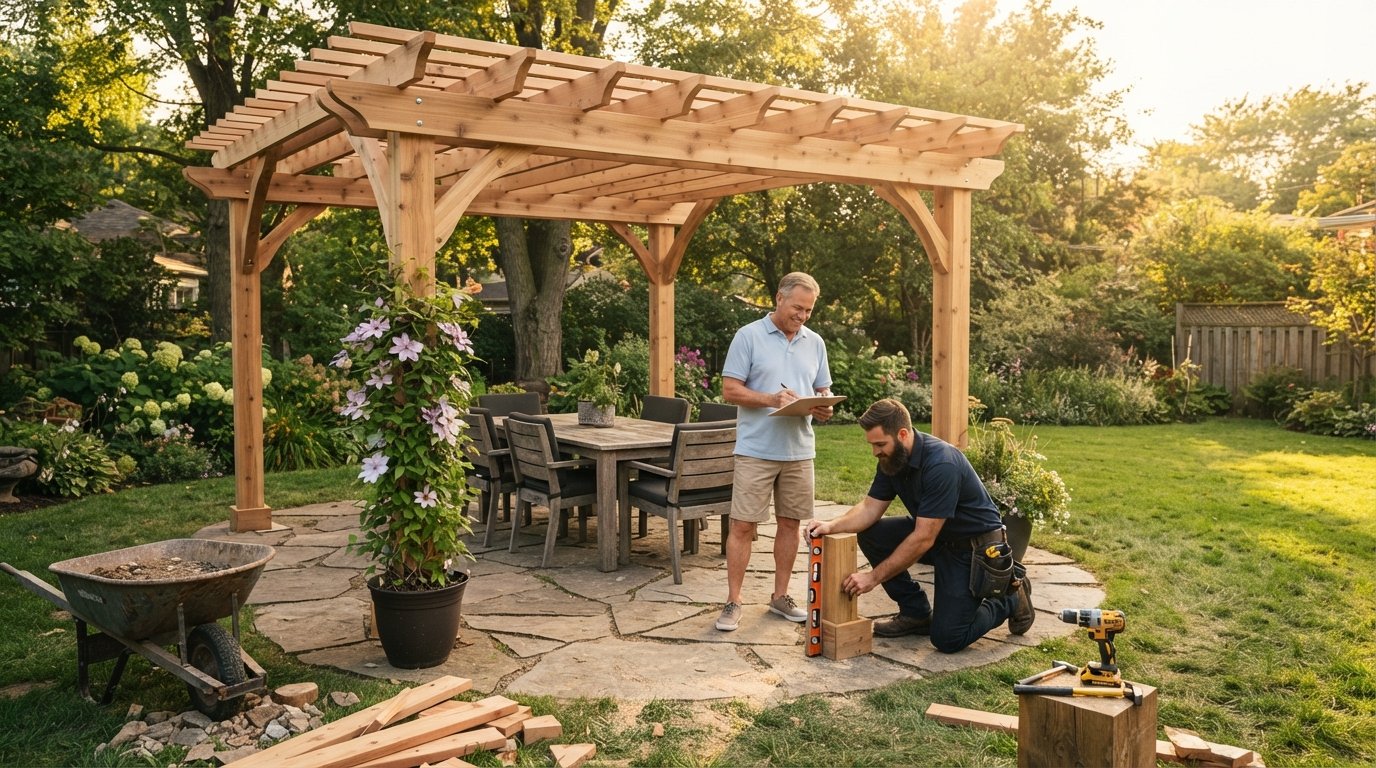
One popular approach is the outdoor dining room. Put a 12x14 pergola over a patio, add a long table, hang a chandelier or pendant lights, and plant climbing vines at the posts. This creates a room that feels separate from the yard without walls. Another approach is the lounge pergola: a smaller 10x12 structure with a sectional sofa, a fire pit table, and a retractable canopy for shade control. A third option is the garden gateway pergola, placed over a path or at the entrance to a vegetable garden. It adds height and structure to a flat yard.
Here are design ideas that consistently deliver value for the cost:
- Attached pergola over a patio: Extends the home's living space and improves the view from inside.
- Freestanding pergola with a fire pit: Creates a year-round gathering spot and works in yards with no convenient house wall.
- Pergola with string lights and heaters: Adds evening usability and extends the season in cooler climates.
- Pergola over an outdoor kitchen: Protects the grill and prep area from direct sun and light rain.
- Corner pergola with built-in seating: Uses an awkward yard corner and adds storage under the benches.
If you want a space that feels more like a room than a frame, consider how a pergola compares to a sunroom or screened porch. Those structures cost more but offer weather protection and pest control. A pergola is the lighter, more affordable option, and it can always be upgraded later with a canopy, curtains, or a solid roof panel. The key is to build the frame with future upgrades in mind: run electrical conduit, choose a size that can accept a canopy, and leave room for lighting.
How to Save on Pergola Installation Cost
The fastest way to reduce pergola installation cost is to shrink the scope without shrinking the impact. A 10x12 pergola over a dining table feels generous. A 16x20 pergola over an empty patio feels unfinished. Start with the furniture layout, then size the structure around it. You can also save by choosing pressure-treated pine and staining it yourself, skipping the louvered roof in favor of a fixed slat design, and attaching the pergola to the house instead of building it freestanding.
Timing matters too. Contractors are busiest in spring and early summer. Scheduling installation in late fall or winter can sometimes earn a lower labor rate, especially if you are flexible on the exact date. Getting multiple quotes is another proven strategy. When you compare three or four bids, you learn the local market rate and you give yourself room to negotiate. A free estimate service makes this easy and keeps you from overpaying for a simple structure.
If you want to plan a larger outdoor project, such as a pergola plus a patio, a deck, or a patio door, it pays to think about the whole project at once. Bundling work can reduce mobilization costs and let the contractor sequence trades more efficiently. For homeowners who want help finding vetted local pros, BuySellRemodel connects you with experienced contractors and free estimates so you can compare options and move forward with confidence. That kind of comparison shopping is the single most reliable way to keep pergola installation cost in line with your budget.
Permits, HOA Rules, and Hidden Costs
Permits are one of the most common surprises in pergola projects. Many cities require a permit for any structure attached to the house or taller than six feet. Permit fees usually run $50 to $300, but the real cost is time: plan review can add one to three weeks to your timeline. HOA approval can add another layer. Some associations restrict material, color, height, and placement, and a few require architectural review before you buy anything. Check these rules before you sign a contract, not after.
Hidden costs to watch for include footing upgrades for rocky or expansive soil, electrical work for lighting or heaters, staining or sealing in the first year, and removal of old structures or concrete. A good contractor will list these as line items in the quote. A vague quote with a single lump sum is a red flag. Ask for a breakdown that separates materials, labor, permits, and any optional add-ons. That transparency makes it easier to compare bids and spot a lowball offer that will grow later.
Maintenance is another long-term cost. Wood pergolas need staining every two to three years, depending on climate. Aluminum and vinyl need occasional cleaning but no painting. Louvered roofs need periodic lubrication and may need part replacement after ten to fifteen years. None of these costs are deal-breakers, but they belong in your budget if you plan to keep the pergola looking good.
Choosing the Right Contractor for Your Pergola
The contractor you hire matters as much as the material you choose. A skilled installer will check the attachment point for rot, flash the ledger board correctly, and set footings deep enough for your frost line. A less careful installer will skip those steps and leave you with a wobbly structure or a leak where the pergola meets the house. When you interview contractors, ask for photos of similar projects, a copy of their license and insurance, and a written scope of work that includes footing depth and flashing details.
Get at least three quotes. Compare not just the total price but what is included. One bid might include permit fees and staining; another might exclude them. Ask how long the project will take, who will be on site, and what happens if the weather delays work. A contractor who answers those questions clearly is usually the one who will communicate well during the build. If you are planning a bigger backyard remodel, ask whether they can handle related work like patio installation or electrical, or whether they will coordinate with other trades.
A pergola is a small enough project that a bad installation is avoidable with a little homework. It is also a high-impact upgrade: it adds shade, defines outdoor rooms, and can increase the usable square footage of your home without a full addition. If you plan the size around your furniture, choose a material that fits your maintenance style, and hire a contractor who sweats the details, pergola installation cost becomes a predictable line item instead of a mystery. The result is a backyard you actually use, from the first warm day of spring to the last cool evening of fall.