
Proactive HVAC Maintenance Guide to Avoid Costly Repairs
Follow this proactive HVAC maintenance guide to avoid costly repairs, extend equipment life, and save on energy bills. Call (833)-439-3727 for free estimates.

By Cameron Howard
Learn more about Central Air Conditioning Repair or Maintenance for guides, costs, and what to expect.
Compare Central Air Conditioning Repair or Maintenance Pros Near You

Enter your ZIP code to compare top-rated local professionals and request free quotes.
Your HVAC system is the hardest-working appliance in your home, running for thousands of hours each year to keep you comfortable. When it fails, you are not just uncomfortable; you are facing emergency repair bills that can run into the thousands. The good news is that most breakdowns are preventable. A proactive HVAC maintenance guide to avoid costly repairs is not about spending more money; it is about spending a little time and effort now to save a lot later. By following a simple seasonal routine, you can extend the life of your equipment, improve energy efficiency, and catch small issues before they become expensive problems.
Why Proactive HVAC Maintenance Matters
Many homeowners treat their HVAC system like a black box: it works until it does not. This reactive approach is risky. Industry data consistently shows that systems receiving regular professional maintenance last longer, break down less often, and operate more efficiently. A well-maintained system can last 15 to 20 years, while a neglected one might struggle to reach 10. That difference alone is worth thousands of dollars.
Beyond lifespan, proactive maintenance directly impacts your monthly utility bills. A dirty filter or a fouled coil forces your system to work harder to move air, consuming more energy. According to the U.S. Department of Energy, maintaining your HVAC system can improve efficiency by 5 to 15 percent. On a $200 monthly bill, that is $120 to $360 saved per year. When you factor in avoided repairs, the return on investment for maintenance is clear.
There is also the comfort factor. A system that is not maintained may struggle to keep up on the hottest or coldest days, leading to uneven temperatures and poor indoor air quality. Proactive care ensures your home stays comfortable when you need it most. And if you are planning broader home upgrades, our home systems preventative maintenance guide can help you coordinate HVAC care with other essential tasks.
Seasonal Maintenance Tasks You Can Do Safely
You do not need to be a technician to handle the basics. Several important maintenance tasks are safe for homeowners and take only a few minutes each month. These simple habits form the foundation of any proactive HVAC maintenance guide to avoid costly repairs. Always turn off power to the unit before performing any tasks, and never attempt to open sealed components or handle electrical parts.
Here are the core tasks to perform each season:
- Replace or clean filters every 1 to 3 months. This is the single most important thing you can do. A clogged filter restricts airflow, strains the blower motor, and reduces air quality. Check it monthly during peak heating and cooling seasons.
- Clear debris from outdoor units. Remove leaves, dirt, and grass clippings from around the condenser. Keep at least two feet of clearance on all sides. Gently rinse the coils with a garden hose (with power off) to remove surface dirt.
- Check and clean condensate drain lines. In cooling mode, your system removes moisture from the air. The condensate drain can become clogged with algae or debris, leading to water damage. Pour a cup of white vinegar down the drain line every few months to prevent clogs.
- Inspect visible ductwork and registers. Look for loose connections, tears, or excessive dust. Ensure supply and return vents are not blocked by furniture or rugs.
- Keep the area around your indoor unit clear. Do not store items against the furnace or air handler. This ensures proper airflow and reduces fire risk.
These tasks are quick but powerful. Filter changes alone can prevent the most common cause of HVAC breakdowns: overheating due to restricted airflow. By handling these simple chores, you are already ahead of most homeowners.
What a Professional Tune-Up Should Include Each Season
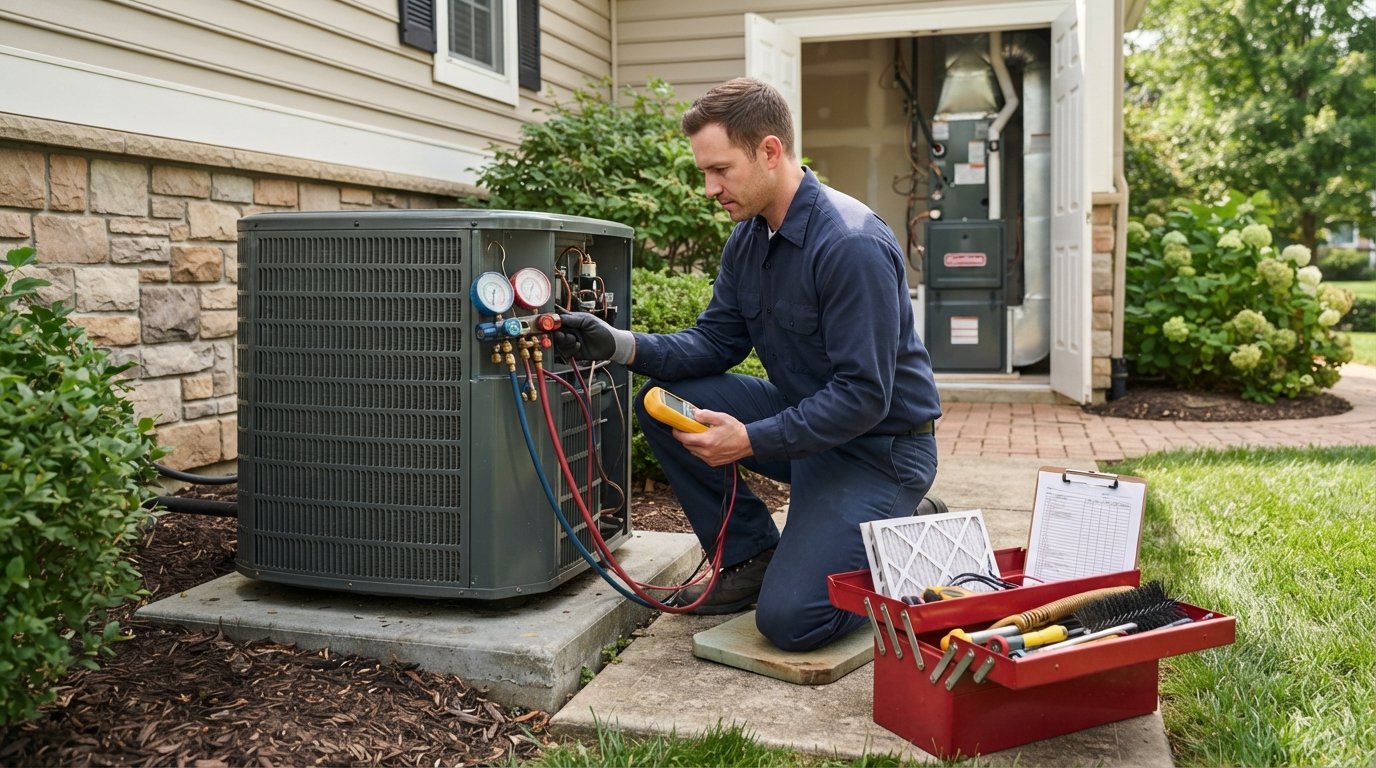
While DIY tasks are essential, they cannot replace a professional tune-up. Technicians have the tools and training to inspect components you cannot safely access, and they can spot subtle signs of wear that precede failure. A proper tune-up should be performed twice per year, once in spring for your air conditioning and once in fall for your heating system.
A comprehensive professional tune-up generally includes the following:
- Inspection of electrical connections and controls. Loose connections can cause short circuits or fires. The technician will tighten and test all connections.
- Cleaning of coils and blower components. Dirty coils reduce efficiency and can lead to compressor failure. The technician will clean the evaporator and condenser coils as needed.
- Lubrication of moving parts. Motors and bearings need lubrication to reduce friction and prevent wear.
- Testing of refrigerant charge. Incorrect refrigerant levels can damage the compressor. The technician will check and adjust the charge to the manufacturer's specifications.
- Inspection of the heat exchanger and flue. For furnaces, this is a critical safety check. Cracks in the heat exchanger can leak carbon monoxide.
- Verification of thermostat calibration and system controls. Ensuring the thermostat is accurate and the system cycles properly.
Ask your technician for a written report of what was checked and any recommended repairs. This documentation is valuable for warranty claims and helps you track the health of your system over time. If you do not have a regular HVAC provider, you can use a service like BuySellRemodel to find and compare local contractors for free estimates.
Warning Signs That Demand Attention
Even with regular maintenance, issues can arise. The key is to catch them early. Certain symptoms are clear signals that your system needs professional attention. Ignoring them often leads to more expensive repairs or complete system failure.
Watch for these warning signs:
- Short cycling. If your system turns on and off frequently, it may be oversized, have a faulty thermostat, or be low on refrigerant. Short cycling wears out components quickly.
- Odd noises. Grinding, squealing, banging, or rattling sounds indicate mechanical problems. A squeal often points to a failing belt or bearing; a bang may mean a loose part or duct issue.
- Rising energy bills. A sudden spike in your utility bills without a change in usage usually means your system is losing efficiency. This could be due to a dirty filter, failing compressor, or leaky ducts.
- Uneven temperatures or poor airflow. Some rooms never seem to get comfortable. This can indicate duct problems, a failing blower, or a refrigerant issue.
- Excessive dust or humidity. Properly functioning HVAC systems filter dust and manage humidity. Increased dust or sticky air suggests your system is not working optimally.
- Water leaks or ice buildup. Water around the indoor unit or ice on the outdoor unit are serious signs of trouble. Turn off the system and call a professional immediately.
If you notice any of these signs, do not wait. A quick diagnostic visit can identify the problem and prevent a full breakdown. Many contractors offer free estimates for repairs, so you can understand the cost before committing.
Repair vs. Replacement: Making the Right Call
When your system needs a major repair, you face a decision: fix it or replace it? This is where proactive maintenance pays off, because a well-maintained system is more likely to be worth repairing. The general rule of thumb is the $5,000 rule: multiply the age of your system by the cost of the repair. If the result exceeds $5,000, replacement is often the better choice.
For example, if your system is 10 years old and the repair costs $600, the product is $6,000, suggesting replacement. However, this is just a guideline. Consider these factors:
- Age of the system. Most systems last 15 to 20 years. If yours is near the end of its life, a major repair may not be worth it.
- Efficiency. Older systems are less efficient. Replacing with a modern, high-efficiency unit can reduce energy bills significantly.
- Frequency of repairs. If you have called for repairs multiple times in the past two years, the system is becoming unreliable.
- Cost of repair vs. replacement. Get quotes for both. Sometimes a repair is a temporary fix; a new system offers long-term savings and peace of mind.
To compare options, obtain at least three written estimates from licensed contractors. Ask for a breakdown of parts and labor, and inquire about warranties. A reputable contractor will help you weigh the pros and cons without pressure. Remember that a new system is a significant investment, but it can pay off in comfort and efficiency.
Why Service Records Matter for Warranty Claims
Manufacturers require proof of regular maintenance to honor warranty claims. If your system fails within the warranty period and you cannot show that you have performed recommended maintenance, the manufacturer may deny coverage. This is a common pitfall that proactive homeowners avoid.
Keep a simple maintenance log. Record the date of each professional tune-up, the name of the technician, and what was done. Save receipts and reports. If you perform DIY tasks like filter changes, note those as well. This documentation demonstrates that you have taken good care of the equipment. It also helps you track the history of your system, which is useful when selling your home or filing insurance claims.
Many contractors offer maintenance plans that include scheduled visits and keep records for you. These plans often cost a few hundred dollars per year but can save you much more in the long run. They also prioritize you for service calls during busy seasons, which is a major convenience when your system breaks down in extreme weather.
Build a Year-Round Maintenance Routine
To make proactive maintenance a habit, create a simple calendar. Here is a suggested schedule:
- Monthly: Check the air filter and replace or clean if needed. Inspect the outdoor unit for debris.
- Spring: Schedule a professional air conditioning tune-up. Clean condensate drain. Test the system before the first heat wave.
- Fall: Schedule a professional furnace tune-up. Replace the filter. Clear debris from outdoor unit. Test the heating system.
- Annually: Review your maintenance log. Consider a duct inspection every few years. Check thermostat settings and consider a programmable or smart thermostat for efficiency.
This routine takes only a few hours per year but can prevent the majority of emergency calls. It also aligns with the broader home maintenance tasks that keep your property safe and efficient. If you are planning other home improvements, such as a remodel, be sure to include HVAC considerations in your project plan. Our guide on home systems preventative maintenance covers how to integrate HVAC care with other systems.
Final Thoughts
A proactive HVAC maintenance guide to avoid costly repairs is not about complicated procedures; it is about consistency. By changing filters, scheduling tune-ups, and watching for warning signs, you protect your investment and your comfort. When you need a professional, take the time to compare local contractors and get free estimates. The small effort you put in now will pay off in lower bills, fewer headaches, and a system that lasts for years to come.