
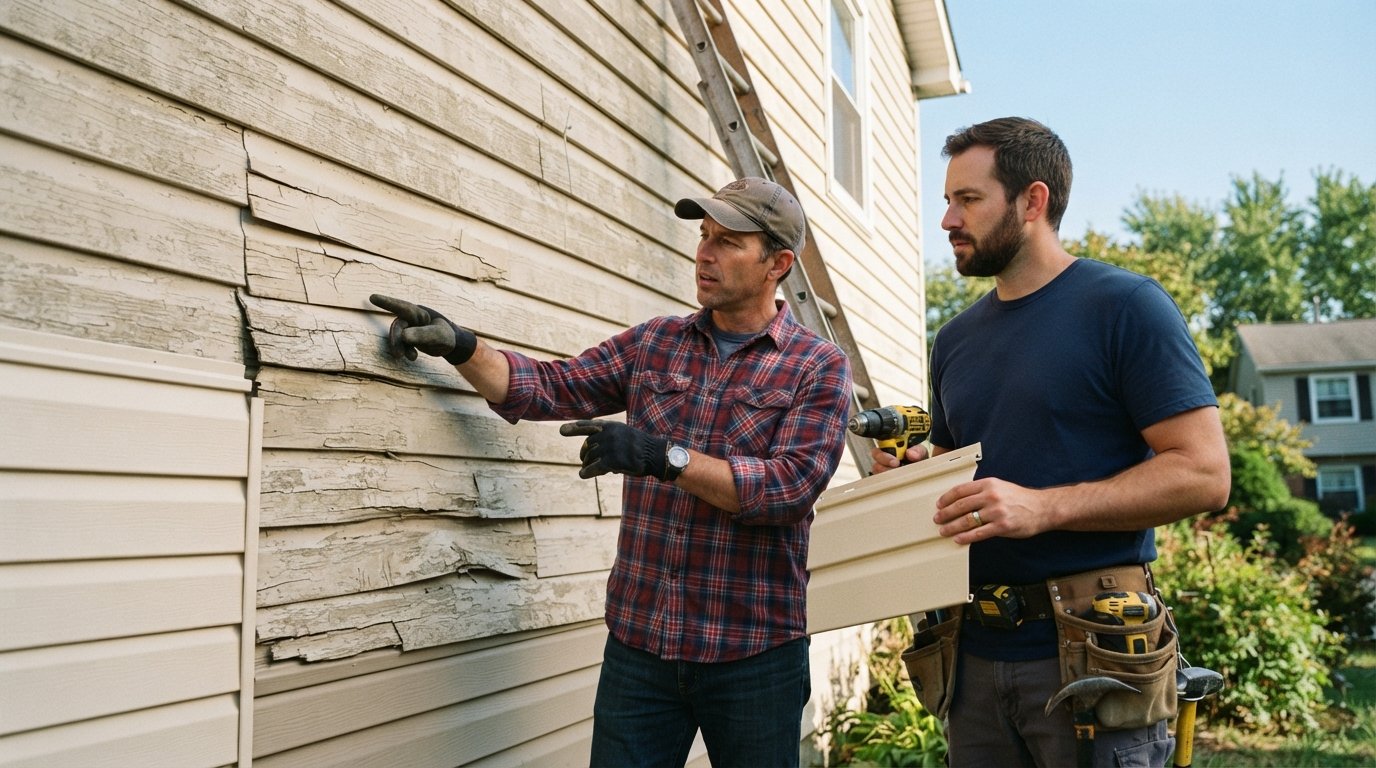
Siding Repair vs Replacement: Cost Comparison
Compare siding repair costs vs full replacement to find the smartest move for your home and budget.

By Sarah Thomas
Learn more about Siding Repair for guides, costs, and what to expect.
Compare Siding Repair Pros Near You

Enter your ZIP code to compare top-rated local professionals and request free quotes.
Your home's siding is its first line of defense against weather, moisture, and pests. But when it starts to crack, warp, or fade, you face a familiar dilemma: should you patch the damaged sections or invest in full replacement? The answer depends on more than just appearances. Your budget, the age of the siding, and the extent of the damage all play a role. In this exterior siding repair vs replacement cost comparison, we break down the numbers, walk through the decision factors, and offer practical tips to help you protect your home and your wallet.
Understanding the Real Costs of Siding Repair
Repairing siding involves removing the damaged pieces and installing new ones. For minor issues like a few cracked panels or a small hole, this is a straightforward job. The cost of repair typically ranges from $200 to $1,500, depending on the material, the size of the damaged area, and whether you hire a pro. For example, patching a small section of vinyl siding can cost as little as $150 to $400, while repairing wood siding that requires cutting, fitting, and painting can run $400 to $1,200.
Labor is the biggest variable in repair costs. Most contractors charge an hourly rate of $45 to $75, and a simple repair might take two to four hours. But if the damage is in a hard-to-reach area, such as a second-story gable, or if the siding is an older type that is no longer manufactured, the cost increases. You may need to pay for custom matching or even replace a larger section to blend the new material with the old.
One hidden cost of repair is color and texture matching. If your siding is older and has been exposed to the sun, the new pieces may not perfectly match the faded existing material. In some cases, contractors recommend replacing an entire wall or elevation to avoid a patchy look. That can push a simple repair into a partial replacement project, which brings us to the next option.
When a Full Replacement Makes Financial Sense
Full siding replacement involves stripping off all the old material and installing new siding across the entire home. This is a major project. The average cost ranges from $8,000 to $20,000 for a typical 1,500 to 2,000 square foot home, with premium materials like fiber cement or engineered wood pushing the price even higher. For a large two-story house, you could pay $25,000 or more.
Replacement is the only logical choice when the siding is severely damaged, such as widespread rot, large areas of mold, or structural issues behind the siding. It is also the smarter investment if your siding is nearing the end of its lifespan. Most vinyl siding lasts 20 to 40 years, while wood and fiber cement can last 50 years or more with proper maintenance. If your siding is already 25 years old and showing signs of wear, spending thousands on repeated repairs is like putting new tires on a car with a failing engine. Replacement gives you a fresh start and a new warranty.
Another reason to choose replacement is energy efficiency. New siding often comes with integrated insulation or can be paired with a house wrap that reduces air leaks. This can lower your heating and cooling bills, which helps offset the upfront cost over time. If you plan to stay in your home for more than five years, replacement can be a value-adding investment that also boosts curb appeal and resale value.
The Cost Comparison: Repair vs. Replacement in 2026
To give you a clear picture, here is a side-by-side cost breakdown for common siding materials. These are national averages based on current market data and can vary by region and contractor.
- Vinyl siding: Repair costs $200 to $800; replacement costs $5,000 to $14,000.
- Wood siding (cedar, pine): Repair costs $300 to $1,200; replacement costs $8,000 to $18,000.
- Fiber cement (HardiePlank): Repair costs $400 to $1,500; replacement costs $10,000 to $22,000.
- Engineered wood (LP SmartSide): Repair costs $350 to $1,300; replacement costs $7,500 to $16,000.
- Aluminum siding: Repair costs $250 to $900; replacement costs $6,000 to $13,000.
These numbers show a wide gap between repair and replacement. But the cost per year of life can make replacement more attractive. A $500 repair that buys you five more years costs $100 per year. A $15,000 replacement that lasts 30 years costs $500 per year. If you plan to sell the home soon, a repair may be enough to pass inspection and avoid a price reduction. If you are staying long-term, replacement offers better long-term value.
Also consider the cost of doing nothing. Ignoring damaged siding can lead to water intrusion, wood rot, mold, and even structural damage. What starts as a $300 repair can turn into a $5,000 problem if the moisture reaches your sheathing or framing. In our guide on water heater repair vs replacement costs, we explain a similar logic for mechanical systems, and the same principle applies here: small problems only grow more expensive with time.
How to Decide: Repair or Replace Your Siding?
Before you call a contractor, walk around your home and inspect the siding. Look for these signs to help you make an informed choice.
Signs That Repair Is Enough
If the damage is isolated to a small area and the rest of the siding is in good shape, repair is usually sufficient. Common examples include a single cracked panel from a stray baseball, a small hole from a pest, or a few loose boards after a storm. Repair is also appropriate when the siding is relatively new, less than 10 years old, and the color still matches. In such cases, a skilled contractor can replace the damaged section and blend it seamlessly.
Repair is also the better choice if you are planning to sell your home within the next couple of years. You do not need to invest in full replacement if the siding is cosmetically acceptable. A fresh coat of paint on wood siding or a few patched panels on vinyl can be enough to satisfy a home inspector and a buyer's eye.
Signs That Full Replacement Is Necessary
Full replacement becomes the smart choice when you notice any of the following:
- Multiple damaged areas: More than 20% of the siding is cracked, warped, or rotted, making repairs look patchy and unreliable.
- Water damage behind the siding: If you can see signs of moisture, such as peeling paint on the interior walls, mold, or soft spots on the exterior, you need to remove the siding to fix the underlying issue.
- Frequent repairs: You have already spent money on siding repairs in the past few years, and new problems keep appearing.
- High energy bills: The siding is old and uninsulated, contributing to drafts and temperature swings.
- Material failure: Your type of siding is known to have a short lifespan, or the manufacturer has discontinued the product, making future repairs difficult.
If any of these apply, a full replacement is the more cost-effective route in the long run. It eliminates the cycle of repeated repairs and gives you a clean, durable exterior.
The Hidden Costs of Siding Repair
Repair quotes often look attractive because they are low. But there are hidden costs that can surprise you. First, the cost of matching. If your siding is more than five years old, the color has likely faded. A new panel will stand out like a sore thumb. Contractors sometimes need to paint the entire wall or use a special color-matching process, which adds $200 to $500 to the bill.
Second, the age of the siding. If your siding is older than 15 years, the contractor may find that the underlying sheathing is damaged once the old piece is removed. That means additional repairs for rotted wood or rusted nails, which can add $500 to $1,500 to your project. In this case, a repair becomes a mini-replacement, and you may be better off doing a full replacement.
Third, the cost of permits. Some municipalities require a permit for siding replacement but not for minor repairs. However, if the repair involves structural work or electrical changes (like moving a vent), you may need a permit. Permit fees range from $50 to $500, so factor that into your budget.
Finally, there is the opportunity cost of time. A repair may take only a day, but if you need to wait for a custom color match or a specific material order, the job can stretch across a week. Full replacement takes one to two weeks, but it is a one-time disruption. If you are living in the home, you may need to move outdoor furniture, trim bushes, and manage the noise and dust. These are small, but they add to the real cost of the project.
Long-Term Value: How Replacement Boosts Home Equity
When you compare costs, do not just look at the sticker price. Think about the return on investment (ROI). Siding replacement is one of the few home improvements that recovers a high percentage of its cost when you sell. On average, homeowners recoup about 70% to 80% of the cost of new siding at resale. That means a $15,000 replacement can add $10,500 to $12,000 to your home's value.
Repair, on the other hand, has a lower ROI. You rarely recoup the cost of a repair because you are simply restoring the home to its previous condition. A $500 repair may add zero resale value. However, if the repair prevents further damage that would lower the home's value, it is still a worthwhile investment. The key is to avoid over-improving a home that you plan to sell for a modest price.
Replacement also improves energy efficiency, which adds long-term value through lower utility bills. Insulated siding can reduce energy consumption by 5% to 15%, depending on your climate and the condition of your current walls. Over a 20-year period, those savings can amount to $2,000 to $5,000, which directly offsets the initial cost.
Should You DIY or Hire a Professional?
Siding repair is often a DIY-friendly project for homeowners with basic carpentry skills. Vinyl siding, for example, can be unzipped and snapped back into place with a special tool. You can patch a small hole with a piece of scrap vinyl and a length of furring strip. A simple repair like this costs you only the price of materials, about $20 to $50, plus your time. But if the repair involves cutting wood to fit around a window or matching a complex profile, mistakes are costly. A poor DIY repair can lead to water leaks and void your insurance coverage.
Full siding replacement is almost always a job for a licensed contractor. It requires removing the old siding, inspecting the sheathing, installing house wrap, and hanging new material that must expand and contract with temperature changes. Improper installation can cause buckling, water intrusion, and even structural damage. The cost of a contractor is justified by the warranty and the peace of mind.
When you decide to hire a pro, always get multiple quotes. Compare not just the price, but the scope of work, the materials, and the timeline. Look for contractors who are licensed, insured, and have experience with your type of siding. Ask for references and check their work on recent projects. The cheapest bid is not always the best value, and the most expensive does not guarantee quality.
Financing and Cost-Saving Strategies
If you decide on replacement, the upfront cost can be a hurdle. Fortunately, there are ways to manage it. Many contractors offer payment plans or financing through third-party lenders. Interest rates vary, so compare terms carefully. Some states offer energy efficiency rebates for siding with added insulation, which can reduce your net cost by $500 to $1,500.
Another strategy is to stagger the project. You can replace the front elevation this year and the sides next year. This spreads the cost over two budgets, but it may complicate the warranty and color matching. If you choose this route, order all the siding at once to ensure you have the same batch color, and store the extra material for future repairs.
For repairs, you can save money by buying the material yourself. Contractors often mark up materials by 10% to 15%. If you purchase the exact siding, nails, and sealant, you only pay for labor. Just be sure to buy the correct type and size, and check with the contractor before you buy to avoid mistakes.
You can also reduce labor costs by doing some of the prep work yourself. For example, you can clear the area around your home, remove old caulk, and prime bare wood. This saves the contractor time, and you will see that reflected in the estimate. Always confirm with the contractor before doing any work, and never attempt to remove old siding that may contain lead paint or asbestos without a professional.
Making the Final Decision
So, how do you decide between repair and replacement? Start by getting at least three professional inspections. A qualified siding contractor will assess the extent of the damage, check for moisture issues, and give you a written estimate for both repair and replacement. Compare those numbers against the age of your siding and your long-term plans.
A simple rule of thumb is the 50% rule. If the cost of repairing your siding is more than 50% of the cost of replacement, and the siding is older than 15 years, it is usually better to replace. At that point, you are paying for a solution that will not last as long as a new installation. On the other hand, if the repair costs less than 30% of the replacement cost and the siding is in good condition overall, repair is the economical choice.
Also, consider the time you will stay in the home. If you plan to move within three years, a repair may be sufficient to get you to the closing table. If you are settling in for the long haul, replacement gives you a worry-free exterior that can last decades. In our experience, homeowners who replace their siding report higher satisfaction because they avoid the cycle of recurring repairs.
Remember, no two projects are identical. That is why it is essential to get personalized quotes from local contractors. A professional can look at the specific condition of your home and provide an accurate estimate. For help planning your project and connecting with trusted pros, you can explore the resources at BuySellRemodel, which offers free estimates and vetted contractors for siding and other exterior work.
In summary, an exterior siding repair vs replacement cost comparison is not just about numbers. It is about understanding the condition of your home, your budget, and your future plans. By weighing the upfront costs against the long-term benefits, you can make a choice that protects your investment and keeps your home looking great. A small repair today can prevent a big expense tomorrow, but a full replacement can give you a fresh start and lasting value. Whichever route you choose, the key is to act promptly and hire a professional you trust.