
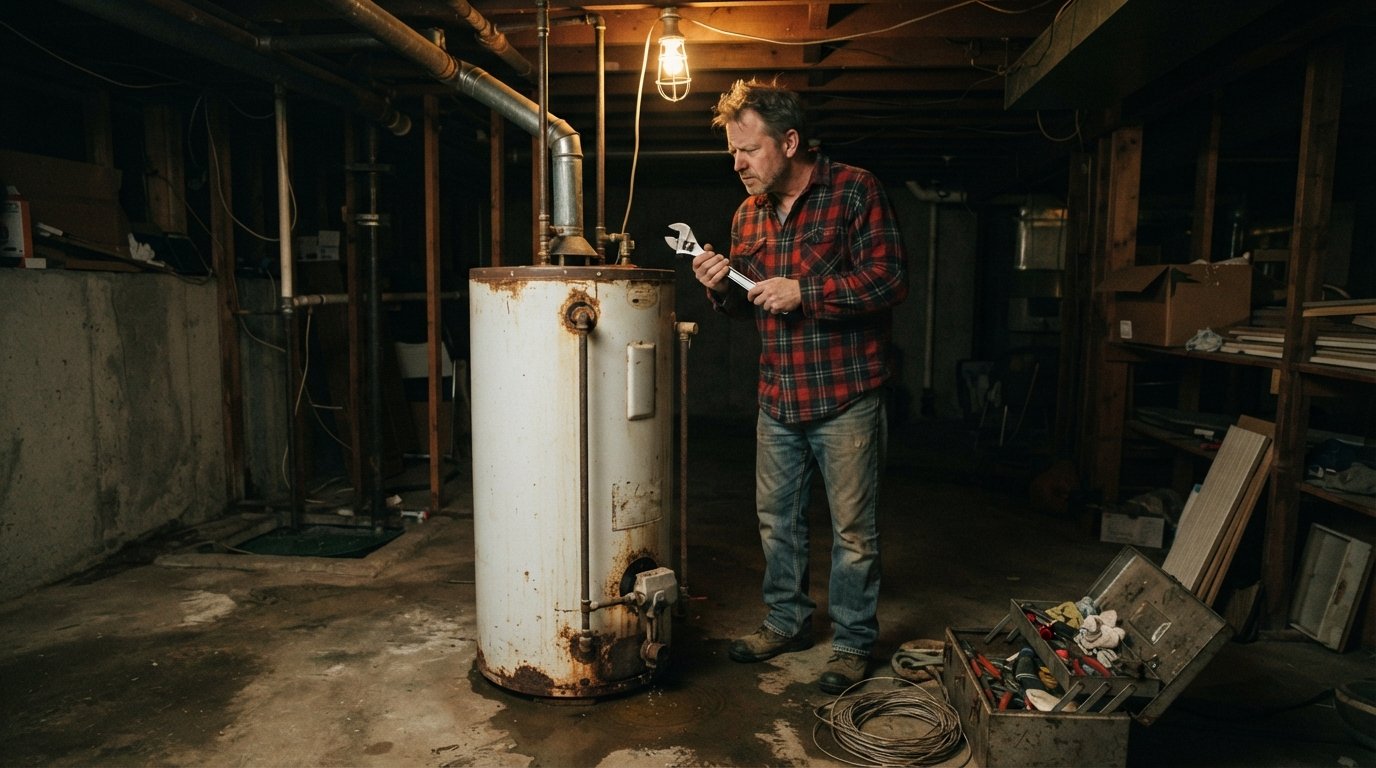
Water Heater Repair vs Replacement Cost: 2026 Guide
Repair or replace your water heater without overpaying. Compare costs, age, and efficiency to make the smartest choice for your home.

By Sarah Thomas
Learn more about Water Heater Installation or Replacement for guides, costs, and what to expect.
Compare Water Heater Installation or Replacement Pros Near You

Enter your ZIP code to compare top-rated local professionals and request free quotes.
When your water heater starts making strange noises, leaking, or producing lukewarm water, you face a tough decision: repair it or replace it. The answer depends on several factors, but the most pressing question is usually about cost. Understanding the true cost of water heater repair vs replacement cost can save you hundreds, if not thousands, of dollars. This guide breaks down the numbers, the warning signs, and the decision-making process so you can make a confident choice for your home and budget.
Why the Repair vs. Replace Decision Matters
Your water heater is one of the most hardworking appliances in your home. It runs daily, often multiple times, to provide hot water for showers, laundry, and dishwashing. Over time, components wear out, sediment builds up, and efficiency drops. When a problem arises, the immediate reaction might be to call a plumber for a repair, but that is not always the smartest financial move. A repair might be a temporary fix, while a replacement could be a long-term investment that lowers your energy bills and prevents future breakdowns.
The cost difference between repairing and replacing is significant. A typical repair costs between $150 and $600, while a replacement can range from $800 to $3,500 or more, depending on the type and size of the unit. But the real question is not just the upfront price. You need to consider the age of your unit, the severity of the problem, and the potential savings from a new, energy-efficient model. This article will help you weigh those factors and determine which option offers the best value for your situation.
When to Repair Your Water Heater
Repairing your water heater is often the right choice when the unit is relatively new, the problem is minor, and the repair cost is low. If your water heater is less than 6 to 8 years old, a repair can extend its life without a large financial outlay. Common repairable issues include a faulty thermostat, a broken heating element, a worn-out pressure relief valve, or a leaking drain valve. These are relatively straightforward fixes that a professional can complete in a couple of hours.
Another reason to repair is if the problem is a simple part replacement. For example, a corroded anode rod can cause rusty water, and replacing it is a low-cost fix that can prevent tank failure. Similarly, a malfunctioning gas valve or electric thermostat can often be replaced for a fraction of the cost of a new unit. If your water heater is still under warranty, repairs are even more attractive because the manufacturer may cover the cost of the part, leaving you to pay only for labor.
However, repairs are not always the best option. If you find yourself calling a plumber every few months for the same issue, the costs add up quickly. In such cases, the cumulative repair expenses might exceed the price of a new unit. As a rule of thumb, if a repair costs more than half the price of a new water heater, you should strongly consider replacement.
Signs That Indicate a Simple Repair
Here are some common signs that your water heater issue is likely repairable:
- No hot water or inconsistent temperatures, often due to a faulty thermostat or heating element.
- Small leaks around the base or from the pressure relief valve, which may be fixed by tightening connections or replacing the valve.
- Unusual noises like popping or rumbling, which are typically caused by sediment buildup and can be resolved by flushing the tank.
- Rusty or discolored water, which may indicate a corroded anode rod that can be replaced.
If you notice any of these issues and your water heater is less than 8 years old, a repair is likely a viable and cost-effective solution. A professional can diagnose the exact problem and give you an accurate estimate before you commit to any work.
When to Replace Your Water Heater
Replacement is the smarter choice when your water heater is old, inefficient, or has a major failure. The average lifespan of a conventional tank water heater is 8 to 12 years, while tankless models can last up to 20 years. If your unit is approaching or exceeding that age, it is more prone to breakdowns and less efficient than modern models. A new water heater can reduce your energy consumption by 10% to 30%, which can lower your monthly utility bills.
Major issues that almost always warrant replacement include a cracked tank, severe internal rust, or a failing heat exchanger. A leaking tank is a sign that the unit is beyond repair, as the corrosion has compromised the structural integrity. Attempting to patch a tank leak is only a temporary fix and can lead to water damage in your home. Additionally, if your water heater is making loud banging noises despite regular flushing, the sediment may have hardened to the point where the tank is no longer efficient or safe.
Another factor to consider is the availability of parts. For older models, replacement parts may be difficult to find, which can drive up repair costs and extend downtime. If you have an outdated unit that is no longer manufactured, replacement is often the only practical option. Moreover, new water heaters come with improved insulation, better temperature controls, and advanced safety features, making them a worthwhile investment for your home.
Key Indicators That Replacement Is Necessary
Look for these red flags that suggest replacement is the better path:
- Your water heater is more than 10 years old and has required multiple repairs in the past few years.
- You notice a puddle of water around the base of the tank, indicating a leak that cannot be repaired.
- The water heater produces rusty water even after flushing, which points to internal corrosion.
- Your energy bills have been steadily increasing without a change in usage, a sign of declining efficiency.
When any of these conditions exist, replacing the unit will likely save you money in the long run. A new water heater will provide reliable hot water, lower operating costs, and peace of mind. You can also choose a more efficient model, such as a tankless or heat pump water heater, which may qualify for rebates or tax credits.
Comparing the Costs: Repair vs. Replacement
To make an informed decision, you need a clear picture of the costs involved. Here is a breakdown of typical expenses for both options:
- Repair costs: Minor repairs like replacing a thermostat or heating element cost $150 to $350. More involved repairs, such as replacing a gas valve or burner assembly, can run $350 to $600. Emergency or after-hours service may add an extra $100 to $200.
- Replacement costs: A standard 40- to 50-gallon tank water heater costs $500 to $1,200 for the unit alone. With installation, the total is typically $1,000 to $2,500. Tankless water heaters are more expensive, ranging from $1,000 to $3,000 for the unit and $1,500 to $3,500 installed. High-efficiency models and heat pump water heaters can cost even more.
When you compare these figures, it is clear that repairs are less expensive upfront. However, you must factor in the age and condition of your unit. If your water heater is old, a repair might only delay the inevitable, and you will soon face the cost of replacement anyway. In contrast, investing in a new unit now can eliminate future repair bills and reduce your energy costs.
Another cost to consider is the potential for water damage. A leaking water heater can damage floors, drywall, and personal belongings, leading to expensive repairs that far exceed the cost of a new unit. Replacing a failing water heater proactively can prevent such damage, saving you money and stress.
How to Decide: A Simple Framework
To simplify your decision, use the 50% rule: if the cost of a repair is more than 50% of the cost of a new water heater, replace it. For example, if a repair estimate is $400 and a new unit installed costs $1,200, the repair is 33% of the replacement cost, so repairing may be reasonable. But if the repair is $700 and the new unit is $1,200, that is over 50%, and replacement is the better financial choice.
Beyond the cost percentage, consider the age of your unit. If it is over 8 years old and needs a major repair, replacement is usually the better investment. A new unit will have a new warranty, typically 6 to 10 years, which protects you from future repair costs. Additionally, you can upgrade to a more energy-efficient model, which can save you $100 or more per year on utility bills. Over the life of the unit, those savings can offset the higher upfront cost.
It is also wise to get a professional opinion. A licensed plumber can assess your water heater, provide a repair estimate, and give you a quote for a replacement. They can also check the condition of your plumbing and venting to ensure a new unit will be compatible. This information will help you make an informed decision based on facts, not guesswork.
When you decide to replace your water heater, it is essential to choose the right contractor. Look for a licensed and insured professional with experience installing the type of unit you want. Ask for multiple quotes and compare them, but do not automatically choose the lowest price. Consider the contractor's reputation, warranty offerings, and customer reviews. A quality installation is just as important as the unit itself, as improper installation can lead to leaks, inefficiency, or safety hazards.
If you are planning other home improvements while addressing your water heater, such as a bathroom remodel or new plumbing fixtures, it can be efficient to bundle projects. In our guide on window replacement cost, we discuss how to budget for multiple upgrades. Coordinating projects can save you money on labor and minimize disruption to your home.
For homeowners who want to be proactive, consider scheduling a yearly maintenance check. A professional can flush the tank, inspect the anode rod, and test the pressure relief valve, catching small issues before they become major problems. This can extend the life of your water heater and reduce the likelihood of sudden failures. Regular maintenance is a small price to pay for the peace of mind that your water heater will perform reliably.
Ultimately, the decision between repairing and replacing your water heater comes down to a balance of cost, age, and efficiency. By weighing these factors and consulting a professional, you can make a choice that fits your budget and meets your household's needs. Remember that a new water heater is not just an expense; it is an investment in your home's comfort and energy efficiency.
When you are ready to take action, whether it is a repair or a replacement, getting a free estimate from a local contractor is the smart first step. Companies like BuySellRemodel connect homeowners with experienced professionals who can provide transparent pricing and quality workmanship. With multiple quotes, you can compare options and choose the contractor that offers the best value. This approach ensures you are not overpaying and that the job is done right the first time.
In summary, the water heater repair vs replacement cost decision is not just about the immediate price tag. It is about the long-term value, reliability, and efficiency of your home's hot water system. By understanding the signs of failure, the costs involved, and the benefits of a new unit, you can make a confident decision that protects your budget and your comfort. Do not wait for a cold shower to force your hand; evaluate your options today and choose the path that makes the most sense for your home.