
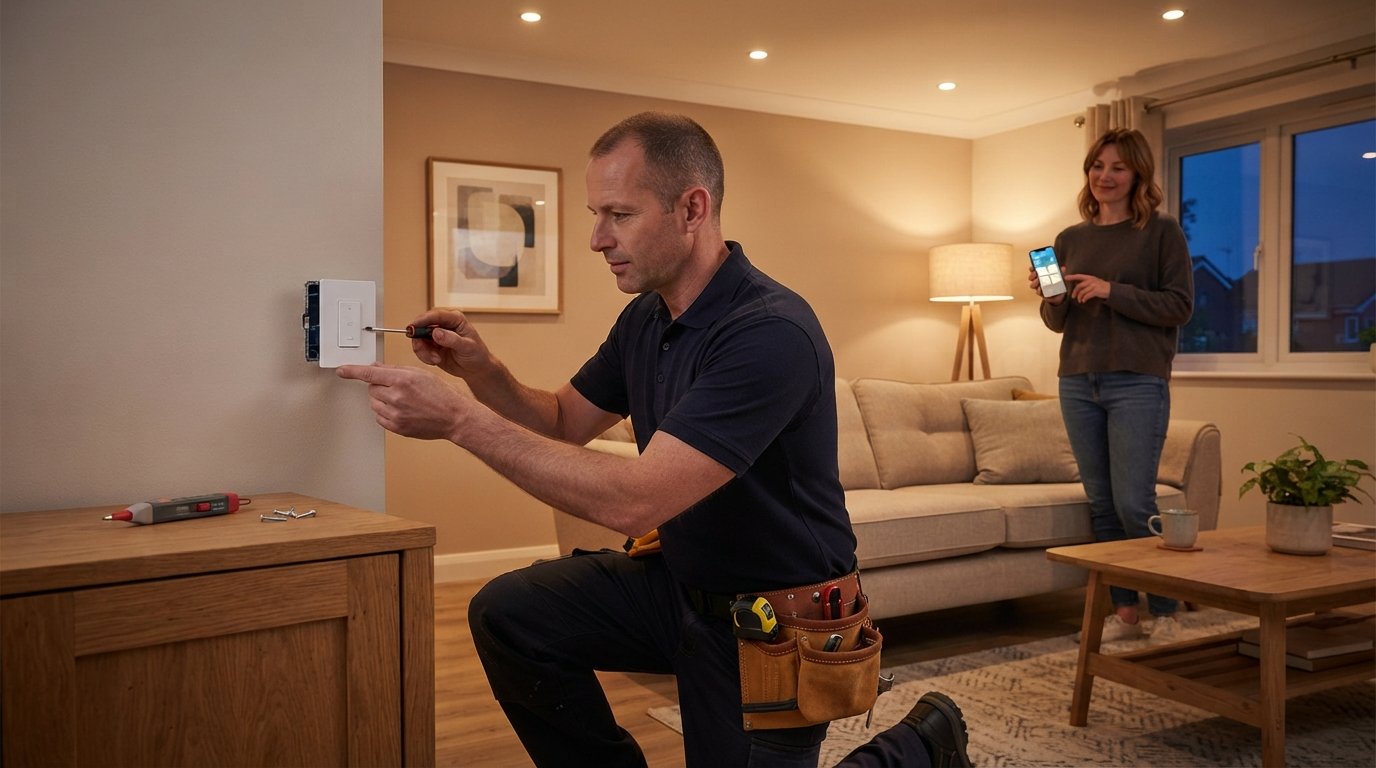
Smart Home Lighting Installation Cost and Savings
Discover the real smart home lighting system installation cost and savings, including payback periods and energy bill reductions.

By Cameron Howard
Learn more about Lighting Installation for guides, costs, and what to expect.
Compare Lighting Installation Pros Near You

Enter your ZIP code to compare top-rated local professionals and request free quotes.
Imagine adjusting every light in your house from your phone, setting schedules that make it look like someone is home while you are away, and watching your energy bill drop. That is the promise of a smart home lighting system, yet many homeowners hesitate, unsure about the upfront investment and whether the long-term savings are real. The good news is that the smart home lighting system installation cost and savings story is more favorable than most people expect, especially when you factor in energy efficiency, bulb longevity, and the potential for lower electric bills. In this guide, we break down the real numbers, the variables that affect pricing, and the practical ways you can recoup your investment over time.
As a homeowner, you likely want upgrades that add convenience without creating a budget headache. Smart lighting delivers that balance, but only when you choose the right components and installation approach. We will explore the cost of hiring an electrician versus doing it yourself, the price differences between smart bulbs, smart switches, and whole-home systems, and the monthly and yearly savings you can realistically expect. By the end, you will know whether this upgrade fits your home and how to plan for it without surprises.
Breaking Down the Costs of Smart Lighting Installation
The first number that matters is the price of the hardware itself. Smart lighting components range from budget-friendly bulbs to premium, professionally installed systems. On average, homeowners spend between $150 and $2,500 for a full smart lighting setup, depending on the size of the home and the level of integration. A single smart bulb costs $10 to $30, while a smart switch or dimmer runs $30 to $60 each. If you want voice control via Alexa or Google Assistant, you may also need a compatible hub or speaker, though many systems now work with Wi-Fi directly, eliminating the need for an extra hub.
Labor costs add another layer. Hiring a licensed electrician to install smart switches, dimmers, or a central control panel typically costs $50 to $100 per hour, with most jobs taking two to four hours. For a simple bulb swap, you might not need a professional at all, but for rewiring or installing a smart panel, professional help is essential. The table below summarizes the typical cost ranges for common smart lighting components and installation services.
- Smart bulbs (per bulb): $10 to $30
- Smart switches or dimmers (each): $30 to $60
- Smart lighting starter kit (hub plus bulbs): $50 to $150
- Professional installation labor (per hour): $50 to $100
- Whole-home system with smart panel: $800 to $2,500
These figures give you a starting point, but the final cost depends on your home's wiring, the number of fixtures you want to automate, and whether you choose a basic system or one with advanced features like color changing, motion sensors, or geofencing. For example, a single room with two smart bulbs and a smart switch might cost under $200 if you install them yourself. In contrast, a whole-home system with a central controller, smart dimmers in every room, and professional integration can easily exceed $1,500.
Key Factors That Affect Your Installation Price
Your specific home and lifestyle play a big role in the final invoice. The most significant factor is the number of light fixtures you want to control. Each fixture requires either a smart bulb or a smart switch, so a larger home with many rooms will naturally cost more. The age of your home also matters. Older homes may have outdated wiring or non-standard switch boxes, which can complicate installation and require extra labor. If your home uses 3-way switches (two switches controlling the same light), you will need special smart switches that are slightly more expensive and trickier to install.
The type of smart lighting protocol you choose also influences cost. Wi-Fi-based systems are the easiest to install and often the least expensive, but they can strain your network if you have many devices. Zigbee and Z-Wave systems require a hub but are more reliable and can support more devices. Professional installers may charge more for these systems because they need to configure the hub and pair each device. Additionally, if you want integration with existing smart home platforms like Apple HomeKit or Samsung SmartThings, you may need specific compatible products, which sometimes carry a premium price.
Finally, consider the cost of any necessary electrical upgrades. If your current light switches lack a neutral wire (common in homes built before the 1980s), you might need to hire an electrician to run a neutral wire to each switch location. This can add $100 to $200 per switch, significantly increasing your total project cost. Always ask for a free estimate from a local contractor before starting so you know exactly what you are facing.
How Smart Lighting Saves You Money Every Month
Now for the encouraging part: the savings. Smart lighting systems can reduce your lighting energy consumption by 30% to 50% in many homes. This is because LED smart bulbs use far less energy than traditional incandescent or halogen bulbs, and the automation features ensure lights are never left on unnecessarily. For example, a typical 60-watt incandescent bulb costs about $7 per year to run if used 3 hours daily. An equivalent smart LED bulb uses about 9 watts and costs less than $1 per year for the same usage. Multiply that by the number of bulbs in your home, and the savings become substantial.
Beyond the bulb technology, smart features like motion sensors and schedules cut waste. Motion sensors automatically turn off lights in unoccupied rooms, which is a common source of energy loss. Scheduling lets you set lights to turn on only when you need them, such as during evening hours or early morning routines. Geofencing takes it a step further: your lights can turn off automatically when you leave the house and turn on when you return, eliminating the worry of forgetting a light on all day. These features do not just save energy; they also extend the lifespan of your bulbs, meaning fewer replacements over time.
Let us put some concrete numbers on this. According to the U.S. Department of Energy, lighting accounts for about 15% of an average home's electricity use. If your monthly electricity bill is $150, lighting costs about $22.50 per month. A smart lighting system that reduces lighting usage by 40% would save about $9 per month, or $108 per year. That may not sound huge, but when combined with the lower cost of LED bulbs and the convenience factor, the payback period becomes attractive. The table below illustrates the potential annual savings for different monthly electricity bills, assuming a 40% reduction in lighting energy.
- $100 monthly bill: Lighting share $15, yearly savings around $72
- $150 monthly bill: Lighting share $22.50, yearly savings around $108
- $200 monthly bill: Lighting share $30, yearly savings around $144
- $300 monthly bill: Lighting share $45, yearly savings around $216
These savings might not make you rich overnight, but they add up over the lifespan of the system, which often exceeds 10 years for quality components. Plus, many utility companies offer rebates or incentives for installing energy-efficient smart lighting. Check with your local provider to see if you qualify for a discount, which can reduce your upfront cost by 10% to 20%.
Comparing DIY Installation vs. Hiring a Professional
One of the biggest decisions you will make is whether to install the system yourself or hire an electrician. For simple smart bulbs that screw into existing sockets, DIY is a no-brainer. You do not need any electrical knowledge, and installation takes minutes per bulb. The same goes for plug-in smart lamps or smart plugs, which just require pairing with an app. However, for smart switches and dimmers that connect to your home's wiring, you should have a basic understanding of electrical safety. Working with live wires carries a risk of shock or fire, so if you have any doubt, call a professional.
Hiring a licensed electrician offers peace of mind and ensures the job is done safely and up to code. The cost of professional installation for smart switches typically ranges from $100 to $300 per switch, including labor and materials. For a larger project, like installing a smart lighting control panel or integrating multiple rooms, you might pay $500 to $1,500. While that adds to your upfront investment, it can save you from costly mistakes, such as damaging your home's wiring or causing a fire hazard.
If you are comfortable with basic tools and have experience with electrical projects, you can reduce your smart home lighting system installation cost and savings ratio by doing the work yourself. Many smart switch manufacturers provide detailed video tutorials and customer support to guide you through the process. Just remember to always turn off the power at the circuit breaker before touching any wires, and use a voltage tester to confirm the power is off. When in doubt, spend the extra money on a professional. The cost is modest compared to the value of your home and your safety.
For a deeper dive into how other home upgrades can yield financial returns, you might find our guide on smart thermostat installation cost and benefits useful, as it follows a similar savings model.
Long-Term Savings and Added Home Value
Smart lighting is not just about monthly utility savings; it can also increase the resale value of your home. Real estate agents report that smart home features, including automated lighting, are attractive to buyers, especially millennials who value convenience and energy efficiency. A well-integrated smart lighting system can make your home stand out in a competitive market, potentially leading to a higher selling price. While you may not recoup 100% of your investment, you can expect to recover 50% to 70% of the cost in increased home value, according to some industry estimates.
Moreover, smart lighting contributes to home security, which is a selling point for safety-conscious buyers. The ability to schedule lights to simulate occupancy while you are on vacation deters burglars, and you can control lights remotely from your phone, giving the impression that someone is home. This peace of mind is valuable, even if it is hard to quantify in dollars.
Another long-term benefit is the reduced maintenance cost. Smart LED bulbs have a rated lifespan of 15,000 to 25,000 hours, which is 15 to 25 times longer than incandescent bulbs. If you replace a standard bulb that lasts 1,000 hours with a smart LED, you will not need to buy another bulb for roughly 10 years, assuming 3 hours of use per day. Over a decade, the savings on replacement bulbs alone can offset a significant portion of the initial smart lighting investment.
How to Maximize Your Return on Investment
To get the most out of your smart lighting system, focus on areas where you use lights most frequently and where automation can have the biggest impact. The living room, kitchen, and outdoor lighting are prime candidates. Outdoor lights that stay on all night are perfect for motion sensors, cutting energy use dramatically. Also, prioritize rooms where lights are often left on accidentally, such as hallways, laundry rooms, and home offices. By automating these areas, you will see the fastest payback.
Take advantage of features like dimming and scene setting. Dimming your lights by 25% can reduce energy consumption by 20%, and it also extends bulb life. Creating scenes, like a "movie night" setting that dims the lights to 30%, encourages you to use lower light levels that save energy. Additionally, integrate your smart lighting with your other smart home devices. For example, if you have motion sensors on your security system, you can trigger lights to turn on when motion is detected, enhancing both safety and efficiency.
Finally, shop around for the best prices on smart lighting components. Prices vary widely between retailers, and sales events like Black Friday or Prime Day can offer significant discounts. Buying starter kits that include a hub and multiple bulbs is often cheaper than purchasing items individually. And don't forget to check with your local utility for rebates, as mentioned earlier. Every dollar you save on the upfront cost improves your overall return.
For a broader perspective on how to plan affordable home upgrades, you can compare options and get free estimates from professionals at BuySellRemodel, a platform that connects homeowners with trusted local contractors.
Realistic Payback Period for Your Smart Lighting System
So, how long does it take to recoup your smart home lighting system installation cost and savings? The payback period depends on your initial investment and your monthly savings. If you spend $300 on a basic system and save $10 per month on your electric bill, your payback period is 30 months, or 2.5 years. That is a reasonable timeframe for a technology upgrade that also adds convenience and security. If you invest more, say $1,500 for a whole-home system, and save $20 per month, the payback extends to 75 months, or over 6 years. However, if you factor in the increased home value and the reduced bulb replacement costs, the effective payback is often shorter.
To illustrate, consider a typical homeowner who installs smart switches in 10 key locations at a total cost of $600 (including professional installation). They save an average of $12 per month on their energy bill. Their simple payback is 50 months. But if they also earn a $100 utility rebate and avoid buying 5 replacement bulbs per year (saving $15 annually), the payback drops to about 36 months. After that, the system is generating pure savings for years to come.
It is also worth noting that smart lighting can reduce the need for leaving lights on for security when you are away. Instead of burning a porch light all night, you can schedule it to turn on and off at random intervals, using less energy while still deterring intruders. This subtle behavioral change amplifies your savings without sacrificing safety.
Choosing the Right Installer and Getting Accurate Quotes
If you decide to hire a professional, choosing the right electrician is critical. Look for licensed, insured contractors with experience in smart home installations. Ask for references and read online reviews. A good installer will assess your home's wiring, recommend the right products for your needs, and provide a detailed written quote before any work begins. Avoid contractors who give vague estimates over the phone without seeing your home, as they may underquote and later add surprise charges.
When obtaining quotes, ask specifically about the cost of materials and labor, and whether the quote includes any necessary electrical upgrades, such as adding a neutral wire. Also, confirm the warranty on both the products and the installation workmanship. A reputable contractor will stand behind their work and offer a guarantee. Compare at least three quotes to ensure you are getting a fair price. The cheapest option is not always the best, but the most expensive is not necessarily superior either. Weigh the contractor's experience, reputation, and the completeness of their proposal.
Remember that many contractors offer free estimates, so you have nothing to lose by inviting several to your home. Use this opportunity to ask questions about the smart lighting system they recommend, the installation process, and their expected timeline. A professional should be able to explain the benefits and limitations of different systems in plain language, helping you make an informed decision.
Final Thoughts
Smart home lighting is more than a trendy gadget; it is a practical investment that lowers your energy bills, improves convenience, and boosts your home's value. While the upfront smart home lighting system installation cost and savings vary depending on your choices, the long-term financial and lifestyle benefits are compelling. Whether you start with a single smart bulb or commit to a whole-home system, every step toward automation puts you in control of your energy use and your budget.
Begin by assessing your needs, setting a realistic budget, and deciding which components make the most sense for your home. If you are handy, you can save on installation by doing it yourself, but do not compromise safety for savings. For larger projects, consult a licensed electrician and get multiple quotes to ensure you get the best value. With careful planning, your smart lighting system will pay for itself over time, and you will enjoy a more comfortable, secure, and efficient home for years to come.