
Smart Lighting Installation Cost for Whole Home Systems
Smart lighting installation cost for whole home systems ranges from $1,500 to $12,000 or more. Call (833)-439-3727 to compare local electrician quotes.

By Cameron Howard
Learn more about Smart Home Installation or Repair for guides, costs, and what to expect.
Compare Smart Home Installation or Repair Pros Near You

Enter your ZIP code to compare top-rated local professionals and request free quotes.
Your lighting is one of the few home systems you interact with every single day, and upgrading it to smart controls can feel like a big leap once you start seeing quotes with four or five digits. The truth is that smart lighting installation cost for whole home systems varies wildly depending on whether you choose simple smart bulbs, replace wall switches, or wire a fully integrated system during a remodel. This guide breaks down the real numbers, the hidden wiring requirements that drive up labor, and the savings you can realistically expect so you can budget with confidence and avoid surprise line items.
What Drives Smart Lighting Installation Cost for Whole Home Systems
Before you compare any two quotes, you need to understand that smart lighting is not a single product category. It is a spectrum that runs from a $20 bulb you screw in yourself to a professionally wired panel that controls every fixture, shade, and scene in the house. The price gap between those extremes is enormous, and most of the confusion homeowners feel comes from comparing a DIY bulb project to a whole-home integration quote as if they were the same thing.
Three cost buckets make up every smart lighting project: hardware, labor, and infrastructure. Hardware includes bulbs, switches, dimmers, hubs, and keypads. Labor covers the electrician or low-voltage technician who installs and programs the system. Infrastructure is the wiring, neutral wires, and sometimes new circuits that make the system work reliably. A quote that looks cheap often skimps on infrastructure, which is why some homeowners end up with flickering lights or switches that stop responding after a month.
For a typical 2,000 to 2,500 square foot home with 30 to 40 light points, most homeowners land somewhere between $1,500 for a switch-based DIY-friendly approach and $12,000 or more for a fully integrated, professionally programmed system. The middle ground, a smart switch retrofit with a hub, usually runs $2,500 to $5,000 installed. Understanding which tier fits your goals is the first step toward a realistic budget.
Cost Tiers: Smart Bulbs, Smart Switches, and Integrated Systems
Each tier solves a different problem, and each has a different cost profile. Smart bulbs are the easiest entry point, but they only make sense if you are comfortable controlling lights through an app or voice assistant and you do not mind that physical wall switches must stay on. Smart switches keep your existing bulbs and your familiar wall controls, which most families prefer. Integrated systems tie everything together with keypads, sensors, and automation, and they command the highest price because of the programming and design work involved.
Here is how the three tiers compare for a whole home:
- Smart bulbs: $20 to $60 per bulb; a 30-bulb home runs $600 to $1,800 in hardware, with near-zero labor if you install them yourself.
- Smart switches and dimmers: $40 to $80 per switch; 20 to 30 switches plus a hub lands at $1,200 to $2,800 in hardware, plus $1,000 to $2,500 in electrician labor.
- Integrated whole-home systems: $3,000 to $10,000 or more for hardware, keypads, and controllers, plus $2,000 to $6,000 in design, wiring, and programming labor.
The integrated tier is where the phrase whole home systems really applies. A professional will map every circuit, recommend keypad locations, program scenes for morning, evening, and away modes, and often integrate motorized shades and security. That level of service is worth it for homeowners who want one-touch control and plan to stay in the home long term, but it is overkill for a rental or a starter home where a switch retrofit delivers 80 percent of the benefit for a fraction of the cost.
Wiring, Neutral Wires, and Hub Requirements That Affect Your Quote
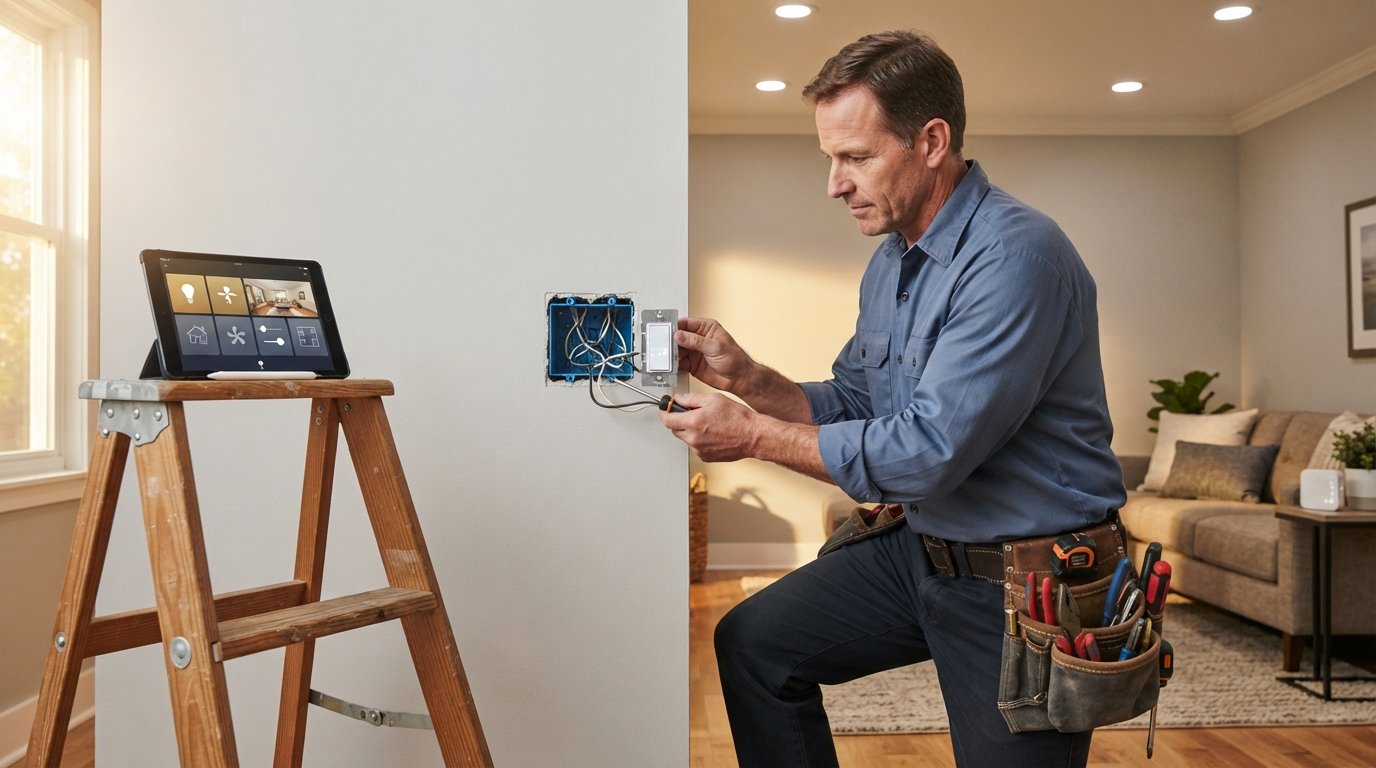
This is the part of the estimate that surprises homeowners most. Smart switches need a neutral wire in the switch box to power their radios, and many homes built before the mid-1980s simply do not have one in every box. If your electrician opens a switch box and finds only a hot wire and a load wire, they cannot install most smart switches there without running a new neutral, which means fishing wire through walls and patching drywall afterward.
Neutral wire remediation typically adds $75 to $150 per switch location, and in a home with 15 problem boxes that easily becomes $1,500 to $2,500 on top of the original quote. Some smart switches are designed to work without a neutral by leaking a small current through the bulb, but they require a minimum load and can cause flickering with LED bulbs. A licensed electrician should always verify compatibility before you buy hardware.
Hubs are the second hidden cost. Many smart switches and bulbs communicate over Zigbee, Z-Wave, or Thread, and those protocols need a hub to talk to each other and to your phone. A good hub runs $80 to $200, and some integrated systems bundle the controller into the keypad or panel. Wi-Fi devices skip the hub but can overload a home network once you pass 30 or 40 devices, which is common in a whole-home install. Plan for either a hub or a mesh Wi-Fi upgrade, and budget $100 to $400 for that piece alone.
Energy and Convenience Savings You Can Realistically Expect
Smart lighting will not pay for itself through energy savings alone in most homes, and any installer who promises otherwise is overselling. Lighting accounts for roughly 10 percent of a typical electric bill, and if you have already switched to LEDs, the remaining savings from smarter scheduling is small, often $5 to $15 per month. The real financial case is stronger when you replace older incandescent or halogen fixtures at the same time, or when you use occupancy sensors in hallways, garages, and laundry rooms that otherwise stay lit for hours.
Where smart lighting genuinely earns its keep is convenience and security. Automated away scenes that turn lights on and off in a lived-in pattern deter burglars better than a single timer. Motion-triggered pathway lighting reduces stumbles and falls. Sunrise wake-up routines help shift workers and early risers. And the ability to kill every light from bed or from your car saves the small daily friction that adds up over years. If you want a deeper look at how these systems pay back over time, our guide on smart home lighting installation cost and savings walks through the math in more detail.
A realistic expectation is that a $3,000 switch retrofit might return $100 to $200 per year in energy savings plus meaningful convenience value. That is not a fast payback, so treat smart lighting as a quality-of-life upgrade first and an efficiency upgrade second. Homeowners who go in with that mindset are far happier with the result than those expecting a utility-bill windfall.
When You Need a Licensed Electrician and When You Do Not
Some smart lighting upgrades are genuinely plug-and-play, and hiring a pro for those is a waste of money. Others involve opening walls, replacing fixtures, or adding circuits, and those are not DIY territory for most homeowners. The line between the two is clearer than most people think.
You can safely handle these yourself:
- Screw-in smart bulbs in existing lamps and fixtures
- Plug-in smart plugs for lamps and holiday lighting
- Battery-powered motion sensors and smart remotes
- Setting up a hub and programming scenes in an app
You should hire a licensed electrician for anything that involves opening a switch box, replacing a dimmer, installing a new fixture, running wire, or adding a circuit. Beyond code requirements, an electrician will confirm neutral wire availability, check that your dimmer is compatible with your LED load, and make sure the work is insured and permitted where required. For a whole-home system, the design and programming phase alone is worth professional help because a poorly programmed system with confusing keypads is worse than a simple switch setup.
When you are ready to get quotes, use a service that connects you with vetted local electricians so you can compare pricing and credentials side by side. Sites like BuySellRemodel help homeowners plan affordable improvement projects and find experienced contractors, which is a sensible starting point before you commit to a five-figure integrated system.
Planning Smart Lighting During a Remodel Versus Retrofitting Later
If you are already remodeling, adding smart lighting is dramatically cheaper than retrofitting it afterward. Walls are open, electricians are already on site, and running neutral wires or dedicated lighting circuits costs a fraction of what it does in a finished home. A remodel is also the best time to plan keypad locations, add deep switch boxes for smart dimmers, and pull wire for future sensors or motorized shades even if you do not install them yet.
During a remodel, budget smart lighting as a line item alongside electrical rough-in. Expect to add 15 to 30 percent to your electrical budget for smart-ready wiring, deeper boxes, and a dedicated lighting control panel if you are going integrated. That premium buys you a home that is ready for any system you choose later, and it avoids the drywall patching and repainting that retrofits require.
Retrofitting later is still very doable, but plan for the neutral wire tax and more labor. A good strategy is to start with smart switches in the highest-use rooms (kitchen, living room, primary bedroom) and expand over time. Many systems are modular, so you can add keypads, sensors, and shade control later without replacing what you already own. If you are weighing a larger electrical project at the same time, our home remodeling contractors resource can help you sequence the work and find local pros who handle both lighting and broader electrical upgrades.
How to Budget and Compare Quotes Without Getting Burned
Smart lighting quotes are notoriously hard to compare because every installer bundles hardware, labor, and programming differently. One quote might include the hub and keypads, another might list them as add-ons, and a third might exclude drywall repair after wiring. The only way to compare fairly is to ask for an itemized bid that separates hardware, labor, wiring remediation, programming, and any patching or painting.
Follow this sequence to keep your project on budget:
- Define your goal: convenience scenes, energy savings, security, or full integration.
- Choose your tier (bulbs, switches, or integrated) before requesting quotes.
- Ask each electrician to verify neutral wires and hub requirements in writing.
- Request itemized bids and confirm what is excluded (drywall, paint, permits).
- Compare at least three quotes and check licenses, insurance, and reviews.
Once you have itemized bids, the lowest number is rarely the best deal if it excludes wiring remediation or programming. A quote that is $800 higher but includes neutral wire fixes and full scene setup may actually save you money and frustration. Ask each contractor how they handle firmware updates, app changes, and warranty support after the install, because smart systems need occasional troubleshooting that a traditional light switch never did.
Finally, keep a contingency of 10 to 15 percent for the surprises that live inside old walls. Knob-and-tube wiring, aluminum branch circuits, or a crowded panel can turn a simple switch swap into a bigger electrical project. A reputable electrician will flag those issues during the estimate rather than after the work begins, which is another reason to choose a licensed, insured professional over the lowest bidder.
Smart lighting is one of the most satisfying upgrades you can make to a home, and the cost range is wider than almost any other project because the category spans from DIY bulbs to full integration. Decide which tier matches your lifestyle, verify your wiring before you buy hardware, and get itemized quotes from licensed electricians so the final bill matches the plan. Do that, and your whole-home smart lighting system will deliver daily convenience for years without the surprise costs that trip up unprepared homeowners.