
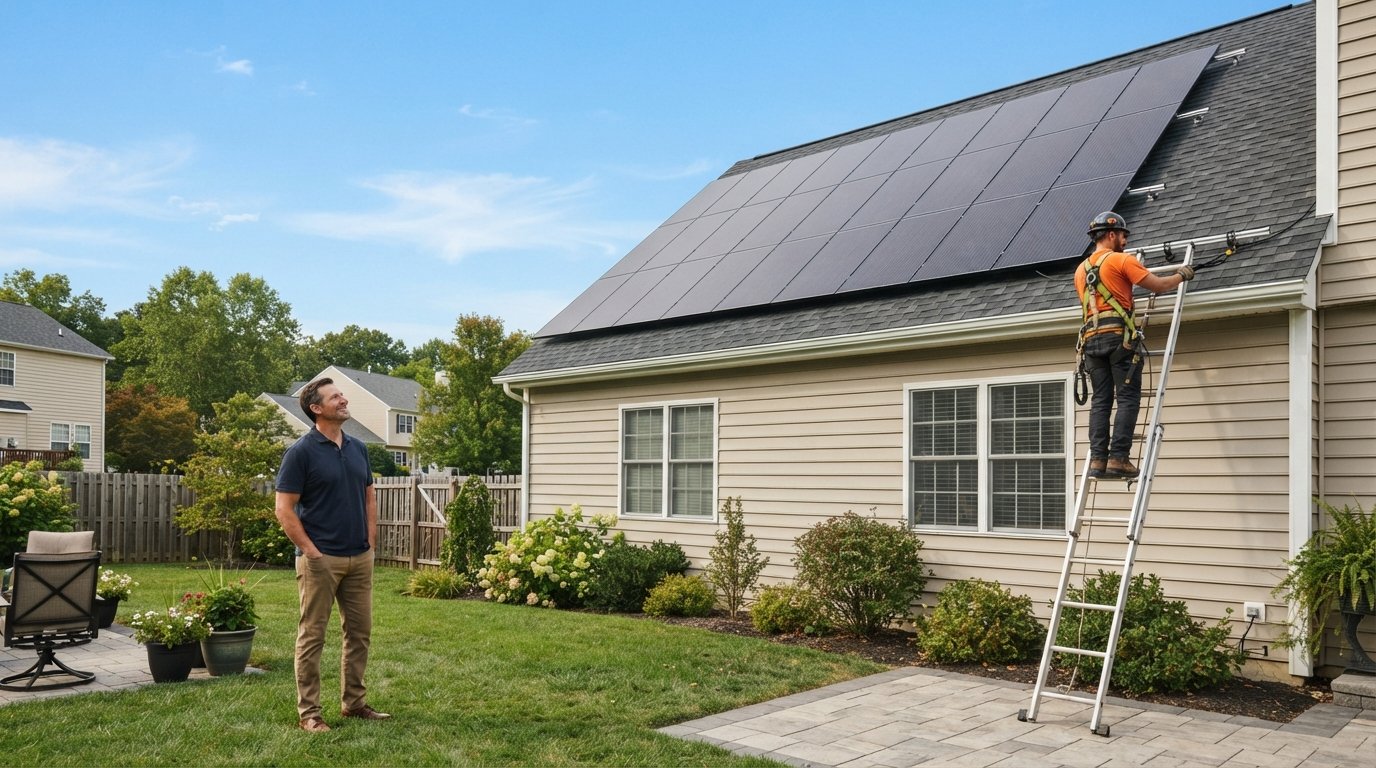
Solar Panel Installation Cost and Long Term Savings
Solar panel installation cost and long term savings explained, with a free estimate call at (833)-439-3727 to compare local pros.

By Quinn Keller
Learn more about Solar Panel Installation and Repair for guides, costs, and what to expect.
Compare Solar Panel Installation and Repair Pros Near You

Enter your ZIP code to compare top-rated local professionals and request free quotes.
Your electric bill keeps climbing, and you are tired of writing that check every month. You have seen the solar signs in your neighborhood, and you are curious whether panels could actually save you money or just drain your wallet upfront. The truth is that solar panel installation cost and long term savings are two sides of the same coin, and understanding both is the key to deciding whether solar is right for your home. This guide breaks down what you will pay, what incentives can soften the blow, and how to calculate whether the numbers work in your favor.
What Solar Panel Installation Typically Costs
The national average for a residential solar system runs between $15,000 and $25,000 before incentives, though your specific quote will depend on several factors. Most homeowners install a system sized between 6 and 10 kilowatts to cover their annual electricity usage. At roughly $2.50 to $3.50 per watt installed, a 7 kW system lands around $17,500 to $24,500. These figures include panels, inverters, mounting hardware, wiring, permits, and labor. Battery storage adds $8,000 to $15,000 or more if you want backup power or greater energy independence.
Several variables push that price up or down. Your location matters because labor rates and permitting costs vary widely by state and municipality. Roof complexity is another major factor: a simple, south-facing asphalt shingle roof is cheaper to work on than a steep, multi-plane tile roof that requires special mounting hardware. System size obviously changes the total, but the per-watt cost often drops as you add more panels. Finally, the equipment you choose matters. Premium panels and microinverters cost more than budget panels and string inverters, but they may offer better performance or warranties.
If you want a detailed breakdown of how solar costs compare with other home upgrades in 2026, our solar panel installation cost and savings guide walks through the latest figures. For now, keep in mind that the sticker price is only part of the story. Incentives, financing, and long term utility savings dramatically change the math.
Federal and Local Incentives That Reduce Your Upfront Cost
The federal residential clean energy credit is the biggest lever most homeowners have. Through 2032, you can claim a tax credit worth 30 percent of your total system cost, including installation and battery storage. That means a $20,000 system nets a $6,000 federal credit, bringing your effective cost down to $14,000. The credit is nonrefundable, but it can carry forward if you do not owe enough tax in the year you install. Always confirm current rules with a tax professional, as policies can change.
State and local incentives can add thousands more in savings. Many states offer rebates or performance-based incentives for solar installations. Some utilities pay you for excess power through net metering, which credits your bill for electricity you send back to the grid. Property tax exemptions and sales tax exemptions are common in solar-friendly states. The Database of State Incentives for Renewables and Efficiency (DSIRE) is a reliable starting point to see what your area offers. Local installers should also know about municipal programs that might not show up in national databases.
Combining the federal credit with state and utility programs can cut your net cost by 40 percent or more. For example, if you live in a state with a $2,000 rebate and a 30 percent federal credit, a $22,000 system could drop to roughly $13,400 after incentives. That changes the payback period significantly. Always ask your installer to itemize which incentives they expect you to qualify for, and verify eligibility yourself so you are not surprised at tax time.
How Roof Condition and Orientation Affect Cost and Performance
Your roof is the foundation of any solar project, and its condition directly impacts both installation cost and long term savings. If your roof is nearing the end of its life, you should replace it before installing panels. Removing and reinstalling solar panels for a roof replacement adds $3,000 to $6,000 in labor, so doing both at once is far more economical. Installers will inspect your roof for structural integrity, age, and remaining lifespan. A roof with less than 10 years of life left is usually a red flag.
Orientation and shading determine how much electricity your system produces, which in turn drives your savings. South-facing roofs are ideal in most of the United States, but east and west facing roofs can still work well, especially with modern panel technology. Shade from trees, chimneys, or neighboring buildings reduces output and may require microinverters or power optimizers to mitigate losses. A professional site assessment will measure shading throughout the day and year. If your roof is heavily shaded, solar may not be cost-effective without trimming trees or removing obstructions.
Roof material matters too. Asphalt shingles are the cheapest and easiest to mount on. Tile roofs require special brackets and more labor, adding cost. Metal roofs can be either simple or complex depending on the standing seam profile. Flat roofs use ballasted mounting systems that are different from pitched roof hardware. Before you sign a contract, ask your installer to explain how your roof type affects the quote and whether any structural reinforcements are needed.
Calculating Long Term Savings and Payback Period
Long term savings from solar come from reducing or eliminating your monthly electric bill. The exact amount depends on your system size, local electricity rates, net metering policies, and how much sun your location receives. A typical 7 kW system in a sunny state might produce 10,000 to 12,000 kilowatt-hours per year. If your utility charges 15 cents per kWh, that is $1,500 to $1,800 in annual savings. Over 25 years, assuming modest rate increases, total savings could exceed $40,000.
Payback period is the time it takes for your cumulative savings to equal your net installation cost after incentives. Most homeowners see payback in 7 to 12 years, depending on the factors above. After payback, the electricity your system produces is essentially free (aside from minor maintenance). Panels typically carry 25-year performance warranties, so you can expect decades of savings after the break-even point. Batteries can extend payback because they add cost, but they also provide backup power and may increase self-consumption of solar energy.
Financing options change the cash flow picture. A cash purchase delivers the highest lifetime savings because you avoid interest. Solar loans let you spread the cost over time, often with monthly payments lower than your current electric bill. Leases and power purchase agreements (PPAs) require little or no money down, but you assign a portion of your savings to the provider. Each option has trade-offs. If you plan to sell your home, ownership of the system is usually cleaner for the transaction, but leased systems can be transferred to the buyer in many cases.
Questions to Ask a Solar Installer Before You Sign
Choosing the right installer is as important as choosing the right equipment. A reputable solar contractor will be transparent about costs, incentives, and expected performance. Start by asking for proof of licensing and insurance. Solar installation requires electrical work, and many states have specific licensing requirements. Ask how long the company has been in business and whether they use subcontractors or employees for installation. Subcontractors are not inherently bad, but you want to know who is actually on your roof.
Get at least three quotes and compare them line by line. The lowest price is not always the best value if it excludes permits, monitoring, or warranty coverage. Ask each installer to provide a production estimate based on a site assessment, not just a generic formula. The estimate should account for shading, roof orientation, and local weather patterns. Also ask about the warranty: what does it cover, how long does it last, and who honors it if the installer goes out of business? Manufacturer warranties on panels and inverters are separate from workmanship warranties, so understand both.
Finally, ask how the installer handles interconnection with your utility and net metering paperwork. This process can take weeks or months, and a good installer will manage it for you. If you are comparing contractors for multiple home projects, BuySellRemodel helps homeowners plan affordable improvements and connect with experienced local pros, from solar to roofing and beyond. Getting free estimates from multiple sources is the best way to ensure you are not overpaying.
Maximizing Your Savings: Practical Steps
Before you commit to solar, take steps to reduce your electricity consumption. Energy-efficient appliances, LED lighting, and smart thermostats lower your baseline usage, which means you can install a smaller and cheaper solar system. Insulation and air sealing also reduce heating and cooling loads, making your home more comfortable and your solar investment more effective. Efficiency upgrades often cost less per dollar saved than solar panels, so tackle those first if your budget is tight.
Consider the timing of your purchase. The federal tax credit is scheduled to step down after 2032, so installing sooner locks in the full 30 percent credit. State and utility incentives can also change annually, so check the current programs before you finalize your design. If you need a new roof, coordinate the projects to avoid paying twice for labor. And if you plan to buy an electric vehicle, size your solar system to account for future charging needs.
Monitor your system after installation to ensure it is performing as expected. Most systems come with monitoring apps that track production in real time. If you notice a drop in output, contact your installer promptly. Regular maintenance, such as cleaning panels if they get dirty and checking for debris, helps maintain production. Inverters may need replacement around year 10 to 15, so budget for that occasional cost.
Bottom Line: Is Solar Worth It for Your Home?
Solar panel installation cost and long term savings are highly personal. If you have a sunny roof, high electric rates, and plan to stay in your home for at least seven years, solar is often a strong financial decision. The federal tax credit and local incentives make the upfront cost more manageable than many homeowners expect. But if your roof needs replacement soon, your property is heavily shaded, or you plan to move in a few years, the math may not work as well. The best next step is to get a free estimate from a qualified local installer who can assess your specific situation and provide a detailed savings projection. With clear numbers in hand, you can decide with confidence whether solar is the right upgrade for your home.