
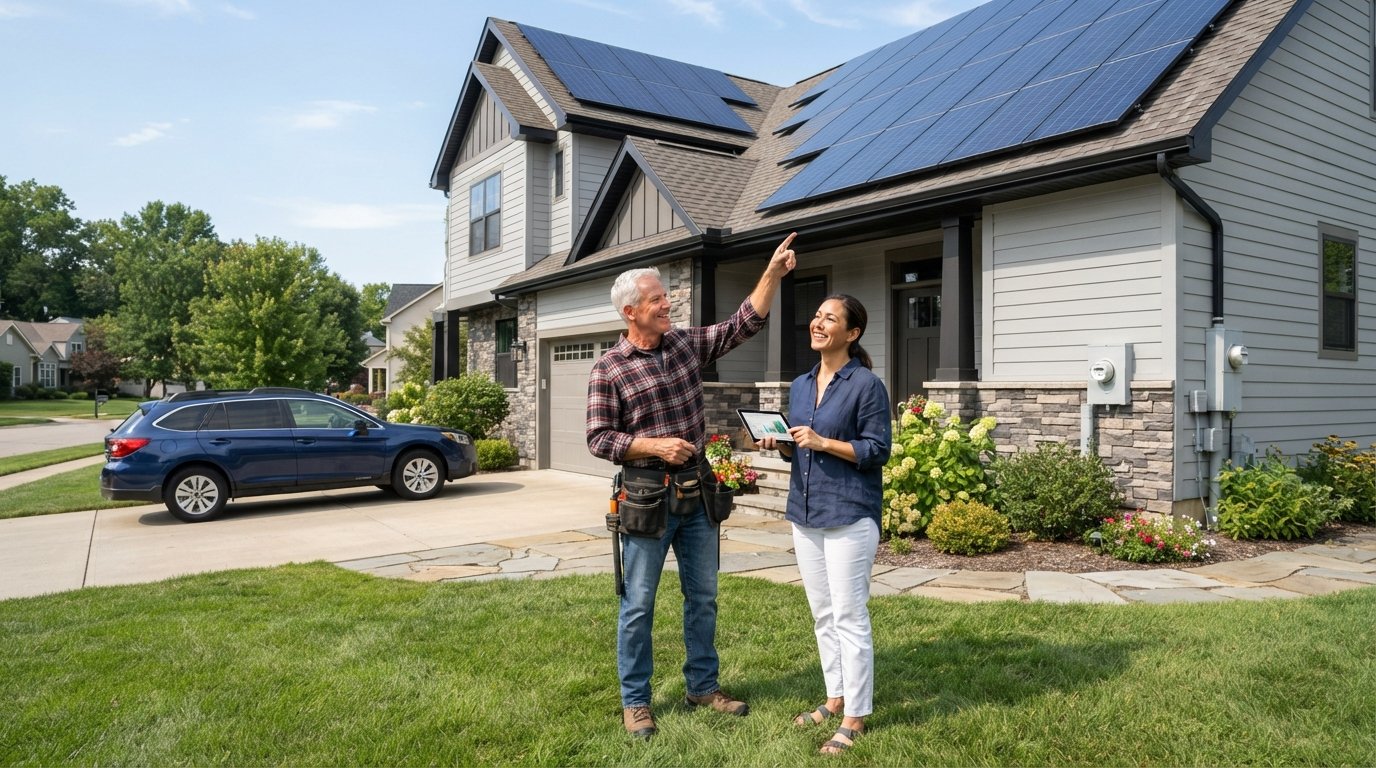
Solar Panel Installation Cost and Savings in 2026
See the real solar panel installation cost and savings for homeowners in 2026, with tips to cut upfront expenses and boost long-term returns.

By Cameron Howard
Learn more about Solar Panel Installation and Repair for guides, costs, and what to expect.
Compare Solar Panel Installation and Repair Pros Near You

Enter your ZIP code to compare top-rated local professionals and request free quotes.
The sun is a powerful financial ally, yet many homeowners hesitate because they assume solar is too expensive or complicated. In 2026, the landscape has shifted dramatically. Prices for photovoltaic systems have fallen, federal incentives remain strong, and new financing options make going solar more accessible than ever. If you have been waiting for the right moment, this year might be it. This guide breaks down the real numbers behind solar panel installation cost and savings for homeowners in 2026, so you can decide if solar fits your budget and your home.
What Does Solar Panel Installation Cost in 2026?
Nationally, the average cost to install a residential solar panel system in 2026 ranges from $15,000 to $25,000 before any incentives. This translates to roughly $2.50 to $3.50 per watt of installed capacity. A typical 6-kilowatt system, which is enough to offset the electricity usage of an average American home, lands around $18,000 before tax credits. However, your final price depends on several variables, including your location, roof condition, panel brand, and labor rates in your area.
To get a precise estimate for your property, you need a professional assessment. Local contractors can evaluate your roof, shading, and energy consumption to give you a tailored quote. If you are planning other energy upgrades, such as a new water heater, combining projects can save you money in the long run. You can read our breakdown of tankless water heater costs and savings to see how efficiency improvements stack up.
Breaking Down the Price per Component
Understanding where your money goes helps you compare bids and avoid surprises. The largest portion of your solar investment goes to the panels themselves, which typically account for 25 to 30 percent of the total cost. Inverters, which convert direct current into usable alternating current, add another 10 to 15 percent. Racking and mounting hardware, wiring, and electrical components make up 10 to 15 percent. Installation labor, permits, and inspection fees cover the remaining 30 to 40 percent.
Some companies also include monitoring systems and extended warranties in their quotes. While these add to the upfront price, they can improve long-term performance and peace of mind. Always ask for a detailed line-item quote so you can compare apples to apples when screening contractors.
Federal Incentives and State Rebates in 2026
The single biggest factor reducing your out-of-pocket cost is the federal Investment Tax Credit (ITC). In 2026, you can claim 30 percent of your total system cost as a credit on your federal income taxes. For an $18,000 system, that amounts to a $5,400 reduction, bringing your net cost down to $12,600. Unlike a deduction, the ITC directly reduces the taxes you owe, and if you do not owe that much, the credit can roll over to future years.
State and local incentives vary widely. Some states offer additional tax credits or rebates, while others have performance-based incentives that pay you per kilowatt-hour generated. Net metering programs, which credit you for excess power sent to the grid, also boost your savings. To find what applies to you, search for your state's solar database or consult a local installer who tracks current incentives.
Because these incentives can change, it is wise to act while they are still available. Many industry experts expect the ITC to phase down after 2026, so locking in now could save you thousands.
How Much Can Homeowners Save on Electricity?
The savings from solar depend on three main factors: your current electricity rate, the size of your system, and the amount of sunlight your roof receives. On average, homeowners with solar cut their electricity bills by 80 to 100 percent. In sunny states with high utility rates, such as California or Hawaii, systems often pay for themselves in six to eight years. In less sunny regions or areas with low electricity costs, the payback period might stretch to 12 years or more.
To illustrate, consider a home that spends $150 per month on electricity. Over 25 years, that adds up to $45,000 in utility payments. A solar system that costs $12,600 after the federal credit and covers 90 percent of usage could save roughly $40,500 over that same period. Even after accounting for maintenance and inverter replacement, the net savings are substantial.
Here is a quick list of the primary savings levers you control:
- System size: match it to your annual consumption, not your monthly budget.
- Panel efficiency: high-efficiency panels produce more power per square foot, ideal for limited roof space.
- Orientation and tilt: south-facing roofs with a 30-degree tilt capture the most sunlight.
- Shade management: trimming trees or installing microinverters can minimize losses.
- Financing terms: cash purchases maximize long-term savings, while loans spread costs.
After optimizing these factors, your actual savings can exceed the average. Many homeowners also benefit from solar renewable energy certificates (SRECs) in certain states, which can be sold for extra income.
Financing Options: Cash, Loans, Leases, and PPAs
How you pay for solar dramatically affects both your upfront cost and your long-term savings. Cash purchases offer the highest return because you avoid interest charges and you own the system outright from day one. If you have the funds, this is the most financially efficient route.
Solar loans allow you to spread payments over 10 to 20 years. Monthly payments are often lower than your utility bill, so you can go solar with no money down and still see net savings. However, interest rates in 2026 vary, and you should compare loan terms carefully. Leases and power purchase agreements (PPAs) require no upfront payment, but you do not own the system. Instead, you pay a fixed monthly fee or a per-kilowatt-hour rate. While these options provide immediate bill relief, they typically deliver lower lifetime savings and can complicate home sales.
When evaluating financing, ask for the total cost of the loan, including interest and fees. A reputable installer will show you a full amortization schedule. If you plan to stay in your home for more than five years, ownership in any form usually beats leasing.
Break-Even Timeline and Long-Term Return on Investment
The break-even point, or payback period, is the time it takes for your cumulative savings to equal your net installation cost. For most homeowners in 2026, this falls between 7 and 12 years. After that, the electricity your panels generate is essentially free, providing an annual return on investment of 8 to 15 percent. That is a better risk-adjusted return than many traditional investments.
Because solar panels have a lifespan of 25 to 30 years, a system that pays for itself in a decade gives you 15 to 20 years of pure savings. Additionally, solar increases your home's resale value. Studies have shown that homes with solar sell for 4 to 6 percent more than comparable homes without it. This added equity can be a significant bonus when you move.
To maximize your ROI, keep your system clean and well-maintained. Most panels require little more than occasional washing and annual inspections. Inverter replacement, which might be needed after 10 to 15 years, costs about $1,000 to $2,000, so plan for that expense in your long-term budget.
Choosing the Right Installer and Getting Free Estimates
The quality of your installation directly affects your system's performance and safety. A poorly installed roof mount can lead to leaks, and faulty wiring can create fire hazards. That is why it is critical to choose an experienced, licensed, and insured installer. Look for companies that have been in business for at least five years, hold manufacturer certifications, and have strong online reviews.
Before signing any contract, obtain at least three detailed quotes. Each bid should specify the equipment brand and model, the total price, the warranty terms, and the estimated annual production. Do not automatically choose the cheapest option; sometimes paying a little more for a reputable contractor saves you from costly repairs later. If you are also considering other home upgrades, such as energy-efficient doors or windows, bundling projects can lead to volume discounts.
To streamline your search, you can use a service that connects you with vetted local contractors. Platforms like BuySellRemodel help homeowners find affordable pros for solar and other improvement projects. They provide free estimates, allowing you to compare options without pressure. This is a practical way to gather bids and move forward with confidence.
Hidden Costs and Maintenance Considerations
While solar is a sound investment, there are a few hidden costs to anticipate. Permits and inspection fees, which are sometimes bundled into the installation price, can range from $200 to $500. If your roof needs repair or replacement before installation, that is an additional expense. Old or complex electrical panels may need upgrading to handle the new system, costing $1,000 to $3,000.
Ongoing maintenance is minimal but not zero. Panels should be cleaned once or twice a year, especially in dusty or pollen-heavy areas. Professional cleaning costs about $150 to $300 per visit. Most systems come with a 25-year performance warranty, but the inverter typically has a 10- to 12-year warranty. Replacing it later is a normal expense. By budgeting for these items, you avoid financial surprises.
Is Solar Still Worth It in 2026?
Yes, for most homeowners, solar remains a smart financial move. The combination of lower equipment costs, the 30 percent federal credit, and rising utility rates means the payback period is shorter than it was a decade ago. In many markets, the monthly savings from solar exceed the loan payment, creating positive cash flow from the first month. Plus, you gain energy independence and reduce your carbon footprint.
That said, solar is not ideal for every situation. If you live in a heavily shaded area, have a roof that needs replacement in a few years, or plan to move soon, you might want to delay. Renting your home also makes solar less attractive because you cannot claim the tax credit. In these cases, community solar programs or green energy tariffs from your utility might be a better fit.
The key is to do your homework. Gather multiple quotes, understand the incentives in your state, and calculate your own payback period using real electricity bills. With the right system and installer, solar can be one of the best home improvements you ever make.
As you plan your budget, remember that solar is just one piece of an energy-efficient home. Combining it with other upgrades, like insulation or a heat pump, can multiply your savings. If you are ready to explore options, start by requesting free estimates from local pros. They can give you a precise picture of what solar panel installation cost and savings for homeowners in 2026 mean for your property, and help you decide if now is the time to go solar.