
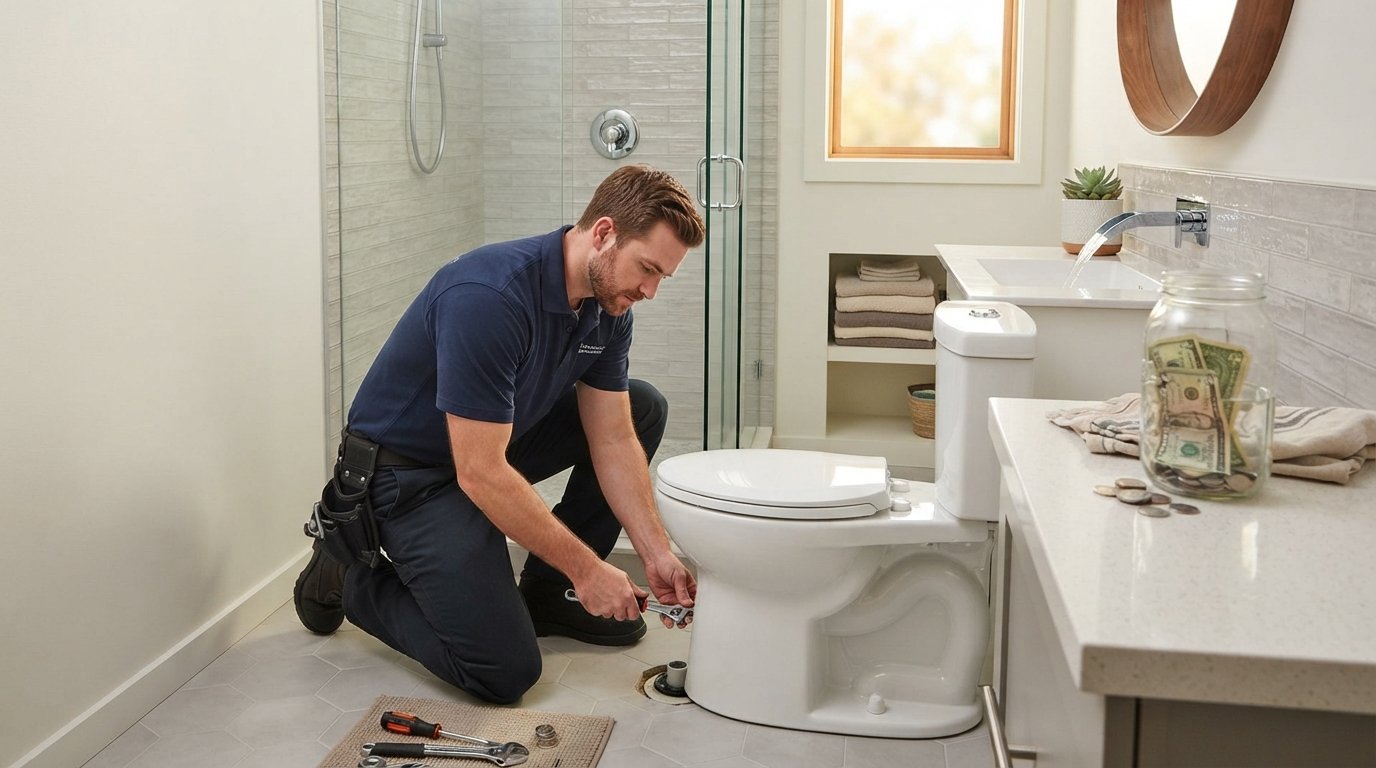
Water-Saving Bathroom Fixtures Costs and Benefits
Compare water-saving bathroom fixtures costs and benefits to see how low-flow toilets and showerheads can slash your utility bills and boost home value.

By Cameron Howard
Learn more about Bathroom Remodel for guides, costs, and what to expect.
Compare Bathroom Remodel Pros Near You

Enter your ZIP code to compare top-rated local professionals and request free quotes.
When a monthly water bill arrives, many homeowners glance at the total and wonder where all that water went. The bathroom is often the hidden culprit. Toilets, showers, and faucets account for nearly half of a home's indoor water use, according to the Environmental Protection Agency. Upgrading these everyday fixtures can lower utility bills, reduce strain on aging plumbing, and even increase property value. Yet the decision to replace perfectly functional fixtures often comes down to a simple question: are the costs worth the benefits? This guide breaks down the real numbers behind water-saving bathroom fixtures costs and benefits so you can make a confident, budget-friendly choice.
For most households, the shift to high-efficiency fixtures is not about sacrificing comfort. It is about smarter engineering. Modern aerators mix air into the water stream, low-flow showerheads use pressure-enhancing technology, and dual-flush toilets give you control over water volume. These innovations deliver the same clean, comfortable experience while using dramatically less water. The result is a home that runs more efficiently and a wallet that feels the difference each month.
Understanding the Upfront Costs of Water-Saving Fixtures
The initial price tag for water-efficient bathroom fixtures varies widely based on brand, style, and complexity. A basic high-efficiency toilet can cost between $100 and $300, while a premium model with advanced flushing systems may run $400 to $800. Low-flow showerheads are far more affordable, typically ranging from $20 to $150, with luxury rainfall models at the higher end. Bathroom faucets with aerators and motion sensors start around $50 and can exceed $300 for designer styles.
Installation costs add another layer. If you are handy with tools, replacing a showerhead or faucet is a straightforward DIY project that takes under an hour. Toilets require more effort, especially if you need to address the wax ring, flange, or supply line. Professional plumber rates usually range from $150 to $400 for a toilet installation, depending on your location and the complexity of the job. When you compare these costs to a full bathroom remodel, which often exceeds $10,000, upgrading individual fixtures is a relatively low-cost entry point.
One way to offset upfront expenses is to look for rebates and incentives. Many municipal water utilities offer cash rebates for installing WaterSense-certified toilets and other high-efficiency fixtures. Some states provide tax credits for water conservation improvements. Checking with your local water authority before purchasing can reveal savings that reduce your net cost by 20 to 50 percent.
Quantifying the Long-Term Savings
The true value of water-saving fixtures emerges over time through reduced utility bills. The EPA estimates that a family of four can save approximately 13,000 gallons of water per year by switching to WaterSense-labeled toilets alone. That translates to roughly $110 to $150 in annual savings on water and sewer charges. When you factor in the reduced energy needed to heat water for showers, the total annual savings often reach $200 or more per household.
Consider a standard toilet from the 1990s that uses 3.5 to 5 gallons per flush. Replacing it with a high-efficiency model that uses 1.28 gallons per flush cuts water consumption by more than 60 percent. Over a 10-year lifespan, a single toilet can save over $1,000 in water costs. For homes with multiple bathrooms, the savings multiply quickly. Showers are another major source of savings. A conventional showerhead flows at 2.5 gallons per minute, while a WaterSense model uses no more than 2.0 gallons per minute. For a household that takes two showers daily, that difference adds up to roughly 2,900 gallons saved annually, plus the energy savings from heating less water.
To maximize your financial return, consider these key factors when choosing fixtures:
- Look for WaterSense certification, which guarantees efficiency and performance.
- Compare the flow rate or gallons per flush to your current fixtures.
- Check your local utility for rebate programs before you buy.
- Consider the long-term cost of water in your area, as higher rates mean greater savings.
- Factor in installation costs, and decide whether DIY or a professional is the smarter route.
While the savings are compelling, the benefits extend beyond your monthly statement. By reducing your home's water consumption, you also lower the load on your septic system or municipal sewer infrastructure. This can prevent costly maintenance issues down the road, from premature septic tank pumping to sewer line backups.
Environmental and Property Value Benefits
Water conservation is not just about personal savings; it is also about responsible stewardship of a finite resource. In many regions, drought conditions and population growth have put severe pressure on freshwater supplies. Every gallon saved in your bathroom contributes to the health of local rivers, lakes, and aquifers. Energy is also saved in the process, because treating and pumping water requires significant electricity. The EPA notes that reducing household water use by 10 percent can save enough energy to power a home for a full year.
These environmental benefits often translate into financial advantages when you sell your home. Modern, water-efficient bathrooms are a selling point for eco-conscious buyers. Real estate studies show that homes with green upgrades, including WaterSense fixtures, can command a premium of 2 to 4 percent over comparable properties. Additionally, a home that demonstrates lower utility costs is more attractive in a competitive market. Buyers are increasingly aware of the long-term costs of homeownership, and efficient fixtures signal that a property has been well-maintained and thoughtfully updated.
The comfort factor should not be overlooked. Modern low-flow showerheads use engineered nozzles that create a powerful, satisfying spray without wasting water. Dual-flush toilets give you a light flush for liquid waste and a full flush for solids, so you are never using more water than necessary. Faucets with aerators maintain water pressure while reducing flow, making everyday tasks like brushing teeth or washing hands feel unchanged. These fixtures are designed to perform as well as, or better than, their older counterparts.
Choosing the Right Fixtures for Your Home
Selecting the right water-saving fixtures involves balancing cost, style, and performance. Start by evaluating your current fixtures and identifying the ones that use the most water. Toilets and showerheads are typically the highest priority because they account for the largest share of bathroom water use. If your fixtures are more than 10 years old, they almost certainly lack the efficiency of modern models.
When shopping for a toilet, look for the WaterSense label, which guarantees that the model uses 1.28 gallons per flush or less. You can also consider dual-flush models, which use a lower volume for liquid waste. However, be aware that some older or poorly designed dual-flush toilets have had issues with clogs. Read reviews and choose a reputable brand to avoid performance problems. For showerheads, focus on flow rate and spray pattern. A 2.0 gallon-per-minute model with a wide spray can feel more luxurious than a restrictive 1.5 gallon-per-minute version. Some showerheads also feature pause buttons, which let you stop the water while lathering without changing the temperature.
Faucets are often overlooked, but they account for about 15 percent of indoor water use. Aerators, which mix air into the water stream, are a cheap and easy upgrade that can reduce flow by up to 30 percent without affecting pressure. For a more comprehensive solution, consider touchless faucets with motion sensors that prevent accidental running. These are especially useful in family bathrooms where children might forget to turn off the water. Whichever fixtures you choose, verify that they meet local plumbing codes and are compatible with your existing pipes.
If you are planning a larger bathroom renovation, the cost of water-saving fixtures becomes part of a bigger picture. In our guide on tankless water heater costs and savings, we explore another upgrade that pairs well with efficient fixtures to maximize your home's energy efficiency. When you replace multiple elements at once, you can often negotiate a better price with a contractor and reduce the overall disruption to your daily routine.
Professional vs. DIY Installation
Deciding whether to install fixtures yourself or hire a professional depends on your skill level and the complexity of the job. Faucet and showerhead replacements are manageable for most DIY enthusiasts. They require basic tools like an adjustable wrench and plumber's tape, and most can be completed in under an hour. Online tutorials provide step-by-step instructions, and the risk of a costly mistake is low if you follow them carefully.
Toilet installation is more involved. It requires lifting a heavy porcelain fixture, aligning the wax ring, and properly securing the base to the floor. Mistakes can lead to leaks, water damage, and uneven seating. If you have any doubts about your ability to complete the job safely, hiring a licensed plumber is a wise investment. A professional can also inspect your existing plumbing for hidden issues, such as corroded supply lines or improper venting, that could affect the performance of your new fixtures.
Working with a contractor for multiple fixture upgrades can also yield cost savings. Many plumbers offer package deals for bathroom improvements, and they can ensure that all installations are done to code. When you request a free estimate, you get a clear picture of labor costs and can compare options from multiple local professionals. This approach not only saves you time but also gives you peace of mind that the job is done right.
Rebates, Incentives, and Financing Options
To make water-saving fixtures even more affordable, take advantage of rebates and incentive programs. Many cities and counties offer rebates for installing high-efficiency toilets, and some provide free low-flow showerheads or faucets to residents. The EPA's WaterSense program also partners with utilities across the country to promote discounts. A simple web search for your local water utility's rebate page can reveal opportunities that cut your upfront costs significantly.
For larger projects, consider financing options. Some contractors offer payment plans, and home improvement loans from credit unions or online lenders can spread the cost over several months. If you are already planning a bathroom remodel, the cost of water-saving fixtures is a small fraction of the overall budget. Rolling it into a renovation loan can make sense, especially if you are also addressing other issues like outdated plumbing or poor ventilation.
Do not forget the long-term value of your investment. A $300 toilet that saves $100 per year pays for itself in three years. Over its 20-year lifespan, it returns more than $2,000 in savings. When you factor in the avoided cost of water heater energy, the return is even higher. This makes water-saving fixtures one of the most cost-effective home upgrades available.
Realistic Timelines and Planning
Upgrading your bathroom fixtures does not need to happen all at once. You can prioritize based on urgency and budget. If a toilet is leaking or constantly running, replacing it immediately will stop the waste and lower your bill right away. A showerhead that has become clogged with mineral deposits is another prime candidate for early replacement, as it may be using more water than necessary to compensate for poor flow.
Create a simple plan that spreads the cost over several months. Start with the cheapest and easiest fixes, such as installing aerators on faucets or replacing a showerhead. Then, move on to larger projects like toilet replacements. By staggering your purchases, you can take advantage of sales and rebates without straining your budget. Keep a record of your water bills before and after each upgrade so you can track your actual savings and stay motivated.
If you are hiring a professional for multiple installations, schedule them together to reduce labor costs. A plumber who is already on site for one fixture can often replace another at a lower marginal cost. Before any work begins, get a written estimate that includes the cost of fixtures, labor, and any necessary permits. This transparency helps you avoid surprise charges and ensures that the final price matches your expectations.
Beyond the Bathroom: A Whole-Home Approach
While water-saving bathroom fixtures offer significant benefits, they are most effective when combined with other conservation measures. Check for leaks in your toilets and faucets, as a single dripping faucet can waste over 3,000 gallons per year. Install a water-efficient washing machine and dishwasher to reduce laundry and kitchen water use. Consider a rain barrel to collect water for your garden, reducing your outdoor demand. These efforts compound the savings you achieve in the bathroom, further lowering your environmental footprint and utility bills.
When you are ready to move forward with an upgrade, use a service like BuySellRemodel to connect with experienced local contractors. They can provide free estimates for fixture installation or a full bathroom remodel, helping you compare options and budget accurately. With a trusted professional on your side, you can ensure that your water-saving fixtures are installed correctly and performing at their best.
In the end, water-saving bathroom fixtures costs and benefits come down to a simple equation: modest upfront investment, significant long-term returns, and a positive impact on your home and the planet. Whether you replace one fixture or all of them, every step toward efficiency is a step toward a more sustainable and economical home. The decisions you make today will be reflected in your water bill for years to come, and they will contribute to a healthier environment for future generations.