
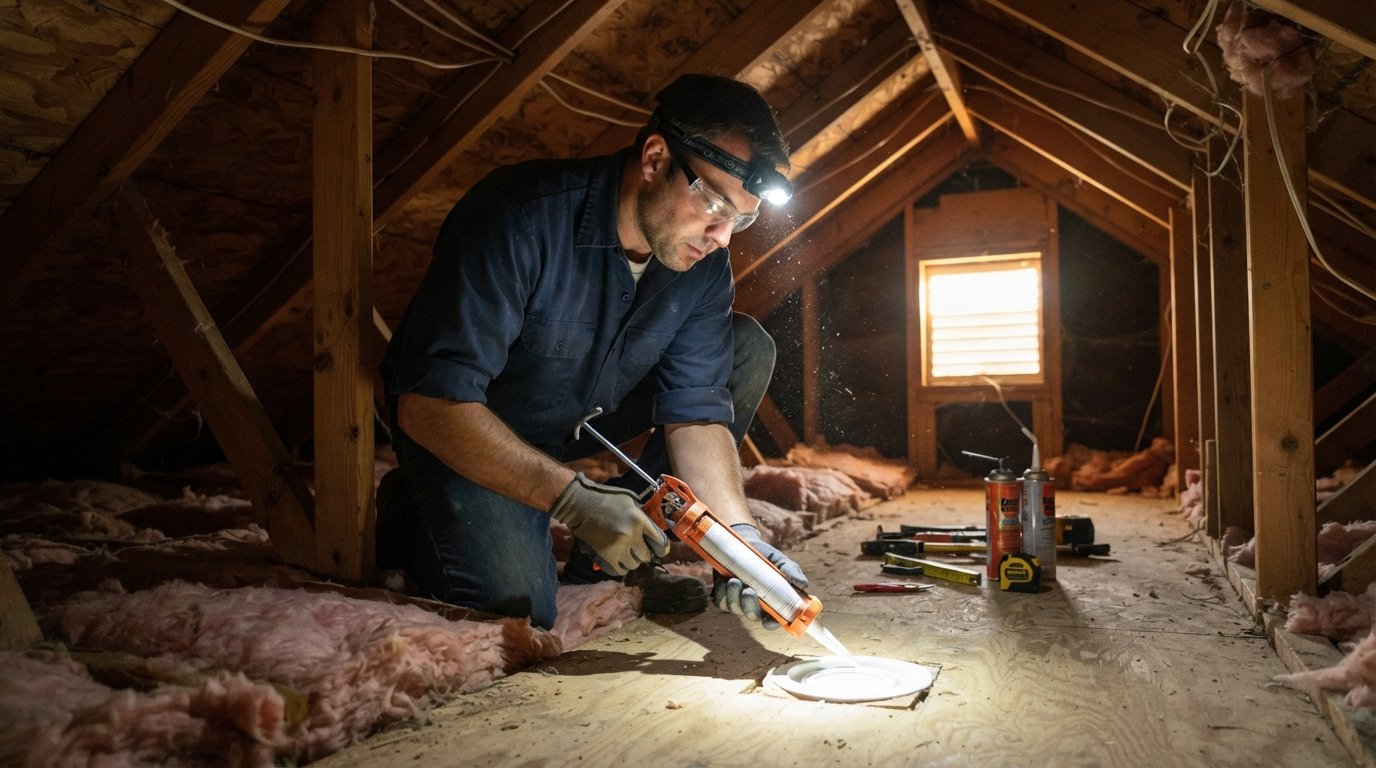
Whole House Air Sealing and Insulation Cost: 2026 Guide
Understand whole house air sealing and insulation cost, energy savings, and comfort gains. Call (833)-439-3727 for free estimates and expert guidance.

By Wendy Walsh
Learn more about Insulation Installation or Upgrade for guides, costs, and what to expect.
Compare Insulation Installation or Upgrade Pros Near You

Enter your ZIP code to compare top-rated local professionals and request free quotes.
Your home is leaking money. Not through the roof or the windows, but through hundreds of tiny gaps and cracks you cannot see. These hidden leaks force your heating and cooling system to work harder, drive up your energy bills, and make rooms uncomfortable. The solution is a one-two punch: whole house air sealing and insulation. But what does it cost? For most homeowners, the combined project runs between $2,500 and $7,500, with significant savings on energy bills that can recoup the investment over time. This guide breaks down the whole house air sealing and insulation cost, explains where leaks hide, and helps you decide whether to tackle the job yourself or hire a pro.
Where Air Leaks Hide in Your Home
Air leaks are sneaky. They are rarely where you expect them. While drafty windows get all the attention, the biggest culprits are often in the attic, basement, and around plumbing and electrical penetrations. According to the U.S. Department of Energy, air sealing and insulation improvements can cut heating and cooling costs by an average of 15 percent, and in some homes, up to 30 percent. That starts with knowing where to look.
Common leak locations include:
- Attic: Gaps around recessed lights, attic hatches, and where the walls meet the ceiling.
- Basement and crawlspace: Leaks around the rim joist (where the foundation meets the wood frame), dryer vents, and plumbing penetrations.
- Exterior walls: Gaps around electrical outlets, switches, and where siding meets the foundation.
- Windows and doors: Not just the frames, but the gap between the window frame and the rough opening.
- Fireplace and chimney: The damper and the gap between the chimney and the framing.
Many of these leaks are small, but together they add up to a significant hole in your building envelope. In fact, the combined leaks in a typical home can equal the effect of leaving a window open all year. Sealing them is the first step; adding insulation ensures the sealed envelope performs at its best.
Understanding Whole House Air Sealing and Insulation Cost
When homeowners ask about whole house air sealing and insulation cost, they often expect a single number. The reality is that costs vary based on home size, climate, existing insulation, and whether you hire a professional or do it yourself. A whole house approach typically includes air sealing in the attic and basement, adding or upgrading insulation in the attic, walls, and crawlspace, and sometimes installing a vapor barrier. For a typical 1,500 to 2,500 square foot home, the combined cost for professional air sealing and insulation ranges from $2,500 to $7,500. But let us break it down further.
Air Sealing Costs
Professional air sealing alone costs between $300 and $1,500, depending on the home's size and the number of leaks. This includes sealing gaps with caulk, spray foam, and weatherstripping. If you DIY, materials might cost $100 to $300, but you will need to invest time and learn proper techniques. Air sealing is often done in conjunction with insulation because sealing without insulating can leave thermal bridging and other issues unaddressed.
Insulation Costs
Insulation costs depend on the type and where it is installed. Here are typical price ranges per square foot installed:
- Fiberglass batts: $0.50 to $1.50 per square foot.
- Blown-in fiberglass: $1.00 to $2.00 per square foot.
- Spray foam: $2.00 to $5.00 per square foot.
- Cellulose: $1.00 to $2.50 per square foot.
For a whole house, attic insulation might cost $1,000 to $3,000, while wall insulation (if needed) could add $2,000 to $5,000. Crawlspace insulation might be $1,000 to $2,500. Combining air sealing and insulation, the total project cost often lands in the $2,500 to $7,500 range, with higher-end homes or those needing extensive work exceeding $10,000. For a more detailed breakdown of attic insulation costs and savings, including payback periods, see our guide on attic insulation cost and savings.
It is important to get multiple quotes to understand your specific whole house air sealing and insulation cost. Factors like local labor rates, accessibility, and the condition of your existing insulation will affect the final price. Many contractors offer free estimates, so take advantage of that to compare options.
Energy Savings and Comfort Improvements
The financial case for air sealing and insulation is compelling. The EPA estimates that homeowners can save an average of 15 percent on heating and cooling costs by air sealing and insulating, and that number can climb to 30 percent in older homes. For a household spending $2,000 annually on energy, that translates to $300 to $600 in savings per year. Over a decade, those savings can exceed the initial investment, especially if you factor in rising energy prices.
But savings are only part of the story. Comfort improvements are immediate and noticeable. Sealing leaks eliminates drafts, making rooms feel warmer in winter and cooler in summer. Insulation keeps temperatures more consistent from room to room, so you can stop fiddling with the thermostat. It also reduces noise from outside and improves indoor air quality by keeping out dust and pollen. In humid climates, proper sealing and insulation help control moisture, preventing mold growth and wood rot.
Beyond monthly bills, a well-sealed and insulated home can increase resale value. Energy-efficient homes are in demand, and buyers are willing to pay a premium for lower operating costs and improved comfort. Some utility companies offer rebates and incentives for air sealing and insulation upgrades, which can offset the whole house air sealing and insulation cost by hundreds or even thousands of dollars. Check with your local utility and state energy office for available programs.
DIY vs. Professional Air Sealing: What Makes Sense?
Many homeowners wonder if they can tackle air sealing themselves. The answer is: sometimes. Simple tasks like caulking around windows and doors, installing weatherstripping, and sealing obvious gaps with spray foam are DIY-friendly. However, a comprehensive whole house air sealing job requires specialized knowledge and tools. Professionals use blower door tests to pinpoint leaks, infrared cameras to detect insulation gaps, and safety equipment to handle potential hazards like vermiculite insulation (which may contain asbestos) or combustion safety issues.
Here is a comparison to help you decide:
- DIY air sealing: Best for minor drafts, accessible attic hatches, and window frames. Cost: $100 to $300 in materials. Time: a weekend or two. Risks: missing hidden leaks, improper sealing that can trap moisture, and safety hazards.
- Professional air sealing and insulation: Recommended for whole house performance, especially if you have combustion appliances (furnace, water heater) that require proper venting. Cost: $2,500 to $7,500. Benefits: comprehensive, safe, and often backed by warranties.
For insulation, DIY is rarely worth it beyond small areas. Blown-in insulation requires specialized equipment, and spray foam requires training and protective gear. Improper installation can reduce effectiveness and even create fire hazards. Professional contractors ensure the job is done right, and many offer free estimates so you can understand your whole house air sealing and insulation cost without obligation.
When hiring a contractor, look for credentials like BPI (Building Performance Institute) certification or NATE (North American Technician Excellence) for HVAC. Ask for references and proof of insurance. A reputable contractor will perform a blower door test before and after to verify results. For help finding vetted local contractors, BuySellRemodel connects homeowners with experienced pros who can provide free estimates and expert advice.
How to Plan Your Project and Get the Best Value
Before you start calling contractors, take a few steps to ensure you get the most accurate pricing and best results. First, identify your goals: are you trying to reduce drafts, lower energy bills, or both? This will help you prioritize. Next, check for any existing issues like moisture problems, pest infestations, or damaged insulation. Addressing these first is crucial.
Then, request at least three free estimates from local contractors. Provide them with your home's square footage, age, and any known issues. Ask for a detailed breakdown of the whole house air sealing and insulation cost, including materials and labor. A good contractor will also offer a blower door test to quantify leaks and recommend a comprehensive plan.
Consider timing. Many homeowners schedule this work in spring or fall when demand is lower, and contractors may offer discounts. Also, check for utility rebates and tax credits. The Inflation Reduction Act includes incentives for energy-efficient home improvements, which can significantly reduce your out-of-pocket cost.
Finally, think about the long game. While the upfront whole house air sealing and insulation cost may seem high, the energy savings, comfort, and increased home value make it one of the best returns on investment in home improvement. With financing options and free estimates, it is more accessible than ever.
Ready to stop leaking money and start saving? Request a free estimate from a local contractor today and take the first step toward a more comfortable, efficient home. For personalized assistance, call (833)-439-3727 to speak with a home improvement advisor.