
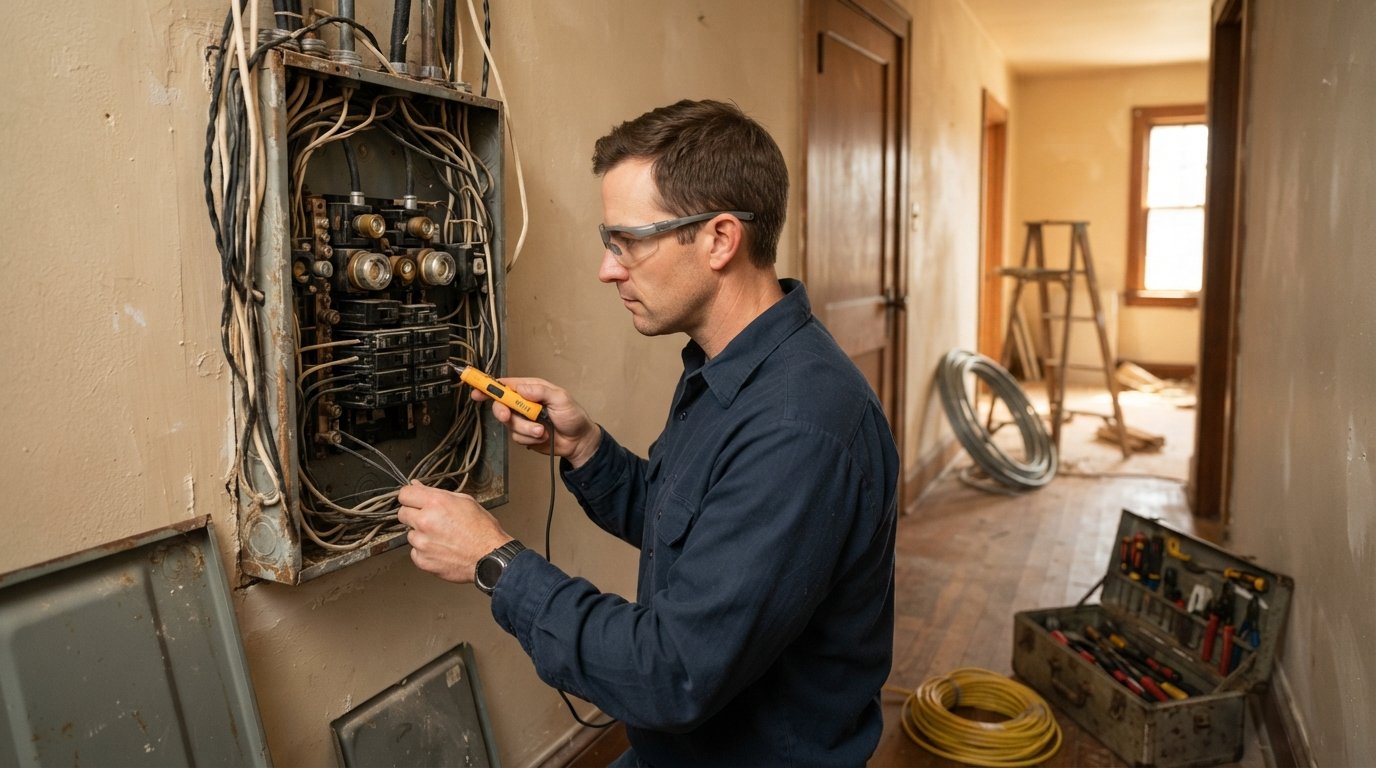
Whole House Rewire Cost and Signs You Need One
Get the facts on whole house rewire cost and signs you need one. Call (833)-439-3727 to compare free estimates from local electricians.

By Ethan Owens
Learn more about Wiring Installation for guides, costs, and what to expect.
Compare Wiring Installation Pros Near You

Enter your ZIP code to compare top-rated local professionals and request free quotes.
Your lights flicker when the dryer kicks on. The outlets in the living room are warm to the touch. Or maybe you just bought a 1960s ranch and noticed fabric-covered wires in the attic. These are not minor annoyances; they are signals that your home's electrical system may be living on borrowed time. A whole house rewire is one of those projects homeowners dread because it feels invasive and expensive, but ignoring it can lead to far worse outcomes: house fires, failed inspections, and insurance headaches. Understanding the whole house rewire cost and signs you need one is the first step toward making a safe, informed decision.
This guide breaks down what a full rewire actually involves, the red flags that demand attention, and the factors that push costs up or down. You will also see how rewiring fits into a larger remodel schedule and why permits and inspections are non-negotiable. Whether you are planning a kitchen update or simply want peace of mind in an older home, the information below will help you budget and prepare.
Warning Signs Your Home Needs a Rewire
Electrical systems age quietly. Unlike a leaking roof, outdated wiring rarely announces itself until something fails. That is why knowing the warning signs is critical. The most common indicators fall into three categories: physical evidence, performance issues, and material red flags. Physical evidence includes discolored outlets, burning smells, or scorch marks around switches. Performance issues show up as frequent tripped breakers, dimming lights when appliances start, or shocks when touching fixtures. Material red flags are the most definitive: if your home has knob-and-tube wiring, aluminum branch circuits, or cloth-insulated wires, the system is outdated regardless of how well it seems to work.
Knob-and-tube wiring was common before 1950. It consists of ceramic knobs and tubes that hold wires in place, often buried in insulation. The problem is twofold: the insulation on the wires becomes brittle over time, and the system lacks a grounding conductor, which is essential for modern safety. Aluminum wiring, used heavily between the mid-1960s and mid-1970s, expands and contracts more than copper, leading to loose connections and overheating at outlets and switches. Both materials are considered fire hazards by modern standards and often trigger insurance complications.
Here are the most common signs that a whole house rewire is warranted:
- You have knob-and-tube or aluminum wiring visible in the attic, basement, or behind outlets.
- Outlets and switches are warm or discolored, or you notice a burning smell when using appliances.
- Breakers trip frequently, especially when running high-draw devices like space heaters or microwaves.
- Your home has two-prong outlets with no ground, or you rely heavily on GFCI adapters.
- Lights flicker or dim noticeably when large appliances cycle on.
If you recognize any of these signs, do not wait for a failure. A licensed electrician can assess the system and tell you whether a partial upgrade or a full rewire is the safer path. In many cases, insurance companies will require documentation of the wiring type before issuing or renewing a policy, so addressing the issue proactively can save you from a last-minute scramble.
What a Whole House Rewire Involves
A whole house rewire is more than swapping a few outlets. It is a top-to-bottom replacement of the electrical infrastructure, from the service panel to the last receptacle. The process typically starts with a load calculation to determine the service size you need, followed by a plan for running new circuits. The electrician will remove old wiring where accessible, install a new panel if required, run new Romex or conduit through walls, ceilings, and crawlspaces, and terminate everything at outlets, switches, and fixtures. Grounding is added throughout, and AFCI (arc-fault circuit interrupter) and GFCI (ground-fault circuit interrupter) protection are installed where code requires.
The scope often includes replacing the electrical panel, especially if the existing panel is a fuse box or an early breaker panel with limited capacity. Modern homes need 200-amp service to handle today's appliances, EV chargers, and home offices. If your panel is 60 or 100 amps, an upgrade is usually part of the rewire. This is also the moment to add dedicated circuits for kitchen appliances, laundry, and HVAC equipment. Many homeowners bundle a panel upgrade with the rewire to avoid duplicate labor costs. For a detailed breakdown of panel costs and signs it is time for an upgrade, see our guide on electrical panel upgrade costs and savings.
Fixture replacement is another common add-on. Old outlets, switches, and light fixtures may not be compatible with new wiring, and worn components undermine the safety of the new system. A reputable electrician will discuss whether to reuse existing fixtures or replace them with modern, grounded options. This is also the time to add USB outlets, smart switches, or dedicated circuits for home entertainment systems if those are priorities.
Whole House Rewire Cost Breakdown
The national average for a whole house rewire ranges from $8,000 to $20,000, with most homeowners spending around $12,000. That said, the range is wide because every home is different. A small, single-story home with a crawlspace and easy attic access might come in at the low end, while a large two-story home with plaster walls and finished ceilings can easily exceed $25,000. The cost is driven by labor and access more than materials; copper wire and electrical boxes are relatively inexpensive compared to the hours spent fishing wire through walls.
Several factors influence the final price. Home size is the most obvious: more square footage means more circuits, more outlets, and more wire. Wall access is equally important. Homes with unfinished basements and attics are cheaper to rewire because electricians can run wire without opening walls. Finished spaces, plaster walls, and fire-blocking require cutting and patching, which adds labor and drywall repair costs. The number of fixtures and devices also matters; replacing 50 outlets and 20 switches takes time. Finally, local labor rates and permit fees vary significantly by region.
Here is a general cost breakdown to help you plan:
- Basic rewire (small home, easy access): $8,000 to $12,000.
- Mid-range rewire (average home, some wall access): $12,000 to $18,000.
- Complex rewire (large home, plaster walls, finished basement): $18,000 to $30,000 or more.
- Panel upgrade (if needed): $1,500 to $4,000.
- Drywall repair and painting: $1,000 to $3,000, depending on the number of openings.
Keep in mind that these figures are estimates. The only way to know your actual cost is to get a professional assessment. Many contractors offer free estimates, and comparing multiple bids is the best way to understand the market in your area. If you are planning a larger remodel, bundling the rewire with other work can sometimes reduce overall labor costs, but only if the timing is right.
How Rewiring Fits Into a Remodel Schedule
If you are already planning a kitchen or bathroom remodel, you have a strategic opportunity. Opening walls for a remodel is the perfect time to rewire because the electrician can access cavities without additional demolition. The key is sequencing: the rewire should happen after demolition but before drywall installation. This allows the electrician to run new circuits, install boxes, and pull wire while the framing is exposed. If you rewire after drywall is up, you will pay for patching and painting that could have been avoided.
Coordination is essential. The general contractor, electrician, and drywall crew need to be on the same page about timing. A good contractor will build the electrical rough-in into the schedule and schedule inspections before the walls are closed. If you are acting as your own general contractor, you will need to manage this sequence carefully. For homeowners hiring a pro, ask how they handle electrical rough-ins and whether they have a preferred electrician or require you to hire your own. Clear communication upfront prevents costly delays.
Whole house rewires are also common during major renovations like second-story additions or basement finishes. In those cases, the electrical work is often folded into the larger project budget. If you are considering a major remodel, it is worth asking your contractor whether a rewire makes sense while the house is already torn up. The incremental cost is often lower than doing it as a standalone project later.
Permits, Inspections, and Safety Steps
Electrical work is regulated for good reason. Most jurisdictions require a permit for a whole house rewire, and the work must be inspected by a local building official. Skipping the permit can void your insurance, create problems when you sell, and put your family at risk. A licensed electrician will pull the permit, schedule inspections, and ensure the work meets current code. The inspection process typically includes a rough-in inspection (before drywall) and a final inspection (after devices are installed).
Before work begins, take safety precautions. If your wiring is knob-and-tube or aluminum, avoid overloading circuits and do not use space heaters or high-draw appliances on questionable outlets. Install smoke detectors and carbon monoxide alarms on every level of the home, and test them monthly. If you notice burning smells or sparks, turn off the circuit at the panel and call an electrician immediately. Do not attempt to repair outdated wiring yourself; the risks are too high.
Hiring the right professional is the most important safety step. Look for a licensed electrician with experience in older homes. Ask for references, verify insurance, and get at least three written estimates. A good electrician will explain the scope, walk you through the process, and answer questions without pressure. For help finding qualified local contractors and comparing free estimates, BuySellRemodel connects homeowners with experienced professionals who can handle rewiring and other improvement projects. Their platform makes it easier to vet pros and get the job done right.
Finally, plan for the disruption. A whole house rewire takes several days to a few weeks depending on the size of the home and the complexity of the work. Power will be off during portions of the day, and walls will be opened. Talk to your electrician about the daily schedule and prepare for temporary outages. If you work from home or have young children, consider arranging alternative space during the heaviest work days. The inconvenience is temporary, but the safety and reliability you gain are long-term.
Understanding the whole house rewire cost and signs you need one empowers you to act before a small problem becomes a disaster. If your home is showing warning signs, do not wait. Reach out to a licensed electrician, get a professional assessment, and plan the work on your timeline rather than an emergency one. The investment protects your home, your family, and your peace of mind.