
Value Engineering a Home Remodel: Cut Costs, Keep Quality
Value engineering a home remodel to cut costs without cutting quality is possible with smart substitutions. Call (833)-439-3727 for free local estimates.

By Leo Dawson
Learn more about Home Remodeling for guides, costs, and what to expect.
Compare Home Remodeling Pros Near You

Enter your ZIP code to compare top-rated local professionals and request free quotes.
Your remodel estimate came in 20 percent higher than you expected. The temptation is to slash the whole scope: cheaper cabinets, thinner counters, a smaller tile budget. But that approach usually trades long-term durability for short-term savings, and you end up with a home that looks tired in five years. Value engineering a home remodel to cut costs without cutting quality takes a different path. It means making smart, deliberate substitutions and design decisions that protect the structural and functional core of your project while trimming the expensive extras that do not add lasting value.
Think of it as a targeted edit rather than a blunt cut. You keep the bones, the layout, and the performance layers (plumbing, electrical, insulation, waterproofing) at full strength. Then you find savings in finishes, fixtures, and details that can be upgraded later or that simply do not justify a premium price. Homeowners who master this approach often shave 10 to 20 percent off a bid without any noticeable drop in how the finished space looks, feels, or holds up over time.
What Value Engineering Actually Means for Homeowners
In construction, value engineering is a structured process of reviewing a project to find the best ratio of cost to function. It is not about buying the cheapest option on the shelf. It is about asking, for every line item: does this component deliver enough long-term performance, safety, and visual appeal to justify its price? If the answer is no, you look for an alternative that meets the same need for less money.
For a homeowner, that translates into a simple mindset shift. Instead of asking "how can I spend less overall?" you ask "where does spending more actually matter, and where can I spend less without noticing the difference in daily life?" The answers are rarely obvious from the estimate alone. They require a little research, a few conversations with your contractor, and a willingness to let go of a few Pinterest-driven details in favor of a solid, comfortable, well-built home.
This is also where the planning process matters. Before you start negotiating substitutions, you need a realistic scope and a clear budget. A detailed permit cost guide can help you anticipate the fixed fees that do not flex, so you know which parts of the budget are truly negotiable. For a deeper look at those fixed costs, see this home renovation permits cost guide, which breaks down what you can and cannot avoid paying.
Where Substitutions Save Money Without Hurting Durability
The biggest savings in value engineering come from swapping materials and products in areas where the premium option is mostly about brand, finish, or fashion rather than structural performance. A $90-per-square-foot marble countertop and a $45-per-square-foot quartz countertop can both last decades; the difference is largely aesthetic and maintenance-related. A designer faucet and a mid-range faucet from a reputable brand may use the same internal cartridge.
Here are the substitution categories that typically deliver the highest savings with the least sacrifice:
- Countertops and backsplashes: Move from natural stone to quality quartz or porcelain. Use a simpler backsplash tile or a slab remnant instead of a full-height feature wall.
- Flooring: Engineered hardwood or luxury vinyl plank can mimic the look of solid hardwood at 40 to 60 percent less, and they often handle moisture better in kitchens and basements.
- Cabinetry: Stock or semi-custom cabinets with a painted finish cost far less than full custom, and they can be upgraded later with better hardware and organizers.
- Fixtures and lighting: Choose mid-range brands with strong warranties. Spend on the items you touch every day (faucets, shower valves) and save on decorative sconces and pendant lights.
- Tile: Use large-format tiles to reduce installation labor, or choose a simple subway tile with a dramatic grout color instead of a complex mosaic.
The key is to protect the layers you cannot see. Do not downsize your waterproofing membrane, your electrical panel capacity, or your insulation to pay for a fancier light fixture. Those hidden systems are expensive to redo and directly affect safety, comfort, and resale value. When you substitute, always ask your contractor which items are structural, code-driven, or moisture-critical, and keep those at full specification.
Keep the Layout and Move Fewer Walls and Pipes
One of the most reliable ways to cut costs without touching quality is to leave the plumbing and electrical rough-in where it is. Moving a sink, a toilet, or a range hood requires new supply lines, drain lines, venting, and often electrical work. Each move adds labor, materials, and inspection time. In many kitchens and bathrooms, the difference between a good layout and a great layout is a few feet, and you can often solve flow problems with smarter cabinetry, a different door swing, or a well-placed island instead of relocating the plumbing.
Before you approve a layout change, ask your contractor for a rough cost breakdown of the move. Sometimes the number is small enough to justify. Often it is not. A simple rule: if the existing plumbing wall works, keep it. If the electrical panel has capacity, do not upgrade it just to add a spa tub. Spend your design energy on storage, lighting placement, and surface choices that do not require opening walls.
This approach also reduces disruption. Fewer wall openings mean less dust, shorter timelines, and fewer opportunities for surprise discoveries inside the walls. That predictability is itself a form of value, because surprise change orders are one of the most common reasons remodels blow past budget.
Trade High-Cost Finishes for High-Touch Focal Points
A common mistake is spreading the budget evenly across every surface. Value engineering works better when you concentrate spending on one or two focal points and keep the rest calm and simple. A beautiful range hood, a statement island, or a well-designed shower niche can carry the visual weight of the room. The surrounding walls, floors, and ceilings can use modest materials and still look intentional.
For example, in a kitchen, you might choose a standard quartz perimeter counter and splurge on a dramatic stone slab for the island only. In a bathroom, you could use a simple porcelain tile on the walls and invest in a frameless glass shower enclosure and a high-quality rain shower head. In a living room, a modest flooring upgrade paired with a custom built-in or a focal fireplace surround often reads as more expensive than uniform mid-grade finishes everywhere.
This strategy also gives you room to phase the project. If the budget is tight, install the modest finishes now and upgrade the focal point later when savings allow. The room still functions and looks good in the meantime, and you avoid the trap of stretching every line item to its breaking point.
How to Ask Contractors for Cost-Saving Alternatives in the Bid
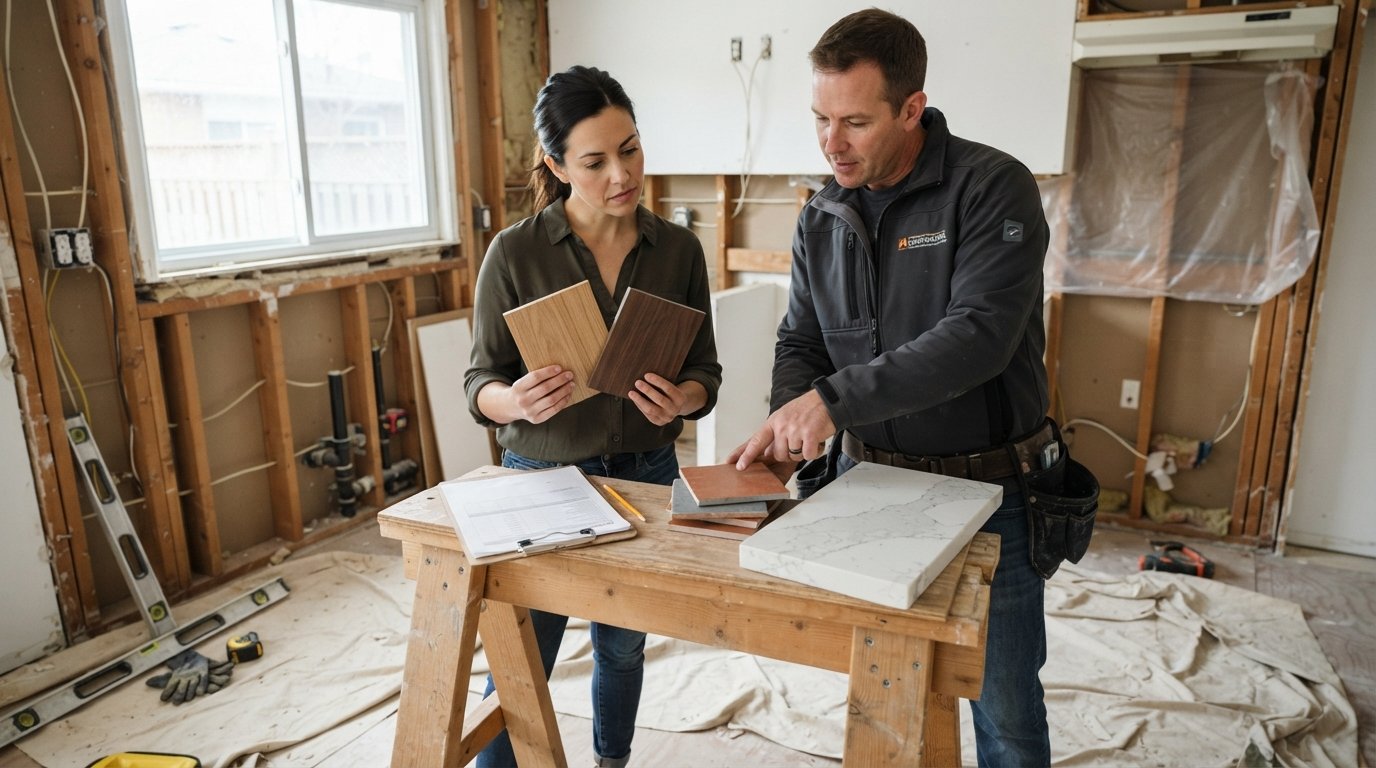
The most effective time to value engineer is before you sign the contract, while the bid is still a draft. Ask your contractor to walk through the estimate with you line by line and identify options. A good contractor will welcome this conversation because it shows you are engaged and realistic. A contractor who resists or dismisses every question is a warning sign.
Use a simple framework when you request alternatives. First, ask for a base bid that meets code and performance standards. Then ask for three optional alternates: one that reduces cost by 5 percent, one by 10 percent, and one by 15 percent. This gives you a menu rather than a single take-it-or-leave-it number. You can also ask which line items have the most price volatility (lumber, tile, appliances) and whether locking in prices now would help.
When you review bids, compare the scope, not just the bottom line. A low bid that excludes prep work, permits, or cleanup is not a bargain. Ask each contractor to specify the brand and model for major materials so you can compare apples to apples. If you need help finding contractors who are willing to work through these conversations, BuySellRemodel connects homeowners with local professionals who provide free estimates and practical guidance.
Finally, get everything in writing. Any substitution should be documented as a change order with a clear description, price, and impact on the schedule. Verbal agreements are the fastest route to disputes. A written record protects both you and the contractor and keeps the project moving.
Protect the Quality You Cannot See
Value engineering fails when it crosses into cutting corners on the parts of the project that keep your home safe and dry. Waterproofing in a shower, proper flashing around windows, adequate ventilation, and correct electrical grounding are not places to save. These systems are hidden when the project is done, but their failure is expensive and disruptive.
Make a short list of non-negotiables before you start negotiating. Typical items include: the waterproofing system in wet areas, the electrical panel and wiring gauge, the plumbing supply and drain materials, insulation R-values, and the structural connections for any new opening. Tell your contractor these are fixed. Then focus your value engineering on finishes, fixtures, cabinetry, and decorative details. This boundary keeps the conversation productive and protects the long-term value of your home.
Value engineering a home remodel to cut costs without cutting quality is ultimately about discipline. It asks you to separate emotion from function, to prioritize the systems that matter, and to spend where you will see and feel the difference every day. Homeowners who take this approach often end up with a home that feels more custom, not less, because every dollar is doing real work.