
How to Winterize a Home to Prevent Costly Repairs
Winterize your home the right way to prevent costly repairs. Call (833)-439-3727 to compare quotes from independent local providers and plan ahead.

By Sarah Thomas
Learn more about Weatherization for guides, costs, and what to expect.
Compare Weatherization Pros Near You

Enter your ZIP code to compare independent local professionals and request free quotes.
Every winter, thousands of homeowners learn the hard way that a frozen pipe or an ice dam can turn a quiet season into a financial emergency. The good news is that most cold-weather damage is entirely preventable. By following a systematic approach to winterizing your home, you can protect your investment, avoid surprise repair bills, and enjoy the season with confidence. This guide walks you through the highest-priority tasks, helps you decide what to DIY and when to call a professional, and shows you how to stage the work over a weekend so nothing gets missed.
Why Winterization Pays for Itself
Winter damage is rarely cheap. A single burst pipe can cause thousands of dollars in water damage, ruined drywall, and mold remediation. An ice dam can tear off gutters and rot roof decking. A furnace that fails during a cold snap can lead to frozen pipes and emergency hotel bills. The common thread is that these failures almost always trace back to a skipped maintenance step that costs far less than the repair it prevents.
Consider the math: a few dollars of pipe insulation versus a four-figure water damage claim. A furnace tune-up versus an emergency replacement. A roof inspection versus structural repairs. Winterizing is one of the highest-return maintenance activities a homeowner can do, and it does not require special skills for most tasks. The key is knowing which jobs matter most and tackling them in the right order.
If you want a year-round system rather than a once-a-year scramble, our home maintenance calendar to prevent costly repairs breaks down seasonal tasks so winterization becomes a habit instead of a rush.
Start With Plumbing: The Costliest Oversight
Water damage from frozen pipes tops the list of expensive winter repairs, and it is also one of the most preventable. Pipes in exterior walls, unheated basements, crawl spaces, and attics are most vulnerable. When water freezes, it expands and can split the pipe; when it thaws, water pours out. The repair bill often includes plumbing, drywall, flooring, and sometimes mold remediation.
Before the first freeze, take these steps:
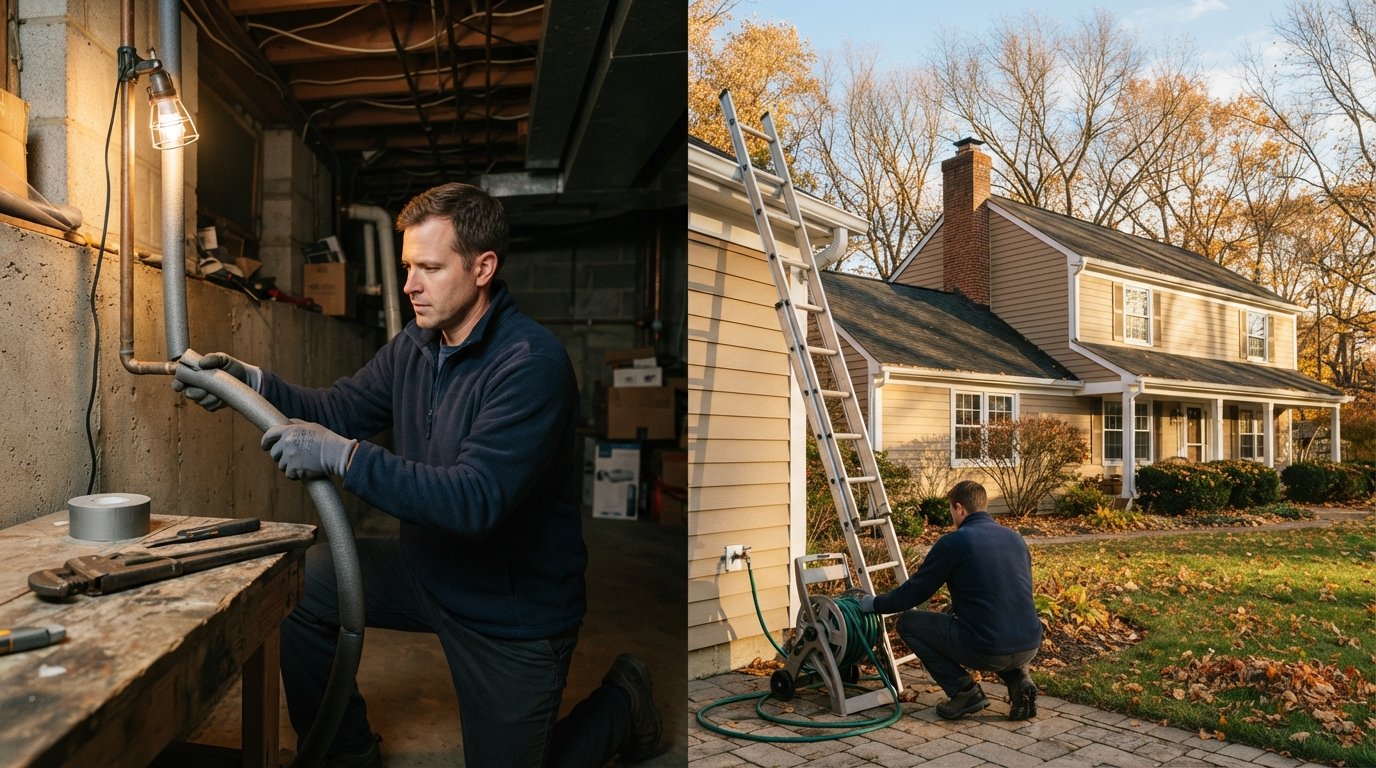
- Insulate exposed pipes in unheated areas with foam sleeves or heat tape.
- Seal gaps around pipes where they penetrate exterior walls.
- Disconnect garden hoses and shut off outdoor faucets, then drain them.
- Locate your main water shutoff valve and label it clearly.
- If you leave town, set the thermostat no lower than 55 degrees Fahrenheit.
These tasks are generally safe for a homeowner to handle. However, if you have a history of frozen pipes or suspect poor insulation inside walls, it is worth booking a plumber to assess the risk. A professional can add insulation, install smart leak sensors, or reroute vulnerable lines. The cost of a preventive visit is small compared to emergency water extraction and restoration.
For homeowners planning broader upgrades, winter is also a good time to consider energy-efficient plumbing fixtures or a tankless water heater, which can reduce both energy bills and freeze risk. If you are unsure which improvements make sense for your home, comparing quotes from independent local providers can help you weigh options without obligation.
HVAC and Heating: Comfort and Safety
Your heating system works hardest in winter, and a failure during a cold snap is both uncomfortable and dangerous. A furnace that has not been serviced can lose efficiency, emit carbon monoxide, or simply quit. A heat pump can ice over. A boiler can develop leaks. Regular maintenance is the difference between a warm home and an emergency call.
Schedule a professional furnace or HVAC tune-up before the heating season begins. A technician will clean components, check for gas leaks, test safety controls, and replace filters as needed. This is not a DIY job for most homeowners because it involves combustion safety and electrical components. The cost of a tune-up is modest; the cost of an emergency repair or a carbon monoxide incident is not.
Homeowners can handle simpler tasks: replace filters monthly, keep vents unobstructed, test smoke and carbon monoxide detectors, and clear debris from outdoor HVAC units. If your system is older than 15 years, consider budgeting for replacement before it fails in January. Comparing quotes from independent local providers can help you plan ahead and avoid a rushed decision.
For those exploring energy-efficient upgrades, solar energy information and calculators can help you understand long-term savings, but the immediate priority is a safe, reliable heating system.
Exterior and Roof: Ice Dams and Water Intrusion
Ice dams form when warm air escapes through the roof, melts snow, and the water refreezes at the eaves. The resulting ice can force water under shingles, causing rot and interior damage. Poor attic insulation and inadequate ventilation are common culprits. Before winter, inspect your roof for missing shingles, seal gaps, and ensure gutters are clear of leaves and debris.
Homeowners can safely clean gutters from the ground with a leaf blower or extendable tools, but roof work should be left to professionals. If you see signs of ice dams in previous years, book a roofing contractor to evaluate insulation and ventilation. Adding attic insulation and sealing air leaks is a cost-effective preventive measure that also lowers heating bills.
Other exterior tasks include:
- Seal cracks in driveways and walkways to prevent freeze-thaw damage.
- Trim tree branches away from the roof and power lines.
- Drain and store garden hoses and irrigation systems.
- Check exterior doors and windows for gaps and add weatherstripping.
These steps are low-cost and high-impact. A tube of caulk and a few hours of work can prevent drafts, moisture intrusion, and pest entry.
Windows, Doors, and Insulation: Small Gaps, Big Savings
Heat loss through windows and doors drives up energy bills and contributes to ice dams. Check for drafts by holding a lit incense stick near frames on a windy day. If the smoke wavers, you have a leak. Weatherstripping, caulk, and window film are inexpensive DIY fixes. For older windows, consider storm windows or insulated curtains.
Attic insulation is another high-value upgrade. Many homes have insufficient insulation, allowing heat to escape and cold to enter. Adding insulation is a project best handled by a professional to ensure proper coverage and ventilation. The cost is often offset by lower heating bills and reduced ice dam risk. If you are planning this upgrade, compare quotes from independent local providers in your area to find a fair price.
Do not overlook the basement and crawl space. Seal vents, insulate rim joists, and close foundation cracks. These areas are common entry points for cold air and pests.
Outdoor Living and Landscape
Winterizing extends beyond the house itself. Drain and store outdoor furniture, shut off exterior water lines, and protect plants with mulch or burlap. Clean and store grills and patio heaters. If you have a pool, follow closing procedures carefully to avoid cracked pipes and liners.
For homeowners with outdoor living spaces, winter is a good time to plan spring upgrades. Comparing quotes now can help you book a contractor early and avoid peak-season prices.
DIY vs. Professional: When to Call a Pro
Many winterization tasks are safe and simple for homeowners: insulating pipes, sealing drafts, cleaning gutters, and testing detectors. However, some jobs carry risk or require specialized knowledge. Furnace and boiler maintenance, roof inspections, attic insulation, and complex plumbing should be handled by independent local providers. Attempting these yourself can void warranties or create safety hazards.
If you are unsure, a good rule is: if the task involves gas, electricity, heights, or the structural envelope, call a professional. For everything else, roll up your sleeves. The site does not perform work itself, but it can connect you with independent local providers who can handle the jobs you prefer to delegate. There is no obligation to hire, and comparing quotes helps you understand fair pricing.
Staging Winterization Over a Weekend
You do not need to do everything at once. A weekend is enough to cover the highest-priority items if you plan ahead. Here is a sample schedule:
- Saturday morning: Inspect and insulate exposed pipes; disconnect hoses and shut off outdoor faucets.
- Saturday afternoon: Seal drafts around windows and doors; check weatherstripping.
- Sunday morning: Clean gutters and check roof from the ground; clear debris from HVAC units.
- Sunday afternoon: Test smoke and carbon monoxide detectors; replace filters; schedule professional tune-ups.
Book professional services (furnace tune-up, roof inspection, insulation) at least two to three weeks before the first expected freeze. Contractors fill up quickly in fall, so early scheduling avoids premium rates and delays.
Cost vs. Repair: A Simple Comparison
To prioritize, think in terms of prevention cost versus potential repair cost. Pipe insulation costs a few dollars per foot; water damage repair can run thousands. A furnace tune-up is a modest fee; emergency replacement can be several thousand. Gutter cleaning is often a DIY task; ice dam damage can require roof and gutter repairs. Weatherstripping is cheap; heat loss adds up all winter.
By ranking tasks this way, you can focus your budget and time on the steps that prevent the most expensive failures. Even if you only complete the top three tasks, you have significantly reduced your risk.
Final Checklist and Next Steps
Before the first freeze, run through this quick checklist: pipes insulated, outdoor faucets drained, gutters clear, furnace serviced, detectors tested, drafts sealed, and emergency contacts saved. If any item requires a professional, request quotes early and compare options from independent local providers. Planning ahead is the simplest way to avoid costly repairs and enjoy a comfortable winter. SolarEnergy.ai