
How to Budget for a Whole Home Renovation in Stages
Staging a whole home renovation keeps costs manageable. Call (833)-439-3727 to compare quotes from local providers and plan your phased budget.

By Irene Parker
Learn more about Home Remodeling for guides, costs, and what to expect.
Compare Home Remodeling Pros Near You

Enter your ZIP code to compare independent local professionals and request free quotes.
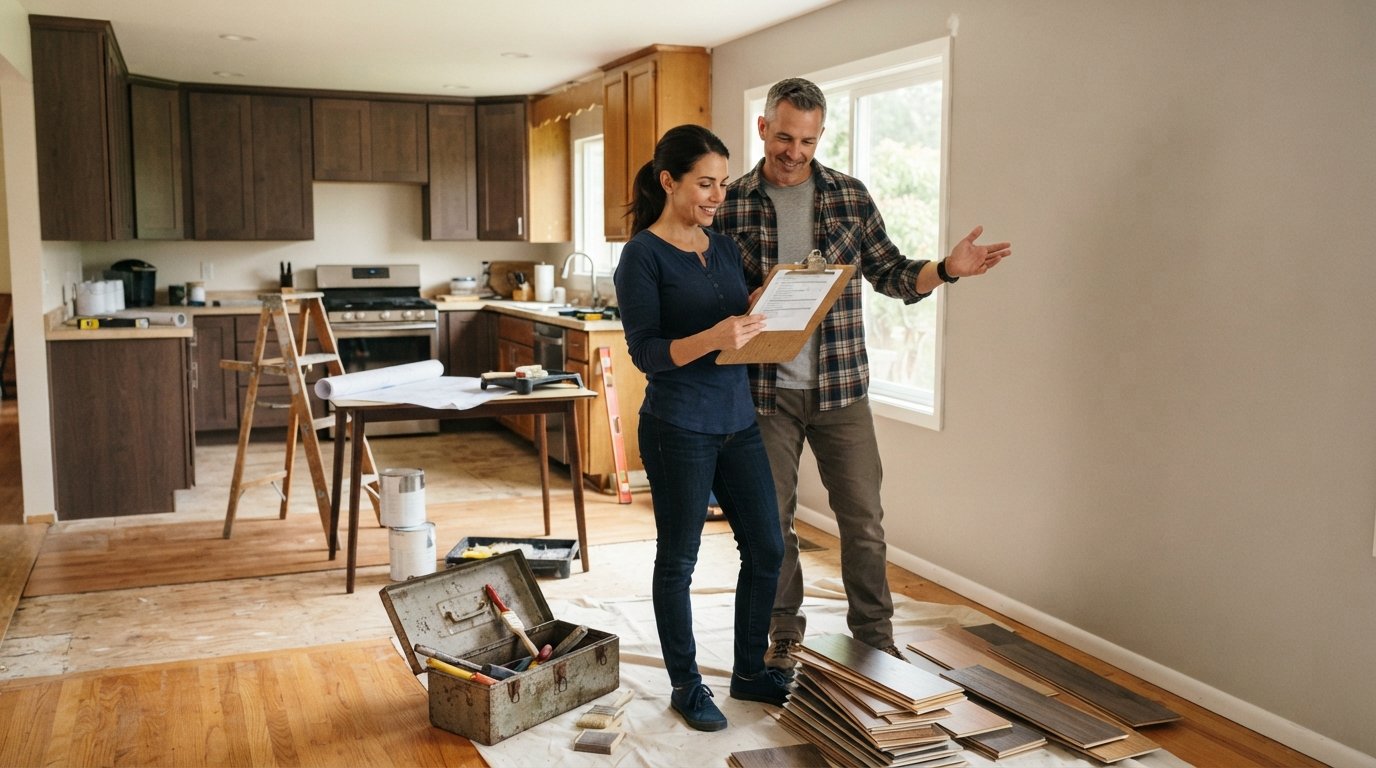
Planning a whole home renovation is exciting, but the price tag can feel overwhelming if you try to tackle everything at once. The smartest approach for most homeowners is to renovate in stages, spreading the work and the cost over months or even years. This strategy keeps your budget manageable, lets you live in the home while work progresses, and reduces the risk of running out of money mid-project. However, staging a renovation requires careful budgeting so that earlier phases do not get undone by later ones, and so that you always have a financial cushion for surprises. In this guide, you will learn how to budget for a whole home renovation in stages, from sequencing projects correctly to setting aside contingency at each step.
Why Staging a Renovation Makes Financial Sense
Whole home renovations can easily cost six figures, and very few homeowners have that kind of cash sitting idle. Staging allows you to pay as you go, using savings and home equity without taking on excessive debt. It also gives you time to recover from one phase before starting the next, which is especially important if you are using a home equity line of credit or saving up between projects. Beyond cash flow, staging helps you avoid the chaos of living in a full construction zone for months on end. You can keep key rooms functional while others are being remodeled.
Another advantage is that staged renovations let you learn as you go. After completing the first phase, you will have a better sense of how your home responds, how your contractor works, and what unexpected issues tend to arise. That knowledge makes it easier to budget accurately for the next stage. For a deeper dive into sequencing and planning, see this guide on a phased home renovation plan that breaks big projects into manageable stages.
Sequence Projects So Earlier Work Does Not Get Undone
The biggest budgeting mistake in a staged renovation is doing finishes before systems. If you install new flooring or paint walls before upgrading plumbing or electrical, you may have to tear out that fresh work later, doubling your costs. The correct order generally follows a top-down, inside-out logic: address the roof and structural issues first, then rough-in electrical and plumbing, then insulation and drywall, and finally finishes like flooring, cabinets, and paint. Following this sequence protects your investment and keeps each stage from damaging the previous one.
Here is a sensible order of operations for most whole home renovations:
- Roof, foundation, and exterior envelope: Fix leaks, repair structural problems, and upgrade siding or windows to keep water out.
- Electrical and plumbing rough-in: Update the electrical panel, rewire old circuits, and replace galvanized or polybutylene pipes before walls are closed up.
- HVAC and insulation: Install new ductwork, a high-efficiency furnace, or a heat pump, and improve insulation to lower energy bills.
- Drywall, flooring, and interior finishes: Once systems are in place, hang drywall, install flooring, and complete kitchen and bathroom finishes.
- Exterior and landscaping: Finish driveways, patios, and fencing last so they are not damaged by construction traffic.
This sequence minimizes rework and ensures that each phase builds on the last. It also helps you budget more accurately because you can price out each stage as a standalone project, with its own permits and inspections.
Which Systems to Tackle First: Roof, Electrical, Plumbing, and Envelope
Before you think about aesthetics, you need to secure the building envelope and its core systems. The roof is the first priority because water intrusion can rot framing and ruin interior finishes. If your roof is nearing the end of its life, replace it before any interior work. Next, evaluate the electrical system. Older homes often have 60-amp or 100-amp panels that cannot handle modern appliances, and aluminum wiring or knob-and-tube wiring can be a fire hazard. Upgrading the electrical panel and rewiring as needed should happen early, because it requires opening walls and is difficult to retrofit later.
Plumbing is the third critical system. Galvanized steel pipes corrode and restrict flow, and polybutylene pipes are prone to failure. Replacing supply and drain lines before you remodel bathrooms and the kitchen saves you from tearing out new tile later. Finally, address the building envelope: windows, doors, siding, and insulation. These improvements often qualify for energy efficiency incentives, and they protect the interior work you will do next. Budgeting for these systems first may feel less glamorous, but it prevents costly do-overs and keeps your renovation on solid ground.
When budgeting for these early phases, get multiple quotes from independent local providers. A free matching service like HomeRemodelingsContractors.com can connect you with contractors in your area who specialize in roofing, electrical, and plumbing, so you can compare prices and scope before committing.
How to Set Aside Contingency at Each Stage
Contingency is the money you set aside for surprises, and in a staged renovation, you need it at every step. A common rule is to reserve 10 to 20 percent of each stage's budget for unexpected issues. For older homes, aim for the higher end, because hidden problems like asbestos, lead paint, or water damage are more likely. If you are tackling a major system upgrade, such as electrical or plumbing, a 20 percent contingency is prudent. For cosmetic phases, 10 percent may suffice.
To manage contingency effectively, treat it as a separate line item in your budget for each stage. Do not roll leftover contingency from one phase into the next until the current phase is fully complete and inspected. If you do not use the contingency, you can apply it to the next stage or keep it as a reserve. This approach prevents you from overspending early and running short later. It also gives you peace of mind, knowing that a small surprise will not derail the entire project.
Here is a simple framework for setting contingency by stage type:
- Structural and envelope work: 15 to 20 percent of the stage budget.
- System upgrades (electrical, plumbing, HVAC): 15 to 20 percent.
- Interior finishes (flooring, cabinets, paint): 10 percent.
- Exterior hardscaping and landscaping: 10 percent.
Review your contingency after each phase and adjust the next stage's budget accordingly. If the first stage came in under budget, you might increase your finishes allowance; if it went over, tighten the next stage.
When Combining Phases Saves Money (and When It Does Not)
Staging does not always mean doing one project at a time with long gaps in between. Sometimes combining phases saves money because it reduces mobilization costs, allows bulk material purchasing, and avoids repeated permit fees. For example, if you are already opening walls for electrical work, adding plumbing rough-in at the same time is far cheaper than doing it later. Similarly, if you are replacing the roof, it may be cost-effective to upgrade gutters and fascia in the same project. Combining related tasks that share labor and access can cut overall costs by 10 to 20 percent.
However, combining phases is not always wise. If you bundle too much, you may exhaust your budget and have to stop mid-project, leaving your home in a disrupted state. Combining phases also increases the complexity of scheduling and can lead to longer periods without a functional kitchen or bathroom. A good rule is to combine phases only when they share the same trade access (for example, electrical and drywall) or when a single permit covers both. Keep major system upgrades separate from cosmetic phases so you can pause between them if needed.
Another consideration is financing. If you are using a construction loan or a home equity line, combining phases may simplify draws, but it also means paying interest on a larger amount sooner. Weigh the interest cost against the savings from combined work. For many homeowners, a hybrid approach works best: group system upgrades together, then tackle finishes room by room over time.
Building a Realistic Budget for Each Stage
To budget accurately, break your whole home renovation into discrete stages and cost each one independently. Start with a detailed scope of work for each stage, including materials, labor, permits, and inspections. Get at least three quotes from independent local providers for each stage, and compare not just the total price but also what is included. A low bid that excludes permit fees or debris removal is not really cheaper. Use a spreadsheet to track estimated versus actual costs for each stage, and update it as you go.
Remember to account for soft costs such as design fees, engineering, and temporary housing if your kitchen or bathroom will be out of commission. These can add 10 to 15 percent to your overall budget. Also, factor in the cost of living through construction: eating out more often, storing furniture, and higher utility bills can strain your finances. Build these into your stage budgets so they do not come as a shock.
If you are considering energy-efficient upgrades as part of your renovation, such as solar panels or a heat pump, you can explore options and compare quotes through resources like FreeSolarPowerQuotes. They provide educational information and connect homeowners with independent providers, which can help you budget for those upgrades alongside your renovation stages.
Financing Your Staged Renovation
Most homeowners cannot pay for a whole home renovation in cash, so financing is part of the budgeting equation. Common options include home equity loans, home equity lines of credit (HELOCs), cash-out refinancing, and personal loans. A HELOC is often ideal for staged renovations because you can draw funds as needed during each phase, paying interest only on what you use. Home equity loans provide a lump sum with fixed rates, which can be good for the first major stage. Cash-out refinancing replaces your mortgage with a larger one, which may lower your rate but also resets your loan term.
When budgeting for financing, factor in closing costs, appraisal fees, and interest. Compare offers from multiple lenders and consider how each option affects your monthly payment. Avoid overborrowing; borrow only what you need for the stages you plan to complete in the next 12 to 24 months. If you finish a stage under budget, you can pay down the line of credit faster. Always keep an emergency fund separate from your renovation budget so that a job loss or medical issue does not force you to abandon the project mid-stage.
Tracking Spending and Adjusting as You Go
A staged renovation is a marathon, not a sprint, so you need a system to track spending and make adjustments. Create a master budget that lists every stage, its estimated cost, and its contingency. After each stage, reconcile actual costs against estimates and update the remaining stages. If a stage goes over budget, identify which categories caused the overrun and adjust the next stage accordingly. Maybe you choose less expensive light fixtures in the next phase to compensate.
Use a simple percentage of completion method to monitor progress. If you have spent 60 percent of the total budget but only completed 40 percent of the work, you are on track to overspend and need to cut back. Regularly reviewing your budget with your contractor (or contractors, if you use different ones for different stages) keeps everyone accountable. It also helps you decide whether to pause between stages to save more money or proceed to the next phase.
Avoiding Common Budgeting Mistakes in Staged Renovations
One of the most common mistakes is underestimating the cost of bringing older homes up to code. If you are renovating a house built before 1980, expect surprises like asbestos, lead paint, or outdated wiring. Budget a higher contingency for these stages. Another mistake is forgetting to budget for permits and inspections, which can add hundreds or thousands of dollars depending on your location and the scope of work. Always confirm permit requirements with your local building department before starting each stage.
Another pitfall is changing your mind mid-stage. Design changes during construction are expensive and can derail your budget. Finalize selections before work begins on each stage. Also, avoid the temptation to upgrade materials in later stages without adjusting the budget elsewhere. It is easy to fall into the trap of "while we are at it" upgrades, but those small additions add up quickly. Stick to your plan and reserve upgrades for a future phase if funds allow.
How to Find and Compare Contractors for Each Stage
For a staged renovation, you may choose to work with a single general contractor for the entire project or hire specialists for each phase. A general contractor can coordinate trades and ensure sequencing is correct, but you will pay a markup for that service. Hiring specialists stage by stage may save money, but you take on more coordination responsibility. Whichever route you choose, get multiple quotes and check references. Ask potential contractors about their experience with phased work and how they handle scheduling between stages.
HomeRemodelingsContractors.com makes it easy to compare quotes from independent local providers for each stage of your renovation. You can submit your project details and receive free, no-obligation estimates from contractors in your area. This helps you budget accurately and choose the right professional for each phase.
Staging a whole home renovation is a smart way to manage costs, but it requires discipline and planning. By sequencing projects correctly, setting aside contingency at every stage, and knowing when to combine phases, you can keep your budget on track and avoid costly rework. Start with a detailed plan, get multiple quotes for each stage, and track your spending as you go. With careful budgeting, you can transform your home over time without financial stress.